

The Aftermath of the 12-Day War Between Israel and Iran
Israel's attacks on Tehran killed over a thousand people, while experts and Iranian officials warn that Israel's U.S.-backed assault on the country leaves open the possibility for more war.

Drop Site is a reader-funded, independent news outlet. Without your support, we can’t operate. Please consider making a 501(c)(3) tax-deductible donation today.
This article is adapted from the documentary, “Target Tehran,” produced by Al Jazeera Fault Lines. Watch the full documentary here.
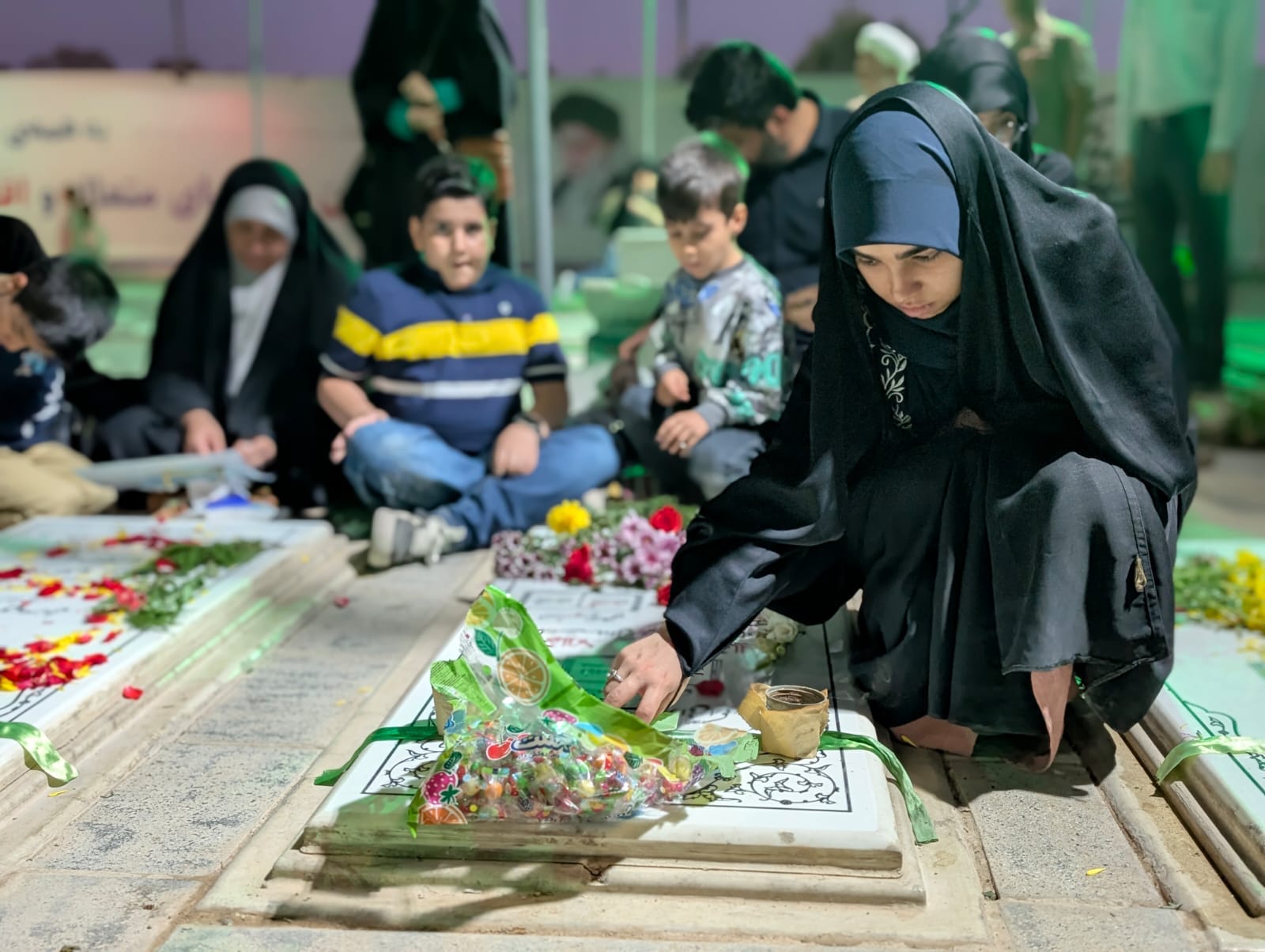
TEHRAN, IRAN—At Behesht-e Zahra cemetery in southern Tehran, families gather every Thursday to mourn their dead. Among the thousands buried, there are royalty, politicians, dissidents, and soldiers, but a new section has been set aside for those killed in Israel’s 12-day military assault on Iran in June.
On June 13, 2025, Israel launched “Operation Rising Lion,” which targeted nuclear facilities, military sites, and residential neighborhoods. The assault was backed by U.S. strikes targeting Iran’s nuclear sites on June 22. At least 1,064 Iranians were killed and thousands more injured, according to Iranian government figures. Iran retaliated with missiles and drones, killing 32 people in Israel, according to Israeli authorities.
When our team with Al Jazeera English’s documentary program, Fault Lines, visited the cemetery in Tehran in October, the area was overflowing with bereaved visitors. Young girls sang songs of martyrdom beside women collapsed over burial plots. The sound of mothers wailing for their lost children, willing them to come back, filled the air with a grief that felt intrusive to witness.
One of the graves belonged to 12-year-old Amirali, who lies next to his father, Reza Amini. It has been months since they were killed in the first hours of the war, but for his grandfather, Sayed Hossein Mir Hashemi, the pain remains fresh and overwhelming.
Flowers and rose petals covered the ornate marble gravestone. Sayed knelt slowly, touching Amirali’s name with one hand, while holding his prayer beads in the other. “I have lost two of my best people,” he said. “My son-in-law is gone. His son is gone.”
Amirali’s mother, Zahraa, and his 8-year-old brother, Amirreza, survived the strike.
“Now my daughter is left with a small child. Without a home. Who’s going to take care of her? They killed her for no reason. What kind of future is waiting for this child without a father?” Sayed asked.
Photographs of victims, including children, hang above the graves at the cemetery. Gesturing toward them, he said, “Look at all these young people. Why were they killed? Most of them are civilians. Did they make bombs? Did they have guns? Did they become enemies with Israel? Did they become enemies with America?”
Breaking down, Sayed said, “I ask God for martyrdom and to go to him soon. I miss him so much that I want to die.”
The Israeli attacks in June came after the International Atomic Energy Agency (IAEA) released a report accusing Iran of enriching uranium to near weapons grade levels, and one day before the IAEA declared that Iran was not complying with its nuclear safeguards obligations.
In 2015, the IAEA issued a report detailing an alleged project to build nuclear weapons, but it stated, “The Agency has no credible indications of activities in Iran relevant to the development of a nuclear explosive device after 2009,” a year when U.S.-led negotiations began and eventually culminated in Iran’s “nuclear deal” in 2015. Formally known as the Joint Comprehensive Plan of Action, the deal set strict limits on Iran’s nuclear program. The U.S. withdrew from that deal in 2018 under President Trump. Iran has since denied authorizing any plan to develop nuclear explosives.
The Israeli government, nevertheless, claimed the June war was necessary to prevent Iran from acquiring nuclear weapons, declaring that Iran was weeks-to-months away from producing a nuclear bomb. As the bombardment began, Israeli Prime Minister Benjamin Netanyahu said in a speech that “Iran has taken steps it has never taken before—steps to weaponise this enriched uranium. If not stopped, Iran could produce a nuclear weapon in a very short time.”
In an interview with Al Jazeera on June 19, IAEA Director-General Rafael Grossi said that, while the agency had warned about the level of Iran’s uranium enrichment, it had found no evidence that Iran was building a nuclear bomb. “We said very clearly in that report that preceded the dramatic events and the attack that we did not find in Iran elements that indicate there is an active and systematic plan to develop nuclear weapons,” Grossi said.
This echoed previous assessments by U.S. Director of National Intelligence Tulsi Gabbard, who stated in March that the intelligence community “continues to assess that Iran is not building a nuclear weapon, and Supreme Leader Khamenei has not authorized a nuclear weapons programme, which he suspended in 2003. The IC [intelligence community] continues to monitor closely if Iran decides to reauthorise its nuclear weapons program.”
Iran has consistently maintained that its nuclear program is peaceful and has been engaged in indirect negotiations with the current U.S. administration, hoping to strike a deal that would allow limited uranium enrichment in return for easing U.S. sanctions. Steve Witkoff, the special envoy to U.S. President Donald Trump, appeared to flip-flop on the official position: at times suggesting enrichment could be part of a deal, then insisting that only the complete dismantling of Iran’s nuclear program would suffice.
Israel struck Tehran amidst these negotiations, with the U.S. joining the attack on June 22—ten days after Israel first struck. The U.S. bombed multiple nuclear facilities, including the notorious Fordow plant, using some of the largest bombs in the world.
By the time a ceasefire was reached on June 24, negotiations on Iran’s uranium enrichment had collapsed.
Attacks on the Charman Complex, Sarv Professors Complex, and Evin Prison
Iran rarely allows international journalists to report from inside Iran. When Fault Lines visited Tehran—the city that bore the brunt of Israel’s assault—the team gained access to sites across the capital where civilians, including children like Amirali, were killed. Fault Lines obtained the names of 33 children killed in the war—most of them in their homes on June 13, the first night of the assault.
Amirali and his father were asleep in their apartment in the Chamran Complex, a 14-story residential building linked to Iran’s Ministry of Defense, when they were killed in the first moments of the war. “It was their rest time. At 2:00 AM, no one could attack their enemy. But these bastards came at 2:00 AM. and killed people’s children,” Sayed said. Officials told Fault Lines that 46 people were killed in the attack against the Chamran Complex, including 24 children.
Sayed’s son, Amirezza, called him in the early hours, and told him about the attack. He rushed to the scene but found rubble where his daughter’s home once stood. At first, he believed the family of four had been killed, but by 4:00 AM, his daughter contacted him from the hospital, where she was receiving treatment along with her surviving son.
It was not until late in the afternoon that emergency workers were able to retrieve Amirali and Reza’s bodies. “When they were removing the rubble, I saw that my daughter’s furniture had been found. When their mattress came out, Amirali’s hands came out and his face was found under the rubble. But his father’s body had been torn apart. We identified him with DNA two or three days later,” Sayed said. He added that his son-in-law was an electrical engineer: “He was not a military man. He did not have a gun. He was not a nuclear scientist. He was not a missile operator. He was an ordinary man.”
Amiralli loved Taekwondo and competed in tournaments. Recalling his last conversation with his grandson, Sayed said, “I went to see Amirali for the last time. I kissed him and gave him a hug. He told me that he had a national competition tomorrow. I promised him that I would go to see him tomorrow morning and that we would go to the gym together to watch his competition. Unfortunately, Amirali flew away.”
Local media reported that the target of the strike was scientist Mansoor Asghari, who worked on Iran’s nuclear program. He was killed along with his wife, daughter, and three-year-old granddaughter. Hours after the attack, the Israeli military confirmed it had targeted and killed Asghari, but it made no mention of the residential facility or the children killed alongside him.
In addition to the Chamran complex, one of the first locations Israel struck was a 16-story residential building in Tehran called The Sarv Professors Complex. Once again, the target was a scientist. This time it was Dr. Mohamed Mehdi Tehranchi, who was a nuclear expert, professor, and president of Islamic Azad University of Tehran. He was killed alongside his wife as they slept in their apartment on the 6th floor. 14 other people were killed in the building.
Israel had accused Tehranchi of working on developing nuclear explosives for Iran as part of an alleged clandestine scientific project from 1989 to 2003. Tehranchi was also sanctioned by the U.S. over the same allegations.
His son, Mohamed Reza, strongly denied allegations against Tehranchi. “My father was a scientist working on peaceful nuclear energy,” he said. “There is no evidence these scientists were currently involved in any [(weapons]) project or activity. Israel hasn’t even provided any proof. Israel’s strikes were based on old accusations, ones that were already answered,” he added.
Civilians, including scientists, can’t be targeted under international law, unless they are directly participating in hostilities. Israel killed at least 14 scientists during the war, claiming they were key to developing nuclear weapons.
On the 11th day of the assault, Israel struck Tehran’s Evin Prison during its bustling visiting hours. According to Iranian officials, 80 civilians were killed, making it the war’s deadliest attack. Human Rights Watch called it an “apparent war crime” while Amnesty International said it constituted “a serious violation of international law and must be criminally investigated.”
Foreign Affairs Minister of Israel Gideon Sa’ar posted videos of the strike online, and the military attempted to justify it by calling Evin Prison “a symbol of oppression” for the Iranian people. Israeli officials also claimed “The prison compound was the site of intelligence operations against the State of Israel.” An Israel military spokesperson declared that “The strike was carried out in a precise manner to mitigate harm to civilians imprisoned within the prison to the greatest extent possible.”
Airwars, a research organization that verifies casualties in conflict zones, confirmed the names of 53 civilians killed in the strike, including prison staff, social workers, medical personnel, prisoner visitors, and children.
Fault Lines gained rare access to an administrative building of one of the bombed sites of the prison. Accountant Maryam Vahedpena had worked in the building, and had planned to flee the bombing in Tehran with her family. She went into work to process payroll and make sure her colleagues received their salaries the day the site was bombed.
Her brother Mehdi rushed to the prison as soon as he heard about the attack. “I saw one or two women; they were on fire, burning and moaning. Before I got to my sister, I put one of them out. When I got there, I saw that my sister was alive. Her teeth were knocked out. We brought her down, and she was talking to me. She said she was cold. She was holding my hand and said, ‘Stay with me.’”
Maryam died in the hospital four days later. “I didn’t think for a minute that she was going to leave us. If I’d known I wouldn’t see her again, I would have talked to her so much more.”
Iran Responds to Washington’s Threats
In Washington, most Republicans backed President Trump’s decision to strike Iran. When Fault Lines approached Republican Sen. Ted Cruz of Texas to ask about the civilian cost, he evaded the question, saying “Eliminating Iran’s nuclear weapons capability was absolutely worth it. And it keeps America much safer.” When pushed on the civilian cost, Cruz replied: “When the Ayatollah chants, ‘Death to America,’ I believe him, and we’re going to do everything we can to prevent that.”
Trita Parsi, the executive vice president of the Quincy Institute, said “To use that as a pretext for war, I think tells you how thin and hollow the case is for war…The Israelis have three objectives with their attack on Iran. Only one was successful. They wanted to finally get the United States into direct military confrontation with Iran.”
Parsi elaborated by saying, “The two other objectives, however, were failures. One was to decapitate the regime. The third objective is the most important one: They wanted to turn Iran into the next Syria or Lebanon—countries that Israel can bomb at will with impunity without American support. Because Iran was one of the few countries that actually could challenge Israel. Their strategy is the same as they used in Gaza and Lebanon, which is mowing the grass every couple of months or so: you just bomb the country again to make sure that it cannot rise against you.”
In October, Fault Lines caught up with Republican Sen. Thom Tillis of North Carolina, who has long supported sanctions on Iran, following a Senate committee hearing. He was forthright about the motivations for supporting conflict with Iran, “The Iranian people need to be freed from the mullahs. In the same way there is no place for Hamas in Gaza, there is no place for the mullahs in Iran. It’s about regime change.”
U.S. President Trump has also threatened Iran’s leadership, posting on Truth Social that if the current government is unable to “Make Iran Great Again,” then “why wouldn’t there be a regime change?”
Asked about the remark in an exclusive interview with Fault Lines, Iran’s Foreign Minister Abbas Araghchi, said “Whether Iran becomes a great and magnificent position or not is for us, and for the Iranian people, to determine. No other country can decide whether a country is in a great position or not and, therefore, whether its regime should remain or not. I really advise the United States to respect the Iranian people and the system that the Iranian people have chosen for themselves.”
Many Iranians we interviewed expressed fear of another Israeli strike—a threat Iran’s leadership takes seriously. Aragchi told us “We also hear frequently that the Israeli regime might again launch an attack. Psychological warfare is part of real warfare, and it appears they are currently focusing on psychological warfare, trying to create fear and unrest inside the country. That itself is part of a broader war they wish to wage against Iran. That said, this does not mean we are ignoring the possibility of war. We are fully prepared; our armed forces and our people are ready to defend the country under any circumstances. That does not mean we seek war. We certainly prefer to resolve matters through diplomacy.”
Araghchi told Fault Lines that Iran did not trust the U.S. as an honest negotiating partner, but that would not prevent them from pushing diplomatic channels. He added: “You may destroy buildings or damage equipment, but technology cannot be eliminated by bombing or military attack. Knowledge cannot be taken out of minds by bombs. Even if some scientists are assassinated, others remain to continue the technology. Above all, the will of a nation cannot be extinguished by bombardment.”
 | A guest post by
|
If killing over a thousand civilians is framed as ‘security,’ then the word has lost all meaning. The human stories in this piece show how little value is placed on Iranian lives. You can’t bomb your way to peace, and you certainly can’t bomb your way to legitimacy
Hey isreal, please vote for leaders who believe in peace
I'm tired of all of the bad news you current leaders bring
Accept differences in the people living,let them live their lives