

Rep. Angie Craig's Campaign Is Quietly Distancing the Minnesota Senate Hopeful From AIPAC
After several AIPAC network fundraisers translating to almost $200,000 for Craig's Senate campaign, staffers are saying the pro-Israel lobby group "hasn't spent a dime."

As a reader-funded independent news outlet, we operate free from the influence of governments and corporate backers. This is essential to our mission: to report on what matters most, beholden only to the truth. In that spirit, we made a commitment to ensure that our journalism is free for everyone, not locked behind a paywall. But that means we rely on the voluntary support of our community of readers. Please consider making a tax-deductible donation to support our work today.
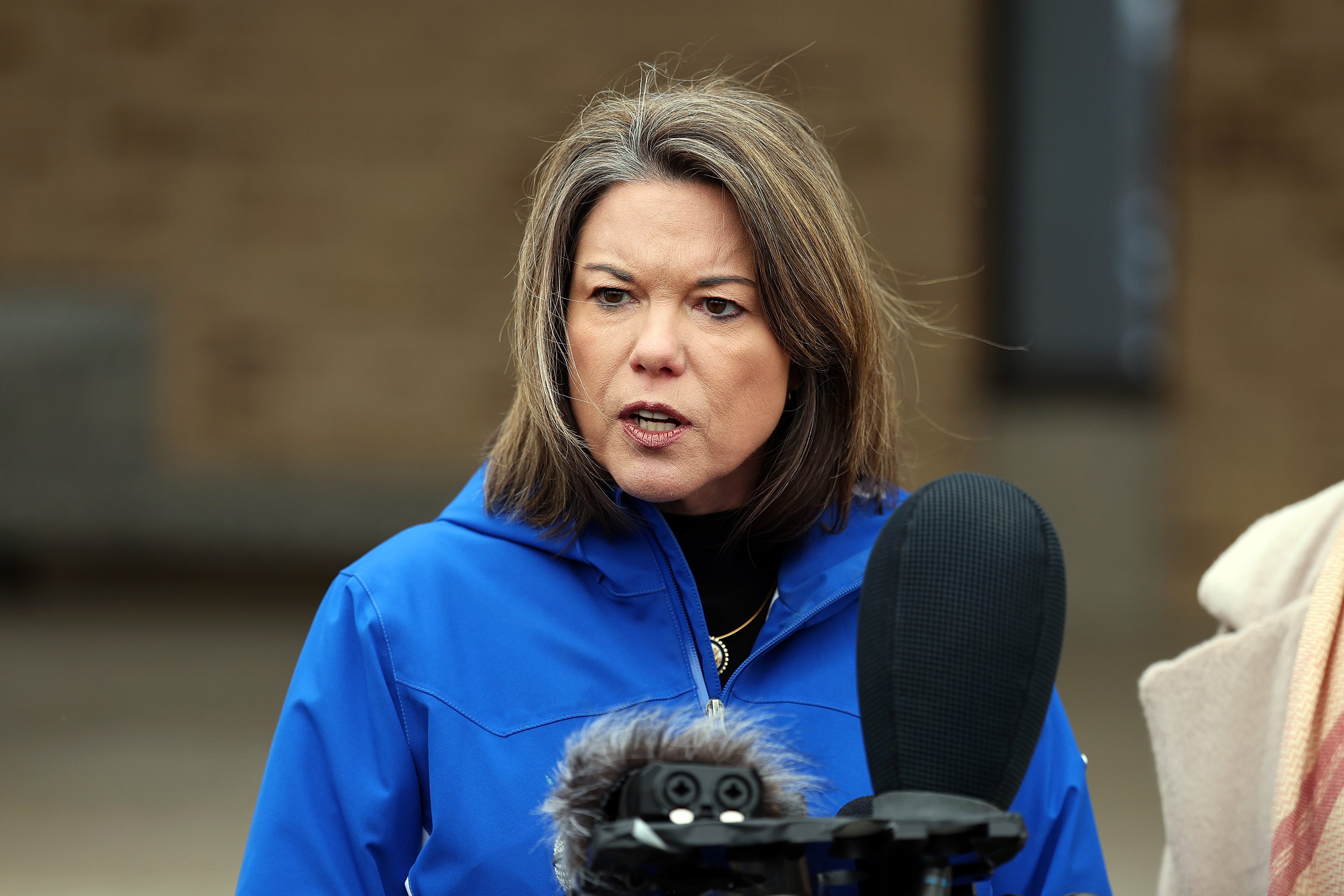
As the Minnesota Democratic primary to succeed the retiring Sen. Tina Smith in the United States Senate heats up, Rep. Angie Craig is privately distancing herself from AIPAC. While courting the crucial endorsement of the Democratic-Farmer-Labor (DFL) party, Craig’s campaign staffers have told DFL delegates that the pro-Israel lobby is not funding her candidacy, according to messages obtained by Drop Site News. AIPAC has held at least a dozen fundraisers for Craig, however, over the course of the past year.
Craig’s behind-the-scenes communications are an indication of AIPAC’s growing toxicity in primary races as it advocates blanket U.S. support for a state committing an unpopular and brutal genocide in Gaza. In two recent races, AIPAC’s millions in support, once firmly understood as a moniker of credibility with the DC political class and financial protection from grassroots-funded challengers, has proven it can do more harm than good. In Illinois’s 9th congressional district, Laura Fine faced outrage from progressive voters in Evanston and surrounding areas centered around her decision to accept millions from the lobby. Similarly, AIPAC fell flat on its face in New Jersey’s 11th district, spending more than $2 million dollars to defeat pro-Israel AIPAC critic Tom Malinowski, only to help elect Analilia Mejia, who is further to his left.
Craig announced her run for Senate in April of last year. AIPAC sent out an email directly fundraising for her in September, and also publicly advertised several fundraisers for Craig between June and December. The email states, “Congresswoman Angie Craig has repeatedly demonstrated the kind of courageous, principled, and pro-Israel leadership our movement needs right now. Angie Craig has been a friend of the community since she was first elected to Congress.”
Nevertheless, campaign staffers have sent messages to DFL delegates and voters emphasizing that “AIPAC hasn’t spent a dime in this race” and “Angie Craig has not accepted a PAC check from AIPAC in this race, nor have they endorsed her.”
Craig’s campaign did not respond to a request for comment.

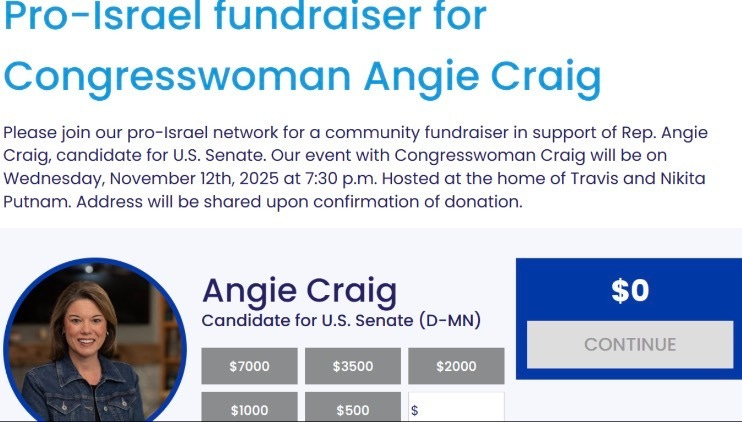
Since the fall of 2023, AIPAC bundled more than $507,000 for Craig’s congressional campaign committee to support her bids for re-election in 2024 and 2026 respectively. Nearly 40% of these funds, $195,409 raised in 2025, have since been transferred to her Senate campaign.
Of course, candidates cannot control who fundraises for them. But Craig benefited from hundreds of thousands in donations from AIPAC’s network before appearing to disavow them this year—after AIPAC proved to be an election liability in two major races with progressive challengers. AIPAC and other special interest groups are not required to report the bundling they do, meaning that PACs are able to come in behind candidates without direct spending, which has to be reported.
Craig’s opponent in the Minnesota Senate race, Lt. Gov. Peggy Flanagan is endorsed by the five most progressive senators—Sen. Bernie Sanders (I-VT), Sen. Elizabeth Warren (D-MA), Sen. Ed Markey (D-MA), Sen. Chris Van Hollen (D-MD) and Sen. Jeff Merkley (D-OR), as well as Sen. Tina Smith (D-MN) herself. She is running to Craig’s left on key issues and has no history of AIPAC support. Flanagan also supported Sanders’ Joint Resolution of Disapproval to block offensive arms sales to Israel, which came to the Senate floor for a vote April 15 and failed by votes of 40-59 on blocking bulldozers and 36-63 on blocking bombs.
The DFL state convention, where the delegates will vote on which candidate to endorse ahead of the August primary, is in May.
Even as Craig attempts to distance herself from AIPAC in name as the lobby has become increasingly toxic in American electoral politics, she continues to align with its agenda. Craig has also consistently voted in favor of sending blank-check military aid to Israel, regardless of whether that be in an offensive capacity or defensive capacity for resources like the Iron Dome. The congresswoman does not have a foreign policy section with updated stances on her campaign website.
More than half, 53%, of Democratic voters nationwide, as well as 33% of voters across the political spectrum, said they’d be less likely to vote for a candidate endorsed by AIPAC, according to a YouGov poll from March 30. Another poll conducted earlier that week, sponsored by the adjacent but more liberal pro-Israel group J-Street, found that 40% of Jewish Democrats, and 66% of those under the age of 35, would be less likely to vote for an AIPAC-endorsed primary candidate. A poll conducted by Drop Site and Zeteo from earlier this month suggests that 64% of likely Democratic voters in Michigan are less likely to support a Senate candidate who receives donations from AIPAC and other pro-Israel groups like Democratic Majority for Israel and J-Street, while 10% said they would be more likely.
The distancing is quite a turnaround from the last election which, where AIPAC notably spent more than $17 million to defeat former Rep. Jamaal Bowman (D-NY) in June of 2024 and over $8 million more to defeat former Rep. Cori Bush (D-MO) in August that year. Bush is running to reclaim the seat. This year, a poll commissioned by Bush shows her neck and neck with incumbent Rep. Wesley Bell despite AIPAC’s endorsement.


 | A guest post by
|
AIPAC has far too much power over US electoral politics. That must change!
As the opposition to AIPAC grows, Zionist PACS are simply branching off with new unfamiliar names to avoid scrutiny. Their ownership and influence of the US Congress continues unabated.