

Euphrates River Becomes the Last Battle Line in Syria’s Civil War
A standoff between the Syrian government and SDF threatens to destabilize northeastern Syria

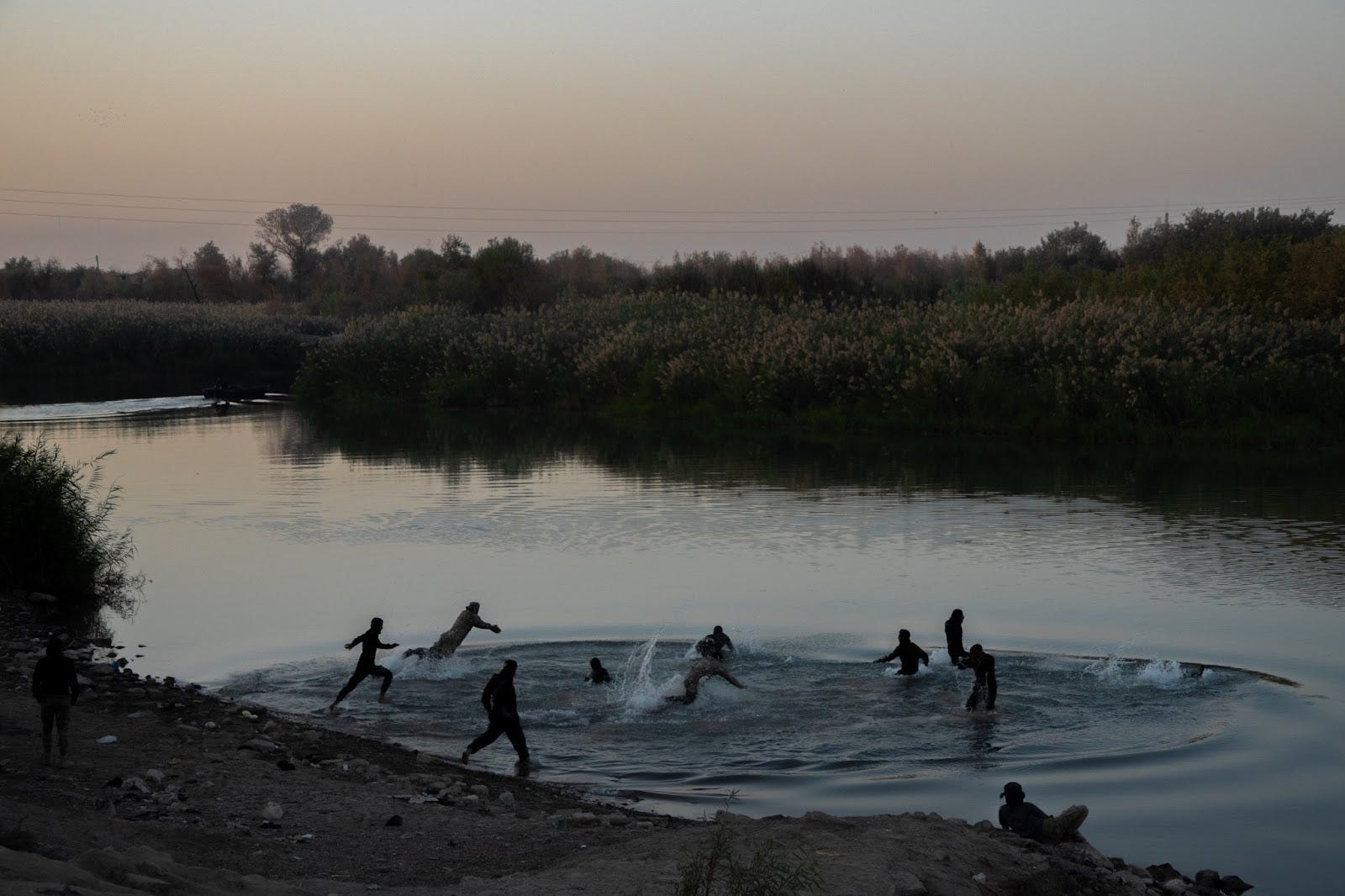
DAMASCUS—On a late October evening in Syria’s eastern city of Deir Ez-Zour, a group of men clad in camouflage military uniforms rushed, yelling, into the waters of the Euphrates river. From the river bank, a masked sergeant holding a Kalashnikov rifle shouted, “Come back! Let’s go again!” This was a training exercise, the officer from the new Syrian government’s Ministry of Defense explained, though what they were training for was left unsaid.
Next to them, a group of young students laughed as they observed the scene. Fathers swam nearby with their children, while a lone man fished from a small wooden boat.
Further down the river a series of iconic bridges crossing the Euphrates were destroyed during the grinding decade-long war; only a few rickety pontoon bridges now connect the two banks.
The Euphrates, which runs for 700 miles across Syria, has become a physical dividing line between two forces now contesting the future of the fragile country. The near bank is the limit of control by the Syrian government led from Damascus, while on the far bank are the positions of the U.S.-backed Syrian Democratic Forces (SDF). The SDF, a Kurdish-led force that emerged during Syria’s civil war in opposition to the Bashar al-Assad regime, played a key role in the fight against the Islamic State. During the conflict, they captured large expanses of territory predominantly populated by Arabs on the far bank of the Euphrates.
While the new Damascus-based government has asserted control over most Syrian territory, the SDF still controls the country’s northeast, as well as Kurdish neighborhoods of Aleppo, and is seeking greater autonomy inside a future Syrian state.
The river that divides the SDF statelet from government-led Syria has now become the last front line of the Syrian war. Although a tense ceasefire holds for the moment, over the last year the Euphrates has been the site of sniper fire and periodic armed clashes. The violence has continued intermittently up until the present. Alongside this confrontation, a separate threat from Islamic State cells also haunts the region. In late October, a roadside bomb exploded on the road between Deir Ez-Zour and Al-Mayadin killing five members of the security services, in an attack that was blamed on the group.
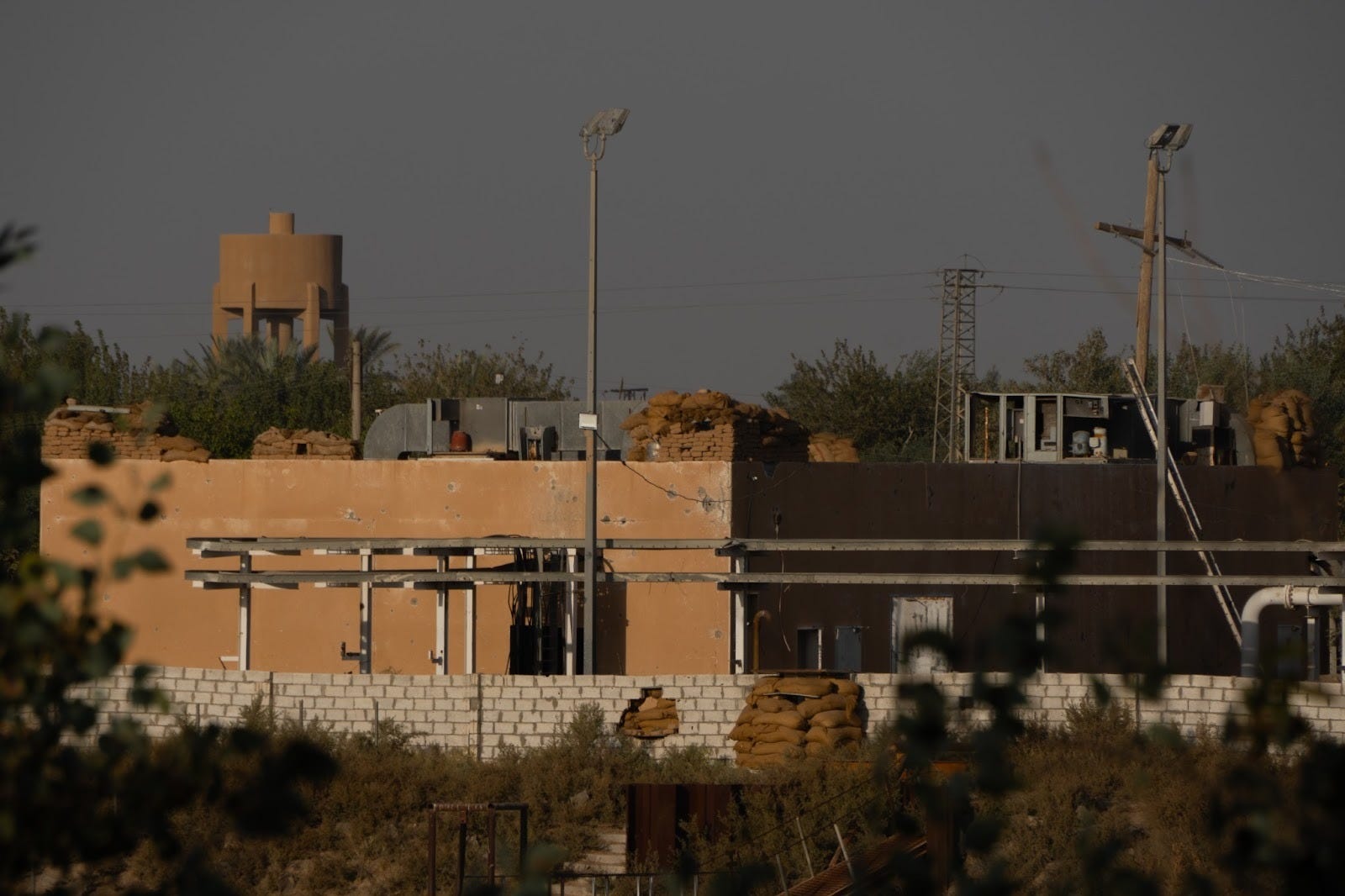
On a recent Saturday, in the village of Mahkan, located on the government held side of the river, fighting also broke out following what the government described as an “infiltration attempt” by armed men associated with the SDF. Days after the attack, at a local water treatment plant in Mahkan, a group of workers sheltered from the sun on a set of low cushions. The walls of the plant were riddled with bullet holes from the recent fighting. The workers pointed to SDF positions directly across the river, warning that it is dangerous to spend too long out in the open.
“It was just a provocation,” said Daher Ibrahim, 55, the head of the plant who had been at the site when fighting erupted around him. “They fire randomly to terrorize the women and children.”
“We are used to it. We have lived through war for a long time.”
According to Ibrahim, the Syrian army returned fire as soon as the shooting started. Government forces are positioned along the river, although we were prohibited from approaching or photographing any of their positions.
What triggered the clash in Mahkan is unclear. But sporadic violence has taken a growing toll on civilians who live on both sides of the river.
A hundred meters further along the Euphrates is the home of Khadija, 55. In August, she had been collecting firewood outside her front door when she was struck in the head by a bullet fired from the direction of SDF territory. Her husband, Mohammed Abd Al-Rizk, 66, rushed her to a hospital in the nearby city of Al-Mayadin, where she was pronounced dead.
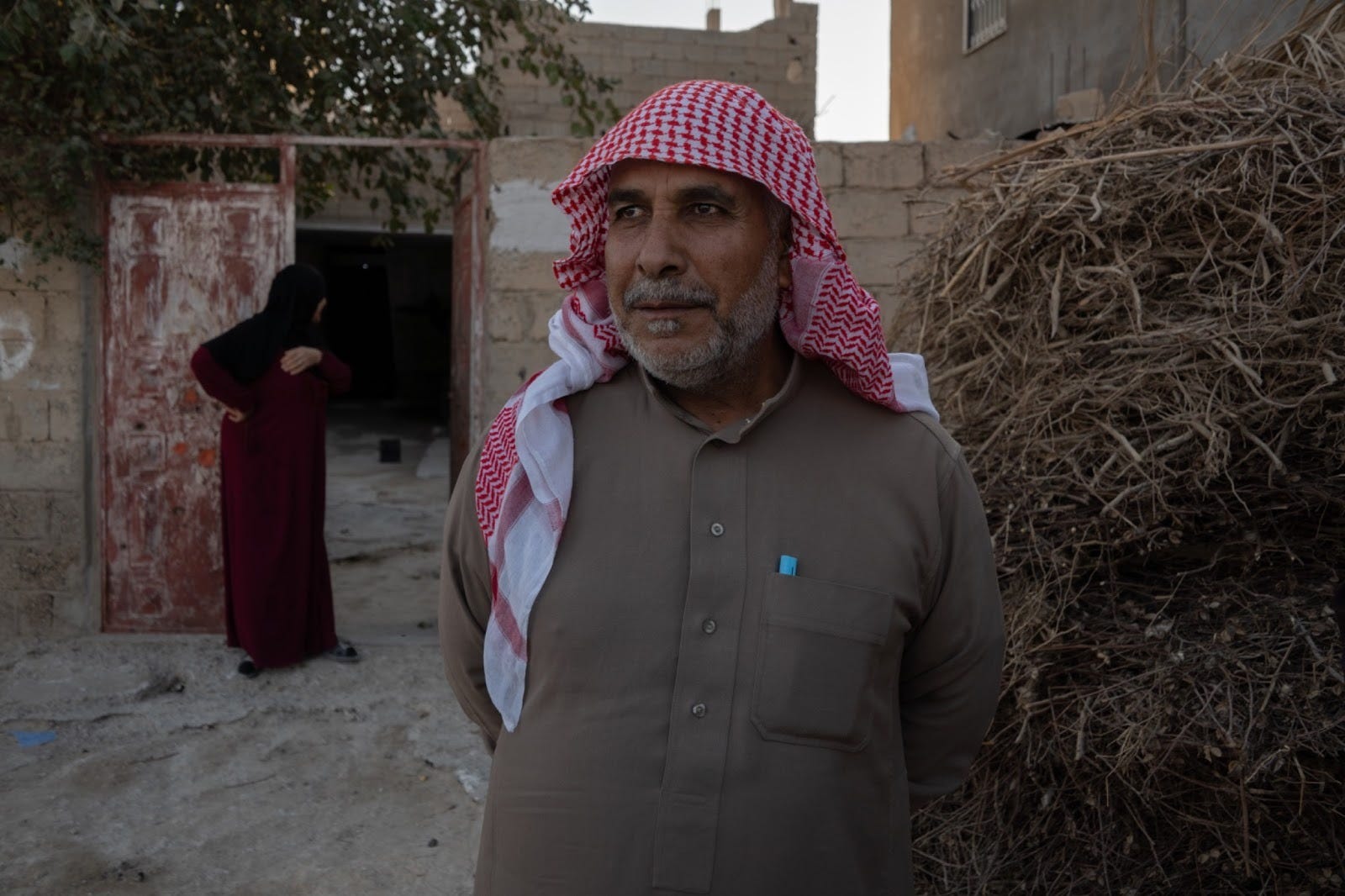
“It was a particularly tense time and there were periodic clashes,” he told Drop Site in an interview at his home. “They have sniper positions over there so it can be dangerous here.” At the time of his wife’s death there was no active fighting. Abd Al-Rizk couldn’t say for sure whether she had been struck by a stray bullet, or killed in a targeted attack.
“This frontline is still hot, [during the most recent clash] bullets hit our home.” Abd Al-Rizk fumed, pointing to bullet holes scattered across the wall of his home. He said that the war “is not over yet. In fact we consider the revolution to only be beginning.”
Despite the division in political control, communities on both sides of the river are still bound by strong tribal bonds. Abd Al-Rizk is a member of the Ougeidat tribe that stretches into SDF-held territory. Tribal groups capable of mobilizing large groups of armed fighters were a major factor during Syria’s civil war and continue to play a role in postwar Syria.
In the wake of recent clashes, several tribes called for a general mobilization against the SDF. The call was not endorsed by the Syrian government and did not trigger a larger conflict, but it raised the prospect that tribal groups hostile to the SDF may initiate a war that forces Damascus to become involved.
“If there were a call to arms our people would cross the river to fight,” Abd Al-Rizk asserted, “just like we did in 2023.” In 2023, the Arab tribes in the SDF-controlled territory launched an uprising that drew in tribes from across the country, before it was violently suppressed by the SDF over the space of two weeks.
An ongoing mediation process involving U.S. officials, the SDF, and the Syrian government aimed at finding a permanent political solution to the conflict has continued since March. Turkey, which backs the Syrian government, has given the group until the end of the year as a deadline to give up power and integrate into the new Syrian Ministry of Defense. Absent an agreement, Turkey, which views the Kurdish-led autonomous zone in Syria as a threat to its own security, has threatened to launch a cross-border offensive against the group.
There have been moments in recent months where it appeared that the tense ceasefire between the government and the SDF would simply collapse. In October, deadly clashes erupted in Aleppo, Syria’s second largest city, between government security services and the SDF. Though hasty mediation restored the truce, it was the most serious confrontation between the SDF and government forces since the fall of the Assad regime in December 2024.
The Ougeidat tribe also mobilized in July, when the Syrian tribes flooded into the southern region of Sweida to support local Bedouin groups in a sectarian conflict against the Druze. That clash saw numerous human rights abuses, including torture and summary executions, before a mediated solution with the government was created.
Despite threats from tribal leaders that they may pull the trigger on a new war against the SDF on their own, some analysts are skeptical that they have the ability to draw the involvement of government forces.
“I don’t see much chance of these mobilizations forcing the government’s hand, because the government isn’t currently responsive to pressure from below,” said Alexander McKeever, an analyst on Syria and author of the newsletter, This Week in Northern Syria.
This sentiment is shared by Riyad Youssef, 77, a senior member of the Beni Temim tribe. “There wouldn’t be a single young man capable of carrying a weapon who wouldn’t cross the Euphrates in order to liberate it,” he explained. But he added, “For now the government is preventing the tribes from crossing, and we will of course abide by their decrees.”
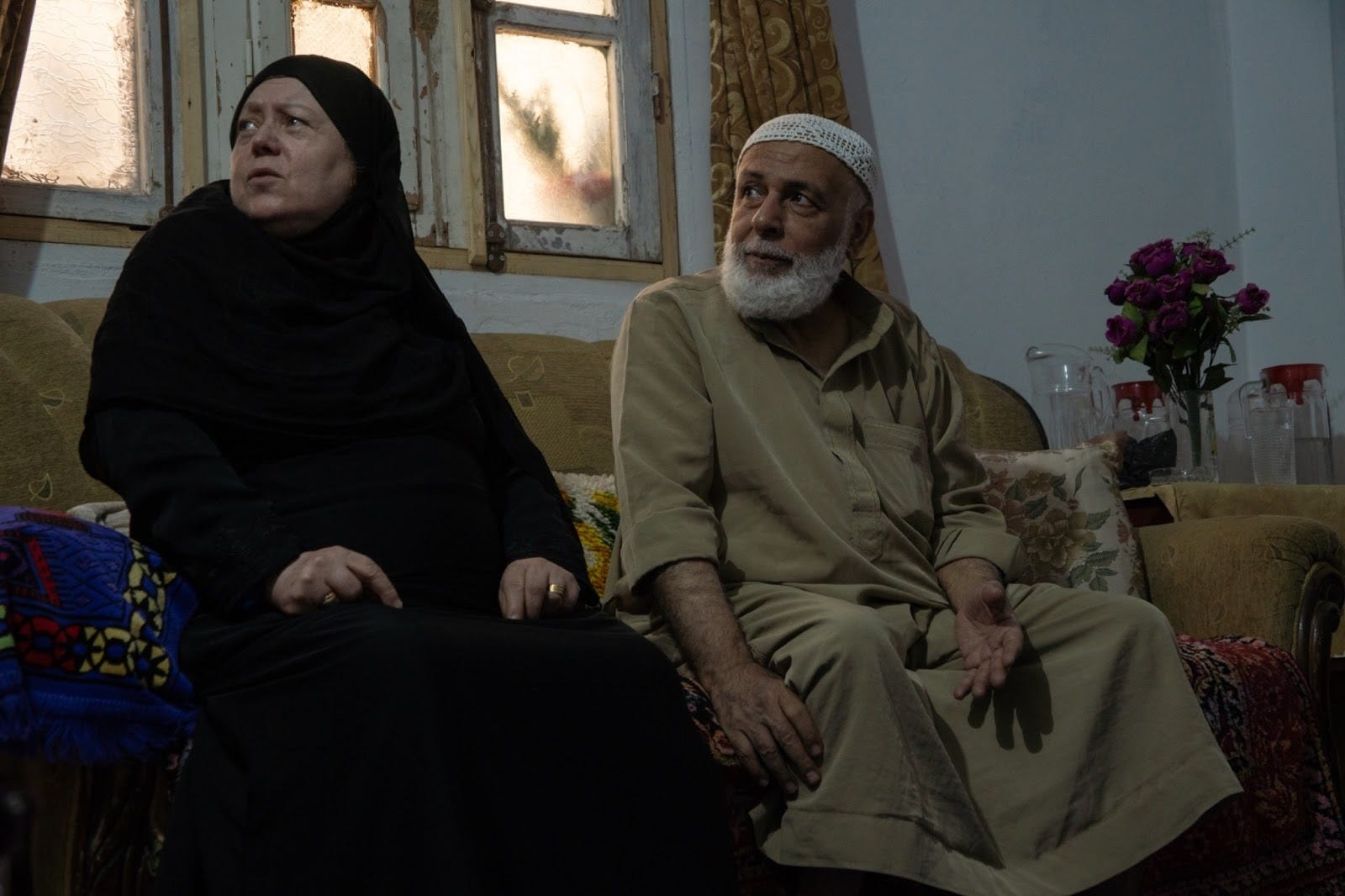
Youssef pointed to a recent incident in which two young men who had crossed the river to join a small clash in the nearby village of Al-Kasra were detained by government forces as they returned.
“If we were given permission then you would see a mobilization far more powerful than what happened in Sweida,” he said.
Syrian government officials denied any support for the recent tribal calls to directly confront the SDF. Khaled Ayoub, the government head of Al-Mayadin city, speaking from his office in the governorate’s municipality building, pointed to the recent arrests as evidence that all parts of the state “are strictly following the government’s directives.”
Mckeever suggested that this is “a good sign” that the government doesn’t want its hand to be forced by the tribes. “This means that [the government] is still trying to pursue a solution via talks,” he said.
In reference to the recent fighting in Mahkan, Ayoub suggested that it was related to cross-river smuggling. “A smuggler might create a small skirmish to distract attention while sneaking someone or something across the river,” he explained. Regardless, he said that the blame for such disturbances lies at the feet of the SDF. “Either way, the group that controls the territory bears responsibility for those operating under its authority.”
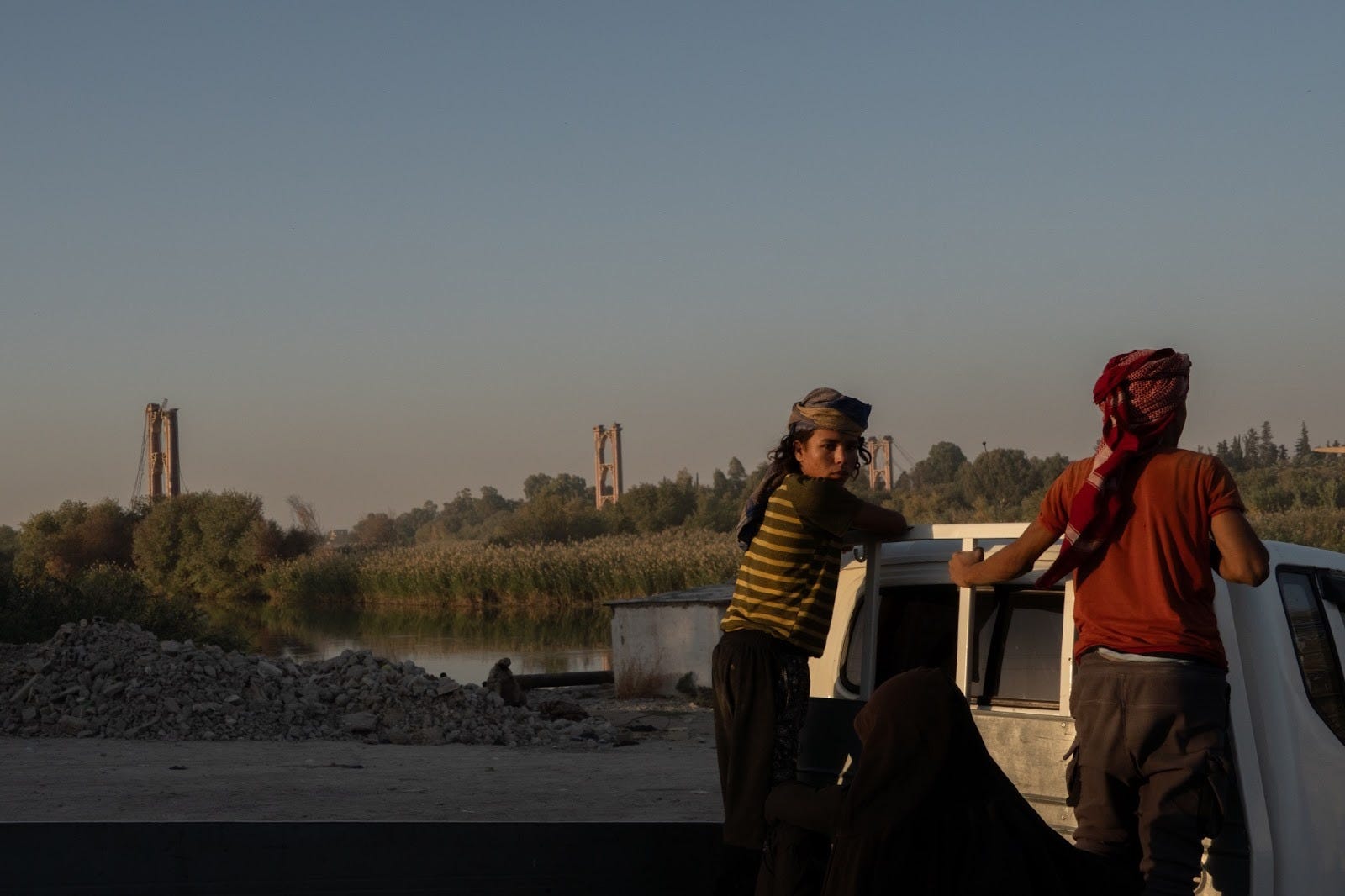
Deir Ez-Zour was fought over by almost every player in Syria’s kaleidoscopic civil war. Years of bombing and siege have rendered 75% of its infrastructure destroyed according to a 2022 UN report. In the city, after which the region is named, large sections of ruins remain abandoned, the threat of mines and unexploded ordnance still lurking amongst the rubble.
As elsewhere, a fragile calm continues to reign in Deir Ez-Zour. But in post-war Syria, tense local situations have frequently devolved into mass violence. In March, a failed uprising by Assad regime remnants in coastal Syria unleashed days of vicious sectarian bloodletting. Forces aligned with the government were later accused of killing up to 1,400 members of the Alawite minority in revenge attacks, including countless civilians.
“People here are scared, and no one wants more violence,” Ayoub said, adding, “this region has seen more war than any place in Syria - the destruction is almost total.”
Progress on rebuilding is “almost nonexistent,” according to Ayoub. “[We are] mostly reliant on efforts from the local community and some small contributions from international organizations.” However, he noted that these contributions are still largely based on old contracts from 2020 which are no longer sufficient “considering the amount of people who have started to return.”
Another resident, Karam Ashgoul, 43, emerged from the shadows of the destroyed neighbourhood of Rashdiye in Deir Ez-Zour to relate his experience. The former rebel fighter, who has recently returned from Turkey, now lives with his parents. “As you can see,” he said, gesturing to the skeletal buildings around him, “most of our homes have been destroyed, so we are forced to live with our families.”
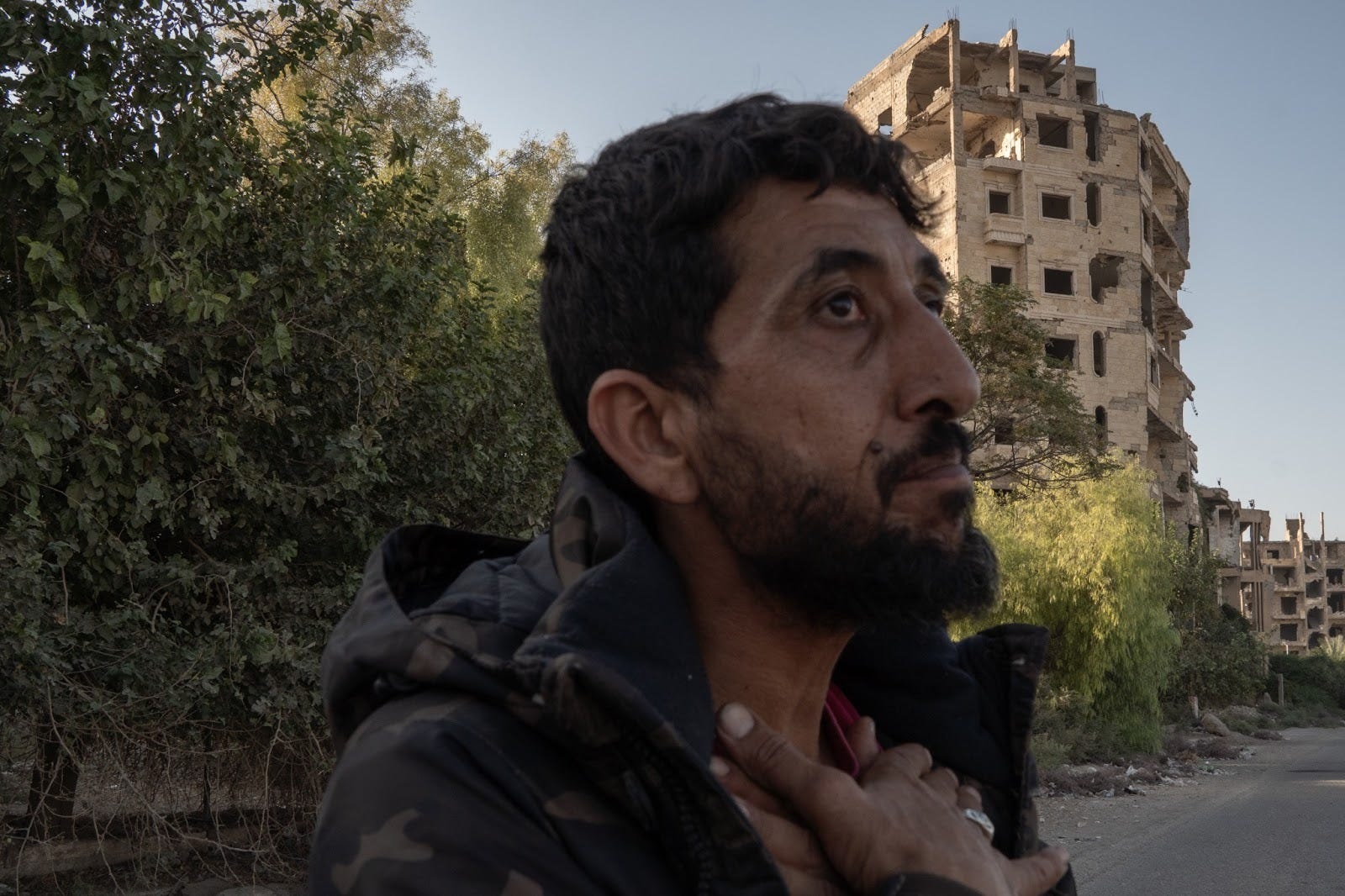
Ashgoul fled Syria after his rebel faction was defeated by Islamic State as it swept through the region in 2014.
Despite a continued insurgency, Ashgoul was confident that ISIS’s days are over. “Our state liberated all of Syria, you really think it can’t defeat a group of fighters hiding in the desert?”
Regarding the SDF, Ashgoul suggested that the government was better off finding a way to compromise with the group rather than fighting.
“We are all tired in this country,” he sighed, exasperated. “If we wanted to take over the SDF territory we could, but we don’t want more war. We should just sit and talk it out.”
Ashgoul took to the streets of Deir Ez-Zour in the heady days of the Arab Spring. Along with many of his generation who sacrificed to overthrow the regime, he expressed hope that a negotiated solution to the conflict bridging the Euphrates would allow ordinary Syrians to focus on the monumental task of rebuilding their shattered country.
“The armed revolution is over,” he declared. “Now we demand the revolution of work and the revolution of our freedom. It is our duty to continue this revolution – for the sake of our children.”
 | A guest post by
|
Does anyone else find the similarities with Marc Antony's attempts to create a coalition vs the Parthian Empire (and its failure) ... something similar to the modern day US-Israel-Abraham Accord team, and its (in my opinion) likely failure?
Thank you for this report about life on the ground in Syria around the Euphrates river. I cannot claim to have been paying attention, but have been aware that the recovery of Syria from their terrible war must be of continuing concern.
If I am reading this post accurately, you are suggesting that Arabs living on the west side of the Euphrates River are disenfranchised relative to the Kurds to the east.
In having read that Kurdish women in northern Iraq wear their hair uncovered, and in having seen reports of Kurdish women fighting hard alongside the men against Isis, I must say there is a soft spot in my heart for their ethnic group.
While it was necessary to strive against the liquidation of all remaining resistance against Assad, that did not mean that those remaining holdouts were innocent of all wrong doing. I remain concerned to see justice in Syria for those whom the Assad regime harmed. Syria, like the United States, needs a rule of law that strives to be fair to everyone.