

In the Wake of Iran War, African Nations Struggle to Cope with Rising Fuel Costs
Fuel prices have spiked across the African continent, leading to desperate stop-gap measures to manage the crisis.

As a reader-funded independent news outlet, we operate free from the influence of governments, advertisers, and corporate backers. This is essential to our mission: to report on what matters most, beholden only to the truth. In that spirit, we made a commitment to ensure that our journalism is free for everyone, not locked behind a paywall. But that means we rely on the voluntary support of our community of readers. Please consider making a tax-deductible donation to support our work today.
Story by Godfrey Olukya
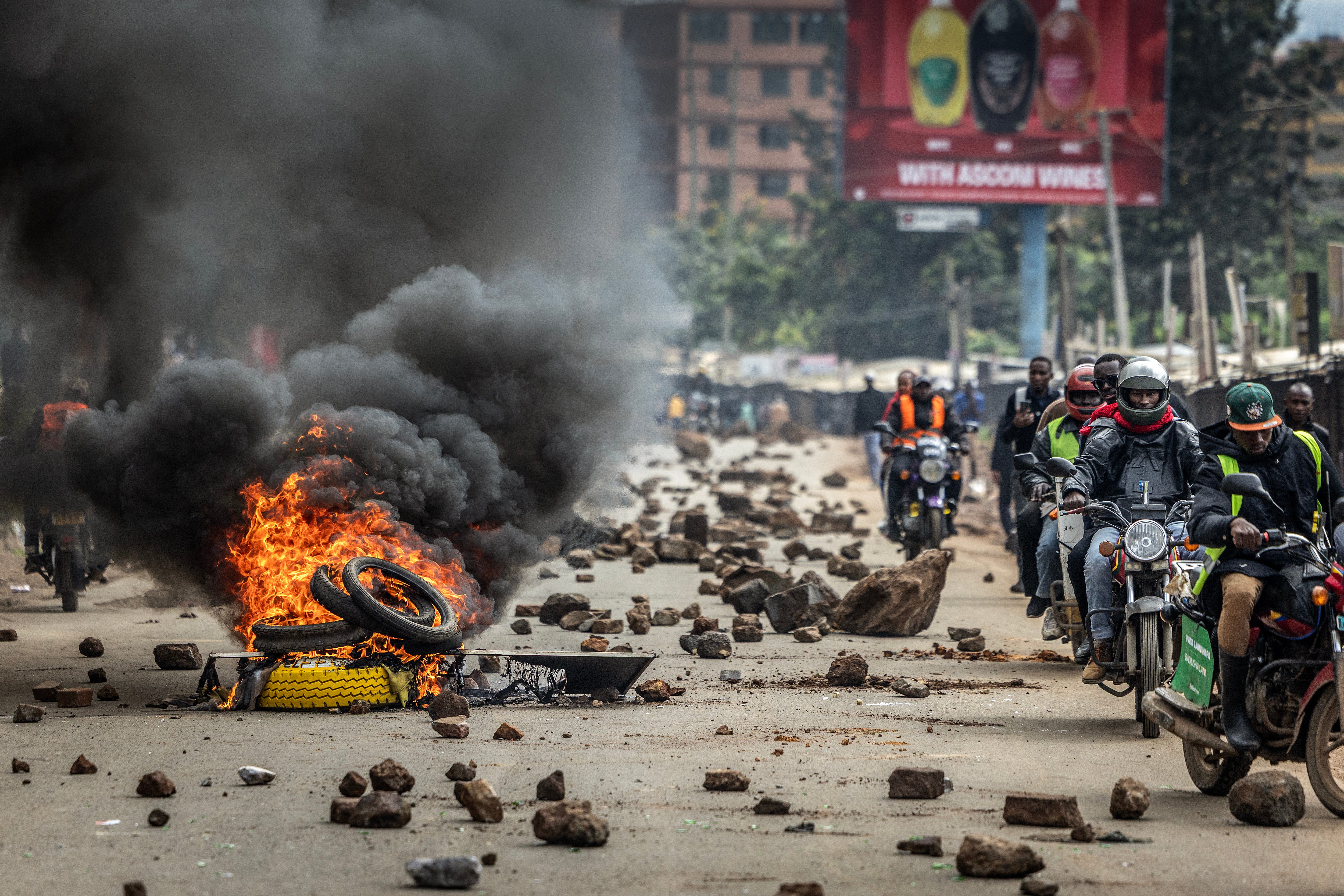
In Soweto, South Africa, schools are closing because buses don’t have fuel to bring the children in. Tanzania’s president announced that she would be trimming her motorcade to two vehicles, and that ministers would travel together on buses. Madagascar has declared a state of emergency. In Somalia, fishing fleets are docked, the lack of diesel cutting off a key supply of local protein, even as aid deliveries are stalled due to lack of fuel. Street demonstrations have rocked Kenya, where four people were killed in fuel protests Monday.
Government subsidies are draining state coffers in Ghana as jet fuel costs stick a knife in the heart of the effort to make Accra International Airport a global transportation hub. On a continent that relies more than any other on local agriculture to feed its population, and where the bulk of fertilizer comes from outside, the planting season crisis is in full swing. But in Malawi fertilizer can’t make it to the regions that need it, and that’s if any can be found at all.
Across Africa, from north to south and from east to west, the war waged by the U.S. and Israel on Iran is wreaking havoc, bringing to life the old cliché, “When elephants fight, it is the grass that suffers.”
When the U.S. and Israel launched coordinated strikes on Iran on Feb 28, 2026, the explosions were in the Middle East. But economic and political aftershocks quickly landed in almost all African countries, leading to a fuel crisis and rampant inflation in goods and services.
Thomas Umba, a political analyst in Democratic Republic of Congo, said that the war pushed up global oil, gas, and fertilizer prices within days and that almost all African countries were affected. Governments, businesses, and families across the continent are scrambling as prices spike and supply chains break.
“As the U.S. and Israel locked horns with Iran, the Strait of Hormuz became a graveyard of tankers. For African nations, the consequences weren’t just higher prices at fuel pumps, they were a total systemic seizure,” Umba said.
“African countries are not bystanders, it is a place where the USA/Israel Iran war has become a local reality at the fuel pumps and market stalls,” said Hassan Abed, a fuel dealer in Burundi, in an interview.
Shortly after the war broke out, most African countries started struggling with increased import bills and debt pressures because the fuel prices are directly tied to global oil prices and exchange rates.
In Tanzania, petrol was at 2,885 Tanzania shillings per liter before the war, but shot to 3,820 shillings per liter shortly after the war broke out. As a cost-saving measure, President Samia Suluhu Hassan cut the size of her motorcade and shifted officials to shared buses to conserve fuel.
“The ongoing global crisis linked to tensions involving the United States, Israel and Iran has disrupted the oil supply chain and triggered rising fuel costs worldwide,” she said at an event in Dodoma town on April 8. “From today my convoy will include only my vehicle, the police escort and a backup vehicle. Other officials will travel together in buses to save fuel.”
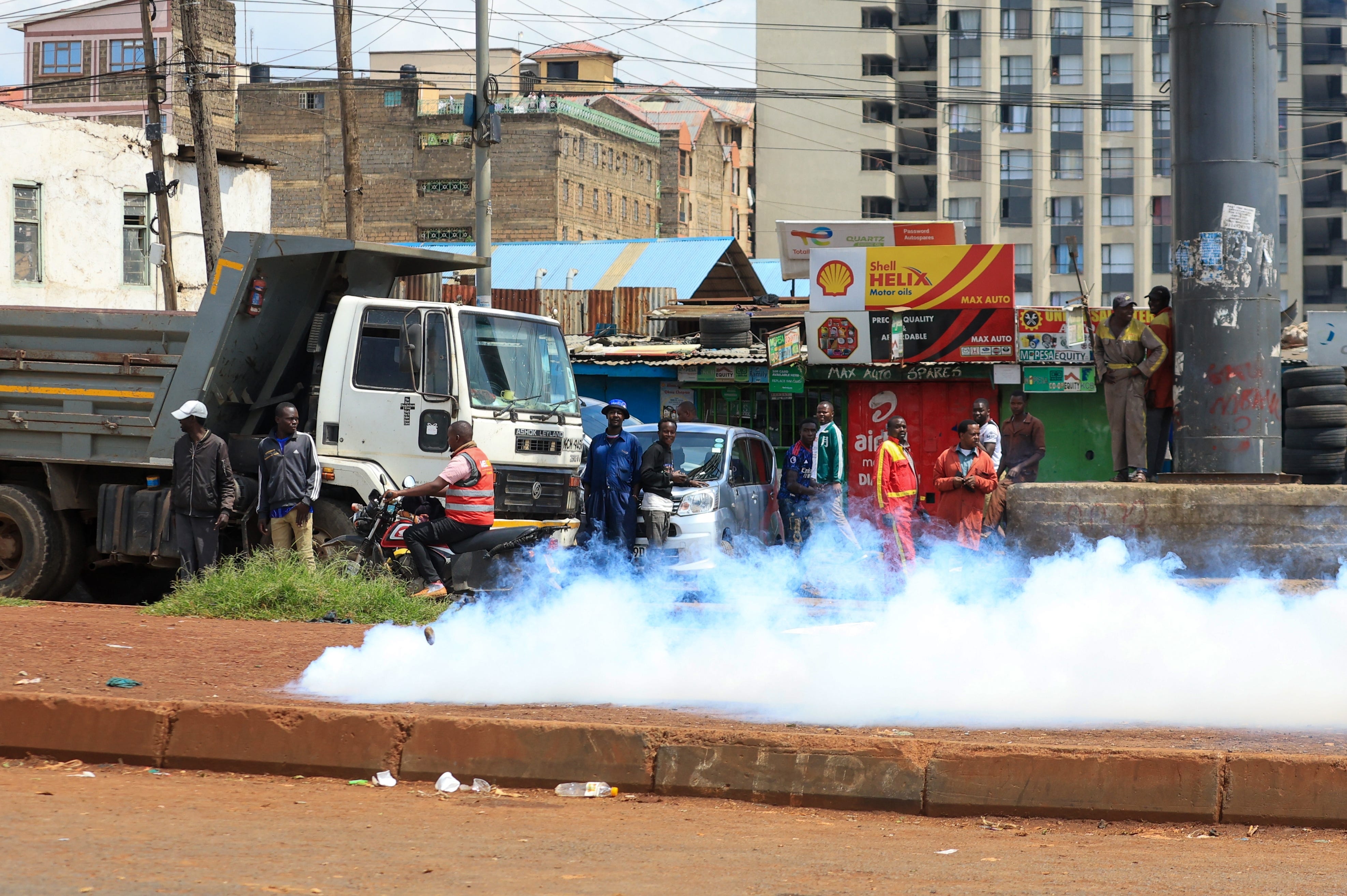
Two weeks after the war started, Kenyans took to the streets, demonstrating against the rise in fuel prices. Before the war petrol was at 186.31 Kenyan shillings per liter but it rose to 220 shillings. Diesel rose from 180 shillings to 219 per liter. The demonstrations led Kenyan President William Ruto to reduce the value-added tax from 13% to 8%, immediately reducing the price at the pump to 206.97 for petrol and 206.81 for diesel.
“We are feeling the shock of a war we didn’t start,” Ruto said during an address in Kenya’s Kisi region. “The escalation between the United States, Israel, and Iran has choked the Strait of Hormuz, and Africa’s tankers are stuck waiting. Kenya imports 80% of its refined fuel. When supply chains break 6,000 miles away, taxi drivers go hungry. We are activating strategic reserves and fast-tracking the Turkana-to-Lamu pipeline.”
On Monday, four people were killed in protests after Kenya’s energy authority last week raised prices by up to 23.5%, with petrol going for 214.25 shillings per liter in Nairobi.
Some countries are implementing emergency measures: Madagascar declared a national state of energy emergency across the entire country on April 7 to address the country’s supply crisis. Despite being an oil producer, on March 25 South Sudan implemented power rationing in the capital, because it lacks refining capacity. A few days later Egypt ordered restaurants, cafes, and stores closed by 9 p.m. to cut electricity use.
In Uganda, a liter of petrol was at 5,100 shillings before the war, but a week after it shot to 5,600. Diesel jumped from 4,900 shillings to 5,600. Petrol is currently at 5,900 shillings, while diesel has dropped slightly to 5,200 shillings. On May 12, at the inauguration for his seventh term in office, Ugandan President Yoweri Museveni showed off the electric buses that are being made in Uganda and touted them as a possible solution.
“Our exposure is different, but the pain is the same, said South Africa’s Minister of Electricity and Energy, Kgosientsho Ramokgopa, in a speech at a fuel depot in Durban on March 20. “We’ve seen a 300,000-ton shortfall already. I’ve spoken to my counterparts in Tehran, Washington, and Tel Aviv through back channels. I told them your war is closing schools in Soweto because buses don’t run. Africa is not a bystander to the global fuel market. We are the customer, and the customer is angry.” Diesel shortages in the country also threaten backup power for mines and factories.
Rising prices have doubled aid transport costs in Somalia and delayed shipments of nutrition supplies and medicines. Before the war petrol was at $0.65 per liter but by the end of March had more than doubled to $1.50. “The rise in price of fuel has led to the price of food to also rise tremendously. The fishing fleets in Mogadishu are docked, unable to afford the diesel, causing a secondary protein crisis.” said Mogadishu councilor Abubaker Ali.
“This crisis exposes what we have said for years. Africa’s growth cannot be hostage to conflicts on other continents,” said Ethiopia’s Prime Minister Abiy Ahmed Ali, speaking after an African Union energy briefing in Addis Ababa on March 20. “The moment the missiles flew, Brent crude jumped $18. We are removing fuel subsidies to protect the economy. That means families choose between transport and food. We call for immediate de-escalation, and we call on OPEC+ to release emergency stocks to non-aligned nations. Neutrality should not be punished at the pump.”
“Let’s be clear about cause and effect,” said Ghana’s Energy Minister Herbert Krapa in an interview with reporters on March 21. “When the U.S. and Israel struck Iranian refineries, and Iran threatened shipping, insurance for tankers tripled overnight. That cost lands here in Accra.” In response to the crisis, Ghana put in place a temporary relief package cutting fuel taxes.
Nigeria has seen government revenue boom due to oil exports, but domestic refineries still can’t meet demand. Fuel queues are out of control in Lagos and Abuja, while the state struggles to balance windfall spending with public anger over local pump prices.
“The irony is not lost on us. Nigeria produces 1.4 million barrels a day, yet our people are queuing because we still import refined petrol. The war has spiked the cost of freight and foreign exchange,” said Nigeria’s Minister of State for Petroleum, Heineken Lokpobiri, while addressing the Senate Committee in Abuja.
The outlook is particularly dire in Malawi, which gets much of its nitrogen fertilizer from Gulf countries. The country was already facing a hunger crisis, with almost a quarter of the population, most of whom are small-scale farmers, experiencing food insecurity. Now fuel prices have gone up by about 35%.
Most Africans pray that the conflict in the Middle East will quickly come to an end and that fuel resumes flowing normally.
The African continent didn’t fire the shots in Iran, yet it is taking the shrapnel. The U.S., Israeli, and Iranian “elephants” are fighting far away, preoccupied with the thunder of their own heavy footsteps. They cannot hear the snapping of the blades of grass beneath them, nor do they seem to care about the suffering they are inflicting on the African grass.
Godfrey Olukya is a freelance journalist based in Uganda.
What this piece makes painfully clear is that Africa is paying the price for a war it didn’t start, didn’t choose, and has no power to stop. The U.S.–Israel strikes on Iran didn’t just ignite the Gulf — they detonated the supply chains that keep entire African economies alive. When fuel stops moving, everything stops: schools in Soweto, fishing fleets in Somalia, fertilizer in Malawi, even the buses that get people to work.
Leaders in Washington and Tel Aviv talk about “strategic objectives,” but the consequences land on taxi drivers in Nairobi and farmers in Lilongwe. Africa didn’t fire a single missile, yet it’s absorbing the shockwave of a geopolitical gamble made thousands of miles away.
This is what global inequality looks like in real time: powerful nations play with matches, and the poorest regions burn. Until the architects of this war are held accountable for the collateral damage they inflict, the “grass” will keep suffering while the elephants trample on.
I had unsurprisingly heard Africa would experience disproportionate economic impact but we peasants in the US have experienced a pretty massive increase, 40% even though we supposedly have plenty and the buffoon running the country expected it to be a lot higher!?!