

Israel Is on a Killing Spree of Paramedics and Rescue Workers in Lebanon
Israel has killed over 120 rescue workers, damaged 16 hospitals, and targeted over 130 ambulances in Lebanon since March 2.

Drop Site is a reader-funded, independent news outlet. Without your support, we can’t operate. Please consider becoming a paid subscriber or making a 501(c)(3) tax-deductible donation today.
Story by Katrine Dige Houmøller
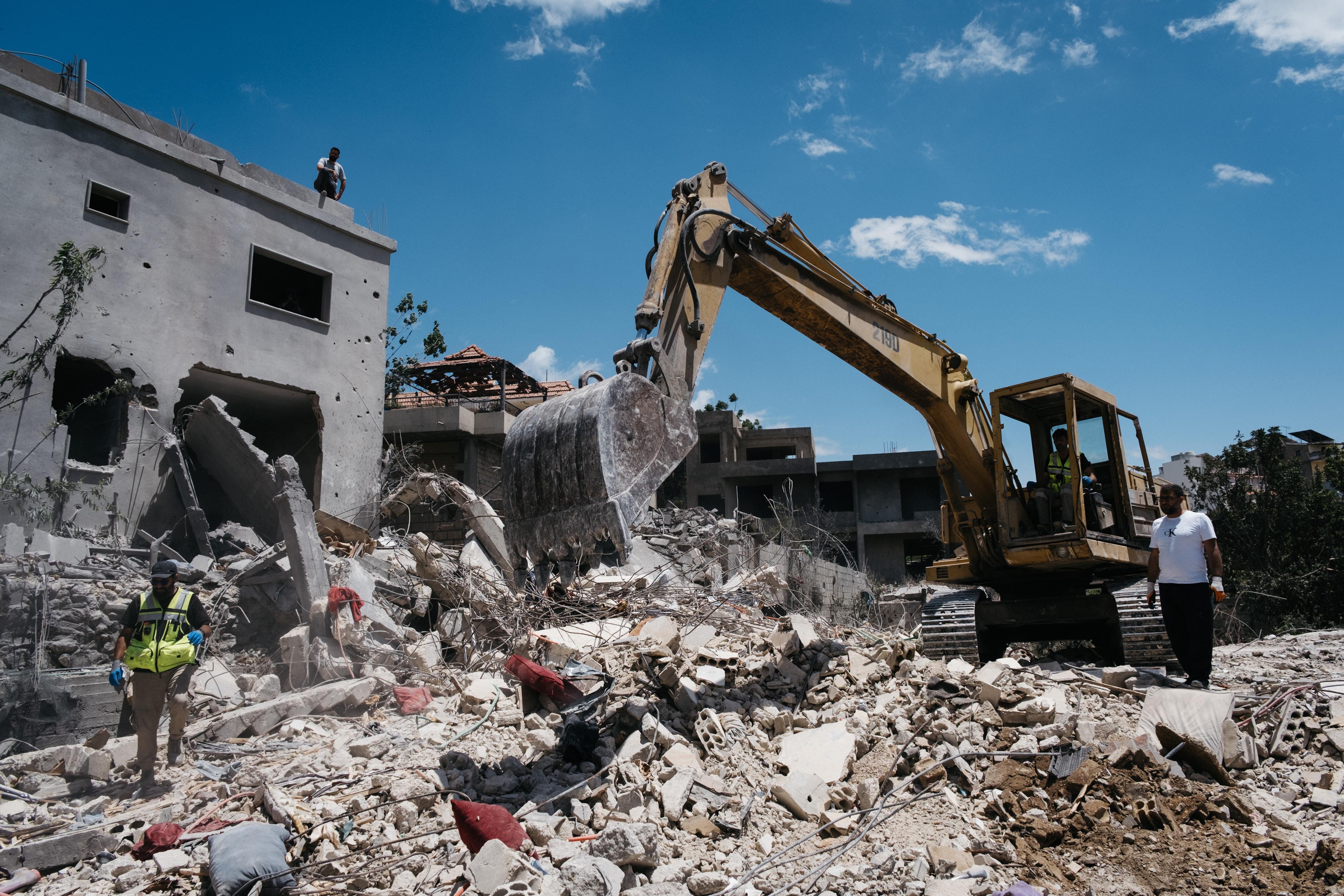
DEIR QANOUN AL-NAHR, Lebanon—An excavator stood on top of what used to be a house in Deir Qanoun Al-Nahr, in southern Lebanon, moving broken concrete from one side of the crater to the other. Rescue workers in fluorescent vests pried away the rubble with their hands. Ahmed Hariri, a paramedic and photojournalist was among them.
Dust rose from the ruins as the men dug hurriedly for any sign of life—or death. “There’s something here,” one of them shouted. He pulled a bloodstained piece of concrete from the wreckage. The others rushed toward him and began to dig faster. Somewhere beneath the flattened family home lay the remains of three people still missing on Wednesday after an Israeli airstrike a day earlier killed 14 people, including four children, in one of the single deadliest attacks in Lebanon in weeks. Ten of the dead belonged to three generations of the same family. A Syrian family of four was killed alongside them.
“Look,” one of the rescue workers said, lifting a schoolbag coated in grey dust with notebooks and children’s books inside. “This belonged to one of the kids.” In the distance, more airstrikes echoed across the landscape, the deep booms carrying over the ruins.
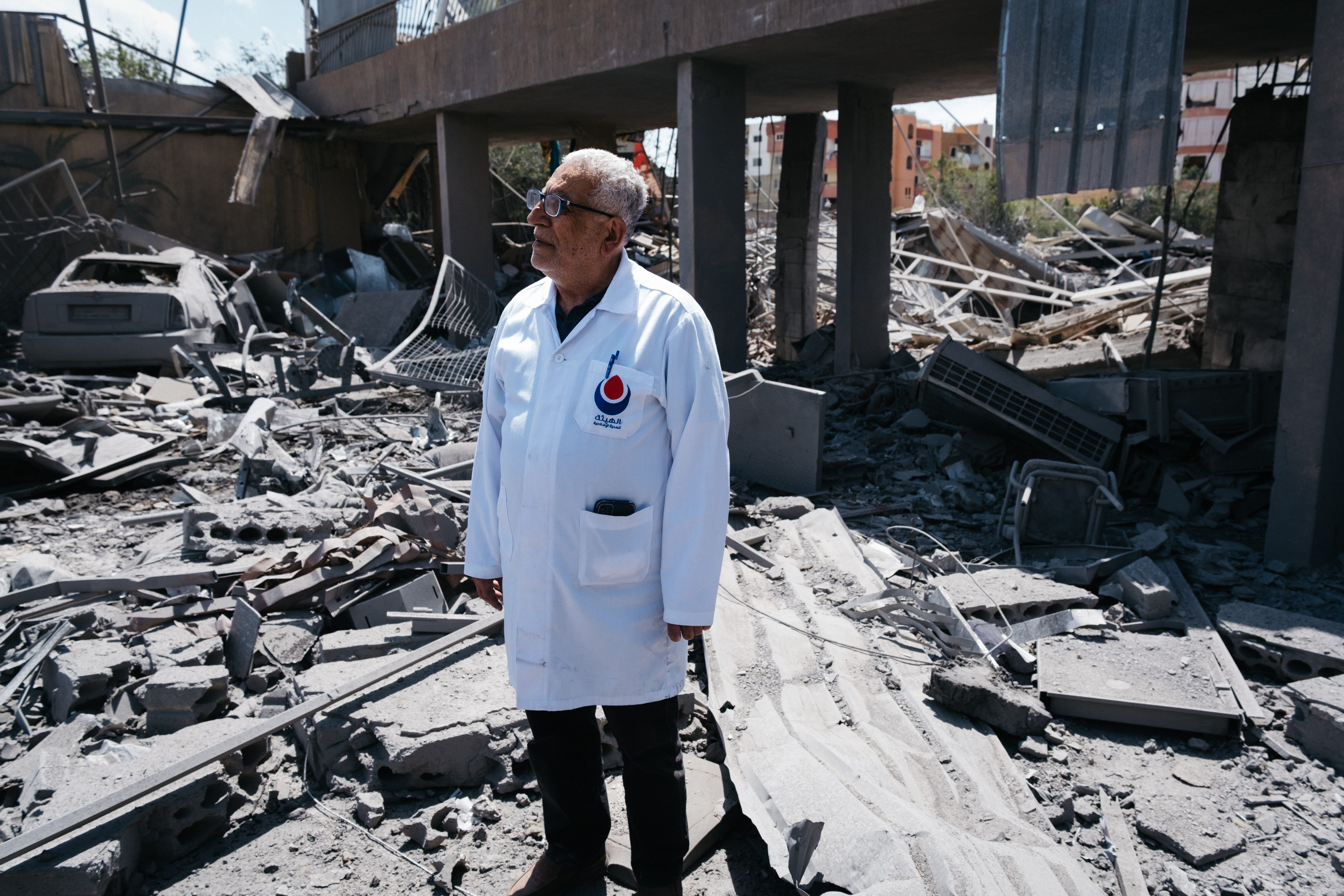
Barely two days later, Ahmed Hariri was killed along with another paramedic in another Israeli airstrike on Deir Qanoun Al-Nahr on Friday that left a total of six people dead. That airstrike had followed the killing overnight on Thursday of four paramedics and wounding of five more in an Israeli attack on Hannawiyah that destroyed both the town’s main Health Authority center and a newly established ambulance station in Tyre.
Israel’s wanton killing of rescue workers and targeting of medical infrastructure in Lebanon has been one of this war’s most brazen features. For the past five weeks, the relentless Israeli aerial and ground assault has continued despite a nominal ceasefire being announced by President Donald Trump on April 16. Last week, Israel and Lebanon agreed to a 45-day extension of the “ceasefire” after holding their third round of direct talks in Washington, of which Hezbollah is not a part. The declaration of a ceasefire has not stopped the Israeli military from continuing its bombardment of Lebanon, mostly in the south and the eastern Bekka Valley. Since March 2, Israel has killed more than 3,100 people across the country and wounded more than 9,400, according to Lebanon’s Ministry of Health, over 900 of them since the so-called ceasefire went into effect.
Israel claims it is targeting Hezbollah fighters and “terrorist infrastructure”—but on the ground, civilian men, women, children, and the elderly make up the majority of the victims, and residential houses and civilian infrastructure have been systematically demolished. At least nine journalists have been killed in 2026 alone, making Lebanon the deadliest place for journalists in the world this year. Most brazenly though, Israel has attacked emergency and medical workers with frightening regularity.
In total, more than 120 health care workers have been killed and over 260 wounded in Israeli airstrikes across Lebanon since March 2. No less than 139 ambulances and 16 hospitals have been damaged, forcing three hospitals to shut down. Lebanon’s Ministry of Health has accused Israel of systematically targeting the medical sector and its staff. Instead of denying the claims, Israel has repeatedly accused Hezbollah of using ambulances and medical facilities for military purposes, without providing any evidence to back up its claims.
Rescue teams describe a pattern of repeated Israeli attacks directly targeting their members, often in double—or triple-tap strikes—where after a site is struck, it is struck a second or even third time as emergency crews arrive on the scene.
“We try to be careful and take safety precautions before interventions, like waiting ten minutes to avoid the double taps,” Abdullah Halal, the rescue team leader at the Civil Defense station in Nabatieh, told Drop Site News. But even those precautions have not always been enough. Last week, Halal lost two of his two colleagues in a double-tap strike.
On May 12, an Israeli drone struck a tuk-tuk (a motorized rickshaw) in Nabatieh, according to the Civil Defense. The driver was wounded but survived and managed to make his way to the Civil Defense center for help. When two rescue workers—Hussein Jaber and Ahmad Noura—came out to assist him, a second strike hit the area, killing all three men and wounding a female paramedic.
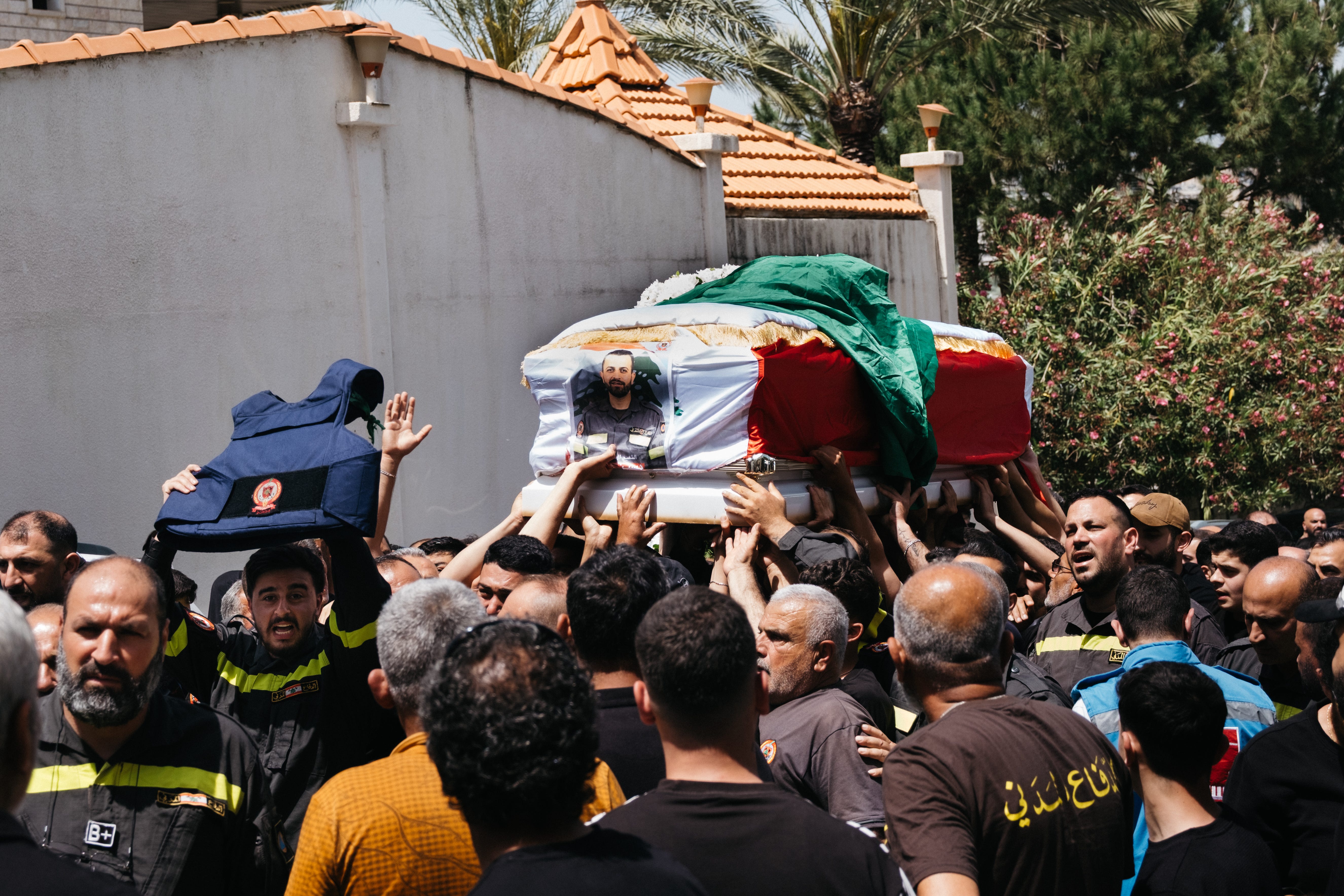
“I was only 20 meters away. I saw everything,” said Hussein Saad, a 23-year-old Civil Defense worker during the funeral for the two paramedics in Saida the next day. His eyes were swollen and red. He stopped mid-sentence, as the tears overwhelmed him again.
The grief at the funeral, which was packed with mourners, was loud and raw. Many wept or shouted or called out their final goodbyes while others stood frozen in shock. As the bodies were carried through the streets, mourners raised their fists and chanted, “Death to Israel.”
Many of the mourners were Jaber and Noura’s colleagues who had shared shifts and taken dangerous rescue missions together. “They are not just colleagues, we are all brothers. I’ve known Ahmad for 20 years. Hussein for ten. This is very difficult for us,” said Abdullah Halal, the Civil Defense rescue team leader in Nabatieh.
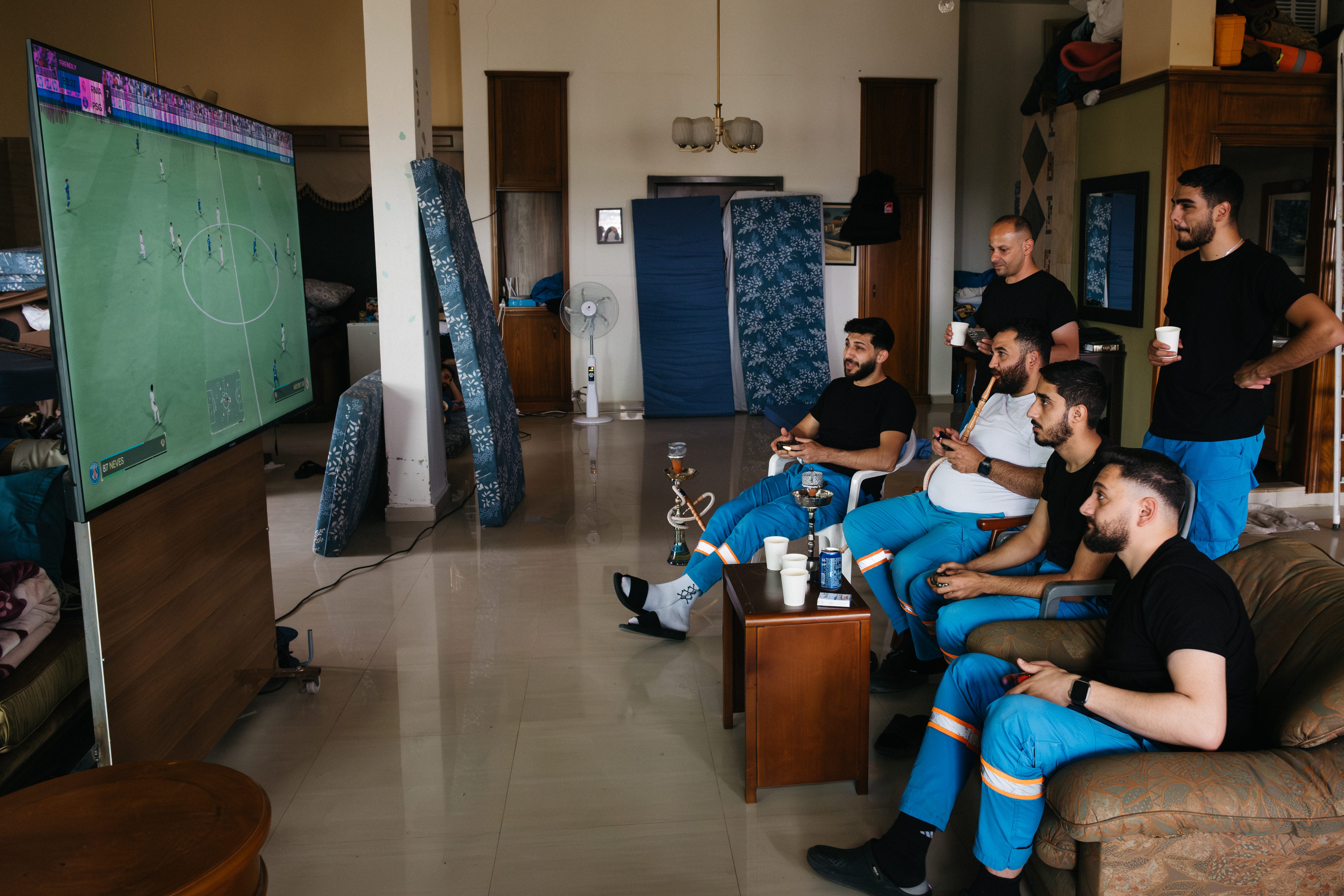
Across Lebanon, hospitals and medical centers have doubled as both workplaces and homes for rescue workers. Next to Najda Hospital in Nabatieh, mattresses cover the floor of a large room where the Nabatieh Ambulance Association team sleeps, rests, and waits for the next call. While their families evacuated elsewhere, they remained behind, living and working side by side.
“It’s hard to leave everything behind,” said Ali Rida Hammoud, a paramedic with the team. “It’s hard to see my family and my people suffering, trying to find shelter or a safe place. It’s like a double-edged sword: either you leave everything or you stay and may die.”
Shortly after Israel’s escalation of the war began on March 2, human rights groups criticized Israel for attacking medical workers in Lebanon. “Healthcare workers are risking their lives to save others, and hospitals, other medical facilities and ambulances are specifically protected under international humanitarian law,” said Kristine Beckerle, Amnesty International’s Deputy Regional Director for the Middle East, said in a statement on March 19. “Deliberately striking medics performing their humanitarian functions is a serious violation of international humanitarian law and could constitute a war crime.”
On Tuesday, Israel issued displacement orders for parts of Nabatieh, including the area around Najda Hospital, one of the last functioning medical hubs in the district. Nurses, doctors, and rescue teams had already regrouped there after several of their own emergency centers were struck in earlier Israeli attacks. Safety is no longer guaranteed, but the work continues.
“The Israelis have a history of violating rules, including targeting medical crews. Despite this, nothing stops us or pushes us away from continuing this work,” said Mahdi Sadiq, executive director of the ambulance association. “It is the belief that we must stand by our people, save them, and help those who remain. This is part of our mission in life, and we are ready to sacrifice for it.”
He added, “This is a job that involves risks, and we have been aware of that possibility from day one. What drives us is our humanitarian sense, and our national values.”
In Nabatieh, streets that once bustled with shops and traffic are now eerily empty and silent except for the roar of Israeli warplanes overhead. Buildings are scarred by airstrikes and entire blocks appear abandoned.
“Over there, Joud and Ali were killed while delivering food to civilians,” a rescue worker who spoke on condition of anonymity, said, pointing down the street, referring to the March 24 strike that killed his colleagues Joud Souleiman, 16, and Ali Jaber, 19, as they were riding their scooter toward central Nabatieh to deliver hot meals.
A few blocks later, the rescue worker gestured again: “And there, Hussein and Ahmad were killed while trying to rescue the wounded,” He said. “Mahdi was also killed, together with three other paramedics in Mayfadoun,” he said, referring to 40-year-old Mahdi Abou Zeid, who was killed in an April 15 Israeli strike.
“I have collected the remains of my friends. We have no other choice,” he said. As he spoke, a loud explosion suddenly shook in the valley beyond the city followed by another airstrike. The team of rescue workers glanced toward the smoke rising behind the hills. “It’s time to go,” one of them said.
“The Israelis have a history of violating rules, including targeting medical crews. Despite this, nothing stops us or pushes us away from continuing this work,” said Mahdi Sadiq, executive director of the ambulance association. “It is the belief that we must stand by our people, save them, and help those who remain. This is part of our mission in life, and we are ready to sacrifice for it.”
The sharp contrast between the angelic words of Sadiq and the demonic actions of Israel are worth pondering.
May God bless the rescue and medical workers in Lebanon and Gaza, and may God punish the rogue Israeli leaders and those who support them in Israel and in America.
Monsters, with their own clearly systematic, terroristic, "final solution"