

Israeli Missile Interceptors Have Dwindled to “Double Digits”: Trump Administration Official
The decreasing supply of interceptors has left Israel increasingly dependent on the missile defense capabilities of the U.S. Navy.


Drop Site is reader-funded — no corporate owners, no outside influence. Your support is what keeps this journalism independent and free. Please consider making a tax-deductible donation to support our work.
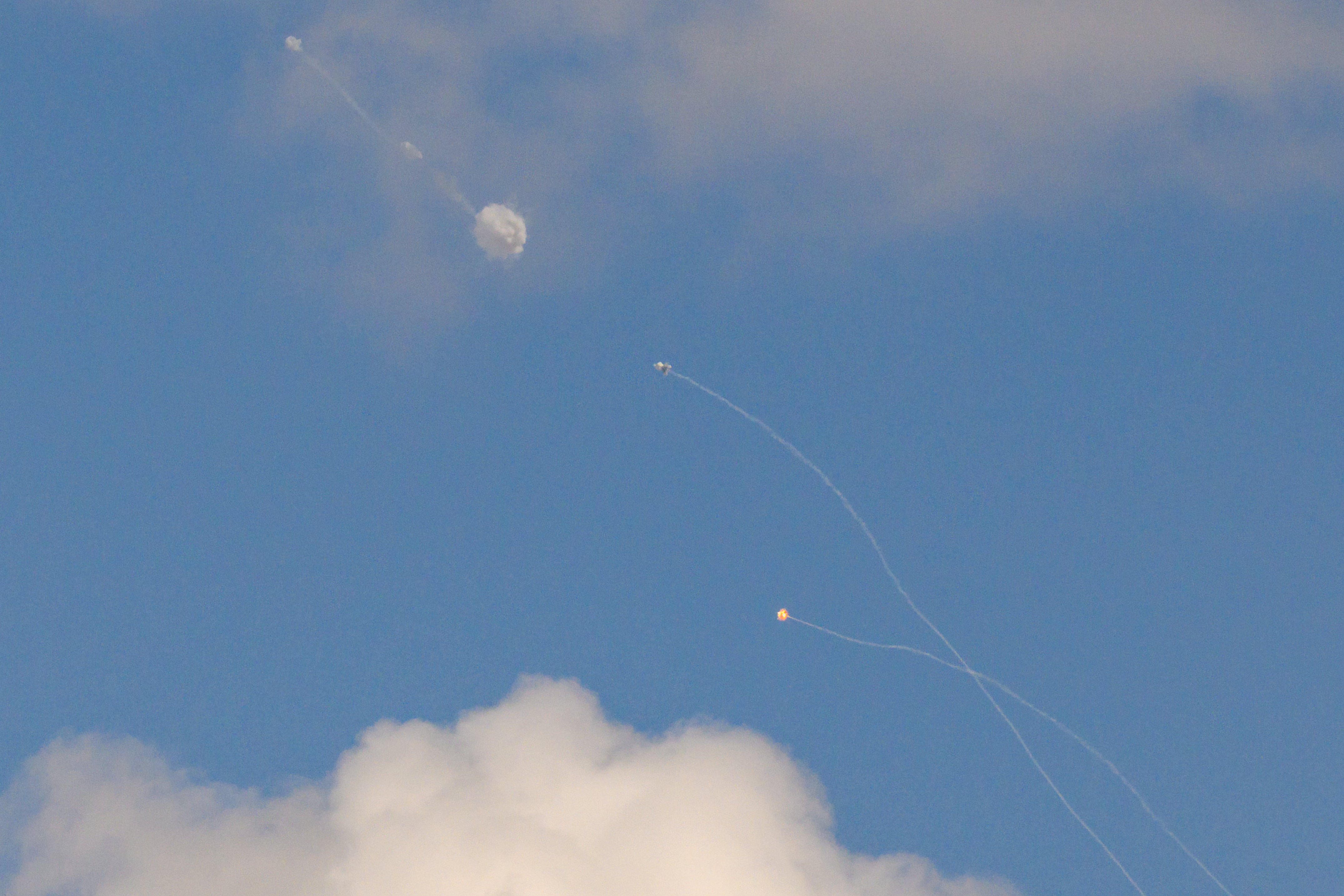
On the eve of the tenuous ceasefire reached between the United States, Israel, and Iran, the number of ballistic missile interceptors left in Israel’s arsenal had dwindled to “double digits,” according to a Trump administration source with knowledge of the situation.
The critical shortage had led Israeli military officials to be significantly more selective when confronting ballistic missile attacks from Iran as well as from Yemen, which recently entered the conflict in a limited fashion. “They’re having to pick and choose what they shoot down,” the official told Drop Site.
The White House referred questions about the dwindling stockpile to the Israeli military. “Refer you to the IDF,” said a White House spokesperson. The IDF told Drop Site “we are checking” but was still working on an answer by the time this article was published, and couldn’t estimate when such an answer might come. When it does, we will update this article.
The number of missile defense interceptors that a country has remaining is typically treated as highly classified information because of what it reveals about their capacity to continue a war. Despite not being forthcoming about these figures, it has still been possible to estimate Israeli reserves based on knowledge of prewar stockpiles and estimates of expenditures during the current conflict.
A recent analysis by The Royal United Services Institute for Defence and Security Studies, a London-based think tank with ties to British intelligence, spells out the difficulty facing Israeli defenses. Drawing on data from the Payne Institute for Public Policy to calculate pre-war stocks, RUSI did the basic math to find that by March 24, Israel had expended 122 of its 150 Arrow 2 and Arrow 3 missiles, as well as 22 of its 48 THAAD missiles.
These interceptors are both expensive and time-consuming to replace. Each Arrow interceptor costs $2-3 million dollars and takes months to produce, whereas a THAAD interceptor, which can stop a ballistic missile in its terminal descent phase, costs a staggering $12 million per unit. In many cases, multiple interceptors are required to confront a single ballistic missile. Iran is also believed to be deploying their missiles in a strategy deliberately aimed at draining Israeli defenses—firing older models in earlier waves to help eliminate interceptor stockpiles, and effectively putting a “down payment” on the impact of future attacks that can take place with more advanced models once interceptor capacity is depleted.
Information about missile impacts and damage in Israel during the current war is subject to intense military censorship, making it difficult to verify the effect of Iranian attacks on the country. But an April 6 research paper published by JP Morgan and citing figures from the Jewish Institute for National Security (JINSA) stated that missile impact rates targeting Israel had risen from 3% during the first two weeks of the war to 27%. That increase is believed to be in part due to an Iranian decision to begin deploying missiles with cluster warheads at Israeli targets, leading to smaller, dispersed impacts, but also forcing Israel to expend more interceptor munitions defending against each attack.
On Monday, the Jerusalem Post reported that the Israeli Ministry of Defense planned to hasten its production of new Arrow missiles. But replenishing stockpiles is a matter of years, not weeks. Iran also fired more than 500 ballistic missiles at Israel during the 12-Day War in June 2025, significantly depleting Israeli inventory even before the current war.
On the same day that JP Morgan issued its report, a ballistic missile struck a residential building in the city of Haifa, killing four people. The victims of that attack were killed by the kinetic energy of the missile itself which did not actually detonate—likely sparing the lives of many more people in what would have been its blast radius.
The decreasing supply of interceptors has also meant that Israel is becoming increasingly dependent on the missile defense capabilities of the U.S. Navy, which has stationed destroyers in the region. The recent departure of the U.S.S. Gerald Ford carrier strike group has hampered that capacity.
The U.S. is believed to have fired 431 of its 2,500 Navy Aegis missiles, designed for ballistic missile interception, making them a savior of last resort when it came to Israeli defense, according to RUSI.
In addition to defending Israel, the U.S. military has been forced to allocate huge amounts of its own limited interceptor stocks to defend the Gulf Arab states. This has meant drawing down from munition stockpiles intended to support deterrence against China as part of the “Asian Pivot” long-planned by the U.S. defense establishment. The drain on interceptors comes after the U.S. also reportedly used up roughly 25% of its THAAD interceptor inventory—between 100 to 150 missiles—along with an unknown number of Patriot and SM-3 missiles defending Israel during the 12-Day War.
Apart from being expensive, missile interceptors are notoriously slow to produce. Earlier this year, Lockheed Martin signed a deal with the Pentagon to increase its annual production from 96 per year to 400. But this increase is expected to be staggered over the next seven years, and will do little to improve capacity in the short-term. The U.S. procured only 12 THAAD interceptors in 2025, and was scheduled to receive a paltry 37 this year.
Israel has insisted throughout the war that it is not running low on interceptors, even as a greater number of Iranian missile attacks have impacted targets inside the country or been allowed to fall in “open areas” of the country.
The Israeli theory of war had been based on a quick victory that rapidly diminished the rate of Iranian missile launches by hitting stockpiles and missile launch vehicles to knock them out of the fighting. Despite those efforts, and the tremendous assistance of the U.S. in this campaign, Iranian missile launches have remained steady for weeks, as launchers and underground missile bases have proven difficult to destroy by aerial attacks. The addition of Hezbollah and Ansar Allah to the war has added a further strain on Israeli defenses.
This week, in the face of escalating questions about its missile defense stockpiles as the war has dragged on, the Israeli defense ministry announced plans to scale up production while denying it had a problem. “Israel has sufficient interceptors to protect its citizens, and the current move is intended to ensure continued operational freedom and the necessary endurance,” said defense minister Israel Katz in a statement.
Thanks, Murtaza, for the breakdown. Ceasefires might be more effective when combatants have fewer things to fire...
"Israel has insisted throughout the war that it is not running low on interceptors..."
Both Israel, and our White House (which Israel currently occupies) have been perpetrating lies about their goals, about the actual damage and casualties, etc. -- and about the reality that they are losing the war.