

U.S. Agencies Will Operate From Surveillance Tower in Chihuahua, Despite Recent Unauthorized CIA Presence in the Mexican State
Chihuahua officials will share intelligence data from surveillance cameras, license-plate readers, drones, and helicopters with U.S. agencies.

As a reader-funded independent news outlet, we operate free from the influence of governments, advertisers, and corporate backers. This is essential to our mission: to report on what matters most, beholden only to the truth. In that spirit, we made a commitment to ensure that our journalism is free for everyone, not locked behind a paywall. But that means we rely on the voluntary support of our community of readers. Please consider making a tax-deductible donation to support our work today.
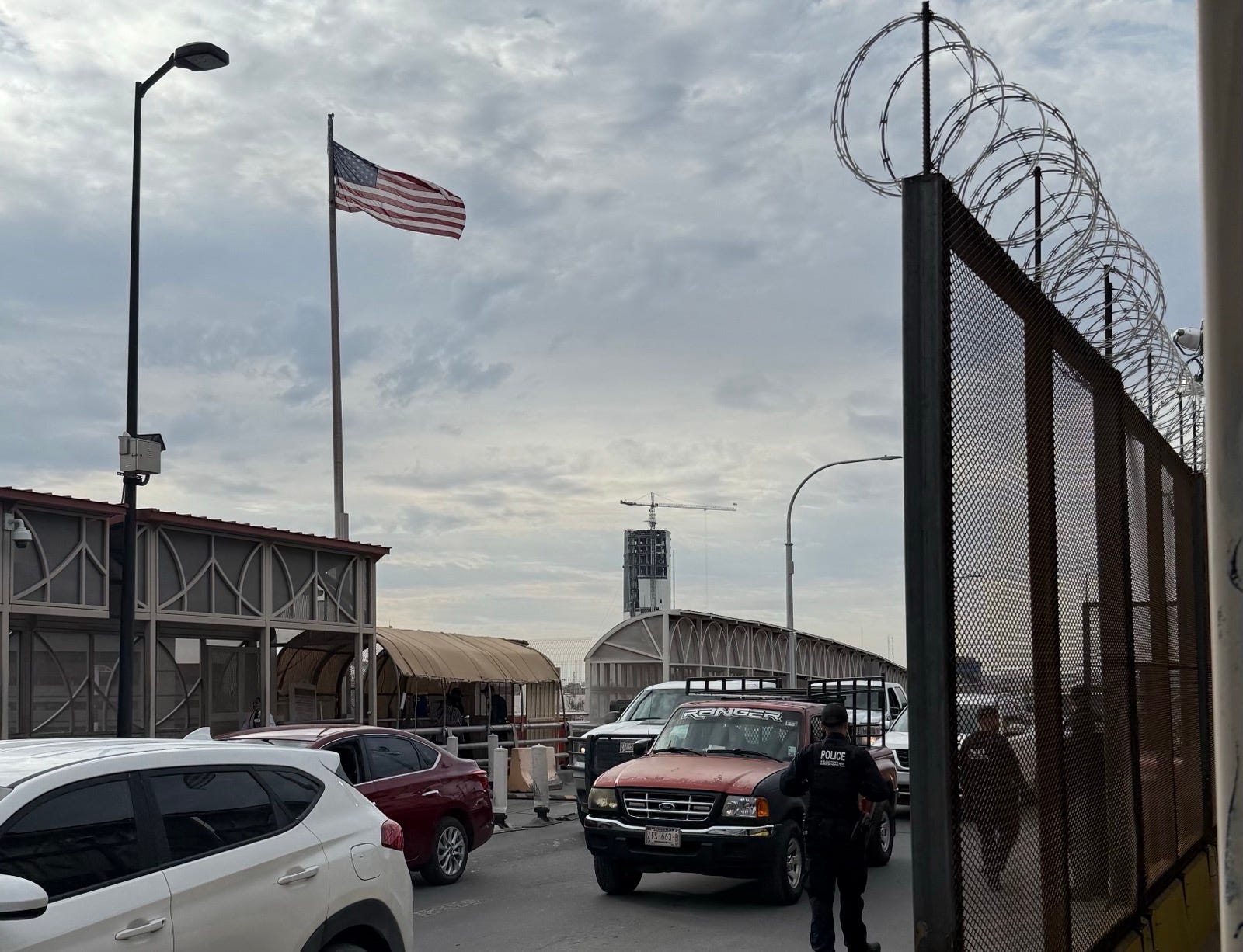
United States officials will soon be operating inside a massive surveillance tower in the Mexican border city of Ciudad Juárez on intelligence-sharing missions—even as Mexico grapples with a diplomatic and political scandal related to the deaths of two CIA agents who were operating inside Mexico without authorization, sources within the Chihuahua state government confirmed.
On April 19, two CIA officials and two officials with Chihuahua State Attorney General’s Office officials died in a car accident in northern Mexico while working on a counter-narcotics operation to seize and decommission a large methamphetamine lab in the state.
Immediately after the incident, Mexican President Claudia Sheinbaum said that Chihuahua’s state government had violated the national security law by collaborating with the CIA without the federal government’s sign-off. The Mexican government also said in a statement that the CIA officials did not have authorization to enter the country to participate in operations. Mexico’s 2020 national security law requires the federal government approve any officials’ collaboration with foreign governments and expressly prohibits the participation of foreign agents in operations, with collaboration limited to information sharing.
Sheinbaum praised the bilateral collaboration between the U.S. and Mexico and expressed her hope that this incident would be an “isolated case.” The incident, however, has led to a standoff between the federal government and the state government of Chihuahua. That same week, the state attorney general stepped down from his position.
Chihuahua Governor María Eugenia Campos Galván has opened a state-level investigation into the CIA deaths, and on May 12 said she did not approve the participation of “foreign people” in the meth lab operation. After a senator accused Campos of treason, Campos declined to appear before the Mexican Senate’s Constitutional Points and Public Security Committee.
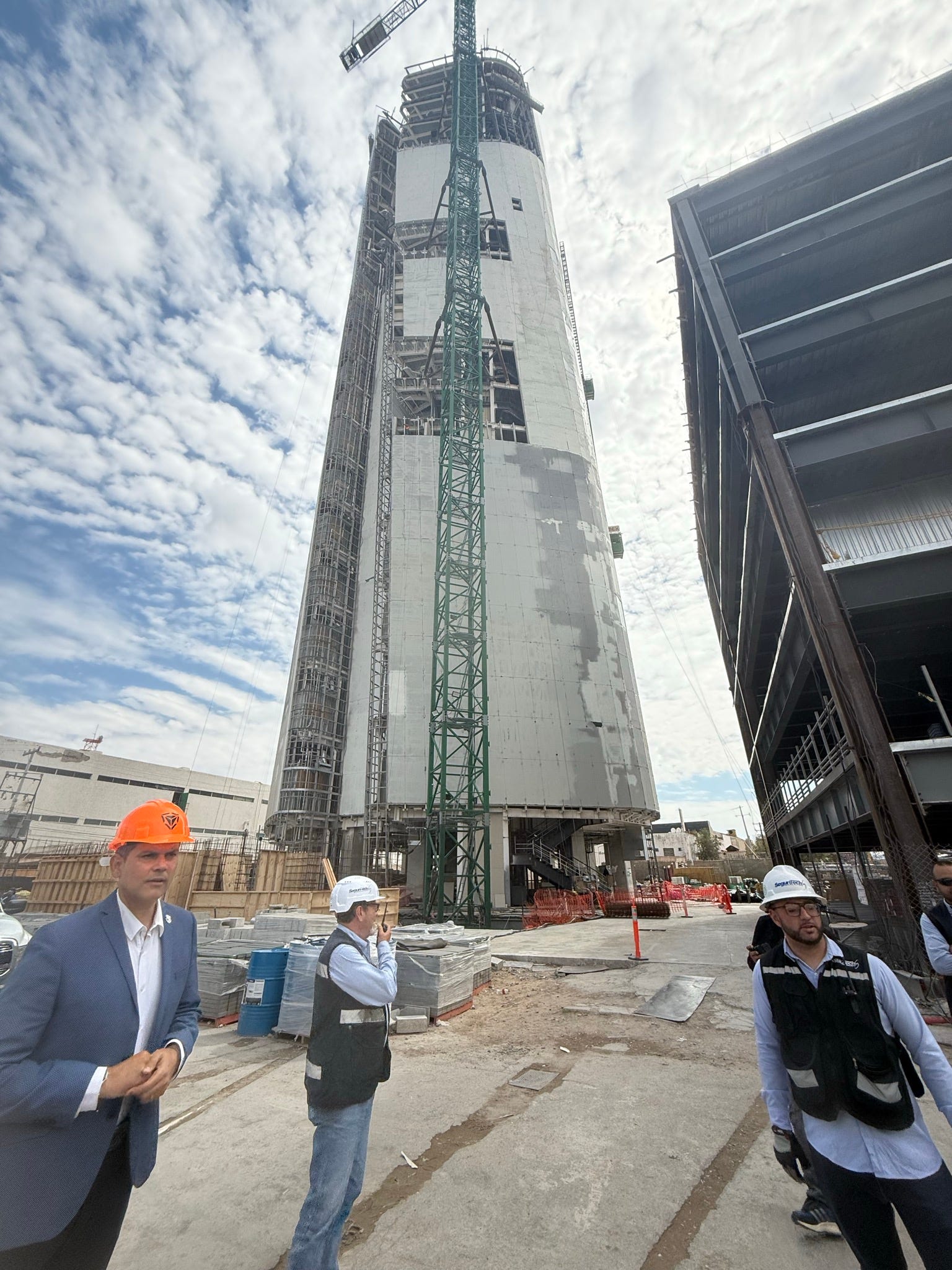
Despite the political scandal that has raised concern about U.S. government involvement in Mexico, Chihuahua is pressing ahead with a close collaboration with U.S. agencies—with the approval of the Mexican federal government, a Chihuahua spokesperson confirmed to Drop Site this week. Representatives from five different U.S. federal agencies—the FBI, the Drug Enforcement Administration, the Bureau of Alcohol Tobacco and Firearms, Homeland Security Investigations, and Customs and Border Protection—are slated to work out of the 18th floor of the new building in Juárez, known as the Centinela Tower. The agencies are expected to exchange intelligence with Mexican officials related to drug and weapons smuggling, organized crime, and immigration enforcement, according to four high-ranking officials from Chihuahua’s State Department of Public Security (SSPE).
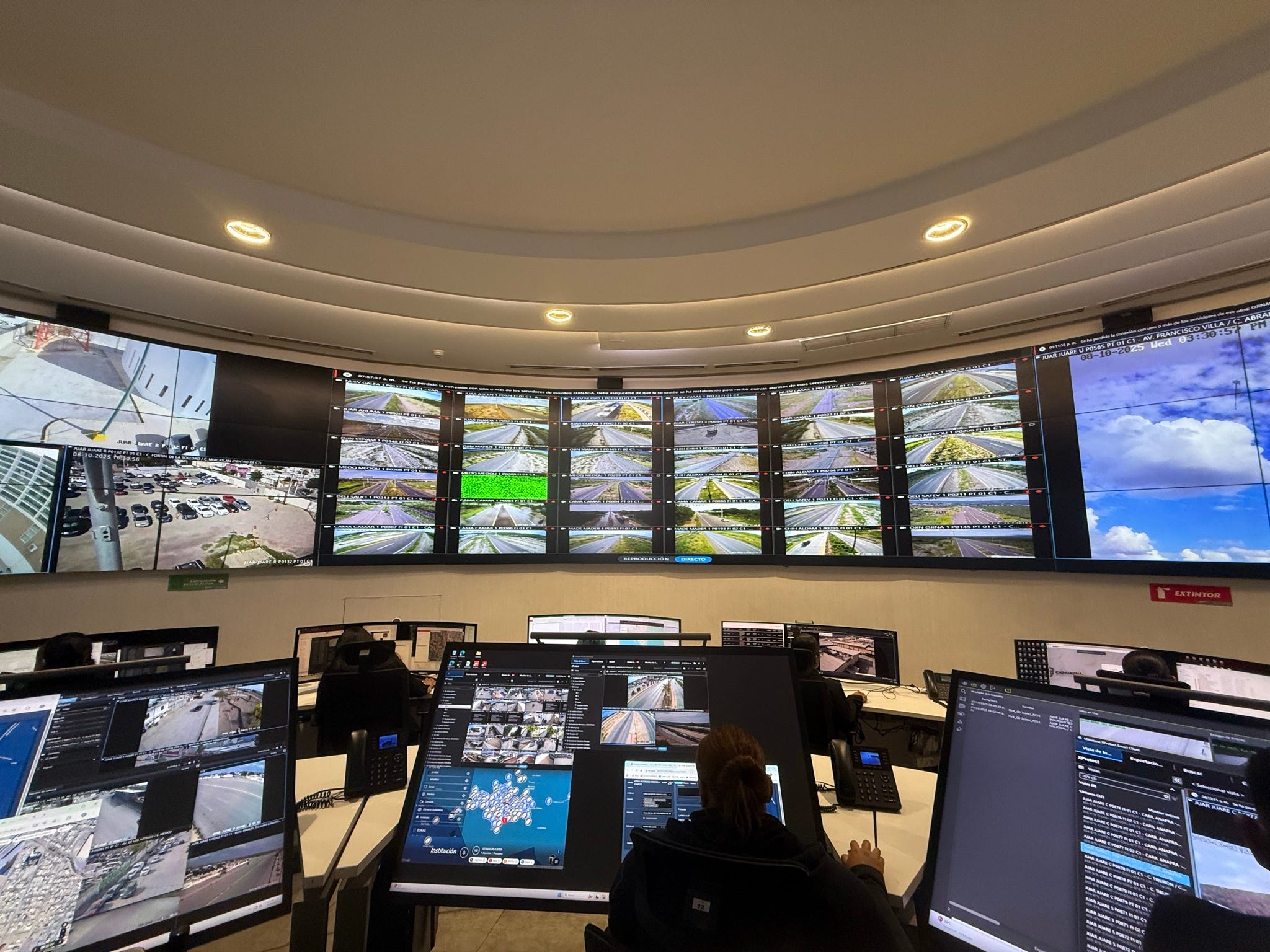
The SSPE is already running a state-of-the-art surveillance operation—known as Plataforma Centinela, or sentinel platform—out of a command center in Juárez that monitors data from surveillance cameras, license plate readers, drones, helicopters, public panic buttons, and other intelligence-gathering technology.
At least one of the surveillance floors of the Centinela Tower began operating earlier this month. SSPE officials estimate the rest of the tower will be fully operational in June, the spokesperson confirmed to Drop Site. Officials did not give an exact date for when the U.S. agencies will begin working out of the tower.
Chihuahua’s secretary for SSPE, Gilberto Loya Chávez, told Drop Site in October that they were working on signed agreements for the U.S. agencies’ collaboration. The agreements would at first be more informal processes between the agencies and Chihuahua, Loya specified, rather than formal agreements navigated through Mexico’s Foreign Relations Ministry.
Loya confirmed in a May 4 press conference that the agreements are still in effect.
“We work closely with Mexican officials at all levels to make people on both sides of the border more secure. We refer you to the government of Mexico for information on specific agreements,” a U.S. consulate spokesperson in Juárez said in a statement.
In a statement, the DEA said it had “nothing to report.” The ATF said it was not offering interviews or commenting on the topic. The FBI referred questions to the State Department. CBP and HSI did not provide a comment.
Mexico’s Secretariat of Foreign Relations did not provide a comment.
“What they could have, at some moment, is a space [within the Centinela Tower] to do intelligence, information and planning work,” said Patricia Escamilla-Hamm, a Mexico-based security analyst and former research professor at the William J. Perry Center for Hemispheric Defense Studies in Washington, DC. “That is very different from going and participating in operations—like going after drug traffickers, supposed criminals. …That type of work is not authorized by the national security law,” she added.
U.S.-Mexico Intelligence Sharing
U.S. government agencies, including the Texas state government, have been working with Chihuahua officials for years on sensitive cross-border operations, primarily in intelligence sharing, based on two separate agreements that have been approved by the Mexican federal government, Loya and three other top SSPE officials confirmed. The other sources include the official in charge of the state’s SWAT teams, the official overseeing the Centinela surveillance technology, and an SSPE executive overseeing the Juárez command center.
“The Chihuahua state government has had coordinative and cooperative agreements with the state of Texas,” Escamilla-Hamm said. “This is done at a state level, between states. But it is not a question of national security. Rather, it is cooperation [allowed] under the federal government’s mandate and its programs.”
Drop Site has identified at least six separate intelligence sharing operations in recent years that involved intelligence sharing between local SSPE officials and U.S. government agencies. Some of those cases involved tracking down and arresting FBI priority targets, coordinating with CBP on border surveillance operations, and coordinating with HSI to arrest alleged human smugglers, according to SSPE officials.
In April 2022, Texas Governor Greg Abbott and Campos signed a memorandum of understanding giving Texas access to the reams of surveillance data that Chihuahua is collecting, including access to 4,000 cameras. The intelligence-sharing agreement “means that the state of Texas will have eyes on this side of the border,” Campos said at the time.
In February 2025, the Chihuahua SSPE authorities facilitated the arrest of Humberto Rivera, alias “El Chato,” a 51-year-old alleged high-ranking drug trafficker running the Juárez plaza for the Sinaloa Cartel, according to Loya and two analysts at the state’s surveillance command center, who requested anonymity because they were not authorized to speak with the press. In that operation, officials at the Centinela command center said they used drones equipped with facial-recognition software to surveil El Chato’s movements. The Chihuahua Attorney General’s Office and the National Guard then tracked his car, pulled him over, and arrested him. Following the operation, the FBI recognized the Mexican intelligence analysts with an award, commending them on the arrest operation, Loya and the analysts said.
In another case, undercover state officials in Chihuahua infiltrated a migrant camp in the state’s capital city of Chihuahua, according to Luis Ángel Aguirre Rodríguez, a top-ranking SSPE official who helps run the state’s SWAT teams. During their undercover operation, agents with the SSPE who infiltrated the camp identified two Venezuelan men running the camp, who were allegedly selling drugs and involved in prostitution. Once they cleared out the camp and arrested the Venezuelan men, they shared their intelligence with CBP, Aguirre said. The officials from the U.S. government then provided information about the men, in particular that they had previously been arrested in Costa Rica and “other parts of the world.” The men were deported.
As part of their efforts in border surveillance and migrant enforcement operations, the Chihuahua SSPE also has partnered with the U.S. Border Patrol to conduct “mirroring” patrol operations along the border, according to Loya, Aguirre and Adrián Eduardo Lui Chavira, the SSPE official overseeing the Centinela surveillance operation. SSPE officials in Mexico will coordinate with their Border Patrol counterparts in the U.S. to apprehend migrants attempting to cross into the U.S.
Public reports from the SSPE also show that the agency has collaborated with CBP on tracking a stolen car from Texas that was driven across the border, arresting the two men who allegedly stole it. And in two separate operations, in coordination with HSI, SSPE tracked and helped arrest people allegedly involved in human smuggling. In one of the cases, they turned the alleged smuggler over to Mexico’s National Migration Institute, who took him to the border bridge and handed him over to U.S. Marshals Service agents.
These types of operations, among others, including training and intelligence sharing, have existed with the authorization of the federal government, Escamilla-Hamm said. “Without that federal authorization, no operation can take place involving foreigners.”
Cool. So we live in Lord of the Rings now. Everywhere is Mordor, Barad-dur is in Chihuahua, and Palantir is Palantir.
Should be fine.
How proudly waves our flag. How high and tall stands our tower of many windows, screens, and buttons. Let us rock out with rolls of circular ribbon wire laced across high linked fences. Our top gov.org officials have tested tough chihuahuas to time how long it takes for a team to dig its way out under the fences.