

Afghans Search for Missing Family Members After Strike on Rehab Center Kills At Least 400
The deadly bombing of Omid Rehabilitation Center follows weeks of escalation between Pakistan and Afghanistan.

Our mission is to report on what matters most, beholden only to the truth. In that spirit, we made a commitment to ensure that our journalism is free for everyone, not locked behind a paywall. But that means we rely on the voluntary support of our community of readers. Please consider making a tax-deductible donation to support our work today.
Story by Fazelminallah Qazizai and Emran Feroz
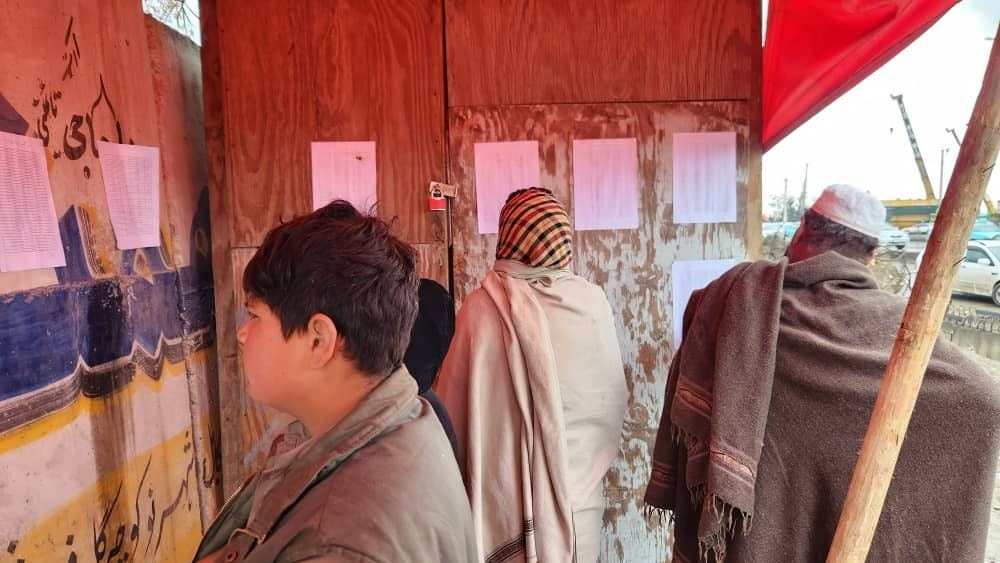
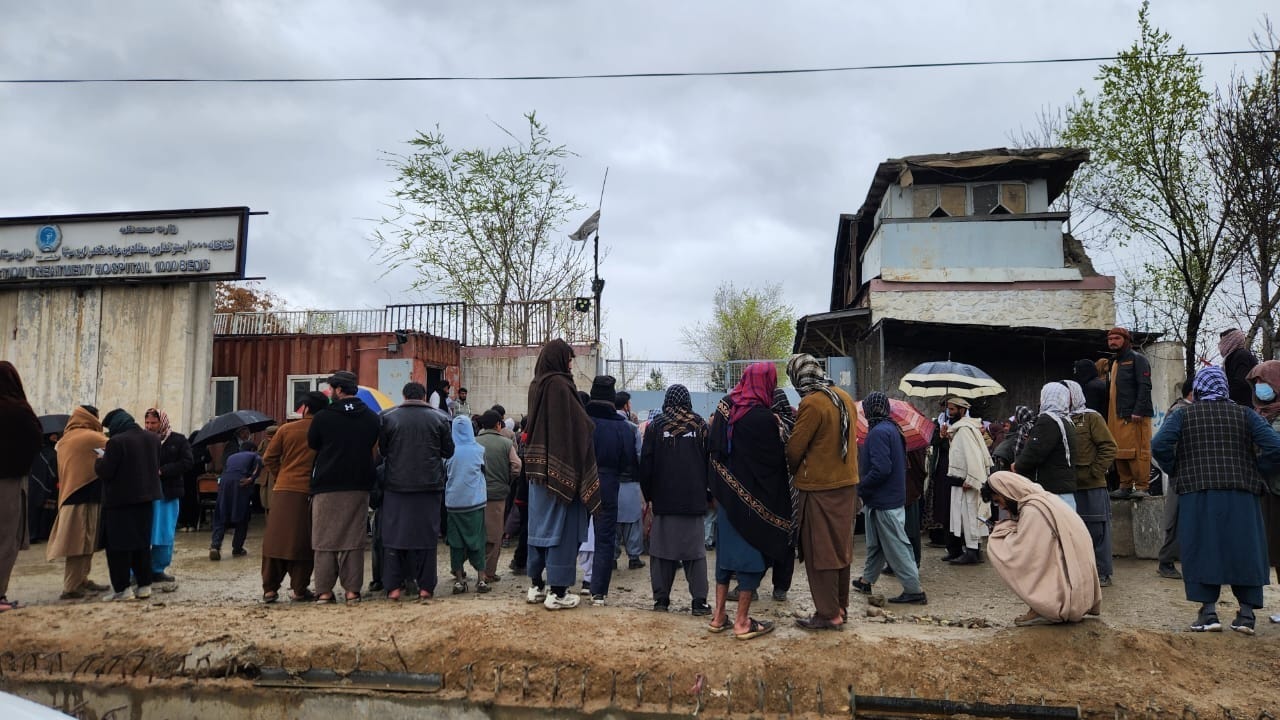
KABUL—On Tuesday, lists of names were nailed to wooden boards outside the gates of the Omid rehabilitation center, some typed on A4 sheets and others handwritten. Their edges curled quickly in the damp air, blurred by rain and a crowd of men running their fingers down the pages again and again, whispering names under their breath, as if repetition might produce a different outcome.
Behind the gates, officials in white medical gowns read names through a megaphone. In front of them, the crowd pushed forward waiting for confirmation of whether their family member was injured, dead, or missing.
“I came from Jalalabad to find my father,” said Shafiq, a teenager holding a crumpled piece of paper. “His name is Delaram.” He pointed to a number on a list. “It says he is alive. But…I don’t know where he is.”
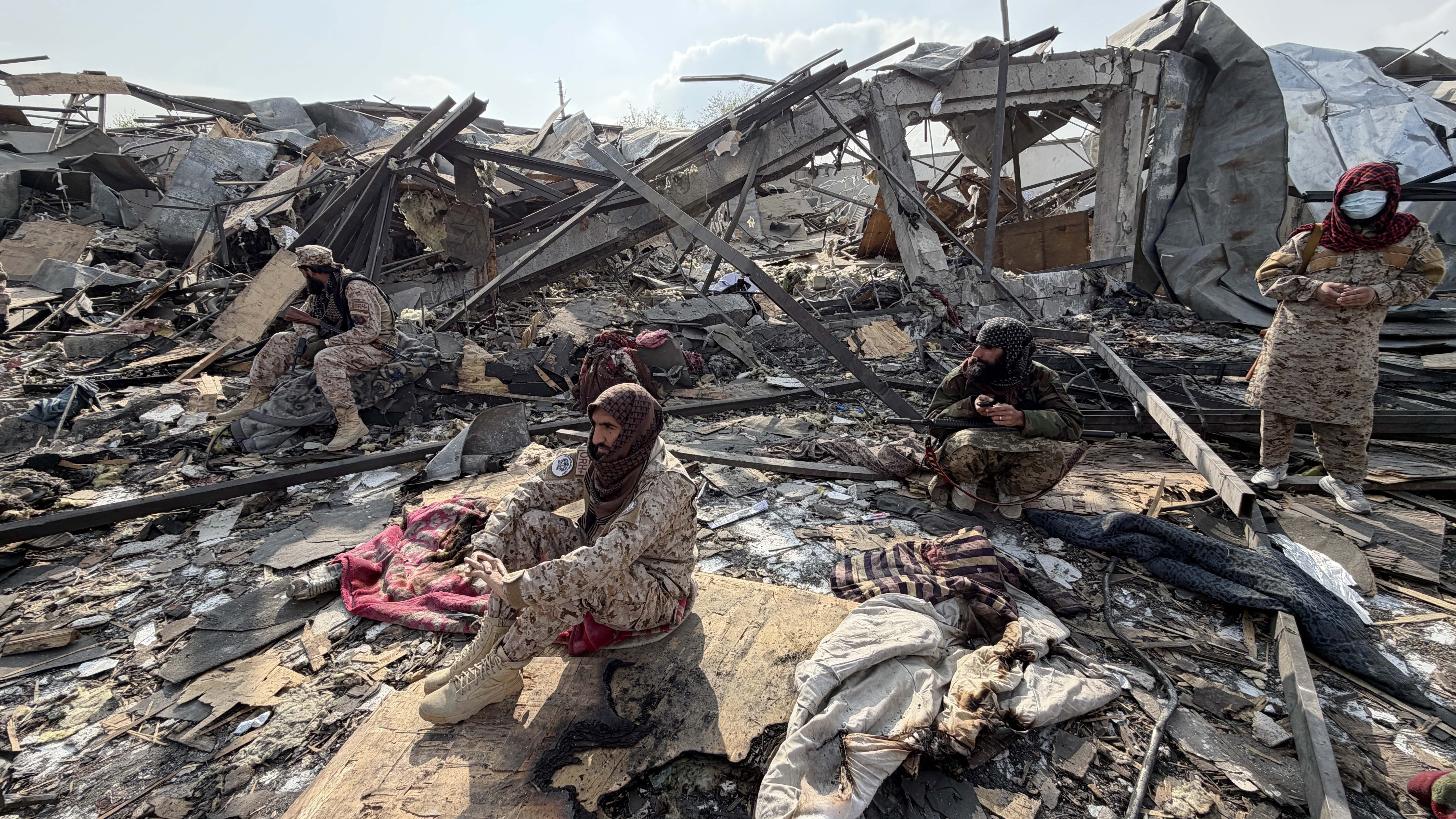
On Monday, an airstrike by Pakistani jets hit the center at the precise moment when hundreds of patients gathered to break their fast. No official figure has captured the full scale of the attack. According to Hamdullah Fitrat, the Taliban’s deputy spokesperson, 400 patients were killed by the strike and 250 injured. But the medical staff and witnesses who handled the bodies insist the true toll is far higher than what has been publicly acknowledged. Pakistan has denied any wrongdoing, insisting that its operations targeted Taliban-affiliated sites.
“The strike happened during iftar,” said a nurse who told Drop Site he arrived at the scene shortly after the strike. “Several hundred patients were gathered together. Many of these people died. There were not many injured—mostly dead.”
The facility, already overcrowded far beyond its intended capacity, became a death trap within seconds. Originally meant to house about 1,000 patients, the center had long been overcrowded. Thousands passed through its gates – men struggling with addiction, often brought by families who had exhausted all other options in a country where healthcare has been steadily collapsing. According to officials, between 1,300 and 1,800 people were being treated at the rehab center when the strike occurred.
“Many people were burned to ashes,” said the nurse, who asked to remain anonymous for his safety. “There was too much fire. We couldn’t handle it.”
Two brothers stood near the gate, searching for a man named Jahanker. “We brought him here two days before the attack,” one said. He declined to give his name. “After the strike, we checked this center, Aghosh, and the hospitals. His name is nowhere.”
Nearby, an elderly father and his son prepared themselves for the next step. “Our son’s name is not on any list,” the father said. “Now we go to the morgue. Maybe he is among the unidentified.”
“Maybe he burned to ashes,” said Abdul Basir Watan, whose cousin had been at the center for months. “We cannot find his body.”
A Brief Pause in “Open War”
On Thursday, after weeks of deadly cross-border strikes, a fragile ceasefire went into effect for Eid—the holiday marking the end of the holy month of Ramadan. But almost as soon as it was announced, reports emerged that the ceasefire had been violated by Pakistani forces. According to TOLO news, at least two people were killed by cross border shelling from Pakistan in Nuristan province on Thursday. The dead included a female doctor and her young son who had traveled to the region to celebrate Eid with family.
At the heart of the conflict lies the Durand Line, a 2,600-kilometer border drawn by British colonial authorities in 1893 that cuts through Pashtun tribal regions. While Pakistan treats it as an international boundary, no Afghan government—past or present—has formally recognized it. The dispute has fueled decades of tension, cross-border militancy, and competing claims of sovereignty, making the frontier one of the most volatile in the region.
In February, Pakistan effectively declared an “open war” against the Taliban regime in Afghanistan. Since then, its military has carried out dozens of cross-border operations. According to the United Nations Assistance Mission in Afghanistan (UNAMA), between the evening of February 26 and March 2 alone, at least 146 civilian casualties were recorded—42 killed and 104 injured, including women and children. These figures remain preliminary.
At the same time, Taliban forces launched retaliatory attacks on Pakistani troops along the Durand Line. In recent days, following the strike on the rehabilitation hospital, civilian casualties have risen sharply.
For decades, Pakistan was one of the Taliban’s key backers, offering sanctuary and support during their insurgency against U.S. and NATO forces. That relationship, however, has frayed since the Taliban’s return to power in 2021.
Since then, Islamabad has accused Kabul of failing to contain militants from Tehrik-i-Taliban Pakistan (TTP), which has carried out attacks inside Pakistan. The Taliban leadership has rejected these claims and asserted its sovereignty.
At the same time, Pakistan has increased unilateral strikes inside Afghan territory. This aggressive stance echoes earlier phases of the post-9/11 “war on terror,” when cross-border operations were routinely justified as necessary and precise—even as civilian casualties mounted.
A City of Searchers
The strike turned Kabul into a city of searchers. The dead were transported across Kabul in ambulances, pickup trucks, and private vehicles. Some bodies were intact. Many others were not. “Just in our clinic, we had 60 to 70 dead bodies,” the nurse told Drop Site.
Outside hospitals, families looked through lists, books, and scraps of paper, any record that might contain a name. They moved from one location to another, following fragments of information passed by officials, strangers, or other relatives.
Sahil, a teenager from Kabul, was looking for his brother, Mohammad Yahya, 25, who had been a patient at the center.
At the site of the strike, Sahil had seen ambulances still carrying bodies away. Now he moved through the city’s fractured healthcare system—Omid, Aghosh camp, Wazir Akbar Khan, and now the Emergency Hospital.
A thick registry book lay open at the entrance, but it did not contain Mohammad’s name. From the back of a pick-up truck, officials told him the last place to try was the morgue.
To reach the morgue, known as Sard-Khana, Sahil followed a narrow cement path behind the hospital. Inside, bodies lay on metal beds, wrapped in white cloth. Some were recognizable. Many were not. “One of them was burned black as coal,” one person searching for relatives said. “Another had no face.”
Sahil could not bring himself to uncover them. Others did it for him. None of them was his brother. He left and continued searching.
Outside, families directed one another toward hospitals or morgues, forming temporary networks of information in the absence of any centralized system.
Some suggested creating WhatsApp groups to track the names of the living and the dead. “Someone should collect all the names,” one man said. During the last decades of conflict in Afghanistan, collecting the many names of the dead was always a burden, and many victims remained unnamed and faceless.
Targeted Without Explanation
Pakistan’s government and many of its supporters on social media aggressively continue to insist that the strike hit Taliban sites and that the incident was somehow made up by the regime. Other airstrikes on the same night allegedly hit Taliban military sites. “We heard the rockets. A few moments later we noticed that they struck a local Taliban site again,” Rias Mohammadi, who lives in western Kabul’s Dar-ul-Aman area, told Drop Site. Such operations received little attention and the Taliban did not allow reporters to enter affected sites.
Things were different on the other side of the city. “We thought they hit military targets,” Ahmad Karimi, a student who lives near the site, told Drop Site. “Then we realized it was the rehab clinic.”
At the Omid center, the Taliban allowed journalists to visit the area shortly after the strike “That suggests they had nothing to hide,” said Thomas Ruttig, a senior Afghanistan researcher and former co-founder of the Afghanistan Analysts Network (AAN). He emphasized that restrictions were much tighter at actual military sites that were recently hit by the Pakistani army.
Some have suggested that Pakistan relies on old maps. Before becoming known as Omid, which means “hope” in Farsi, the hospital was a U.S. military base called Camp Phoenix. Years ago, during Afghanistan’s Soviet invasion, it was a logistics center. But Camp Phoenix was abandoned by the troops more than a decade ago. In 2016, it was converted into a rehab center by then-President Ashraf Ghani.
Regardless of whether the strike was based on outdated maps, it reflects an escalation in Pakistan’s approach—one that increasingly extends beyond the border conflict and deep into Afghan territory.
In the absence of international scrutiny—especially as the world is focused on the Iran war—Pakistan’s strikes have not resulted in international consequences. ُThe U.S. government has continued to embrace the military junta currently ruling Pakistan, which has offered itself as a counterterrorism partner to Washington following its withdrawal from Afghanistan in 2020.
Facilities like Omid serve a critical role in a country where drug addiction has surged, fueled by poverty, displacement, decades of war, and continued U.S. economic sanctions. Families brought their relatives there with the hope of recovery. “We hoped to see him healthy again,” Shafiq said of his father.
As evening approached, the crowds began to thin. Some families left with answers. Many did not. “We are still searching,” one man said quietly.
 | A guest post by
|
The US and Israel has made it clear that there are no rules, and no international law or bodies to control those with the weapons. This government in Pakistan was put in by the US, and is not necessarily reflective of the people of Pakistan.
Rule, conquest, and dispute resolution by brute force is what the leaders of the so-called democracies have decided will be the new normal. We, the people, must find a way to stop them, if such a thing is even possible. Only one way to find out, and that is by trying.
Another triumph of British colonialism.