

Somalia Plans to Foment Conflict in Awdal Region After Israeli Recognition of Somaliland
The Israeli recognition of the breakaway state of Somaliland has raised alarms from nearby states and risks triggering a new armed conflict.

We have a commitment to ensuring that our journalism is not locked behind a paywall. But the only way we can sustain this is through the voluntary support of our community of readers. If you are a free subscriber and you support our work, please consider upgrading to a paid subscription or gifting one to a friend or family member. You can also make a 501(c)(3) tax-deductible donation to support our work. If you do not have the means to support our work financially, you can do your part by sharing our work on social media and by forwarding this email to your network of contacts.
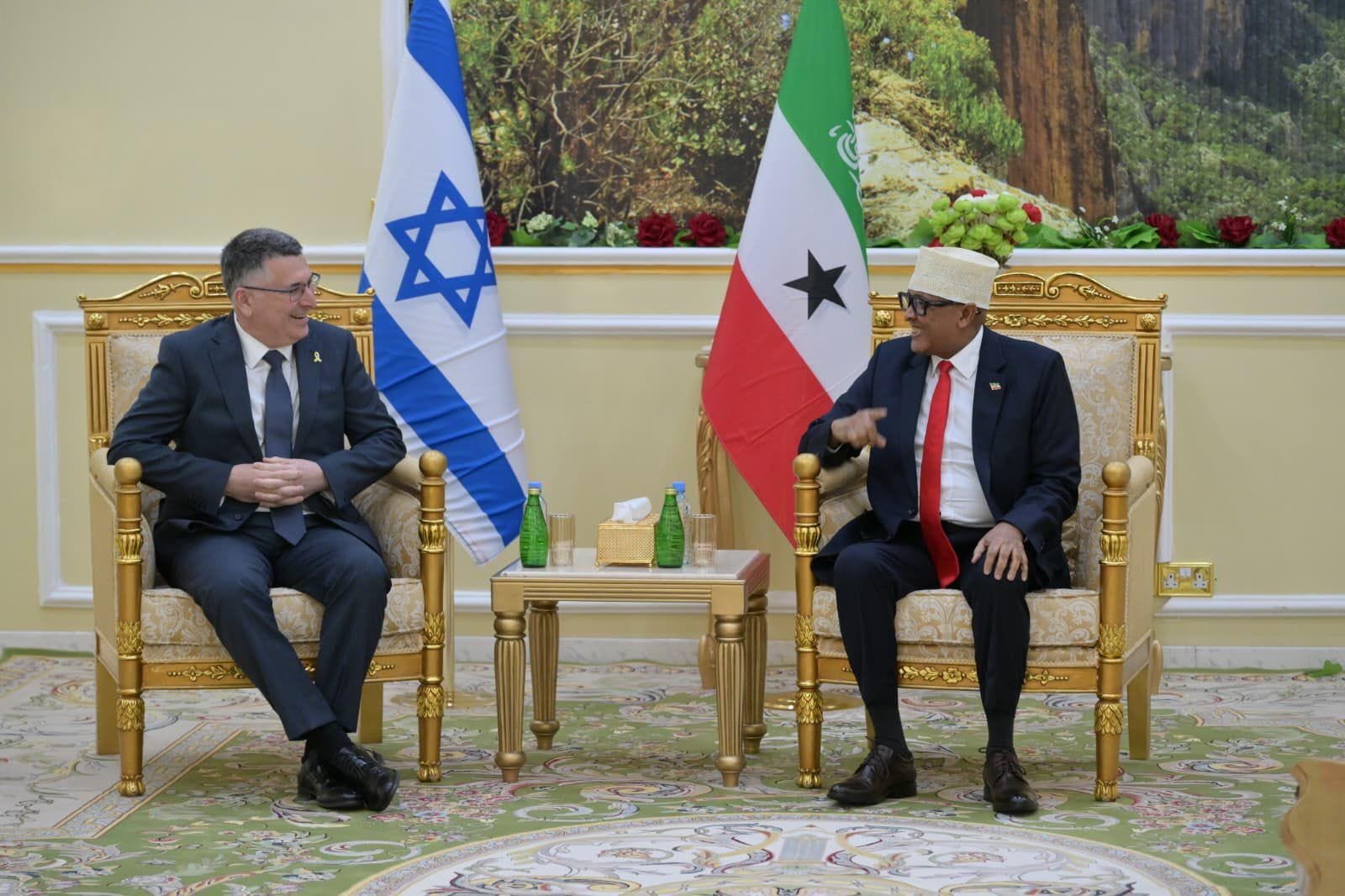
MOGADISHU, Somalia—The Somali government has plans to retaliate against Israeli’s recent recognition of the breakaway state of Somaliland, two senior intelligence officials from Somalia’s National Intelligence and Security Agency (NISA) told Drop Site. Mogadishu will support separatist movements inside Somaliland, they said, using the Somaliland government’s lack of control over the province of Awdal as an opportunity to empower local clans that oppose the government in Hargeisa—simultaneously weakening Somaliland and Israeli efforts to exert influence over the region.
On December 26, Israeli Prime Minister Benjamin Netanyahu announced that Israel had formally recognized the breakaway region of Somaliland as an independent state, a decision that Netanyahu said came “in the spirit of the Abraham Accords.” Somaliland—a semi-autonomous region in northern Somalia that emerged during the 1990s civil war in Somalia—has sought international recognition for more than three decades. Prior to the move by Tel Aviv, its status had not been recognized by any other government; states have been wary of encouraging separatist movements that could unravel the status quo borders in the region and enable foreign states and groups to gain a foothold.
The Israeli decision triggered immediate outrage from the Somali federal government based in Mogadishu, which fiercely rejects Somaliland’s claims to independence. Somali President Hassan Sheikh Mohamud denounced the recognition as “illegal aggression,” and a deliberate attack on Somalia’s sovereignty by Netanyahu, vowing to resist the move by “diplomatic, political, and legal means.”
Awdal is a region inside Somaliland where several local clans reject ties with Somaliland, and have sought to reunify with the federal government in Somalia. “The clans in Awdal are crucial to thwarting Israel’s plans in Somaliland. Awdal sits on the Bab Al-Mandab strait,” said a senior NISA official who spoke with Drop Site News on condition of anonymity. The Bab Al-Mandab strait is a strategic waterway connecting to the Red Sea and Suez Canal through which nearly 15% of global maritime trade passes. “The clans are not only marginalized but unionists,” the official continued, referencing their support for the federal government in Mogadishu. “All they lack is political support and arms.”
Somali officials have expressed in recent weeks their intention to extend administrative authority over the territory, including by establishing a regional administration there that reports to Mogadishu instead of Hargeisa, the capital of Somaliland.
On January 21, the Somaliland National Army announced that it had killed two armed gunmen and seized weapons from a group based in Awdal. The same statement warned that Somaliland authorities warned that they will take “decisive action against any individuals or groups attempting to cause insecurity in the western part of the country.”
Several members of Somalia’s federal parliament representing the Issa (Ciise) clan, heavily represented in Awdal, held a televised press conference the next day to announce the creation of a new “Guban State,” claiming territory in the Awdal region,. That area is inhabited by the Issa clan, which also spans into neighboring Djibouti. The statement from Somalia’s federal lawmakers included a “stern warning” to Somaliland to not suppress what they described as “liberation movements” in the area.
In the days since, the situation has only deteriorated with armed clashes between clans that support unionism and those who support secession in Awdal, according to Al-Arabiya. The Somaliland Ministry of Foreign Affairs rejected claims that “foreign or unauthorized forces” were active in the region, but did not address the factors driving the conflict.
Regional Reactions
President Mohamud’s outrage over Israeli recognition of Somaliland was echoed by other states across the Horn of Africa and Middle East, with the Arab League and African Union both issuing separate statements decrying the move as an attack on Somali sovereignty, and an attempt to further fragment the states of the region.
A second NISA official, who described Awdal as the “weak point” of Somaliland, stated that unnamed Arab states with interests in the region would also support a push by Djibouti and Somalia to encourage retaliatory secessionist movements in Somaliland. “There are some Arab countries that support the creation of Awdal state, because even though many Arab nations have relations with Israel, having Israel set up a presence on the Gulf of Aden could unleash many dangers,” the official said.
The coastal state of Djibouti, formerly known as French Somaliland, which hosts U.S., French, and Chinese military bases—including forces participating in international peacekeeping and counterterrorism efforts—has strongly criticized the Israeli decision to promote a new separatist state in the region.
In the days following Israeli recognition of Somaliland, the Djibouti government announced that it was severing ties with Hargeisa and shuttering its liaison office in Somaliland, while hosting the Somali president on an official visit.
NISA officials who spoke to Drop Site stated that the official visit contained an implicit message to Hargeisa. “Djibouti is against Israel’s recognition of Somaliland also and shares clan ties to Awdal. They are ready to assist in propping up their fellow clansmen,” said one official. “This is why President Hassan arrived in Djibouti 72 hours after Israel recognized Somaliland.”
One state that did not join the backlash was the United Arab Emirates, a close ally of Tel Aviv which also has major economic interests in Somaliland—including a major port run by the Emirati logistics giant DP World—and whose elites had been vocally promoting the separatist region prior to Netanyahu’s announcements. In early January, the Somali government announced in response that it was severing ties with the UAE and expelling Emirati forces from military bases in the country—accusing Abu Dhabi of undermining its sovereignty through its support for Hargeisa. Despite its falling out with Somalia, the UAE remains entrenched in Somaliland, as well as in the semi-autonomous regions of Puntland and Jubaland.
Decades in the Making
Somaliland declared independence from the rest of Somalia in 1991, after a coalition of rebel groups including the Somali National Movement (SNM), overthrew the country’s late Marxist leader Siad Barre.
In the decades since the fall of the Barre government, Somalia has been wracked by lawlessness, tribal conflict, warlordism, economic crises, and famine. These issues have been exacerbated by foreign military interventions, as well as an insurgency by the militant group Al Shabaab that continues to threaten the country’s embattled central government. In contrast, Somaliland, which is a smaller territory that does not face the same scale of challenges from local clan dynamics as Somalia, has enjoyed relative stability, functional state institutions, and local democracy—despite internal revolts and an armed rebellion by disenfranchised communities in parts of its territory.
Once united under the same borders, the divide between Somaliland and Somalia has become more acrimonious in the years since the country descended into civil war, with the situation exacerbated by the fractious clan politics of the region. Since its formation, Somaliland has been dominated politically, economically, and militarily by the Isaaq clan, which spearheaded the original insurgency against Barre in northern Somalia. These fractures have been exploited by outside states which have sought to strategically capitalize on the breakup of the country, with Israel being the most recent.
Deqa Qasim, a senior official from Somaliland’s Ministry of Foreign Affairs, was cited by the Tel Aviv based Channel 12 stating that discussions were already underway between Somaliland and Israel about establishing a military base in the territory, adding that security cooperation between both sides would entail fighting “terrorism” and naval collaboration. Somali leaders have also accused the Israeli government of planning to establish a military presence in the region and forcibly resettling Palestinians displaced from the genocide in the Gaza Strip to Somaliland.
The relationship between Israel and Somaliland had been gathering momentum behind the scenes for many years before the formal establishment of ties late last year. In February 2022, the Israeli government dispatched teams of officials to Somaliland to inspect runways built by the Soviet Union during Siad Barre’s rule, according to the investigative outlet Africa Intelligence.
Decades earlier, in 1995, Somaliland’s second president Mohamed Ibrahim Igal wrote a letter to Israeli prime minister Yitzhak Rabin seeking to establish ties—an entreaty that Somaliland’s founding father Abdurahman Tuur later stated in an interview was intended to curry favor for formal recognition of the new state by Washington.
In 2005, Dahir Riyale Kahin, Somaliland’s third president declared in an interview with Al Jazeera that he was “free to establish relations” with Israel and that “no one could stop him.” A few years later, the Israeli government belatedly seemed to reciprocate this outreach, when foreign ministry spokesperson Yigal Palmor was quoted in Ha’aretz expressing Israeli readiness to build ties with Hargeisa.Jethro Norman, a senior researcher with the Danish Institute for International Studies (DISS), told Drop Site that Israel’s recognition of Somaliland was not only driven by a desire to exert influence over the Red Sea, but also to gain a foothold to strike targets in Yemen, where Tel Aviv has been at war with the Ansarallah (Houthi) movement for several years.
“Recognition potentially opens channels for intelligence cooperation, surveillance capabilities, and logistical access. Projecting power 2,000 kilometers from Israeli territory to strike Houthi positions in Yemen is operationally demanding. A presence in Somaliland compresses that distance dramatically,” Jethro said. “It’s telling that Netanyahu thanked Mossad specifically for years of work cultivating this relationship—which signals that security rather than commercial considerations drove the decision.”
Opening Fractures
Despite publicly celebrating the new relationship, there are signs of internal dissent within Somaliland about the decision to embrace Israel at a moment when its leadership is under indictment for war crimes by the International Criminal Court.
The Somaliland government arrested numerous religious scholars who spoke out against the recognition, while implementing new security measures within its territory, including new requirements that citizens must carry ID cards at all times, mandatory vehicle inspections in all major cities and towns, and prohibitions on rentals of certain vehicles and properties, according to local authorities, who justified the measures as necessary preventive steps against terrorism.
“A (Israeli) military base would create conditions which would lead to increased national divisions between different external and internal groups turning this region a hot zone of conflicts,” Hassan M. Said Samatar, former Director General of the Ministry of Defense told Drop Site. “Somalia and its neighbors, in particular Ethiopia and Djibouti, will worry that the situation in the northern part of the country will experience increased military activity.”
Despite not carrying out an attack in Somaliland since 2008, the Al-Qaeda affiliate Al-Shabaab remains active in the Sanaag region, which is partially controlled by Somaliland. Several of the group’s most senior figures have also hailed from Somaliland, including its founder Ismail Arale—who was renditioned by the United States after his capture and spent time in Guantanamo Bay but now lives in Somaliland—as well as Its former leader Ahmed Abdi Godane, a native of Somaliland who was killed in a U.S. drone strike in southern Somalia more than a decade ago.
“Al-Shabaab has considerable ties in Somaliland. Prominent former and current Al-Shabaab members hail from Hargeisa and Burco, and still have relatives there. It would be possible for them to clandestinely stage an operation, based on family ties in the region,” said Markus Virgil Hoehne, a social anthropologist at the University of Goettingen who has researched and written extensively on Somaliland for over two decades. “Generally, I think it is likely to assume that security in Somaliland will decline due to the presence of Israel.”
Amid the political jockeying between different parties, the legacy of the colonial period during which Somali-populated regions of the Horn of Africa were partitioned into separate states—including territories now under the sovereignty of Ethiopia, Kenya, and Djibouti—looms large over the current dispute.
“Many Somalis, including those sympathetic to Somaliland’s grievances, view separating Somaliland from Somalia as a return to colonial partition,” said Norman. “For many across the region, Israel’s recognition based on colonial-era boundaries reopens wounds that have never fully healed.”
 | A guest post by
|
This is what “recognition” looks like in practice: foreign powers redrawing borders from afar and turning local grievances into proxy battlefields. Israel’s move doesn’t advance peace or self-determination—it pours gasoline on unresolved clan politics around one of the world’s most strategic chokepoints. Awdal isn’t a chess square, and the Horn of Africa doesn’t need another externally engineered fracture sold as stability.
Thanks for reporting on issues that others ignore. A story like this would benefit from a map.