

Pakistani Government Denies Visas to Imran Khan’s Sons as Khan’s Health Deteriorates in Prison
After the former prime minister suffered a health crisis in solitary confinement, fears are growing over the fate of the former prime minister.


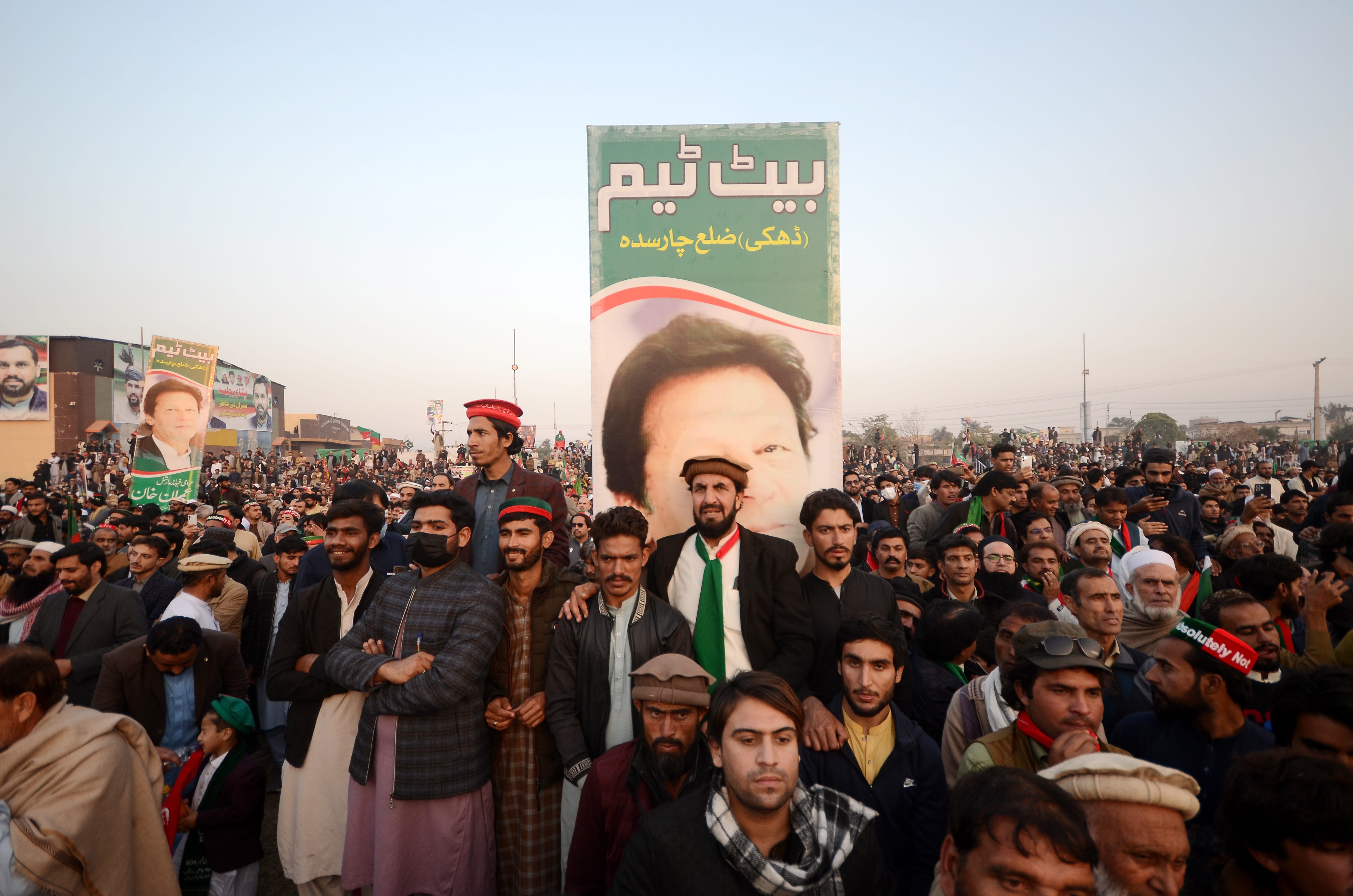
Pakistan is refusing to grant visas to the sons of imprisoned former Prime Minister Imran Khan as concerns mount over Khan’s health in detention. During his incarceration, Khan has largely been held in solitary confinement, with his lawyers and leaders of his political party Pakistan Tehreek-e-Insaaf (PTI) stating that they have been denied any visitation access to him for several months.
In a statement, the PTI said that concerns over Khan’s health have intensified after reports that the former prime minister was diagnosed with a dangerous blockage in the retinal vein of his right eye, a condition that can cause permanent blindness if left untreated.
Sulaiman and Kasim Khan, who live in London with their mother Jemima Goldsmith, submitted visa applications to the Pakistan High Commission in July of 2025, Khan’s sister, Aleema Khan, told Drop Site News. They reapplied for the Pakistani visa on January 15 of this year, but their applications remain stalled at the Interior Ministry, which must approve entry for foreign nationals.
A source inside Pakistan’s Interior Ministry informed Drop Site that the decision to withhold the approvals and prevent access to Khan is intentional. “They will not be given visas,” said the source, speaking on condition of anonymity. “The decision has been made. The government only wants to delay the decision as long as possible without actually announcing the decision.”
The source inside Pakistan’s Interior Ministry said that the government plans to deny the visas on technical grounds, such as failure to disclose recent travel to the United Arab Emirates, rather than issuing an outright rejection. The strategy is to delay the decision as long as possible to give the brothers minimal time to correct their applications and resubmit before February 8, a politically sensitive date marking the second anniversary of a rigged election that kept Khan’s party from power.
In the past, Pakistani government officials had offered assurances regarding the entry of Khan’s sons. Defense Minister Khawaja Asif told Zeteo’s Mehdi Hasan that he could “guarantee” the sons can “Go to Pakistan and meet with their father.” Mosharraf Zaidi, an advisor to the Pakistani prime minister, also said he would “personally call the visa officer” to facilitate entry, though he characterized such intervention as “below my pay grade.”
The visa denials come as Khan, 73, has been held largely incommunicado for nearly two months at the Adiala Jail in Rawalpindi. The former Pakistani prime minister has not been seen by family members since early December and has been denied access to his lawyers for approximately 100 days, according to PTI officials.
On January 24, authorities secretly transferred Khan from Adiala to the Pakistan Institute of Medical Sciences in Islamabad late Saturday for what the government described as a short medical procedure. He was returned to the jail before sunrise Sunday without his family or legal counsel being notified beforehand. According to PTI officials, Khan suffers from Central Retinal Vein Occlusion (CRVO), a serious eye condition. The condition, which affects the blood vessels in the retina, carries a high risk of permanent vision loss without proper treatment.
Dr. Aasim Yusuf, chief medical officer at Shaukat Khanum Hospitals and Khan’s personal physician of more than 20 years, confirmed the CRVO diagnosis and said the condition often requires injections of specialized medications or steroids directly into the eyeball, sometimes combined with laser therapy. In a statement Friday, Yusuf said the condition typically persists for years and requires regular follow-up. The potential underlying causes (such as high blood pressure, diabetes, elevated cholesterol, and hypercoagulable blood conditions) must be also diagnosed and treated.
Yusuf and Dr. Khurram Azam, a Lahore-based retinal specialist, drove to Adiala Jail late Thursday after Khan’s legal team indicated permission for a medical visit might be granted, but authorities turned them away shortly after midnight without allowing them to examine the prisoner. Yusuf said he has provided Khan’s legal team with the names of two retinal specialists based in Rawalpindi and Islamabad who could treat the former prime minister, but stressed that the condition cannot be managed in a prison cell. “He will need to keep going to [the] hospital for repeat treatments and for follow-up for the next many months and perhaps a period of up to two or three years,” Yusuf said.
Khan’s sons last saw their father in 2022 and last spoke with him during a six-minute phone call in September of 2025. Khan has been imprisoned since August 2023 on multiple convictions involving corruption, treason, and illegal marriage, some of which have been overturned by the courts. He has consistently denied all the government’s charges, calling them politically motivated retaliation by the military establishment for his criticism of senior generals. His wife, Bushra Bibi, is imprisoned in the same complex on separate charges. Both have been barred from receiving family visits since December.
Kasim Khan told Reuters in December that the family’s “greatest fear is that something irreversible is being hidden from us.”
The United Nations Human Rights Council’s Working Group on Arbitrary Detention has called Khan’s imprisonment arbitrary, while a UN special rapporteur warned last month that his conditions of detention may constitute “inhuman or degrading treatment.”
Despite the increasing concerns over Khan’s wellbeing, the military-backed Pakistani government and Field Marshall Asim Munir have continued to develop closer ties with Washington. Earlier this month, it was announced that Pakistan would participate in the “Board of Peace,” the new initiative by Donald Trump aimed at imposing a political solution on the Gaza Strip, without participation of Palestinians, including through the likely deployment of outside military forces from select member nations.
Before you go: We have a commitment to ensuring that our journalism is not locked behind a paywall. But the only way we can sustain this is through the voluntary support of our community of readers. If you are a free subscriber and you support our work, please consider upgrading to a paid subscription or gifting one to a friend or family member. You can also make a 501(c)(3) tax-deductible donation to support our work. If you do not have the means to support our work financially, you can do your part by sharing our work on social media and by forwarding this email to your network of contacts.
This isn’t a visa issue, it’s hostage logic. Deny a sick prisoner his doctors, his lawyers, and now his children, then hide behind “technicalities” while his health collapses. The secrecy, the midnight hospital transfer, the stalled paperwork all point to the same thing: fear of scrutiny. When the state treats family access as a political weapon, it’s no longer about law — it’s about control. And it’s telling that Washington keeps calling this a partner while the UN calls it arbitrary detention and inhuman treatment.
The most popular leader in the country is imprisoned and held under conditions more brutal than those imposed on convicted criminals.