

The Pittsburgh Post-Gazette to Shutter After Workers Held Longest Strike in the History of U.S. Newspapers
Block Communications just closed its Pulitzer Prize–winning newspaper, but its workers hope to keep local journalism alive, with their strike paper in hand and support from residents and officials

Corporate outlets answer to advertisers and investors. Drop Site answers to you. While legacy media is being bought up and controlled by billionaire oligarchs, we’re holding them accountable. Your tax-deductible donation isn’t just supporting our work, it’s choosing truth over propaganda, independence over corporate control.
Together, we’re proving that independent journalism backed by thousands of readers is stronger than journalism controlled by a handful of billionaires. Can you make a donation today to help us grow even stronger?
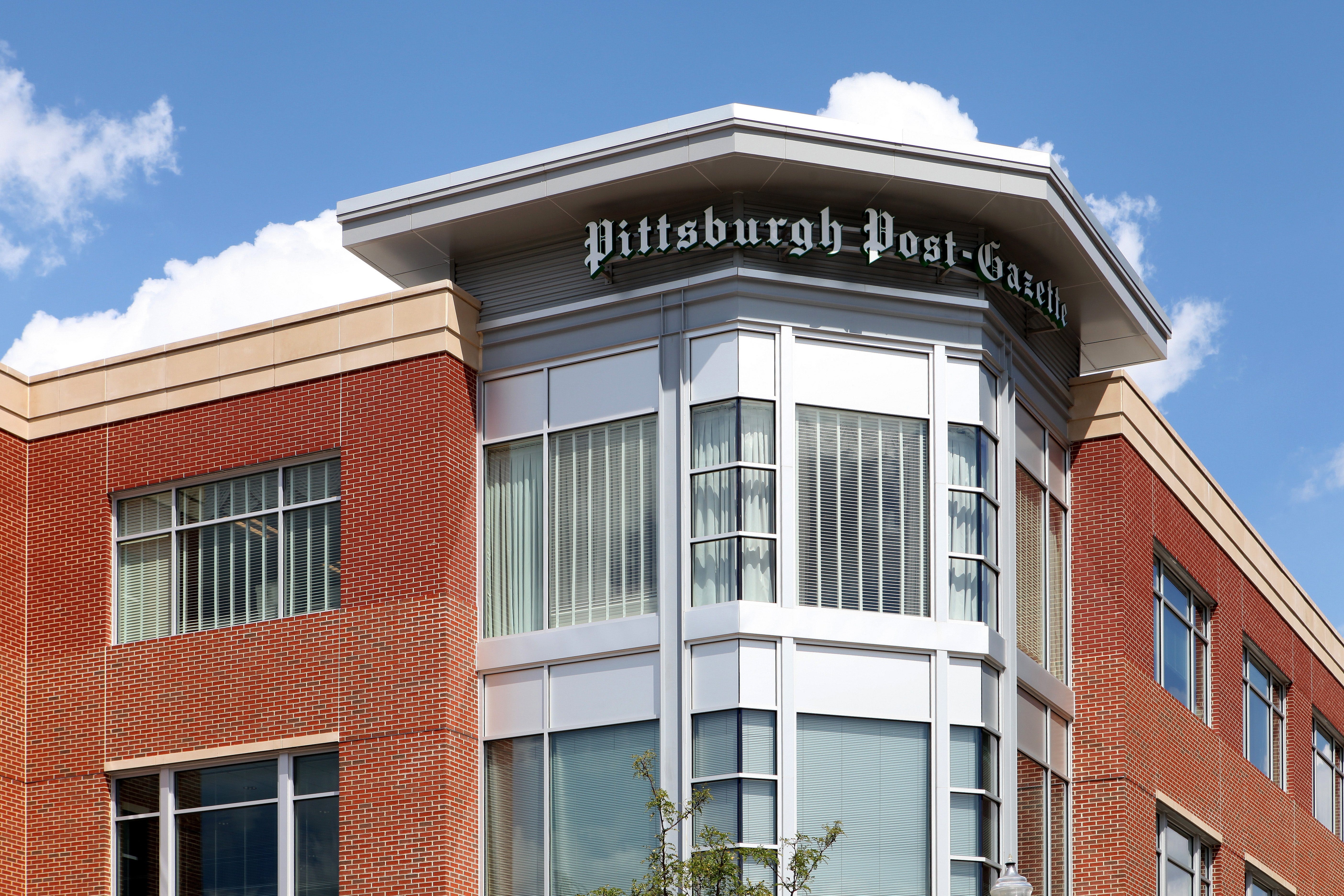
News broke late last year that striking workers at the Pittsburgh Post-Gazette were headed back to the office after more than three years since they first walked out of the newsroom in 2022. Members of the Newspaper Guild of Pittsburgh-CWA returned to work in November as victors in a grueling multi-year struggle with Block Communications—the longest strike in the history of U.S. newspapers and of any Pittsburgh industry. The U.S. Court of Appeals had ordered the company to resume bargaining a new union contract allowing workers and management to move forward with a clean slate.
The family-owned Block Communications has now blocked the possibility. Mere hours after the U.S. Supreme Court denied the Pittsburgh Post-Gazette’s request to stay the November ruling, the owners of the nearly 240-year-old newspaper announced on Wednesday that they would be shutting it down entirely come May. The company claimed in a statement that financial pressures facing local journalism make “continued cash losses at this scale no longer sustainable.” When reached for comment, Block Communications forwarded the previously released statement but declined to comment further.
Block Communications—a regional media conglomerate that also operates The Toledo Blade out of Ohio—is run by the monied Allen and John Block twins, with the latter serving as the Post-Gazette’s publisher. The Block brothers’ pro-Trump political leanings, petty demands, and legal squabbles had caused friction within the newsroom long before anyone made it to the bargaining table. The Post-Gazette workers were informed of the paper’s closure via a pre-recorded Zoom video, which was promptly leaked to a local radio station by the company’s director of operations.
Vice President of the Newspaper Guild of Pittsburgh Erin Hebert worked as an editor at the Post-Gazette since 2016 and contributed to the paper’s Pulitzer Prize-winning coverage of the 2018 Tree of Life shooting. Hebert told Drop Site, “When the Supreme Court told them that they were wrong, they showed us a two-and-a-half minute video over Zoom. I think that’s shameful.” She wondered if Allen Block “just threw a tantrum, called somebody, and said, ‘Hey, play this to everybody right now.’” She added, “It’s devastating that something that old and integral to the fabric of our community would be going away because this family broke the law so flagrantly and refused to ever do the right thing.”
Block Communications violated a previous union contract in 2020 by unilaterally imposing changes to the workplace that forced workers onto a pricier healthcare plan, which ultimately set off the years-long strike, workers say. The Third District Court had ordered them to restore the expired 2017 union contract and resume bargaining for a new one, as well as paying back the workers for any harms or expenses incurred due to the company’s illegal actions, such as increased healthcare costs or lost earnings during bad faith bargaining sessions.
The Blocks will still be liable for those costs should the newspaper shut down this spring, but the damage of the closure will be done to Pittsburgh and local journalism. “Journalists also are the public’s watchdogs. When local news outlets disappear, people have far less information about what’s happening in their community…expertly reported news stories hold both powerful organizations and people accountable to the public,” Pittsburgh Magazine editor Jessica Sinichak wrote in her epitaph for the paper.
Eight days prior to the Post-Gazette announcement, the Blocks publicized their decision to shutter the Pittsburgh City Paper, an alternative weekly bought during the strike. “There are a lot of people in the city that have a hunger for something that is not run by the Block family, who just showed that they have the power to shut down two legacy publications within eight days of each other, which should not be allowed in any market—let alone one as small as Pittsburgh,” Hebert said.
Pennsylvania Congresswoman Summer Lee, whose district encompasses Pittsburgh, agreed in a public statement posted to X, saying “Block Communications has failed our region.” Lee said in her statement, “This is a huge loss for the workers who have stood up for their colleagues, their craft, and their community, and for the readers who relied on these trusted sources for critical information.”
“Instead of simply following the law, the owners chose to punish local journalists and the city of Pittsburgh,” said Andrew Goldstein, president of the Newspaper Guild of Pittsburgh. In his statement, he added that “Post-Gazette journalists have done award-winning work for decades, and we’re going to pursue all options to make sure that Pittsburgh continues to have the caliber of journalism it deserves.”
With the potential demise of their storied newspaper looming over the city, the Post-Gazette workers are mulling their next move. When they weren’t on the picket line, the workers kept busy publishing their own strike paper, The Pittsburgh Union Progress (PUP), with some residents pledging to support Pittsburgh’s journalists through the closure and beyond.
Hebert said that she’s heard from people who want to support PUP or to start something new. “If anything really cool and new and innovative for some sort of sustainable model of local journalism is going to happen, it would happen in a place like Pittsburgh,” she said. “If this continues, there is going to be a vacuum, and who’s going to be the one to fill it? I would hope it would be the journalists who just went on strike for three years to make sure that we are treated fairly.” she added.
“I believe that good journalism comes from people who are investing in their communities and places that they live. I don’t want to be a person who has a remote journalism job running a desk in another state. I want to be able to walk down the street and cover my local borough council.”
 | A guest post by
|
All media should be non-profit and treated as public trusts.
Can this paper be owned by all the workers?