

“They Stole Our Home and Our Life”: Israel Permanently Displaces Syrians in Quneitra
The Israeli military has taken over land in southwest Syria, expelled residents, demolished homes, built new military bases, and conducted arrest sweeps.

Drop Site is a reader-funded, independent news outlet. Without your support, we can’t operate. Please consider becoming a paid subscriber or making a 501(c)(3) tax-deductible donation today.
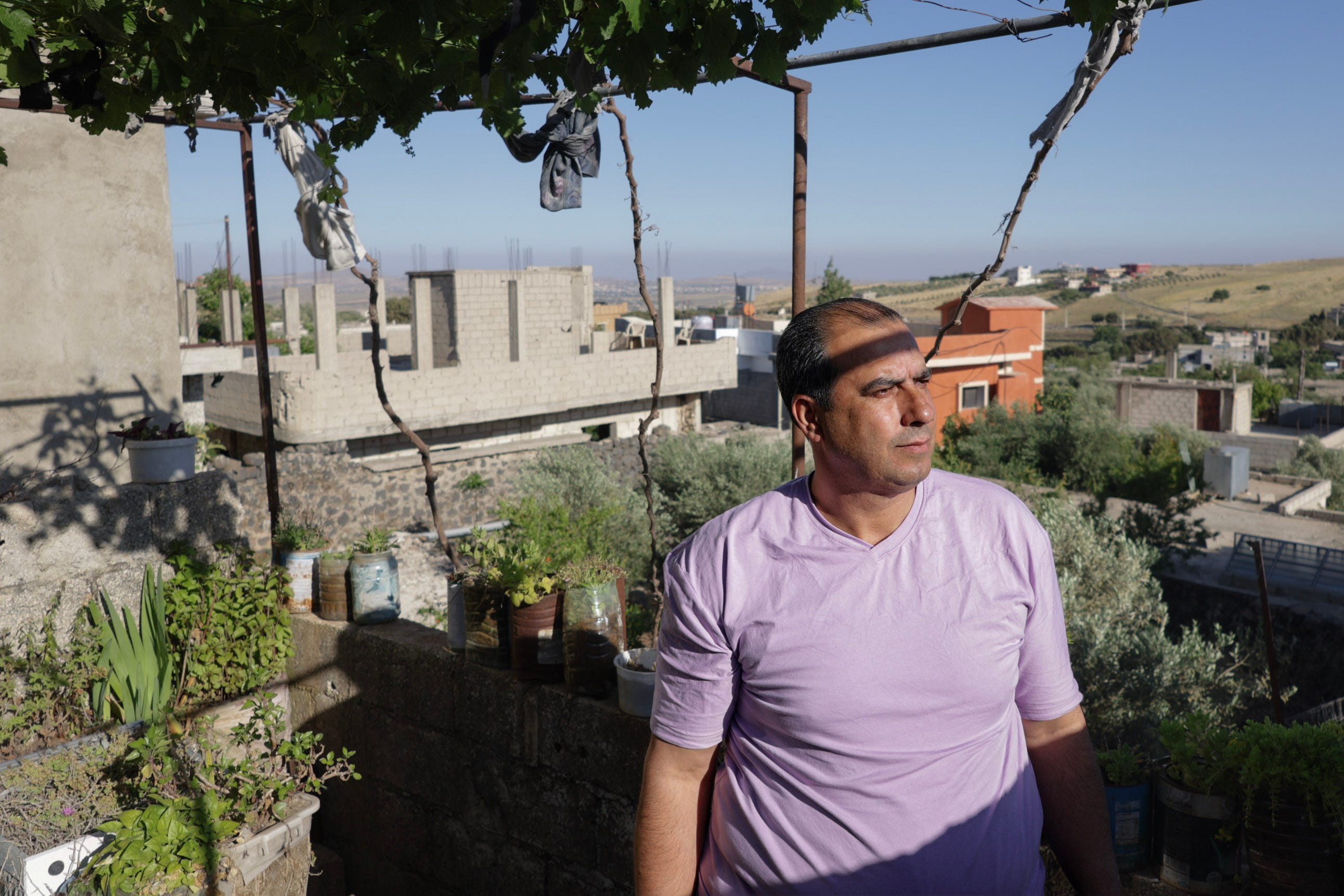
QUNEITRA, Syria—Mohammed Al-Ali never got to celebrate the fall of Bashar al-Assad on December 8, 2024. It was the night his home was stolen by Israeli soldiers. As liberated civilians flooded the streets of Syria’s cities in euphoria, the Israeli military burst into his home in the village of Al-Hamidiya and ordered Al-Ali and his family to leave.
“They barely gave us ten minutes to get out,” Al-Ali, 50, told Drop Site News, teary-eyed as he recalled the night, clutching a cushion in his lap. “We weren’t able to bring anything with us, we left our whole lives behind.”
Al-Ali would never see his house again. Six months after his forced eviction, Israel demolished his home, alongside 15 others in Al-Hamidiya located in the Quneitra countryside of southwest Syria. According to a Syrian official, residents’ reported that Israeli soldiers told them that the homes “blocked sight lines” from a newly constructed military base at the edge of the village. The official dismissed this pretext, saying “Israel uses the same justifications in Gaza and Lebanon.”
Al-Ali’s home had been built by his father. “That house was my life. It is where my children were born and raised,” he explained, sitting in his grandparents’ home in the nearby village of Jubat Al-Khashab. “They stole our home and our life. They stole our memories.”
Over the last year, the new military base has been established on a hill overlooking Jubat Al-Khashab, where Al-Ali now lives. Residents are prohibited from approaching, and an Israeli drone whizzed into view within minutes of Drop Site photographing the base.
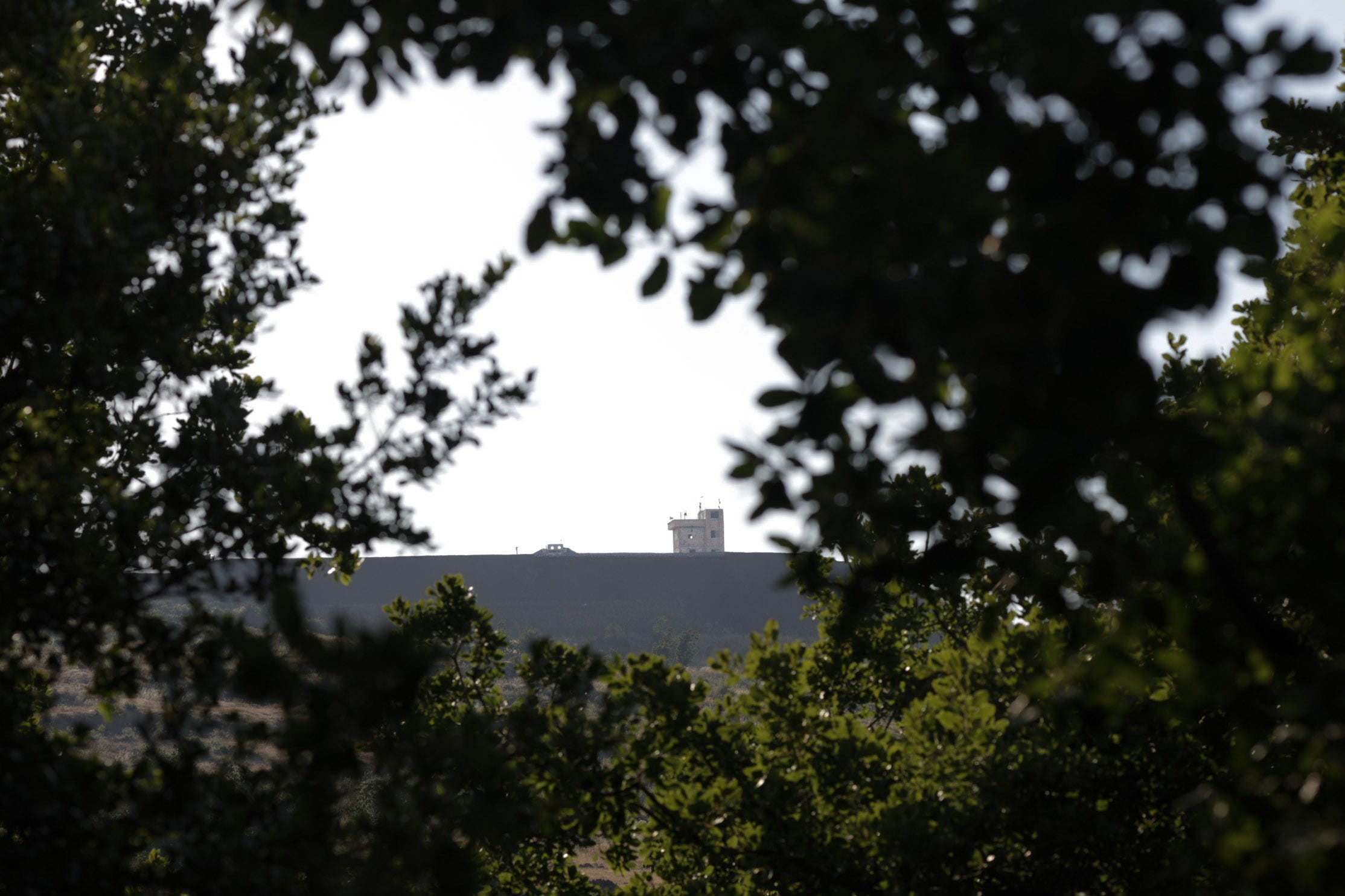
The Israeli military has razed over 110 acres of ancient forest that once stood on the site. Farmers have been prohibited from accessing their fields nearby, and local residents reported incidents of animals that entered the vicinity around the base being seized.
The site has also become the launch point for Israeli raids on Jubat Al-Khashab. On June 7, five young men were snatched from their home just outside the village. Four were reportedly released after several hours of questioning, but one remains unaccounted for. A recent UN report, citing Syrian authorities, found that at least 250 Syrians have been arrested by Israel since 2024, with 50 still detained inside Israel.
The threat of being arrested and imprisoned in Israel—an illegal act under international law— hangs like a specter over Quneitra.
Samar, 23, had snuck a local journalist onto the roof of Al-Hamidiya mosque to photograph the nearby Israeli military base in October 2025, when he noticed a resident looking at them and talking on the phone. Samar used a pseudonym to identify himself for security reasons.
Immediately, an Israeli convoy descended from the base. The journalist managed to escape, but Samar was caught. “The Israelis handcuffed and blindfolded me, pressed a gun to my head,” he recalled.
They questioned him for several hours before finally letting him go. “They told me that if I ever see an Israeli patrol, I should turn and look away from them,” he said. “If they catch me looking they would take me to the Golan and I would disappear.”
The border region in southern Syria technically remains a UN-patrolled, demilitarized buffer zone established by the 1974 disengagement agreement that ended hostilities between Syria and Israel. However, following the ouster of Assad in 2024, Israeli Prime Minister Benjamin Netanyahu unilaterally claimed this agreement had “collapsed” and ordered the Israeli military into Quneitra province from the Golan Heights, which were seized from Syria in 1967, and unilaterally annexed in 1981, a move unrecognised by the international community. Since then, Israel has deepened its occupation of Syria, establishing new positions in Quneitra, and occupying Jabal Al-Sheikh. Israel also launched a massive wave of airstrikes on Syria’s military infrastructure in the days after Assad’s fall, destroying its conventional military capability.
Israeli officials claim without evidence that its raids target individuals linked to Hezbollah and other Iranian-linked groups. In April, Syria’s Ministry of Interior arrested an alleged Hezbollah cell in Quneitra, and seized a mobile rocket launcher—the only notable instance of its kind.
Nevertheless, Syrian officials reject Israel’s justification for occupation. “If Hezbollah cells do enter the province, our position is unambiguous,” said a local official, speaking on the condition of anonymity. “It is the Syrian government’s responsibility to arrest them and hold them to account, not Israel’s.”
“There is no social base for Hezbollah here, and so most of the arrests of local residents are baseless,” he continued.
“These were areas of the revolution, why would we harbor Hezbollah?” said Hail Abdullah, the Mayor of Rasm Al-Rawadi, a village on the border that has had several homes demolished by the Israeli military. For years, Syria helped fund and arm Hezbollah, which intervened in 2013 in the country’s civil war in defense of Bashar al-Assad. The group is opposed to Syria’s new government under President Ahmed al-Sharaa, who has sought to ingratiate himself with President Donald Trump.
Abdullah explained how on December 8, the Israeli military gathered the residents of his village in the local school and ordered them to leave. “They said that they had come to clear Hezbollah from the region, and I replied, ‘why now?’” he recounted. “If you had come at any point during the last 13-years we would have welcomed you, but now you intervene when the fighting is done?”
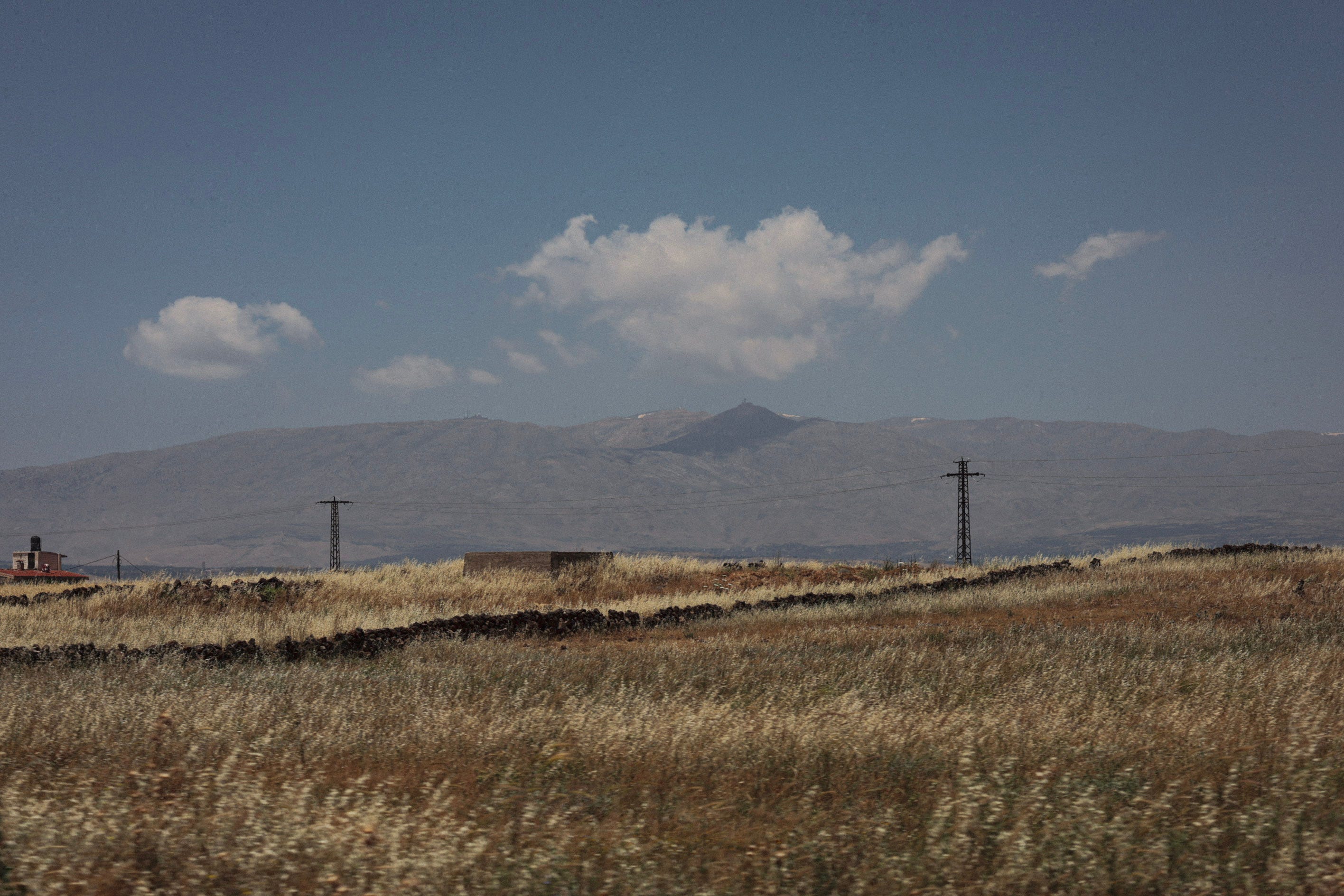
The countryside of Quneitra is a mottled yellow, as the long grass, fed by a year of heavy rain, dries in the sun. The air is hazy with the smoke of crop fires set by farmers, whose plumes dot the landscape intermittently.
In the 18 months since, the Israeli military has occupied the region. While Syrians said they rarely saw Israeli soldiers—who typically operate at night—they feel the military’s presence constantly.
The most frequent reminder is the constant rumble of Israeli jets in the sky above. The Israelis target property, forcibly displacing residents and demolishing their homes. A report by Amnesty International last month identified dozens of such cases, and found that the destruction of civilian homes should be investigated as war crimes. Equally, the report noted that destruction of property is “a hallmark of Israel’s military operations in Gaza and Lebanon, and now in Syria.”
Israel “seized Mantara dam, bulldozes farmland, and institutes grazing bans that make the countryside unworkable,” said Nanar Hawach, senior researcher at the International Crisis Group. “Farmers who lose their fields often leave even when their homes are left standing.”
“Israel is running its southern Lebanon model in Quneitra,” he explained. In the latest phase of its war on Lebanon, Israel has invaded areas of southern Lebanon over the past three months, forcibly displacing some 60 towns and villages, designating them as no-go zones, and engaged in systematical, large-scale demolition of entire communities.
Under the Shadow of the Golan
Hala was staying with her mother in the Damascus countryside, when the Assad regime fell. She rushed to Assad’s notorious Sednaya Prison in search of her husband who had gone missing in 2014. Her nephew, sent to check on her home in the village, which she asked not to be named, found it occupied by Israeli soldiers. “One of the soldiers was from Bab Touma [a neighbourhood in Damascus], he had left as a child in 1992,” she said. “Now he has come back to take our land.”
The day Assad fell, Hala “died twice”. She found out that her husband wasn’t in prison, so was most likely dead, and that the Israeli military had seized her home.
After several days, she went back to her village and “begged [the soldiers inside] to let me take my belongings.” They ignored her as she sat outside her home for hours, clutching a white handkerchief she had been carrying, in the hope it would stop them shooting her. “A few days later they destroyed the home. I don’t even know why.”
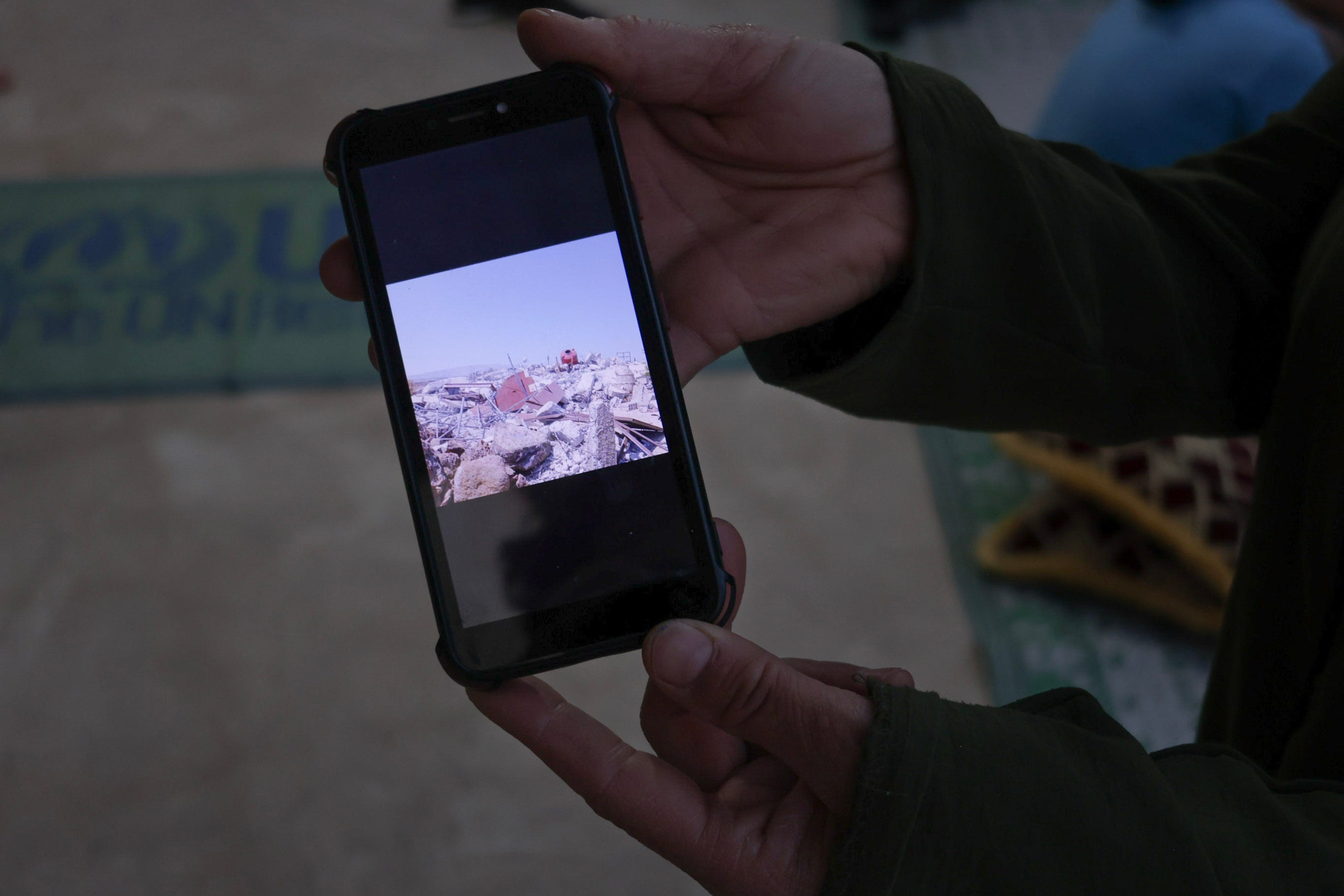
The house she had lost was the third she had rebuilt. The previous two were destroyed during the Syrian civil war. She shows photos on her phone of the new kitchen she had installed only weeks before her eviction. “I paid 10 million lira [roughly $700] for it, but it’s all gone,” she sighed. “Now I am stuck living with my parents again, putting a burden on them.”
Unlike Hala, Al-Ali hasn’t returned to Al-Hamidiya since the eviction. He is too scared. “I’ve spoken to the media now, so if I go back they will probably arrest me,” he said. Al-Ali’s new residence is in Jubat Al-Khashab, a lush wooded village that sits under the shadow of the Golan Heights, whose buttress-like peaks are crowned by Israeli military bases.
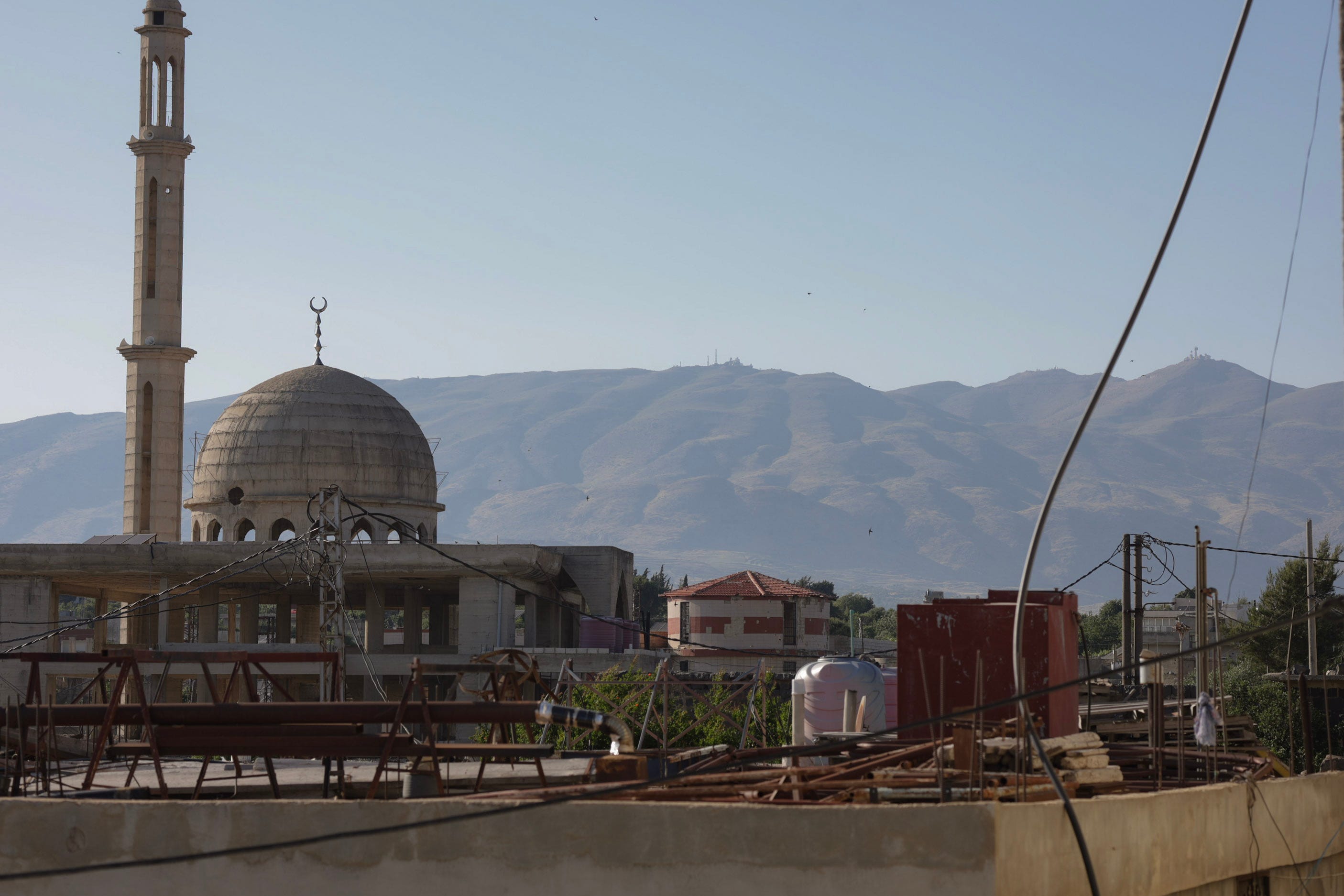
Following Israel’s seizure of the Golan Heights in 1967 war and unilateral annexation in 1981, large numbers of residents were expelled, many of whom resettled in Quneitra, as Israel began building settler outposts.
Israel’s colonization of the Golan is ongoing. In April 2026, the Israeli cabinet approved plans to settle 3,000 new settler families in the occupied region by 2030.
Al-Ali’s grandparents fled the Golan Heights and were never able to return. Ali “[doesn’t] want to repeat the mistake of 1967 again,” and so chose to remain in Quneitra, in his grandparents village, despite the presence of the Israeli military nearby.
“I was born here and I will die here,” he said. “I don’t want to feel the humiliation of being forced to leave this land.”
In April, a large number of settlers, belonging to a group called the “Pioneers of Bashan”—a biblical term for southern Syria—occupied a building in the village of Al-Hader for several hours, singing songs and calling for the colonization of Quneitra. They were later removed by the Israeli military.
“They are attempting to repeat what they have done in the West Bank,” said Hala, 42. “They destroy our homes and force us off our land so that they can claim them.”
 | A guest post by
|
Thank you for this story. It's replicated many times over by the odious Israelis. How the racist jews of Israel cannot throw off their brainwashing shows how stunted they are. My Jewish friends here are not like that, but in Israel, 99.99% are thoroughly ruined from birth. People should know the greater
-Israel goal eliminates not just Palestinians, but anyone else who is not jewish. ANYONE WHO SUPPORTS ISRAEL HAS IS A MONSTER.
Another one of these "buffer" zones that they use to steal land. The Greater Israel project is a menace and MUST be stopped...