

Why Iran’s Oil Infrastructure Is Not Exploding Like Trump Said It Would
Trump’s risky gamble to stop Iran from exporting oil shows no signs of succeeding, experts say.

Drop Site exists because readers like you make a different kind of journalism possible.
We made a commitment from day one: no paywalls. Ever. Someone living paycheck to paycheck can access the same reporting as anyone else. Our journalism isn’t just for people who can afford to pay—it’s for everyone who needs it.
That commitment is what allows us to amplify the voices of journalists risking their lives on the ground in Gaza, Venezuela, Sudan, Pakistan, Syria, and elsewhere. It’s what gives us the editorial independence to publish stories that have real-world impact, stories that powerful interests don’t want told. It’s what lets us compete against billionaire-controlled propaganda machines.
But here’s the reality: we can only do this with your support.
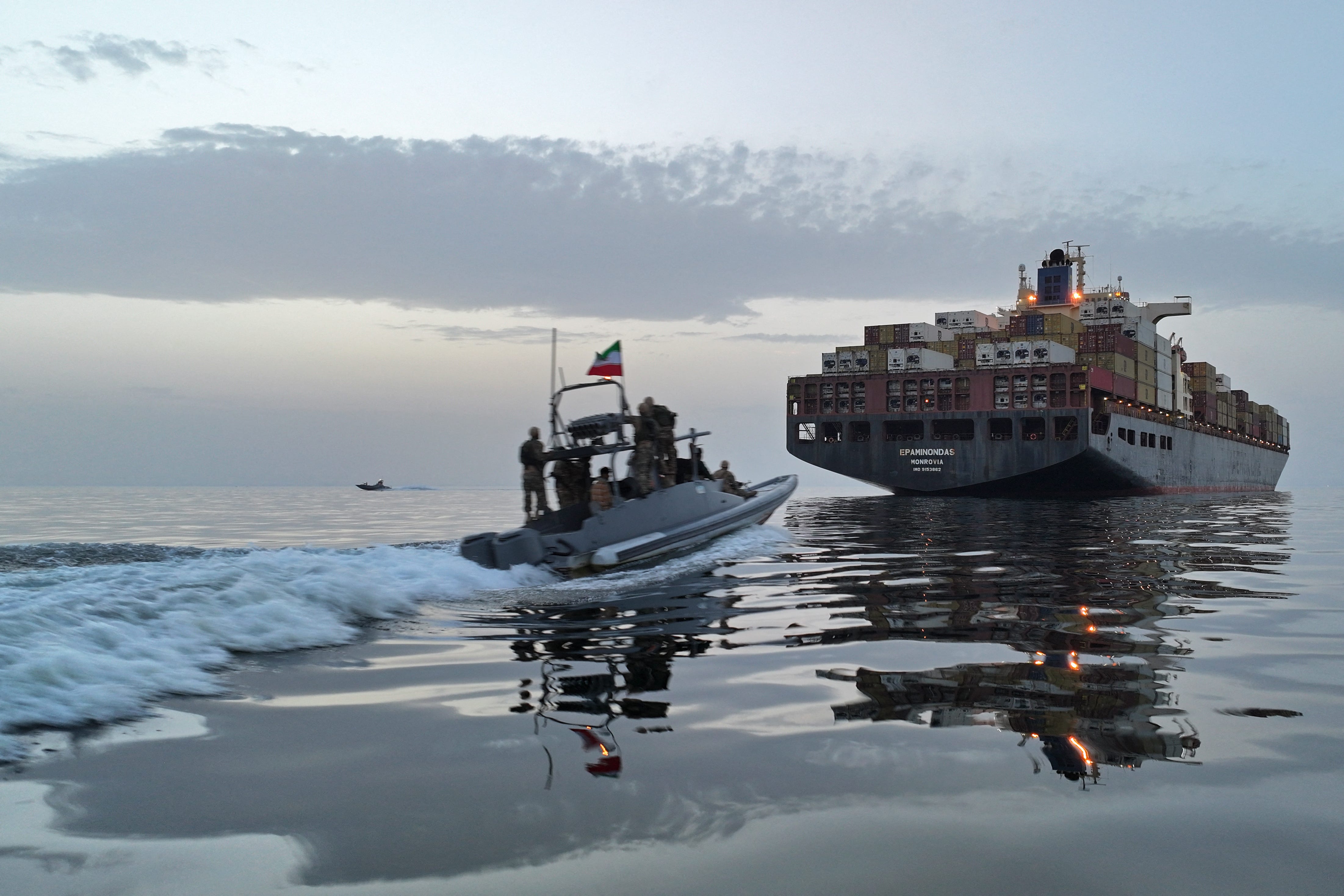
The Trump administration is currently pursuing a high-stakes economic strategy aimed at crippling Iranian shipping in the hopes of forcing Tehran to capitulate to its demands. The U.S. has expanded a blockade of Iranian ports, seizing and turning back container ships, and attempting to choke off energy exports that are vital to the Iranian economy.
At the same time, according to President Donald Trump and administration officials, the U.S. goal is to trigger production shutdowns of Iranian oil and gas fields that would fill up the country’s storage capacity, cause shortages, and ultimately inflict long-term infrastructure damage on Iranian oil and gas fields.
“What happens is that line explodes from within. Both mechanically and in the earth, something happens where it just explodes, and they say they only have about three days left before that happens,” Trump said during an appearance last weekend on Fox News’s The Sunday Briefing, describing what he expected to be the impact of shutting down Iranian oil wells. “And when it explodes, you can never rebuild it the way it is.”
Trump’s three day deadline for Iranian infrastructure explosion passed without incident. Similar statements have also been echoed by Treasury Secretary Scott Bessent, who claimed in a recent post on X that, “IRGC Leaders are trapped like drowning rats in a sewage pipe,” adding that “Iran’s creaking oil industry is starting to shut in production thanks to the U.S. BLOCKADE. Pumping will soon collapse. GASOLINE SHORTAGES IN IRAN NEXT!”
The blockade strategy—which has continued even as the price of Brent crude, the global oil benchmark, briefly rose above $126 in recent days—is based on two assumptions: that economic pressure will make the Iranian government fold to U.S. demands, and that possible shutdowns of Iranian oil export capacity will inflict imminent infrastructure damage on the country that would make capitulation inevitable.
But several Iranian economic experts and individuals with insight into the government’s pre-war planning said that the country had already viewed a blockade as a likelihood and had restructured their oil and gas logistics with the expectation of facing an extended siege.
“Before the war, Iran had emptied a portion of its storage capacity. That’s why Iran had tens of millions of barrels floating on the sea. It already foresaw the situation. Secondly, 70% of Iran’s oil production is used at home and 30% is exported abroad. Iran could re-channel its oil exports through land, through swapping, through many other means,” said Mostafa Khoshchesm, a security analyst in Tehran close to the Iranian government. “That they [the U.S. government] believe that they can fill Iran’s storage capacity with maximum oil in two to three days or one to two weeks is totally wrong.”
The ratio of Iranian oil exported versus domestically consumed has fluctuated over the years—with exports declining under sanctions and the current blockade, but surging in the days and weeks before the war as the country braced for an economic siege. Khoshcheshm also said, citing discussions with Iranian parliamentarians involved in the talks, that Iran had agreed to allow a fixed number of commercial ships through the Strait of Hormuz every day as part of the ceasefire agreement. The offer was withdrawn, Khoshchesm said, after the continued U.S. naval blockade, expanded Israeli bombing of Lebanon, and failure by Washington to unfreeze Iranian assets.
The U.S. has been racing against the clock to see whether the Iranian economy can be brought to a breaking point before the rest of the world—much of which is already beginning to feel economic pain from the shutdown of the Strait of Hormuz. The administration’s claim that the blockade could destroy Iranian infrastructure, trigger immediate economic collapse, hyperinflation, or shortages, has also been echoed by the New York Times, which recently reported claims from U.S. officials stating that oil wells “cannot be turned on and off, and they would be damaged if they are forced to shut down,” and arguing that these risks would force Iran to “make a deal to avoid such long-term problems.”
But numerous experts inside and outside of Iran strongly disputed the claim that causing a production shutdown on Iranian oil wells would trigger serious harm to the country’s infrastructure, with one expert calling the claim reported in the Times “egregiously false.”
“Iran has more storage capacity than the United States is claiming and significant domestic use for the oil. So, the claim by the United States that the wells must shut down completely, may never happen,” said Saeed Laylaz, an Iranian economist and adviser to reformist former Iranian President Mohammad Khatami.
A recent report from Columbia University’s Center on Global Energy Policy assessed that Iran has considerably more crude storage than before, after deliberately expanding capacity in recent years.
The economic intelligence firm Kpler reported on Monday estimates that Iran had “enough unused storage capacity to last another 12 to 22 days,” stating that if the blockade continued it would be forced to reduce daily oil output by mid-May. Other estimates by independent researchers have put the timeline out further to 4 to 6 weeks based on Iranian ability to deploy more floating storage using empty oil tankers in their possession as well as land-based storage facilities.
“The age of Iran’s wells are much older than some newer wells, so we are not faced with the kind of upward gas pressure that will cause a catastrophe if they are shut down,” Laylaz continued. “We also have historical experience. In 1980 our wells were 50 years younger than they are now and our oil production dropped to around 700,000 oils per day—under one-million barrels per day. Back then, we still never faced these questions.”
In the midst of the 1979 Iranian Revolution, the country’s oil production briefly fell by as much as 90% due to shutdowns and disruptions. Laylaz added that Iranian officials viewed the American claims of energy shortages or damage to infrastructure from shutdowns as “an attempt to apply pressure through propaganda.”
“The Americans either don’t have enough information or they’re distorting the information,” Laylaz said. “The fact that they’re trying to sow fear among the Iranian public is not a new policy.”
Emerging Timelines
The exact timeline that Iran faces for continuing oil production without overwhelming its storage facilities remains unclear, although Trump’s three-day prediction for the implosion of the Iranian oil industry is already long past.
In particular, energy industry experts disputed the notion that Iran would suffer structural damage to its infrastructure from a shutdown, noting that Iran made similar planned shutdowns of its infrastructure in response to sanctions measures in 2012 and pandemic related disruptions in 2019.
“Iranian oil fields, wells, and pipelines aren’t going to explode from being shut down,” said Robin Mills, a non-resident fellow at the Center on Global Energy Policy and the CEO of Qamar Energy. “Fields shut down all the time—they shut down for maintenance, OPEC restrictions, all kinds of reasons. It can be quite normal to even shut down production for weeks, or even months at a time and there are no major technical safety risks from doing so. Ideally, you would want a few days or weeks of warning, which the Iranians seem to have had in this case.”
In recent weeks, Iran has begun deploying improvised storage containers—including mothballed storage tankers in the Persian Gulf brought back into service to help deal with the blockade—as a means of continuing production in the face of the dilemma imposed by the blockade and avoiding production stoppages.
But even if the Trump administration’s strategy succeeded in forcing Iran to pause production, that would still not inflict immediate economic harm on the country, analysts said. Prior to the imposition of the blockade, Iran had continued shipping oil out of the strait, primarily to China which is the consumer of the vast majority of its energy exports.
The timeline for an Iranian tanker to reach China is roughly two months, followed by another two months before Iran receives payment. This means Iran itself may not feel the full economic impact of the blockade until four months after a total halt on energy production and shipping goes into effect—by which time the global economy would experience catastrophic harm.
“Iran will still receive revenues from exports shipped out between January and April—they will not necessarily see the full weight of the economic impact from this blockade for several more months,” said Brett Erickson, a sanctions and geopolitics expert and managing principal at the strategic consultancy firm Obsidian Risk Advisors. “If the blockade takes another 2-3 days to force them to capitulate or reach an agreement, that’s fine. If it takes 2 months that is a nonstarter for the global economy.”
“Holding all the cards”
The U.S. blockade on Iranian shipping has emerged as a major barrier to a resumption of talks with the Iranians repeatedly stating that they will not return to the negotiating table while this policy is in place. In the absence of Iranian capitulation, the Trump administration has expanded its attacks on Iranian commercial shipping while also hinting at the possibility of resumed bombing.
“Inside Iran, there is a general sense that while such measures can create pressure, they do not have the same structural impact they might have had in the past. Iran has lived under sanctions for years, and a significant part of its economy has adapted, whether through domestic production or alternative trade routes, including land borders,” said Peiman Salehi, a political analyst based in Tehran. “At the same time, there is a perception that disruptions in Hormuz have a wider global impact. The question being discussed here is not whether Iran will be hurt, but how much the global system can absorb prolonged disruption in energy flows. Europe, in particular, is seen as highly exposed.”
Europe is losing nearly €500 million a day due to rising fuel costs driven by the ongoing conflict, said European Commission President Ursula von der Leyen, while addressing the European Parliament on Wednesday, according to Politico. In just 60 days of conflict, “our bill for fossil fuel imports has increased by over €27 billion, without a single molecule of additional energy,” said von der Leyen.
While the Trump administration has repeatedly vacillated between declaring victory and predicting imminent success, Salehi says Iran has already priced in an extended period of confrontation and is willing to continue until a favorable balance of power is reached that prevents future attacks on the country by the U.S. and Israel.
“The U.S. operates under political timelines, elections, economic cycles, and upcoming events like the World Cup. Iran, by contrast, is not working under the same kind of immediate time pressure,” added Salehi. “Many people here see the current phase not as the end of the war, but as a pause within a longer confrontation. There is a strong belief that unless a decisive outcome is reached, the conflict could resume, especially after key political moments in the U.S.”
While the Trump administration continues to try and find a way to break the negotiating deadlock, the global economy is facing increasing shocks, particularly in Asian and European countries that have relied on the U.S. as a security guarantor. The Philippines declared a national energy emergency on March 24, the first country to do so as a result of the crisis, while Bangladesh ordered universities to close early and warned commercial establishments to do the same to conserve fuel.
In a recent interview, the foreign minister of Thailand, a long-time U.S. ally, complained that the U.S. had offered no assistance to the country to deal with energy shocks from the war besides encouraging it to buy from U.S. energy producers, forcing them to turn to Russia and China for assistance. Germany, France, Italy, and Spain meanwhile have all warned their populations to brace for rapid price spikes or prepare for similar emergency measures as those being implemented already across Asia.
“I worry that we are going to continue to wait a few more weeks and refuse to negotiate in a serious manner. We have already seen D.C. cancel negotiations twice in Islamabad by refusing to lift the blockade and extending the timeline. I am concerned that we are going to double down on this, which would have catastrophic effects if unsuccessful,” Erickson said.
“It certainly is a major gamble from the Trump administration.” Erickson added. “They better be holding all the cards as they say they are, otherwise Iran is going to beat us on the river card, and the entire world economy is going to pay the price.”
As usual, Drop Site is delivering fantastic coverage - and details - of events that others won't. Literally zero ballroom-class media outlets are doing journalism - they're running cover, if not outright propaganda on behalf of their fellow billionaires. Or they're completely unsober to realities which conflict with their wishfulness. Really great piece by Murtaza.
Here's something else:
I think this quote - from Donald Trump himself - is actually quite truthful **when attributed to the current state of the US under his administration**, as opposed to its intended purpose of denigrating Iran's infrastructure:
**"And when it explodes, you can never rebuild it the way it is.”**
Caitlyn Johnstone wrote a few years ago about the US being the most propagandized country on the planet. When I first read those words, I was offended because I "knew" it was untrue. It wasn't until about two years ago when I realized how correct she really was. Our government has been exposed as the most vile on earth; even more so that israel . . . because we knowingly pay for their genocides along with our own.