

As Trump Launches “Massive” Regime Change War, Iran Strikes Back at U.S. Bases and Vows Not to Capitulate
Diplomacy was weaponized as an “instrument of deception,” an Iranian official tells Drop Site. Tehran promises to inflict losses on the U.S.


Drop Site’s journalism is free to read because thousands of readers choose to fund it. If our work matters to you, please consider making a tax-deductible donation today.
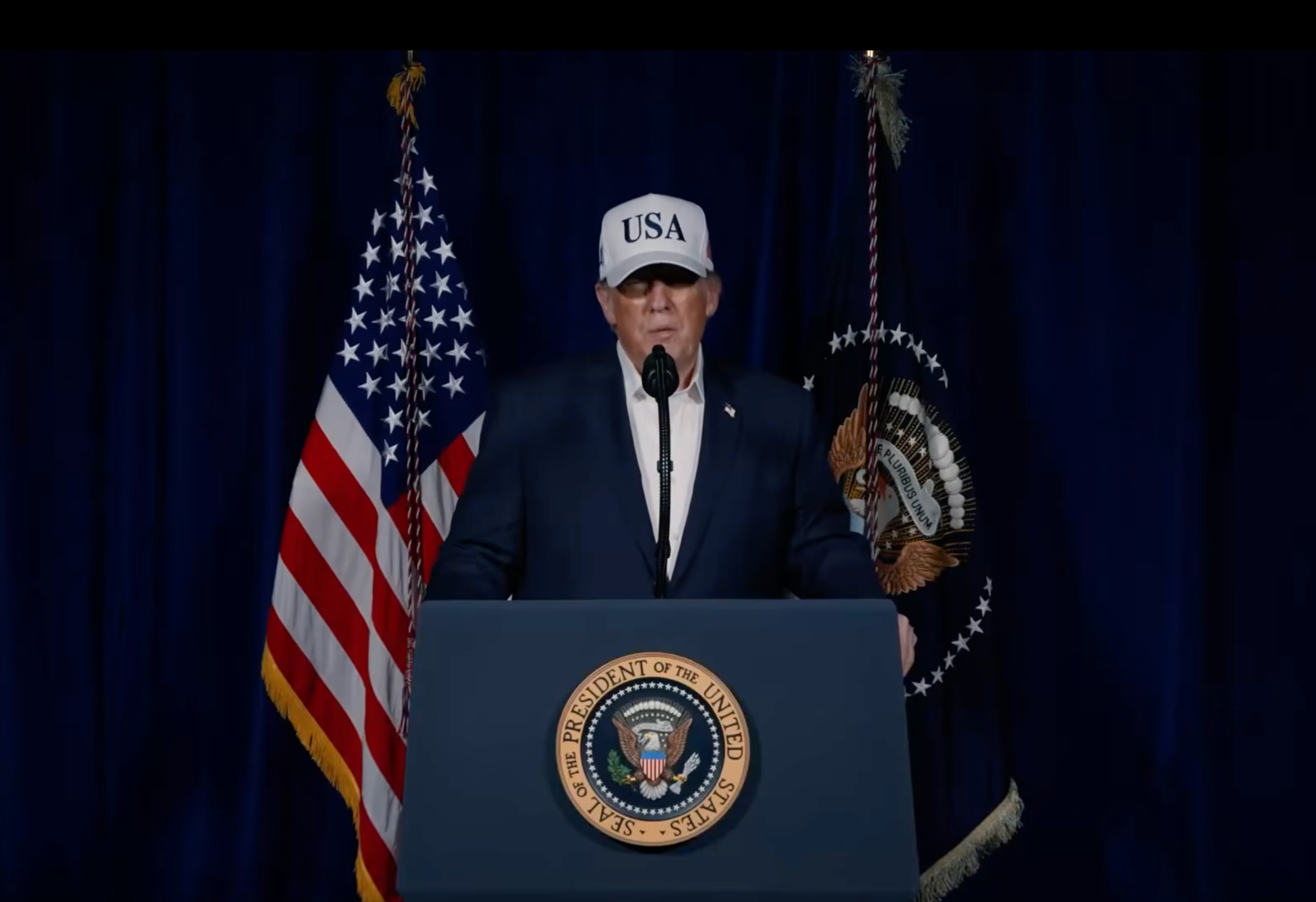
At approximately 9:40 a.m. local time in Iran, President Donald Trump launched what he bluntly characterized as a regime change war aimed at eliminating the Iranian leadership, destroying the country’s missile system and naval forces, and calling on Iranians to rise up and seize control in the aftermath of the attacks. The bombing campaign was initiated by Israel but Trump’s statement announcing U.S. involvement made clear the stakes to Iranians: “Bombs will be dropping everywhere. When we are finished, take over your government. It will be yours to take,” Trump said in a taped statement on Truth Social soon after Operation Epic Fury began. “This will be probably your only chance for generations.”
In what has now become a signature component of Trump’s approach to Iran, the U.S. constructed a false veneer of continuing diplomatic negotiations, only to turn around and launch a major attack.
In the months running up to the strike, Israel and the U.S. reportedly engaged in close coordination to synchronize attacks aimed at decapitating the leadership of Iran and degrading its ballistic missile program. This morning, strikes targeted both the Supreme Leader Ali Khamanei and President Masoud Pezeshkian; while Israel claimed the targeting was successful, Iran denied that either had been killed.
Iranian Foreign Minister Abbas Araghchi, speaking in an interview with NBC, said Iran’s supreme leader and president are still alive “as far as I know.” Araghchi added that while “one or two,” commanders may have been killed, senior government officials including the head of judiciary and the parliament speaker survived.
Technical negotiations on the nuclear file were scheduled for Monday in Vienna, and the Omani foreign minister—who had been mediating the talks—had just concluded a visit to the U.S. where he met with Vice President JD Vance and proclaimed that a diplomatic agreement was within reach. It was the precise tactic Trump employed last June when the U.S. and Israel initiated a 12-day bombing campaign targeting Iranian nuclear facilities and killing more than 1,000 Iranians in the process.
“Once again, diplomacy has been reduced to an instrument of deception, and international law has been openly disregarded by the United States. The assassination or elimination of Iranian political and military officials will have no impact on the continuity and authority of the Iranian system,” a senior Iranian official told Drop Site on the condition of anonymity because he was not officially authorized to speak. “We had anticipated that unlawful and aggressive attacks by the United States and Israel were far more probable than the acceptance of a fair and effective agreement. For this very reason, the military and political posture of the country had been carefully planned and structured for precisely such circumstances.”
In his announcement of the U.S.-Israeli war against Iran, Trump spoke in sweeping terms about the military and political objectives, boasting that “no military on earth is even close to its power, strength, or sophistication.”
“We are going to destroy their missiles and raze their missile industry to the ground. It will be totally totally, again, obliterated. We’re going to annihilate their navy,” Trump said. He called on members of the Iranian Revolutionary Guard Corp (IRGC) to lay down their weapons and surrender. “ I say tonight that you must lay down your weapons and have complete immunity, or in the alternative, face certain death,” Trump said. “You will be treated fairly with total immunity, or you will face certain death.”
Dr. Foad Izadi, a professor at the University of Tehran, told Drop Site that despite the massive deployment of military assets in the region and Trump’s vow to enact regime change, he believes the stated aim will ultimately fail. “They cannot do it. It’s not possible—physically not possible. Iran has a population of over 90 million. You cannot kill everybody,” Izadi said. “Iran is not an organization or a small entity. Iran is a serious country with a serious history. And we have seen aggression in the 7,000 years of Iranian history. And the aggressors have been defeated and Iran has continued to live.”
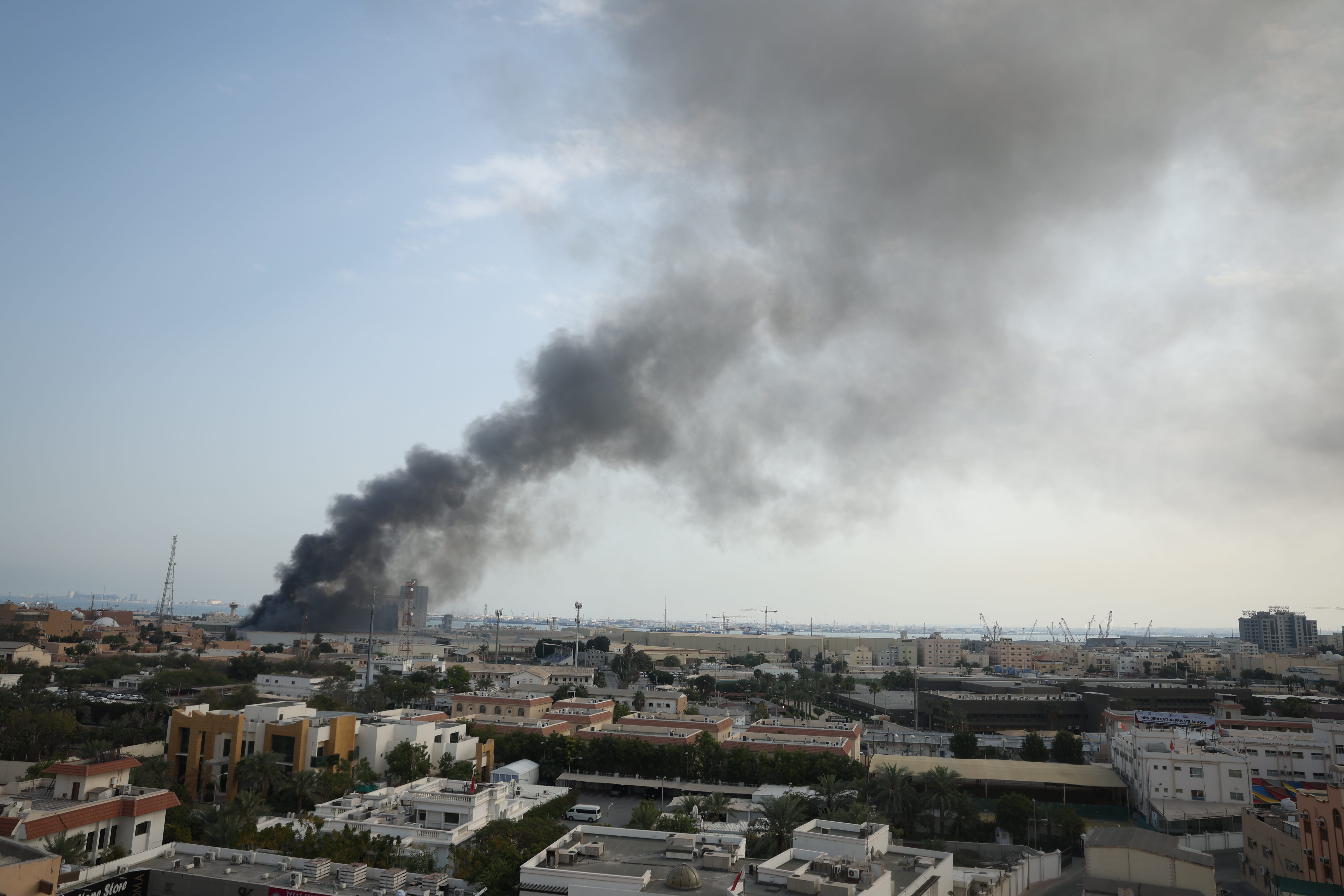
In contrast with previous attacks by the U.S. and Israel, within hours of bombs hitting cities across Iran, Tehran unleashed a series of ballistic missile and drone strikes aimed at Israel and U.S. military facilities across the Persian Gulf, as well as in Jordan. Iran targeted U.S. assets in Qatar, the UAE, Kuwait, Bahrain, Syria, Jordan, and Iraq.
It is not yet clear what targets were hit in Israel. Videos of Iranian Shahed drones and ballistic missiles hitting U.S. positions quickly emerged on social media including attacks on radar stations in Bahrain. Only one casualty has been officially reported so far in the attacks—a laborer in the UAE killed by shrapnel from an intercepted missile. Reports have also emerged online of strikes targeting the Muwaffaq al-Salti airbase in Jordan, which is hosting dozens of U.S. military aircraft deployed for use in the operation.
“The instruction [the Iranian military] had was that once the US or Israel attacked, the targets that were supposed to be hit were supposed to be hit, and they needed no more instructions, and that’s what they did. And this is going to continue,” said Izadi, who maintains close contacts with members of Iran’s leadership. “The consensus here is that the pain for the other side should be strong enough so these types of attacks every few months are not carried out against Iran.”
Trump acknowledged that U.S. personnel could be killed in his war based on Iran’s capacity to launch strong ballistic missile counterstrikes. “My administration has taken every possible step to minimize the risk to U.S. personnel in the region. Even so, and I do not make this statement lightly, the Iranian regime seeks to kill. The lives of courageous American heroes may be lost, and we may have casualties,” Trump said. “That often happens in war, but we’re doing this not for now. We’re doing this for the future, and it is a noble mission.”
Gulf Arab countries and Jordan all issued condemnations of Iranian “aggression,” but did not condemn the U.S. launching the war against Iran. Saudi Arabia quickly condemned the Iranian counter attack instead of the initial U.S. and Israeli strikes, with the foreign ministry saying in a statement that it “denounces in strongest terms the blatant Iranian aggression and the flagrant violation of the sovereignty of the UAE, Bahrain, Qatar, Kuwait, and Jordan. The Kingdom affirms its full solidarity with and unwavering support for the brotherly countries, and its readiness to place all its capabilities at their disposal in support of any measures they may undertake.”
“The failure of countries in the region—especially those hosting American military bases—to condemn this criminal U.S.-Israeli attack on Iran is deeply regrettable. This is not merely an Iranian matter; it is a matter concerning the entire region,” the Iranian official told Drop Site. Pointing out that Iran is striking U.S. bases in these countries, he added, “It is certain that American soldiers stationed in the region will not return home alive.”
Last month, as the threat of a U.S. attack was growing, Saudi Arabia struck a different chord, with Saudi Crown Prince Mohammed bin Salman calling Iranian President Masoud Pezeshkian to inform him that the kingdom was ruling out the use of its airspace for a potential attack. The UAE also said it would not allow its airspace or territorial waters to be used in any military action against Iran.
The breadth and immediacy of Tehran’s retaliatory strikes in the region are unprecedented. In his statement to NBC, Araghchi said Iran had communicated its intentions to Gulf Arab countries, stating that “I was in contact with my colleagues in the Persian Gulf and explained to them that we have intention to attack them; but we are actually attacking the American bases in an act of self-defense. We cannot just sit and watch them attack us and not respond simply because their bases are in a friendly neighboring country.”
After the initial wave of U.S. and Israeli attacks, videos circulated showing the aftermath of an airstrike that struck a girls’ elementary school in southern Iran, including harrowing images of families screaming and searching through the rubble of the collapsed building. According to state-run IRNA news outlet, the attack on a girls’ elementary school in Minab, a city in southern Iran, killed at least 60 students. Many more students were reportedly trapped beneath the debris; approximately 170 girls were inside the school at the time.
Araghchi said the attack “will not go unanswered.”
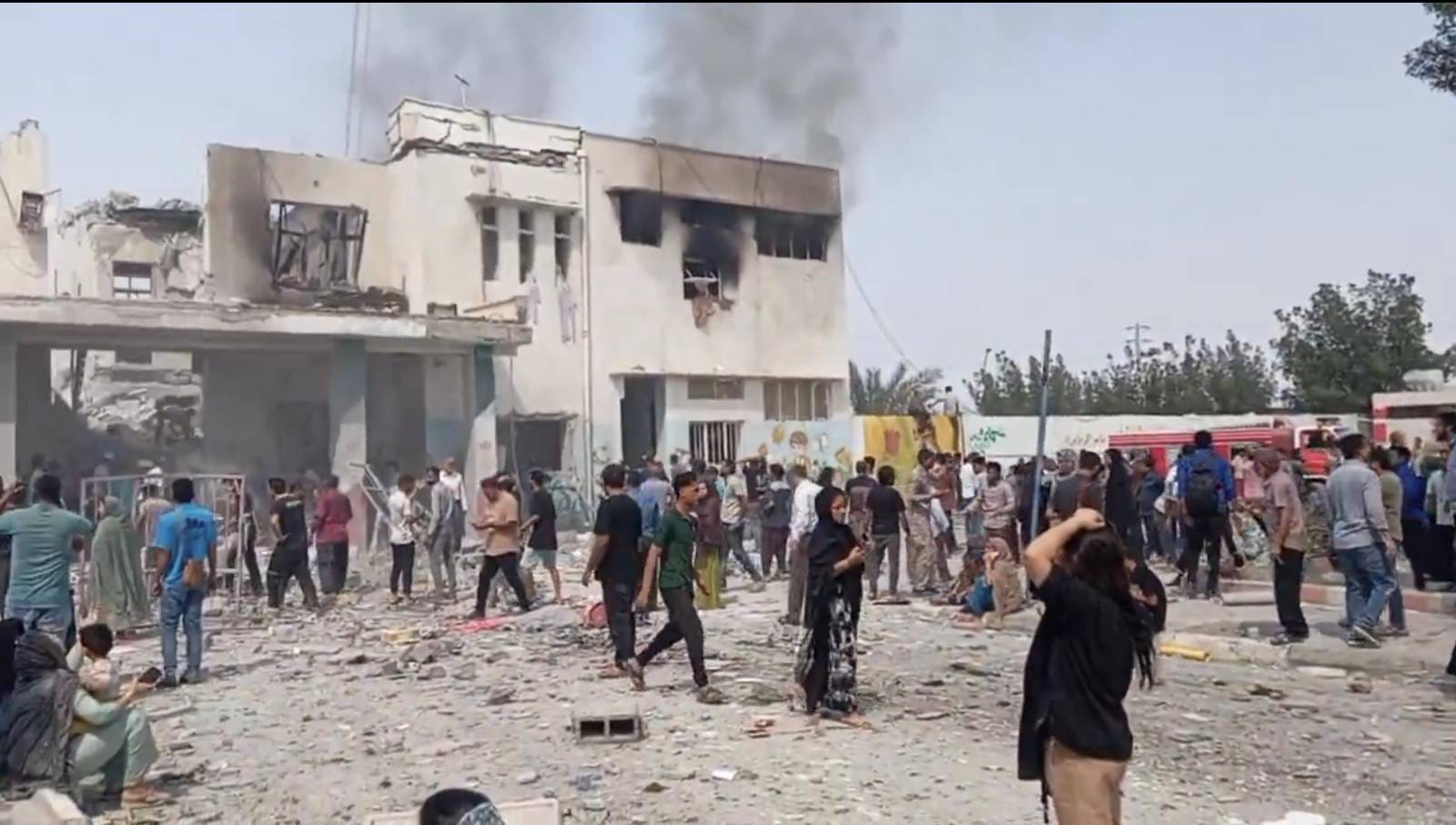
“The targeting of civilian infrastructure—such as schools and hospitals—in the city of Minab sends a clear message to all: in this criminal aggression, the attackers recognize no red lines and evidently intend to shed a great deal of the blood of the noble people of our country,” the Iranian official told Drop Site.
Both the House and Senate indicated that lawmakers would vote on respective War Powers Resolutions early this week, which in theory could limit Trump’s ability to attack Iran because the U.S. constitution states that Congress has the exclusive authority to declare war. In launching the strikes, the Trump administration preempted any formal congressional debate.
“We had Congresspeople talking about the War Powers act, so they wanted to get this started so diplomacy wouldn’t have a chance,” Izadi said. “And this is logical because they’re saying that they want to overthrow the Iranian government and if you want to do that, then you shouldn’t be reaching a diplomatic solution. Because if you reach a diplomatic solution, that means there is no war. And if you want to overthrow the government, you need war. So this was very much a deception operation.”
Drop Site News Middle East Research Fellow Jawa Ahmad contributed to this report.
When did the mass slaughter of children become normalized? Can you imagine another country dropping a bomb on a school in the US? Why do we tolerate/facilitate this evil, this hypocrisy?
"**Gulf Arab countries and Jordan all issued condemnations of Iranian “aggression,” but did not condemn the U.S. launching the war against Iran.** Saudi Arabia quickly condemned the Iranian counter attack instead of the initial U.S. and Israeli strikes, with the foreign ministry saying in a statement that it “denounces in strongest terms the blatant Iranian aggression and the flagrant violation of the sovereignty of the UAE, Bahrain, Qatar, Kuwait, and Jordan. The Kingdom affirms its full solidarity with and unwavering support for the brotherly countries, and its readiness to place all its capabilities at their disposal in support of any measures they may undertake.”"
**Royal** Arabia, just another front for the US and Israel..