

Trump struggles to secure Strait of Hormuz; Israel launches ground invasion of Lebanon; North Korea conducts new missile tests
Drop Site Daily: March 16, 2026


Iran hit with “wide-scale wave of strikes” as the war enters its third week. U.S. airstrikes hit oil-production hub. More Marines and warships being sent to the Middle East. Trump warns allies against refusing to send ships to Strait of Hormuz. Araghchi says Strait of Hormuz only closed to “enemies.” IRGC aerospace chief claims Iranian missile “hit rate” has doubled. Iran launches multiple missile waves at Israel, Iraq, and Kuwait. Iran claims regional attacks are “false flag” operations meant to frame Tehran. Goldman Sachs warns Gulf economies could contract sharply; U.S. Energy Secretary says war “will definitely come to an end in the next few weeks.”
Israel launches ground operation in Lebanon. Israeli strikes hit multiple sites across Lebanon. Israeli strikes across Lebanon kill dozens and hit medical and UN sites. Israeli strike kills eight police officers in central Gaza. Israeli forces kill family of four in Tammun in northern West Bank. Limited opening of Rafah following Israeli closure.
Senate set for weeks-long debate and vote on SAVE America Act starting Tuesday. Illinois primaries on Tuesday. FCC Chair threatens to revoke broadcast licenses over Iran war coverage. Afghan U.S. ally dies hours after ICE arrest in Texas. ICE released Haitian asylum seeker alone in Pittsburgh; she was found dead days later. Immigration judge orders release of Palestinian activist Leqaa Kordia on bond for third time.
“Private Mossad” caught spying on center-left Slovenia government. Bobi Wine says he fled Uganda after disputed election. Somalia says 22 Al-Shabaab fighters killed in joint operations. Pakistan launches strikes inside Afghanistan overnight. EU renews sanctions on Russia as attacks hit Ukrainian energy infrastructure. Rwanda warns it may withdraw troops from Mozambique mission without EU funding. North Korea conducts new missile tests. Ambush in Nigeria’s Plateau state kills security personnel. Reports of protests turning violent in Cuba after announcement of U.S. talks.
This is Drop Site Daily, our free daily news recap. We send it Monday through Friday.
War on Iran
Iran hit with “wide-scale wave of strikes” as the war enters its third week:
The Israeli military announced it had begun a “wide-scale wave of strikes targeting infrastructure” in the cities of Tehran, Shiraz, and Tabriz.
Several civilians were killed in an Israeli airstrike on an electricity department building east Tehran, according to the Fars news agency.
At least five people were killed and seven injured after strikes on Markazi province.
U.S.-Israeli airstrikes hit the Shahid Khomeini Boys’ School in the city of Khomein at dawn. No casualties were reported, according to the Mehr news agency, though many houses in the area were damaged.
U.S. and Israeli airstrikes continued to pound Iran over the weekend:
Six people were killed and seven others injured after a projectile strike hit a rural home in Khizab village near Khomein in Iran’s central Markazi Province on Saturday, according to Iranian media reports citing a provincial security official.
A strike on a residential house in Ivan, a city in Ilam province near Iran’s border with Iraq, killed six members of the same family on Saturday, including a six-month-old infant, according to provincial officials cited by Iran’s Fars News. The explosion destroyed the home and was reportedly heard across the city.
At least 15 people were killed after a strike hit a factory in the central Iranian city of Isfahan on Saturday, according to the Fars News Agency. The victims were reportedly factory workers producing heaters and refrigerators who were inside the facility when it was struck.
Massive explosions were reported early Saturday at the Iranian Space Research Center in western Tehran, a civilian government facility involved in satellite development and space technology research. Iranian media said the site was among several locations hit in the capital as Israel continued strikes on military and research infrastructure, with video circulating online showing smoke rising from the complex, followed by large blasts. The center is part of Iran’s civilian space program, though Israel and the United States have accused Iran of using the facility for the development of rocket and satellite technologies.
Casualty count: At least 1,444 people have been killed and 18,551 injured in US-Israeli attacks on Iran since the war began on February 28, according to Iran’s Health Ministry. The attacks have killed 223 women and 202 children, 41 of whom were under the age of two, the ministry reported Sunday.
U.S. airstrikes hit oil-production hub: U.S. airstrikes hit Kharg Island on Friday, multiple reports say. Witnesses to the attack described at least 15 explosions targeting the island’s air defense systems, the Joushan naval base, the airport control tower, and a helicopter hangar used by Iran’s offshore oil company. Iran claims that its oil export infrastructure was not damaged, a claim later buttressed by satellite imagery published by The Washington Post. President Donald Trump said the strikes “obliterated” all military targets on the island, including its air defenses, though Iranian reports say those systems resumed activity hours later.
Iran says Kharg and Abu Musa strikes launched from UAE: Iran Foreign Minister Abbas Araghchi alleged on Saturday that attacks on Kharg Island, Iran’s main oil export terminal, and Abu Musa in the Persian Gulf were carried out using HIMARS rockets fired from the United Arab Emirates. Araghchi said the launches came from two locations in the UAE—one in Ras Al Khaimah and another near Dubai—adding that Iran “will certainly retaliate” while attempting to avoid attacks on populated areas.
More Marines and warships being sent to the Middle East: Some 2,500 Marines on as many as three warships are heading to the Middle East from the Indo-Pacific region, according to The New York Times. The Marines will join more than 50,000 American troops in the region. It is unclear how the new deployment would be used.
Trump warns allies against refusing to send ships to Strait of Hormuz: President Donald Trump said on Sunday that he has “demanded” that about seven countries heavily reliant on Middle East oil join a coalition to police the Strait of Hormuz, which has been effectively blocked by Iran. “I’m demanding that these countries come in and protect their own territory, because it is their own territory,” Trump said. “It would be nice to have other countries police that with us, and we’ll help. We’ll work with them.” On Saturday, he listed China, France, the UK, Japan, and South Korea as countries he hoped would send ships. A German government spokesperson said NATO would not participate. “As long as this war continues, there will be no participation, not even in any effort to keep the Strait of Hormuz open by military means,” the spokesperson said. Meanwhile, British Prime Minister Keir Starmer said in a press conference at Downing Street that the UK would not be drawn into a wider war. Greece also said it would not engage in any military operation in the Strait of Hormuz. The price for Brent crude oil has increased more than 40% since the start of the war.
Araghchi says Strait of Hormuz only closed to “enemies”: Iranian Foreign Minister Abbas Araghchi said in a press conference in Tehran on Monday that the Strait of Hormuz is only closed to the U.S., Israel, and their allies. “They are asking other countries to come and help them so that the strait remains open. From our perspective, the strait is open, but it is closed to our enemies, closed to those who carried out this cowardly aggression against us and to their allies,” Araghchi said. Iran allowed two Indian-flagged LPG carriers to pass through the Strait of Hormuz on Saturday, according to Indian media reports.
Dubai airport suspends all flights: All flights were temporarily suspended at Dubai International Airport after a drone struck a fuel tank and sparked a fire, Emirati authorities said on Sunday. Dubai airport has since resumed reduced flight operations.
Fire at UAE’s Fujairah oil facility after drone attack: A fire broke out on Monday after a drone attack on an industrial oil facility in Fujairah in the United Arab Emirates. The Fujairah Oil Industry Zone hosts the largest commercial storage capacity for refined products in the Middle East. The fire comes two days after oil-loading operations were suspended at the facility after debris from an intercepted drone sparked a fire near the port on Saturday.
Drones strike Ahmed Al-Jaber Air Base in Kuwait: Several “hostile drones” targeted Ahmed Al-Jaber Air Base in southern Kuwait on Saturday, causing material damage near the installation and minor injuries to three Kuwaiti armed forces personnel, Kuwait’s Defense Ministry said. The base, operated by the Kuwaiti Air Force near the Saudi border, also hosts U.S. Air Force aircraft—including A-10 attack planes, MQ-9 drones, and other support aircraft used in operations under U.S. Central Command.
Missile hits helipad inside U.S. Embassy compound in Baghdad: A missile struck a helipad inside the U.S. Embassy compound in Baghdad’s fortified Green Zone on Friday, Iraqi security officials told the Associated Press, after smoke was seen rising from within the embassy perimeter. After the attack, the U.S. embassy in Baghdad told American citizens in Iraq to leave the country immediately.
Iranian missile strike damages U.S. refueling aircraft at Saudi base: Five U.S. Air Force KC-135 Stratotanker refueling aircraft were damaged while parked at Prince Sultan Air Base in Saudi Arabia on Saturday, according to a report by The Wall Street Journal. The aircraft were not destroyed but sustained damage and are currently undergoing repairs. No fatalities were reported in the strike.
IRGC aerospace chief claims Iranian missile “hit rate” has doubled: Major General Seyed Majid Moosavi, head of Iran’s Islamic Revolutionary Guard Corps Aerospace Force, said on Saturday that Iranian missile strikes on U.S. and Israeli targets have become more effective. “In the past 48 hours, the rate at which Iranian missiles strike American and Zionist targets has doubled,” Moosavi said, adding that “the sky has opened to Iran’s giant missiles, and the punishment of the aggressor continues.”
Iranians volunteer in support of the government: Residents in Iran were filmed lining up to volunteer for neighborhood checkpoints after Israeli strikes targeted Basij and police posts across Tehran and other areas, reportedly killing security personnel. Fars News shared a video on Saturday that shows residents responding to calls for additional “popular forces” to help staff new checkpoints.
Internet blackout tightens in Iran: The internet blackout in Iran is getting worse. The group NetBlocks reported on Monday, “Over the last day a decline has been tracked in reserved telecoms network infrastructure, further reducing VPN availability.” On Sunday NetBlocks reported a collapse in connectivity on a key Iranian telecoms network that had so far remained partly online as part of the state infrastructure.
IRGC warns U.S. companies in region to evacuate facilities: On Saturday, Iran’s Islamic Revolutionary Guard Corps warned that American industries operating in the region could become targets, urging the United States to evacuate its companies and advising people living near facilities in which U.S. firms hold shares to leave the area. The warning was issued alongside a graphic circulated by IRGC-affiliated news outlets, which listed American companies and office locations in Jordan and the United Arab Emirates. The list included major firms across the defense, technology, energy, and financial sectors, such as Lockheed Martin, Boeing, Microsoft, Oracle, ExxonMobil, Citigroup, and Amazon Web Services in Amman, as well as companies including KKR, Boston Consulting Group, Bain & Company, and Trafigura with offices in Dubai and Abu Dhabi.
Iran launches multiple missile waves at Israel, Iraq, and Kuwait: Iran fired at least ten successive waves of missile attacks on Israel early Sunday, with additional barrages targeting southern Israel and some strikes reportedly coordinated with Hezbollah.
Footage from Israel’s public broadcaster Kan and Haaretz showed fires and significant property damage in parts of central Israel and in Tel Aviv following the attacks, and with sirens sounding almost continuously in parts of the country.
At least six people were injured in the strikes.
Iran’s Islamic Revolutionary Guard Corps said the 52nd wave of “Operation True Promise 4” also targeted three U.S. bases with missiles and drones—Al-Harir near Erbil in northern Iraq, and Ali Al-Salem and Camp Arifjan in Kuwait.
The IRGC said the strikes were retaliation for the killing of at least 15 factory workers in Isfahan, adding that missiles aimed at Tel Aviv targeted industrial sectors in Israel’s commercial hub.
Iran claims regional attacks are “false flag” operations meant to frame Tehran: A spokesperson for Iran’s Khatam al-Anbiya headquarters said on Saturday that recent attacks on infrastructure in Turkey, Kuwait, and Iraq attributed to Iran are part of a deception campaign intended to drive a wedge between Tehran and neighboring states. The spokesperson claimed the United States and other hostile actors have copied Iran’s Shahed-136 drone—developing what the U.S. military calls the “LUCAS” drone—and are using it to strike illegitimate targets across the region, adding that Iran only targets U.S. and Israeli interests and publicly claims responsibility when it carries out attacks. The IRGC made a similar claim about drone attacks in Saudi Arabia on Sunday, saying that the strikes in Riyadh and Sharqiya were not carried out by its military.
Goldman Sachs warns Gulf economies could contract sharply; U.S. Energy Secretary says war “will definitely come to an end in the next few weeks”: Goldman Sachs estimates that Qatar and Kuwait could each see their GDP contract by about 14% this year if the conflict continues through April and the Strait of Hormuz remains closed for two months. The bank said the disruption would severely limit the ability of both countries to export hydrocarbons, which underpin their economies. Saudi Arabia and the United Arab Emirates would likely fare better due to their capacity to reroute some oil exports away from the critical waterway, though Goldman Sachs still projects GDP declines of roughly 3% for Saudi Arabia and 5% for the UAE under that scenario. U.S. Energy Secretary Chris Wright projected on Sunday that the crisis “will definitely come to an end in the next few weeks,” possibly even sooner, while acknowledging there are “no guarantees in wars at all.”
EU foreign policy chief warns of food deprivation if Strait of Hormuz remains closed: The EU High Representative for Foreign Affairs and Security Policy and Vice-President of the European Commission, Kaja Kallas, called for a diplomatic effort to get oil through the Strait of Hormuz. Kallas also warned of food shortages next year as a result of fertilizer shortages if the crucial waterway remains closed. “If there is lack of fertilizers this year there’s going to be also food deprivation next year,” she said.
Lebanon
Casualty count: The death toll from Israel’s assault on Lebanon has risen to at least 850, including 107 children, and 32 medical workers—with 2105 wounded—since March 2, according to Lebanon’s Health Ministry.
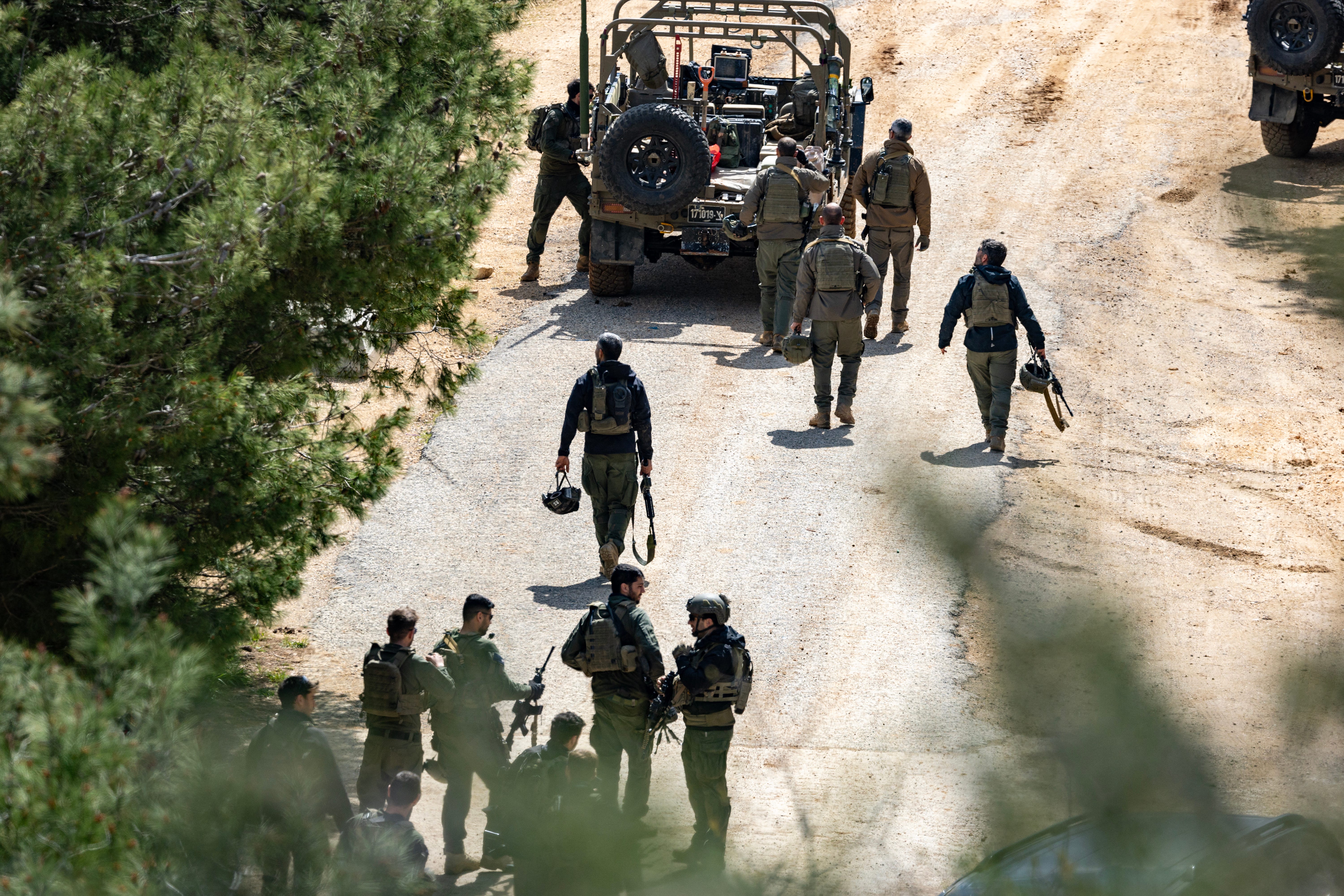
Israel launches ground operation in Lebanon: The Israeli military launched a ground invasion of Lebanon on Monday as it continued to bombard the country. In a statement, the Israeli military characterized the offensive as “limited and targeted ground operations...aimed at enhancing the forward defense area.” However, Israeli Defense Minister Israel Katz likened the operation to the Israeli military’s genocidal assault on Gaza and said Lebanese residents in the south would not be able to return to their homes indefinitely. “Hundreds of thousands of Shiite residents of south Lebanon who have evacuated and are evacuating from their homes will not return to the area south of the Litani [River] until the safety of the residents of the north is guaranteed,” Katz said, according to the Times of Israel. Katz says that he and Prime Minister Benjamin Netanyahu have told the military to destroy Hezbollah infrastructure close to the border, “just as was done against Hamas in Rafah, Beit Hanoun, and the terror tunnels in Gaza.”
Israeli strikes hit multiple sites across Lebanon:
Monday: A strike on a house in Kfar Sir killed one person on Monday. When an ambulance from the Islamic Health Organization arrived, a second strike killed two paramedics and wounded another, according to the state-run National News Agency. Additional airstrikes hit Khiam, Qantara, Sawana, Burj Qalawiya, Sultaniyeh, Shaqra and Yater. Civil defense teams recovered the bodies of Youssef Al-Saghir, his wife, and their two children from beneath the rubble of a house in the town of Qantara, two days after it was struck by an air raid.
Sunday: A strike in Sharhabil near Saida killed one person—identified as Wissam Taha—and wounded three children, while additional Israeli drone, jet, and artillery attacks targeted areas around Nabatieh, Tyre, Zawtar Sharqieh, Al Sawaneh, Touline, Majdel Selm, and the strategic border town of Khiam. Hezbollah said it responded with multiple rocket attacks Sunday morning, targeting sites including Balmakhim airbase south of Tel Aviv, an air-defense system in Ma’alot-Tarshiha, and the coastal town of Nahariya.
Israeli strikes across Lebanon kill dozens and hit medical and UN sites: Israeli airstrikes and shelling killed dozens across southern Lebanon and Beirut’s southern suburbs on Friday, according to Lebanese health authorities and local media. Among the dead were at least 12 medical professionals killed in a strike on a healthcare center in Burj Qalawiya, while additional strikes in Nabatieh, Al Sawaneh, Bint Jbeil, and Ghazieh killed civilians including a young girl and two boys. Lebanon’s state-run National News Agency also reported artillery shells landing inside a UNIFIL compound housing the Nepalese battalion in Mays al-Jabal, injuring peacekeepers.
WHO says Israeli strikes killed 14 health workers in southern Lebanon in 24 hours: The World Health Organization said on Saturday that Israeli strikes in southern Lebanon have killed 14 health workers over the past 24 hours, including 12 doctors, nurses, and paramedics killed in an attack on the Burj Qalawiya primary healthcare center near Bint Jbeil and two paramedics killed earlier at a health facility in the border town of Al Sawaneh. The WHO said it has verified 27 Israeli attacks on healthcare sites in Lebanon since March 2, leaving at least 30 health workers dead and 35 injured. Israel later suggested it would continue targeting ambulances and medical facilities in Lebanon, claiming without evidence that Hezbollah uses ambulances “for military purposes.
The Gaza Genocide, Israel, and the West Bank
Casualty counts: Over the past 24 hours, eight Palestinians were killed and 17 were injured in Israeli attacks across Gaza. The total recorded death toll since October 7, 2023 has risen to 72,247 killed, with 171,878 injured. Since October 11, the first full day of the so-called ceasefire, Israel has killed at least 671 Palestinians in Gaza and wounded 1,779, while 756 bodies have been recovered from under the rubble, according to the Palestinian Ministry of Health.
Israeli strike kills eight police officers in central Gaza: Eight Palestinian police officers were killed and 14 people injured after Israeli aircraft struck a police vehicle on Salah al-Din Street near the entrance to Al-Zawayda in Gaza’s Central Governorate on Sunday, according to Gaza’s Interior Ministry. The dead include Colonel Iyad Abu Yusuf, director of the Central Governorate Intervention Police, along with seven other officers. In a separate strike in the Al-Sawarha area of Nuseirat refugee camp, three members of the Ayash family were killed. The incidents bring the reported death toll across Gaza on Sunday to at least 11 people.
Israeli strikes and gunfire kill at least six Palestinians in Gaza: Israeli strikes and gunfire killed at least six Palestinians in Gaza on Saturday, including two children, according to reports from Felesteen Today and the Associated Press. Among the dead were Ahmed Mohammad Al-Maghribi, killed in an Israeli artillery strike on a police checkpoint in Khan Younis, and three civilians shot by Israeli aircraft in the Al-Shujaiya neighborhood of Gaza City, including two 17-year-olds. Another Palestinian, Mutasim Maher Fares, was shot and killed by Israeli forces east of Deir al-Balah.
Gaza dust storm: Gaza Civil Defense officials urged residents to remain indoors, in homes, shelters, or tents, as a dust storm swept across the enclave on Saturday, warning people to go outside only if necessary, particularly those with respiratory illnesses. Authorities advised anyone who must leave to cover their noses with a mask or a damp cloth and protect their eyes from dust. Displaced families were told to secure tents and tarpaulins—especially in coastal areas where strong winds could tear them away.
Israeli forces kill family of four in Tammun in northern West Bank: Israeli forces opened fire on a car carrying the Bani Odeh family in the town of Tammun in the northern occupied West Bank, killing Ali Khaled Bani Odeh, 37, his wife Waad, 35, and their two sons, Mohammad, 5, and Othman, 7 on Sunday. Two other children in the vehicle—Mustafa and his brother Khaled—survived the shooting but were wounded. One of the surviving boys said soldiers pulled him from the vehicle and beat him, saying they shouted “We killed dogs.” The Israeli military said its troops were operating in the area during an arrest raid and that the incident is under review.
Palestinian man killed in settler attack in Qusra village: Israeli settlers killed Palestinian Amir Odeh during an attack on the village of Qusra on Saturday, south of Nablus in the occupied West Bank, on Saturday evening, according to witnesses. Islam Odeh, who was shot in both legs during the attack, said settlers surrounded Amir and his father, shot Amir, then beat him with sticks and knives before shooting him again.
Limited opening of Rafah following Israeli closure: The Rafah Crossing between Gaza and Egypt will reopen Wednesday, March 18, for “limited movement” of people only, in both directions, Israel’s Coordination of Government Activities in the Territories (COGAT) announced. The crossing will operate under the same mechanism used before its closure, with travel coordinated with Egypt and subject to prior Israeli security approval and EU supervision. Following U.S.-Israeli strikes against Iran, Israel reinforced a total siege of Gaza and closed the Rafah crossing—allowing only the partial operation of Kerem Shalom and the entry of about 200 trucks daily instead of the 600 required under the ceasefire agreement.
United States
By Julian Andreone, with Ryan Grim. Have a tip on Capitol Hill? Email Andreone at Julian@dropsitenews.com.
Senate set for weeks-long debate and vote on SAVE America Act starting Tuesday: Several GOP senators, including Sen. Mike Lee (R-Utah), have attempted to lobby Senate Majority Leader John Thune to set a “talking filibuster,” essentially requiring Democratic senators to speak for hours on the floor to delay a vote on the controversial bill designed to suppress already disenfranchised voters, namely women and lower income Americans. Others, like Sen. Ron Johnson (R-WI), Sen. John Cornyn (R-TX), Sen. Tommy Tuberville (R-AL), and Sen. Bernie Moreno (R-Ohio), have advocated for doing away with the filibuster altogether and dropping the 60-vote threshold required to pass the legislation in the Senate to a simple 51-vote majority. Republican Sens. Thom Tillis from North Carolina and Lisa Murkowski from Alaska have both expressed opposition to any suspension of the filibuster as well as with the text of the bill itself. Thune and his advisers told NBC News that they expect weeks of debate on this legislation, but it appears to be dead on arrival.
Bipartisan housing bill moves to the House: Sens. Elizabeth Warren (D-Mass.) and Tim Scott’s (R-SC) 21st Century ROAD to Housing Act passed the Senate by a vote of 89-10 on Thursday in a rare show of bipartisan support for a bill that seeks to constrain private equity’s power in the single-family housing market and build more affordable units. The bill will now head for a vote in the House of Representatives, where a similar bill passed earlier this year.
Congress to introduce yet another Iran War Powers Resolution: Democrats in Congress are set to coalesce around another War Powers resolution this week and force a vote to constrain the Trump administration’s all-out assault on Iran. According to Aída Chávez, human rights and peace groups have been mounting a pressure campaign on Democratic lawmakers to bring Rep. Josh Gottheimer’s watered-down WPR back up for a vote weeks later. This particular resolution would force the administration to end its war by March 30, due to a provision outlined in the bill written by Gottheimer and other hawkishly pro-Israel lawmakers that says the conflict must not last longer than 30 days. Eight Democrats—Greg Landsman, Henry Cuellar, Jared Golden, Jimmy Panetta, Tom Suozzi, Vicente Gonzales, Adam Gray, and Jim Costa—are cosponsoring this resolution. It remains to be seen whether pro-war Democrats, four of whom voted with Republicans in the House to kill the initial War Powers resolution, would vote against their own bill if reintroduced as a vehicle to end, not prolong, the war.
Illinois primaries on Tuesday: AIPAC has outdone itself in spending that was intended to be secret in the upcoming Illinois primaries, funneling money through a series of pop-up Super PACs with anodyne names like “Elect Chicago Women” and “Affordable Chicago Now” and, when those were outed, “Chicago Progressive Partnership.” AIPAC is backing Laura Fine in IL-09, and initially spent heavily against Daniel Biss, but is now also targeting democratic socialist Kat Abughazaleh. Its latest innovation has been to cynically spend money on a leftist candidate polling in the single digits in an effort to draw votes away from Abughazaleh. In IL-02, AIPAC is behind Donna Miller and is backing Melissa Bean in IL08 and Chicago City Treasurer Melissa Conyears-Ervin in IL07. Crypto and AI are also spending heavily in the races.
Illinois Senate race a test for crypto: The crypto Super PAC Fairshake is trying to be a rare open Senate seat, spending heavily to back Rep. Raja Krishnamoorthi against Lt. Gov. Juliana Stratton, who has the support of popular Gov. J.B. Pritzker.
Tlaib endorses Kat Abughazaleh in Illinois House race: Rep. Rashida Tlaib (D-Mich.) has officially endorsed Kat Abughazaleh for Illinois’ 9th Congressional District, joining Rep. Ro Khanna (D-Calif.) in supporting the progressive candidate against Evanston Mayor Daniel Biss and AIPAC-backed state senator Laura Fine. Abughazaleh, a 26-year-old Palestinian American and former journalist for Media Matters, is running for the seat being vacated by retiring Rep. Jan Schakowsky. Tlaib said she decided to endorse after AIPAC began cynically boosting a longshot, left-wing candidate in an attempt to draw votes away from Abughazaleh and Biss.
FCC Chair threatens to revoke broadcast licenses over Iran war coverage: The chair of the Federal Communications Commission Brendan Carr threatened to revoke broadcasters’ licenses over their coverage of the war on Iran: “Broadcasters that are running hoaxes and news distortions — also known as the fake news — have a chance now to correct course before their license renewals come up. The law is clear. Broadcasters must operate in the public interest, and they will lose their licenses if they do not.” Trump later said in a social media post he was “thrilled” with Carr’s statement.
Afghan U.S. ally dies hours after ICE arrest in Texas: Mohammad Nazeer Paktyawal, a 41-year-old Afghan special forces veteran, died Saturday roughly a day after being arrested by federal immigration agents near Dallas, according to his family. Paktyawal, who fought alongside U.S. troops and was evacuated to the United States after the fall of Kabul, had a pending asylum case. He was preparing to take his children to school when agents detained him Friday and he later told relatives from ICE custody that he was feeling ill before being admitted to Parkland Hospital late that night and dying around noon the following day. The case marks at least the 12th death in ICE custody this year.
ICE released Haitian asylum seeker alone in Pittsburgh; she was found dead days later: Daphy Michel, a 31-year-old Haitian asylum seeker whose misdemeanor charges were dismissed on February 26, was transferred from Washington County Jail to ICE custody, fitted with an ankle monitor, and released in Pittsburgh the next day without notice to her brother or legal representatives. Five days later, on March 2, she was found unresponsive at a South Side bus shelter and later pronounced dead. The full report on what has been described as a “profound failure” by immigration authorities is available from Migrant Insider here.
Immigration judge orders release of Palestinian activist Leqaa Kordia on bond for third time: An immigration judge ordered the release of Palestinian activist Leqaa Kordia on bond for a third time, after the Department of Homeland Security repeatedly kept her detained through appeals and automatic procedural stays. Kordia has been held at the Prairieland Detention Center in Texas since March 13, 2025, when she was taken into custody during a routine immigration check-in in New Jersey. Her lawyers and supporters, including Amnesty International, say she has suffered deteriorating health and inhumane conditions in detention, including a seizure that led to her hospitalization on February 6.
Democrats debate middle-class tax cuts: A policy debate among Democrats ahead of the 2028 presidential cycle is centered on competing proposals from Sens. Chris Van Hollen and Cory Booker to expand the standard deduction and cut taxes for middle-class households while raising rates on high earners. Booker’s plan would exempt up to $75,000 in income for married couples and expand the Child Tax Credit, while Van Hollen’s proposal exempts the first $46,000 of income and adds surtaxes on million-dollar earnings. The measures have inspired a debate within the party about whether or not the correct approach is to imitate Republican tax-slashing rhetoric, or to challenge it, given the immense importance of taxes to funding social services. More in the last from David Dayen and Ryan Cooper at The American Prospect, here.
Beef workers strike in Colorado: About 3,800 workers at one of the country’s largest beef processors went on strike Monday in Greeley, Colo. The plant, owned by Brazil’s JBS, accounts for roughly 5% of U.S. beef capacity, the Wall Street Journal reported. The strike puts more pressure on U.S. beef prices, which are up 15% from last year.
Other International News
“Private Mossad” caught spying on center-left Slovenia government: Black Cube, a notorious spy firm with links to the Israeli government, has been spying on Slovenian government officials and allies in the months leading up to a crucial election, according to a new report. The center-left coalition is trailing the right wing in the polls ahead of elections scheduled for March 22, but the new revelations upend the campaign and threaten to further complicate increasingly strained relations between Israel and the European Union. This morning, the Slovenian prime minister held a press conference in relation to the report by Mladina, a storied Eastern European magazine that found Black Cube officials had met right-wing opposition leader Janez Janša before secretly recorded videos of government figures began appearing anonymously online. Black Cube became infamous for working on behalf of Harvey Weinstein to surveil journalists and dig up dirt on accusers of the convicted rapist.
Baghdad–KRG dispute threatens restart of northern Iraq oil exports: Iraq’s federal government and the Kurdistan Regional Government are at odds over restarting exports through the Kirkuk–Ceyhan pipeline to Turkey as the U.S.–Israel war on Iran disrupts the country’s energy trade. With tanker traffic through the Strait of Hormuz effectively halted, exports from southern terminals around Basra have stopped, cutting national output to roughly 1.3–1.4 million barrels per day—a third of the pre-war level. Baghdad has proposed sending up to 300,000 barrels per day through the northern pipeline along with about 200,000 barrels from Kurdish fields, but the KRG has refused to resume shipments. Kurdish officials accuse Baghdad of imposing an “economic blockade” that restricts access to U.S. dollars through a new customs system and say repeated drone and missile attacks by pro-Iranian groups have disrupted energy infrastructure, leaving the dormant Kirkuk–Ceyhan route as Iraq’s only realistic option for restoring exports.
Bobi Wine says he fled Uganda after disputed election: Ugandan opposition leader Robert Kyagulanyi, known as Bobi Wine, said he fled the country on Sunday after going into hiding following January’s presidential election, claiming security forces threatened his life. In a video message, Wine said the military invaded his home a day after President Yoweri Museveni was declared the winner with 71.65% of the vote, an outcome Wine rejected as fraudulent after finishing second with 24.72%. Wine said he will meet “friends and allies” abroad before returning to Uganda to continue campaigning for democratic reforms.
Somalia says 22 Al-Shabaab fighters killed in joint operations: Somali forces killed at least 22 Al-Shabaab militants in two operations in central Somalia carried out with support from the African Union Support and Stabilization Mission in Somalia and other international partners, according to the National Intelligence and Security Agency. Fifteen fighters were killed in Dumaye in the Mudug region in a strike targeting senior commanders, while a second operation in the Hiran region hit two houses used by the group, killing seven militants, including operatives accused of financing attacks. The raids were part of Operation Rolling Thunder, a broader campaign aimed at dismantling Al-Shabaab strongholds and disrupting its operational routes. The offensive follows the recent recapture of the towns of Daarusalaam, Mubarak, and Hawadley as Somali authorities seek to roll back the group’s 16-year insurgency.
Pakistan launches strikes inside Afghanistan overnight: Pakistan said its forces carried out strikes inside Afghanistan on Sunday, targeting what it described as Taliban-linked military installations and “terrorist hideouts” in southern Kandahar province. State-run Pakistan Television said the operation destroyed technical support infrastructure, an equipment storage site, and a tunnel housing equipment used by the Afghan Taliban and the Pakistani Taliban group Islamabad calls “Fitna al-Khawarij.” Residents reported hearing explosions and seeing jets over Kandahar, while Taliban spokesperson Zabihullah Mujahid said the strikes instead damaged a drug rehabilitation center and other civilian structures. The exchange marks the sharpest escalation yet in the current conflict. Nearly 100 people have been reported killed on both sides and about 115,000 displaced, according to United Nations estimates, since late February.
EU renews sanctions on Russia as attacks hit Ukrainian energy infrastructure: The European Union renewed sanctions on Sunday against 2,600 individuals and entities linked to Russia’s war on Ukraine, overcoming opposition from Hungary and Slovakia to extend travel bans and asset freezes until September 15. EU Council President António Costa criticized the United States for easing sanctions on Russian oil exports, warning the move could increase Moscow’s resources to continue the war. Russian missile and drone attacks targeted Ukrainian energy infrastructure, killing six people in the Kyiv and Zaporizhzhia regions and injuring others in Russia’s latest wave of strikes.
Rwanda warns it may withdraw troops from Mozambique mission without EU funding: Rwanda warned it could withdraw its troops from Mozambique’s Cabo Delgado province if sufficient international funding for the deployment is not secured. Government spokesperson Yolande Makolo said the sustainability of the mission depends on “adequate, predictable funding,” after reports that European Union support for the operation is set to expire in May. Rwandan forces were deployed in 2021 at Mozambique’s request and have helped stabilize parts of the gas-rich region that had been overrun by an Islamist-linked insurgency.
North Korea conducts new missile tests: North Korea fired more than ten ballistic missiles in tests conducted Saturday, according to a statement by the South Korean military, amid rising tensions on the peninsula. The reported launches originate from an area near Pyongyang and traveling toward waters off the country’s east coast. Japan’s coast guard also detected a suspected ballistic missile that landed in the sea, reportedly outside Japan’s exclusive economic zone. The tests coincided with a recent decision by the U.S. to relocate an advanced THAAD anti-missile system from South Korea to help assist in the war with Iran.
Ambush in Nigeria’s Plateau state kills security personnel: Gunmen ambushed security forces on patrol in several communities in Nigeria’s Plateau state, killing an unspecified number of personnel, according to the state government. A local group, the Kanam Development Association, said the attack near the communities of Wanka, Kyaram, and Gyambau killed around 20 people, including two senior military officers and eight local security operatives.
Reports of protests turning violent in Cuba after announcement of U.S. talks: Peaceful protests turned violent in at least one location, reports from Cuba indicate, with a regional Communist Party office reportedly targeted. The flare-up appears isolated so far but comes shortly after President Miguel Díaz-Canel announced official talks with the United States. The timing has raised questions about whether the unrest is linked to domestic political tensions or reactions to the prospect of renewed engagement with Washington. Deputy Prime Minister of Cuba Oscar Pérez-Oliva Fraga said the country will allow Cubans abroad to invest and own business on the island. Former Mexican President López Obrador issued a public call to support Cuba as the country faces a hardened U.S. blockade.
Programming note: You can sign up here to get updates from us on our WhatsApp channel.
If you want to continue getting this newsletter, you don’t have to do anything. But if this is too much—we do try to be mindful of your inbox—you can unsubscribe from this newsletter while continuing to get the rest of our reporting. Just go into your account here at this link, scroll down, and toggle the button next to “Drop Site Daily” to the off setting. It looks like this:

"...the strait is open, but it is closed to our enemies, closed to those who carried out this cowardly aggression against us and to their allies,”....I have so much respect for the strategic approach Iran is using in response to the outrageous, illegal war being waged upon them. Disgraceful the way Israel continues its vicious ethnic cleansing on Lebanon and the Palestinians. Can we test their water and see what MKUlta drug they've been consuming? Seriously. Utter, dehumanized insanity.
Are US tax payers picking up the tab for Israel's military envolvement. I mean Israel is like a metastatic cancer on the whole Middle East fed by the US.