

EXCLUSIVE: U.S. Military Tells Key Middle East Ally to Prepare for Attack on Iran
In addition to military targets, Trump is considering strikes on senior Iranian leaders with the aim of spurring the overthrow of the Iranian government.

Drop Site is non-aligned, completely independent, and reader-funded. Every dollar of your support goes directly to our reporting and our journalists on the ground in conflict zones around the world. Please consider making a 501(c)(3) tax-deductible donation today.
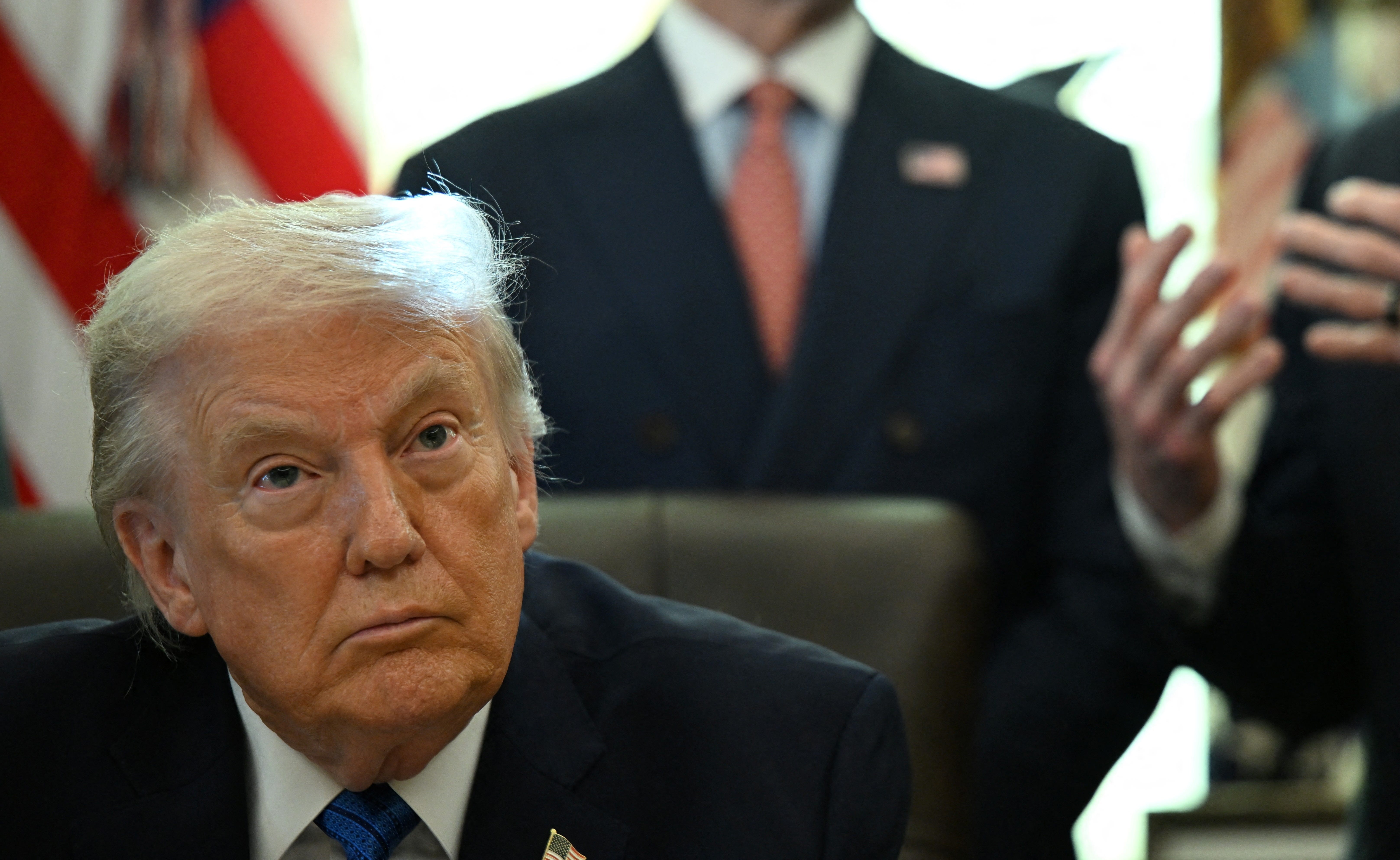
Senior U.S. military officials have informed the leadership of a key U.S. ally in the Middle East that President Donald Trump could authorize a U.S. attack on Iran this weekend, multiple sources have confirmed to Drop Site News. Strikes could commence as early as Sunday, the ally was informed, if the U.S. decides to move forward.
“This isn’t about the nukes or the missile program. This is about regime change,” said a former senior U.S. intelligence official who consults for Arab governments and is an informal advisor to the Trump administration on Middle East policy. He told Drop Site that U.S. war planners envision attacks that target nuclear, ballistic, and other military sites around Iran, but will also aim to decapitate the Iranian government, and in particular the leadership and capabilities of the Islamic Revolutionary Guard Corps (IRGC). The IRGC is a branch of the Iranian armed forces created after the country’s 1979 revolution whose leadership now plays a major role in the country’s politics and economy.
The thinking in the Trump administration, according to the source, is that a successful strike on Iranian leadership would be followed by Iranians returning to the streets to protest, leading to the overthrow of the government. Israeli Prime Minister Benjamin Netanyahu “is hoping for an attack,” the former senior intelligence official said, “and assuring Trump that Israel can help put in place a new government that is friendly with the West.”
Two senior Arab intelligence officials told Drop Site that they received word a U.S. attack could come “imminently.”
The U.S. briefing of the key Arab ally comes as regional countries are feverishly engaged in last-minute efforts to mediate talks between the U.S. and Iran to avert war. On Friday, Iran’s foreign minister met with Turkish leaders to push forward a possible diplomatic resolution. Regional countries have been engaged in attempts to establish a format for backchannel talks, including a trilateral meeting involving Iranian, American, and Turkish leaders, aimed at forestalling an expected attack.
Saudi Arabia on Tuesday ruled out the use of its airspace for a potential U.S. attack on Iran in a phone call between Saudi Crown Prince Mohammed bin Salman and Iranian President Masoud Pezeshkian, according to the Saudi state news agency SPA. The United Arab Emirates also said on Monday it would not allow its airspace or territorial waters to be used in any military action against Iran.
U.S. Central Command declined to comment for this report. The White House referred Drop Site to Trump’s comments on Friday in the Oval Office, where he said that the U.S. has a “large armada, flotilla, call it whatever you want, heading towards Iran right now,” while declining to confirm whether Iran had received a deadline to conclude an agreement to avoid a war.
“If such a miscalculation is made by the Americans, it will certainly not unfold the way [U.S. President Donald] Trump imagines—carrying out a quick operation and then, two hours later, tweeting that the operation is over,” said Brigadier General Mohammad Akraminia, Iran’s military spokesperson, in an interview on Iranian TV on Thursday. “The scope of war will certainly extend across the entire region,” he added. “From the Zionist regime to countries that host American military bases, all will be within range of our missiles and drones.”
Iranian officials have repeatedly said that if the U.S. attacks Iran—particularly if it aims to assassinate the country’s leadership—that it will respond with unprecedented counterstrikes against U.S. military facilities, oil infrastructure in the region, and Israel. In a Senate Foreign Relations Committee hearing this week, U.S. Secretary of State Marco Rubio stated that the US had between 30,000-40,000 troops stationed at bases in the region that could be in range of Iranian drones and short-range ballistic missiles in the event of a war.
Since the Gaza war began in October 2023, Iran has mostly exercised restraint in its response to attacks launched by both Israel and the U.S. on its personnel and military and nuclear facilities, choosing to telegraph many of its attacks in advance to minimize escalation. Before launching retaliatory strikes following previous Israeli attacks—like the assassination of Hamas’s political leader Ismail Haniyeh in an IRGC facility in July 2024—Tehran communicated through backchannels to the U.S. that it would be launching barrages of missiles and drones at Israel, thereby avoiding large-scale casualties and an escalation in fighting. The same pattern was used in response to U.S. attacks on its nuclear facilities during the 12-day war in June 2025, when Iran retaliated with a telegraphed attack on a U.S. military base in Qatar.
Iranian officials have said during the past few weeks that they would not engage in the same process in the event of more attacks. In a recent interview, Dr. Foad Izadi, a professor at the University of Tehran, told Drop Site that in the past “a number of high-ranking military officials … made the decision to inform the United States when they were attacking the U.S. bases.”
“The idea was basically trying to ride out the Trump administration, not to confront him in a serious manner, respond to him, but respond in a very limited style so they don’t start a huge war with the United States,” he said. “This was their decision. And they were killed in June,” during the 12-day bombing campaign unleashed against Iran by the U.S. and Israel.
Izadi said that the new leadership of the military in Iran has determined that the previous policy failed to deter U.S. and Israeli aggression. “The number that I hear is the goal is to get at least 500 American soldiers. The casualties that they need to have if Iran is attacked again is at least 500,” Izadi said. “I think the Iranian government, the Iranian military has decided to respond quite harshly this time because you cannot have a country when that country is threatened to be attacked militarily every other week.”
The revelation that the U.S. has informed the leadership of a regional ally that strikes on Iran could begin imminently come amid ongoing efforts to mediate a last minute off-ramp to a war.
Iran’s foreign minister Abbas Araghchi, speaking in Istanbul on Friday during a press conference held with his Turkish counterpart Hakan Fidan, said that Iran is ready to resume talks with the United States on issues related to its nuclear program, but not under the threat of force. Araghchi also said that no direct talks had been scheduled with U.S. officials and that Iran had made preparations for war if attacked, while warning that such a conflict could expand beyond Iranian borders throughout the region.
“I should also state unequivocally that Iran’s defensive and missile capabilities—and Iran’s missiles—will never be the subject of any negotiations,” Araghchi added, responding to U.S. demands that it limit the scale and range of its ballistic missile program. “We will preserve and expand our defensive capabilities to whatever extent is necessary to defend the country.”
Araghchi also reiterated Iran’s willingness to find a diplomatic solution, adding that Iran is prepared for a possible war but also for “fair and equitable negotiations.”
This is regime change fantasy dressed up as “security.” The idea that assassinating Iranian leaders will spark a democratic uprising—rather than a regional war—is a delusion with a long body count behind it. We’ve seen this movie in Iraq, Libya, and beyond: decapitation strikes don’t bring freedom, they bring chaos, retaliation, and civilian death. The fact that this is being floated openly, with U.S. troops and the entire region on the line, shows how casually catastrophic choices are being made—again.
Oh, the things a girl has to do to try to distract from the Epstein files.