

Over 425,000 Kids in U.S. Face Deportation Hearings Without Lawyers
A new analysis of federal immigration data found that 57% of children with deportation orders in the U.S. do not have access to an attorney.

As a reader-funded independent news outlet, we operate free from the influence of governments, advertisers, and corporate backers. This is essential to our mission: to report on what matters most, beholden only to the truth. In that spirit, we made a commitment to ensure that our journalism is free for everyone, not locked behind a paywall. But that means we rely on the voluntary support of our community of readers. Please consider making a tax-deductible donation to support our work today.
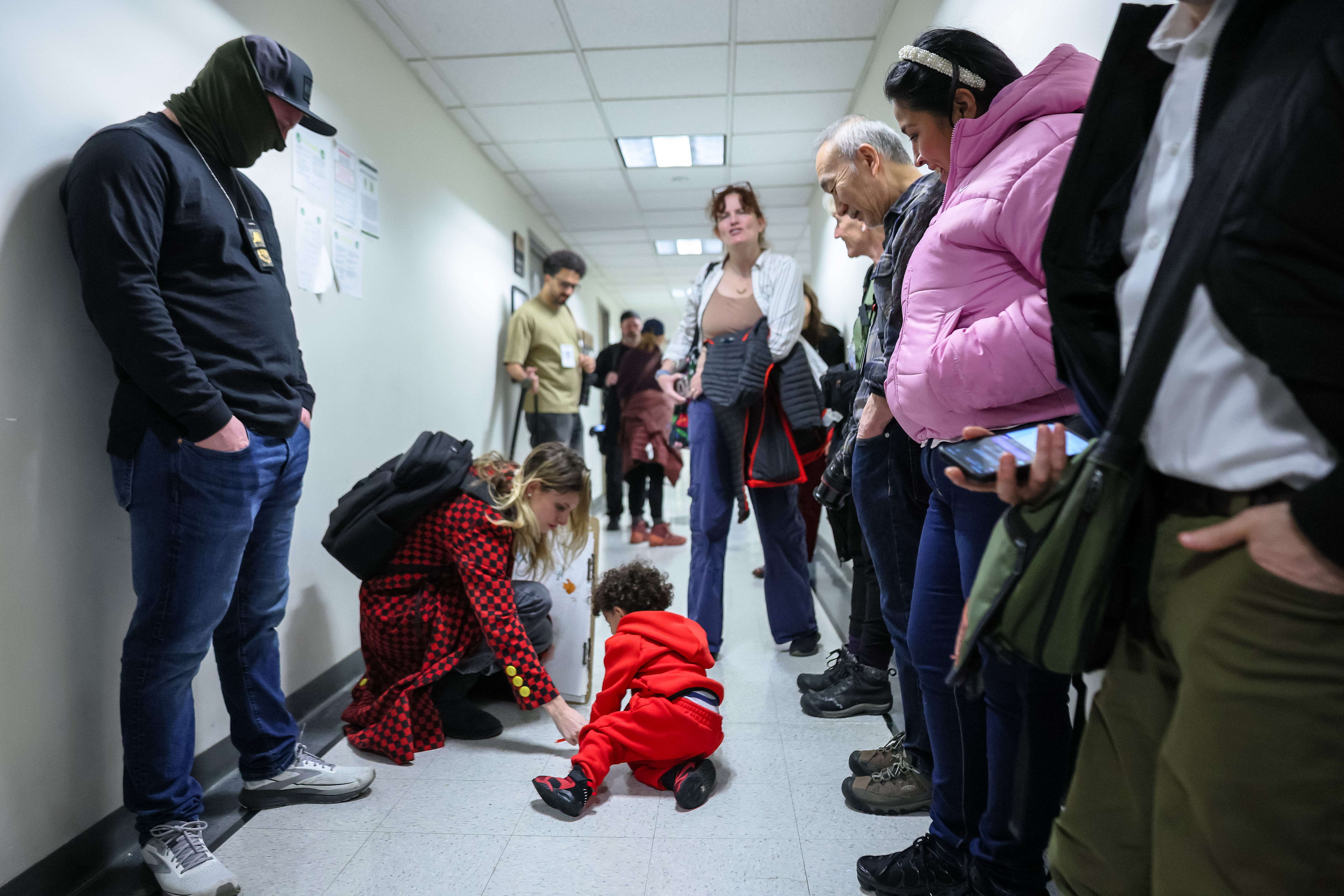
In April, a 10-year-old Venezuelan boy named Wilfredo Hoyos-Gomez appeared in immigration court in Texas, unaccompanied and without a lawyer. His mother, Nexoli Anyis Gomez Bracho, was arrested during a traffic stop and has been in ICE custody in Houston since December.
Wilfredo entered the U.S. three years ago with his mother. She has a work permit, and their asylum cases are pending. They have no other family in the U.S., and Gomez’s former employer has been looking after Wilfredo while he faces deportation hearings alone.
“I was nervous because it was my first time going to a court,” Wilfredo told Univision after his hearing. The DHS is seeking to deport him to Ecuador, a country where he knows no one and has never been.
Wilfredo is one of hundreds of thousands of children facing pending immigration cases without legal representation nationwide, according to federal immigration data. His case offers a rare glimpse into a system operating outside of public scrutiny. While technically open by law, immigration hearings for children are effectively blocked from public access.
A new analysis of federal immigration data, conducted by the Vera Institute of Justice in response to questions from Drop Site News, shows that children like Hoyos-Gomez are not an anomaly but part of a wider pattern. More than half of all children facing pending immigration cases are doing so without legal representation, according to data from the Department of Justice. The analysis shows that legal representation appears to be one of the most important factors shaping children’s outcomes in immigration court.
Of 751,861 children with pending removal cases, 57%—or 425,093 children—lacked legal representation, according to the most recent data. This rate is slightly higher than that of adults, 54% of whom are unrepresented in immigration court in pending cases. Nearly two thirds of children’s cases that are still pending were initiated by the federal government in 2023, under the Biden administration. The gap widens in completed cases. Last year, 64% of children’s completed immigration cases went forward without legal representation.
The data, from the DOJ’s Executive Office for Immigration Review (EOIR), indicates that children under the age of 18 are increasingly appearing in immigration court without lawyers at a time when deportation orders are surging as the Trump administration attempts to deport more than a million people annually and immigration relief is becoming harder to obtain. The Vera Institute analysis could not determine how many of these children are unaccompanied, because EOIR data does not distinguish between accompanied and unaccompanied children.
Former judges, attorneys, and advocates interviewed by Drop Site describe an immigration court system under mounting pressure to move cases quickly, straining due process protections for the most vulnerable.
“The scale is alarming,” said Neil Agarwal, the principal data scientist who led the analysis at the Vera Institute of Justice. These figures reflect the administration’s coordinated effort to pursue its “mass deportation scheme,” he added.
The Justice Department and ICE did not respond to requests for comment. In an emailed statement, a spokesperson with the Department of Homeland Security claimed that ICE does not separate families. “Parents are asked if they want to be removed with their children or ICE will place the children with a safe person the parent designates,” a DHS spokesperson said, adding that the U.S. encourages voluntary departures and if people don’t choose to do so they will be arrested and deported. “The United States is offering illegal aliens $2,600 and a free flight to self-deport now.”
“Any possible way to be harsh and unforgiving is being utilized by the government at this point,” said former immigration judge Dana Leigh Marks, who presided over cases for more than three decades in San Francisco. “It makes me ashamed.”
“I don’t know if I could remain on the bench today…because my hands would be tied,” she said. “I think there was a very small amount of due process before and there was more ability of immigration judges to try to find a way to craft a reasonable solution for children in the court,” she added, “and now it’s non-existent.”
A Clear Pattern
Last year, 7% of children with an attorney in completed cases were allowed to stay in the country with some form of legal relief, either by being granted asylum or some other federal protection, including a change in status or cancellation of removal, compared with less than 1% of children without legal representation. The pattern has continued into 2026. So far this year, 3% of represented children have avoided deportation and received some form of protection, compared with less than 1% of those without lawyers.
This year, 25% of represented children’s cases resulted in an outcome allowing them to remain in the country without protections such as asylum, compared with 11% of unrepresented children. Meanwhile, 73% of represented children were either deported or opted for voluntary departure, versus 89% of unrepresented children.
Over the past two years, final court decisions that allow children to remain in the United States have declined, while removal orders have increased.
Tania Cohen, legal director of the New York-based Safe Passage Project, a nonprofit organization that provides free legal representation to migrant and refugee children facing deportation, said she has seen more migrant children heading to hearings alone after parents were detained or deported. “It’s alarming and unsurprising,” said Cohen. “I have seen an uptick of youth seeking representation who entered with a parent, but now that parent has been deported or is in detention.” The youngest child the group has recently represented was just an infant.
“We are concerned that the immigration court system is speeding up cases at the expense of due process,” said Jennifer Podkul, chief of global policy and advocacy at Kids in Need of Defense (KIND), a nongovernmental organization providing free legal counsel to unaccompanied refugee and migrant children.
The true number of children navigating immigration court may be even higher. Roughly 11% of people in the EOIR dataset lacked birthdate information and could not be categorized by age, meaning some children may not have been included in this analysis.
Hearings Behind Closed Doors
Because public access to minor immigration hearings is restricted, judges and legal aid organizations are among the few sources of information about these proceedings.
“An immigration court proceeding involving an unrepresented two or three year old can be exactly as nonsensical as it sounds,” said Jason Boyd, the vice president of U.S. federal policy and an attorney at KIND. “The hearing may conclude and a child doesn’t comprehend what just happened.”
For five years, former immigration judge Elizabeth Young presided over thousands of cases on the juvenile docket in San Francisco. Young said she vividly remembered a case involving a four-year-old girl with her father. She had fallen asleep in her father’s arms, exhausted in the middle of a noisy courtroom at the beginning of the hearing. As Young began to read out names, she looked to the government attorney to introduce themselves, and saw they were silently weeping. She decided to grant the family a continuance, or extra time, to prepare for a case and secure counsel.
Last year when KIND’s Podkul was in a courtroom observing the juvenile docket, there was a child she recalled “running around a tiny car, zoom-zooming on the floor,” she said. “They’re treating these kids as if it’s a regular case, like they’re an adult.”
“Just the other day, one of our colleagues had to hold a baby in her arms that she was a lawyer for,” Podkul told Drop Site.
Violations of Due Process
Attorneys and former judges interviewed by Drop Site say immigration courts can be difficult for adults to navigate, let alone children.
“This is a due process crisis,” said Boyd. ”It’s virtually impossible for an unaccompanied child to navigate the complex and adversarial U.S. immigration system without an attorney at their side, federal data makes that very clear.”
In the past, unaccompanied children were more likely to receive extra time to prepare their cases, often two to three months, according to KIND. In recent months, they’ve observed continuances no longer than two to three weeks, which is insufficient time, Boyd said.
Legal aid and advocacy groups and former judges told Drop Site that due process is being challenged under the Trump administration by “mega masters,” or mass hearings with multiple cases involving children and adults being heard back to back. There are sometimes about 100 people scheduled for a morning, Cohen said.
Marks, the former immigration judge, says these hearings are detrimental for children.
“They should have a judge who is able to spend as much time as needed explaining things, making the child feel comfortable enough to be able to tell their story, giving enough time for the judge to be able to assess whether the child is suffering from post-traumatic stress or some of the effects of a dangerous journey to the United States,” she said.
Immigration judges are also working under pressure to move quickly through cases—not only from their supervisors but also from attorneys who appear for the Department of Homeland Security in court, Marks said.
“There’s just a push to get the cases done,” said Young, and the administration has made it clear “they want it done in a way that results in a lot of deportations.”
Boyd observed another “disturbing” trend with judges routinely “ordering the removal of unaccompanied children” who had already been granted special immigrant juvenile status, a form of protection guaranteed by Congress for children who experienced parental abuse or abandonment. “By judges ordering those kids removed from the United States, potentially to the very abuse that they fled,” he said.
Over the last year the Trump administration has reduced the number of immigration judges by 25%.
“It feels like there is no due process,” Cohen said. “Judges are being fired for following the law, and then being fired if they do not take enough of an anti-immigrant stance in their decision making.”
Disruption to Legal Aid
In February 2025, the Trump administration issued a “stop-work” order to legal service providers such as KIND that are funded by the Department of Health and Human Services. That order disrupted support for nearly 26,000 children before it was rescinded three days later.
The following month, HHS abruptly terminated major federal grants that supported legal representation for unaccompanied minors. A federal judge soon ordered the administration to restore these funds, but legal aid organizations say the funds have not been fully restored. They are now being provided in three month increments while the government appeals the case.
KIND, which relied on federal funding to cover 68% of its budget to represent more than 4,000 unaccompanied children, has reduced its staff to work within a strained budget. The organization is currently operating under these three month increments, according to Podkul.
“As an organization that’s trying to hire attorneys into representation for children, that’s really hard to do at three month increments,” Podkul said. “You can’t say to a kid, well I can help you now, but I don’t know if I’m going to be here in 89 days.”
While there are laws in place to offer protection to children in these cases, the impact of these new policies reshaping the immigration system will be felt for years to come, according to legal aid service providers.
“We have laws that Congress passed that provide an avenue for relief and this administration is trying to find all the ways to cut off those avenues,” Cohen added, “I think that it’s a huge miscarriage of justice.”
Please, clarify this: the kid in the story is 10 years old and can be deported to Ecuador, where he knowns nobody. What is he supposed to do when he arrives there? Is he going to be jailed by the puppet government of that country? Is he going to be put in the system and languish there?
Why aren't the judges who feel their hands are tied stop everything and refuse to follow the fascistic orders of the regime? This is inhumane, just another inhumane policy in this declining and rotten empire.
What this reporting shows is not a “broken system” but an intentional one. When 425,000 children are pushed through deportation hearings without lawyers, that isn’t administrative failure — it’s policy by design. A government that accelerates removals while cutting legal aid knows exactly what outcome it’s engineering.