

Five Palestinians killed in Gaza amid Trump's "Board of Peace" rollout; House passes spending package that funds DHS despite ICE abuses in Minnesota
Drop Site Daily: January 23, 2026


Attacks on Gaza continue, killing five Palestinians. U.S. sanctions Gaza-based medical groups. U.S. boosts Israel aid in 2026. General strike protests crime in Palestinian towns inside Israel. Gaza’s technocratic committee awaits guarantees. House passes a spending package that funds DHS. Minnesota resident says she was illegally detained and abused by ICE. The U.S. names Laura Dogu top envoy for Venezuela. U.S. maintains control over Venezuela oil sales. Mahmoud Khalil challenges DHS deportation threat. Supreme Court cases advance corporate claims tied to Cuba regime change. Trump’s war on childcare. U.S. urges ceasefire compliance in northern Syria. U.S. weighs full troop withdrawal from Syria. Iraq accepts transfer of ISIS detainees from Syria. Drone strikes intensify around El Obeid, killing civilians. Sudan weighs new U.S.–Saudi ceasefire proposal. Violence in the Democratic Republic of Congo worsens a humanitarian crisis. UN warns Nigeria food aid at risk amid funding shortfall. Venezuelan officials privately pledged cooperation with the U.S. post-Maduro. Ecuador–Colombia trade and power dispute escalates. U.S. signals outreach to Islamist party ahead of Bangladesh vote. Ukrainian partisans disrupt Russian supply lines. U.S. envoys hold Kremlin talks ahead of Ukraine mediation. U.S. warns Haiti council over move to oust prime minister. Peru president rejects calls for removal over undisclosed meetings. Drop Site covers the latest in Syria.
Notes from the ground in Iran: Tehran-based photographer and essayist Kaveh Rostamkhani speaks with Drop Site about what he witnessed and felt during a turbulent month inside Iran. He reflects on daily life under the protests, the atmosphere in Tehran, and how recent events reshaped his concepts of fear, resilience, and uncertainty. The full interview with Kaveh Rostamkhani is available here.
This is Drop Site Daily, our new, free daily news recap. We send it Monday through Friday.
The Gaza Genocide, West Bank, and Israel
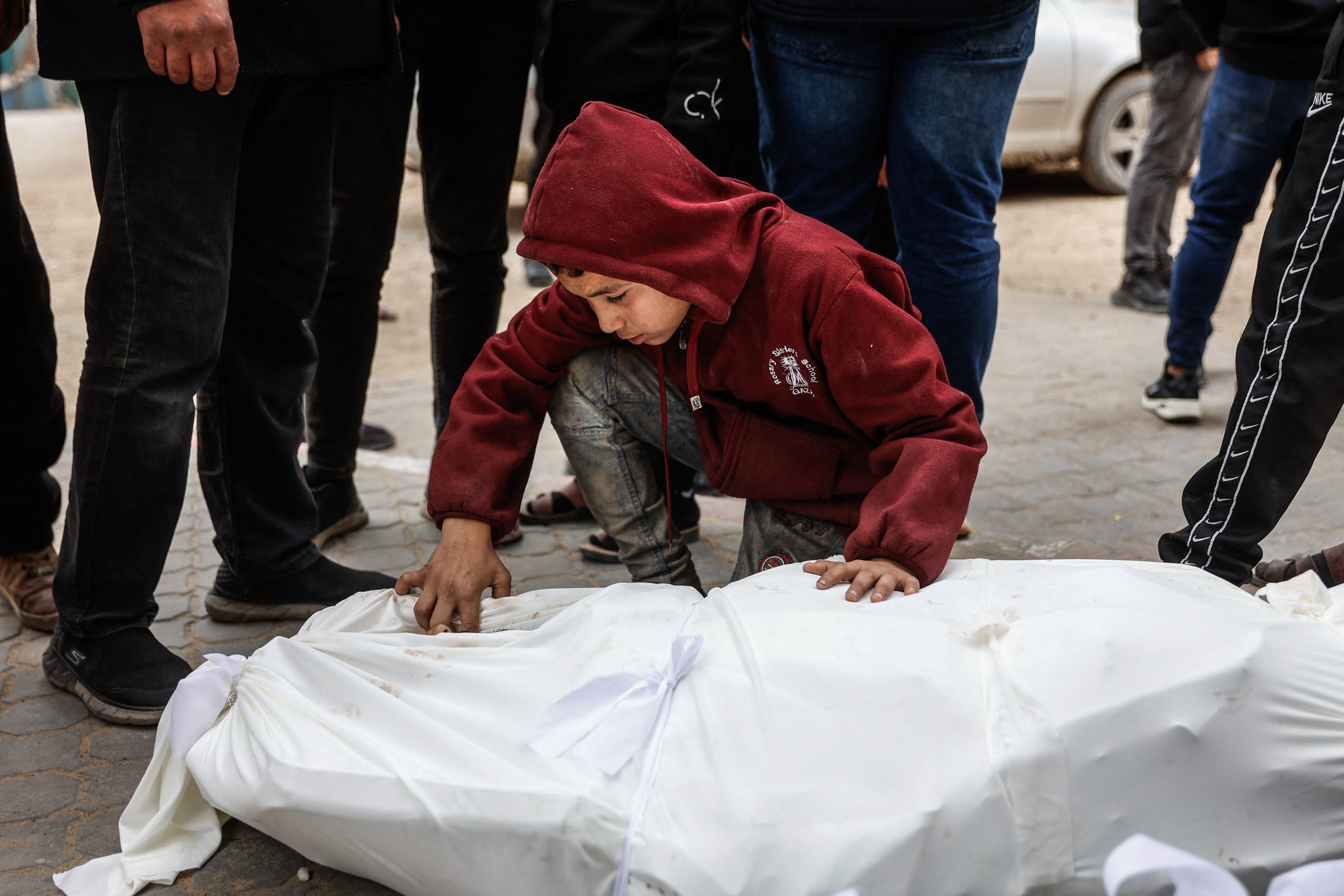
Casualty counts in the last 48 hours: In the past 48 hours, the Gaza Health Ministry reported 11 people killed and seven injured arriving at hospitals. Since the October 11, 2025 ceasefire, there have been 477 killed, 1,301 injured, and 713 bodies recovered, bringing the documented toll from the Israeli genocide in Gaza to 71,562 deaths and 171,379 injuries, with actual injuries likely three to five times higher.
Attacks on Gaza continue, as an infant dies of hypothermia: On Thursday, Israeli tank fire hit the Zeitoun neighborhood in eastern Gaza City, killing four people. Another Palestinian was killed by Israeli gunfire in Khan Younis, according to Reuters and Al Jazeera. The Israeli military declined comment on both of these incidents.The Palestinian Civil Defense reported the death of an infant from hypothermia in the central Gaza Strip during the ongoing cold snap.
U.S. sanctions on Gaza-based medical groups: The U.S. Treasury Department’s Office of Foreign Assets Control sanctioned on Wednesday six Gaza-based medical organizations and the Popular Conference for Palestinians Abroad, accusing them of covertly supporting the military wing of Hamas. These sanctions freeze their assets and bar dealings with them. Hamas attributed the move to Israeli influence on Washington and said it would deepen suffering in the Gaza Strip, while urging the U.S. to reverse the measures, open crossings, and allow aid and shelter supplies. The sanctioned groups include the Waed Society Gaza, Al-Nur Society Gaza, Qawafil Society Gaza, Al-Falah Society Gaza, Merciful Hands Gaza, and Al-Salameh Society Gaza.
U.S. boosts Israel aid in 2026: New 2026 State Department and Pentagon bills allocate $4.02 billion in additional U.S. aid to Israel, according to analysis by Stephen Semler, despite Israel’s GDP per capita exceeding that of roughly 80% of U.S. congressional districts. The package includes $3.3 billion in military aid, $702.5 million more via Pentagon funding for missile defense and related programs, and $14.6 million in economic aid. Conversely, the U.S. has banned funding for UNRWA and conditioned Palestinian assistance on strict compliance with U.S. political priorities. By 2026, total U.S. aid to Israel will reach an estimated $352 billion since the state’s inception, including $263 billion in military aid, adjusted for inflation.
General strike protests crime in Palestinian towns inside Israel: A general strike shut down Palestinian towns inside of Israel on Thursday, leading to the four main parties representing Palestinian citizens of Israel agreeing to run on a ‘joint list’ in the next Knesset elections, with their leaders signing a pledge titled “Joint List Now.” The strike was called to protest surging crime and killings in Palestinian communities and originated in Sakhnin. Demonstrations were held in northern towns, including Umm al-Fahm, Shefa-‘Amr, Tamra, Majd al-Krum, and Kafr Manda, with larger protests planned in Sakhnin and Rahat, followed by rallies in Nazareth and Kafr Kanna on Friday. The Higher Follow-Up Committee for Arab Citizens of Israel said the spike in violence stems from state neglect and held the Israeli government responsible for unchecked criminal gangs and their killings, according to information shared by Sada News.
Gaza administration committee awaits guarantees: A source familiar with the work of the Palestinian National Committee for the Administration of Gaza said the committee is awaiting detailed commitments from the guarantors of the Gaza ceasefire before beginning its operations inside the Strip, according to Ultra Palestine. The source denied Israeli media claims that Israel blocked the committee’s entry into Gaza, saying no formal request was made, and added that members are holding daily meetings to finalize their plans and that they expect to deploy once the guarantees are secured.
Thursday’s UN update: The United Nations said in its daily Gaza update that aid groups can currently reach only about 40% of Gaza’s 970 displacement sites due to severe capacity and funding constraints. It also discussed recent developments in the West Bank, where settler violence and Israeli military operations have displaced more than 100 households in two weeks. The attacks have cut off access to basic services for hundreds of thousands of people, including pregnant women.
U.S. News
House passes spending package that includes a DHS funding bill: A small group of seven House Democrats joined Republicans to pass a bill funding the Department of Homeland Security, overcoming broad Democratic opposition fueled by anger over recent Immigration and Customs Enforcement operations, especially the ICE campaign in Minneapolis. The House also advanced a broader bipartisan funding package to avert a January 31 shutdown. The funding bill includes a repeal of a November provision that allowed eight Republican senators to sue the government for damages on account of their phone records being accessed during the January 6th investigations and without their knowledge. No members of the Democratic leadership voted for the funding bills. Majority Leader Hakeem Jeffries told reporters, “ICE is out of control and operating, in far too many ways, in a lawless fashion,” and accused ICE of “using taxpayer dollars to inflict brutality on the American people,” including by killing Renee Good “in cold blood.”
Minnesota resident says she was illegally detained by ICE, adding that she was subjected to abuse and racial slurs: A 23-year-old U.S. citizen from St. Paul, Nasra Ahmed, says she was violently detained by federal Immigration and Customs Enforcement agents on January 14, held for two days without explanation, during which she suffered a concussion and other injuries after being pushed and handcuffed. Ahmed adds that she was subjected to this treatment even after showing proof of citizenship. While in detention, she says she was subjected to racial as well as physical abuse, adding that agents used racial slurs against her during the process of her arrest and detention. She gave an account of her arrest at a press conference at the Minnesota capitol on Thursday.
U.S. names Laura Dogu top envoy for Venezuela: The United States has appointed veteran diplomat Laura Dogu as its top envoy for Venezuela, naming her chargée d’affaires to the Venezuela Affairs Unit based in Bogotá. Dogu previously served as U.S. ambassador to Honduras and Nicaragua, and is slated to lead U.S. diplomatic efforts during the transitional period that follows the abduction of Venezuelan President Nicolás Maduro and the assumption of power by his Vice President, Delcy Rodriguez. It is expected that Dogu might resume embassy operations in Caracas, where the U.S. has not had an ambassador since 2010.
U.S. maintains control over Venezuela oil sales: The Trump administration will allow China to continue purchasing Venezuelan oil only at “fair market” prices, ending the discounted rates offered under Nicolás Maduro, a U.S. official told Reuters. Washington now claims control over Venezuela’s oil exports and intends to direct most of the country’s crude oil to the United States. The shift is expected to cut Chinese imports of Venezuelan oil, as very few tankers have been permitted to depart to international ports under the U.S. blockade.
Khalil challenges DHS deportation threat: Mahmoud Khalil said he cannot legally be detained or deported while his appeals process is ongoing. Khalil made this statement in response to an earlier assertion by Department of Homeland Security spokesperson Tricia McLaughlin, who said this week that authorities were considering sending him to Algeria. Nearly a year after his arrest, U.S. authorities have not charged Khalil with a crime or presented evidence of unlawful conduct. NYC Mayor Zohran Mamdani defended Khalil’s right to remain in New York, calling the deportation push an attack on free speech, particularly pro-Palestinian expression.
Supreme Court cases advance corporate claims tied to Cuba regime change: As President Donald Trump escalates pressure on Cuba, the U.S. Supreme Court has agreed to hear two Helms-Burton Act lawsuits—one by Exxon Mobil and another by Havana Docks Corporation—that could allow corporations to seek hundreds of millions of dollars over decades-old expropriations. The cases, which are backed by the Trump administration, challenge long-standing principles of foreign sovereign immunity and revive a statute historically used to deter foreign investment and hasten regime change. Legal experts warn the move could retroactively punish a foreign revolution, chill normalization efforts with Cuba, and channel the spoils of U.S. foreign policy to corporate profiteers. Read a full account of the case at the Lever here.
The Trump Administration’s war on childcare: On January 5, the Department of Health and Human Services proposed rescinding key 2024 Child Care and Development Fund rules that expanded affordability and stabilized payments for providers, citing fraud concerns amplified by a viral right-wing video, despite Minnesota state findings that most centers were operating normally. Advocates warn the changes—reviving attendance-based billing, ending upfront payments, weakening grants to providers, and potentially lifting the 7% family cost cap—would raise costs for families, squeeze providers, and reduce access for infants, disabled children, and underserved communities. The proposal follows a brief, court-blocked freeze of roughly $10 billion in child care and family assistance funds to five states under the Trump administration. Read more about the Trump administration’s attack on childcare in the latest from The American Prospect, available here.
Syria
Drop Site covers the latest in Syria: Earlier this week, Syrian government forces crossed the Euphrates into Deir Ez-Zour after Arab tribes in Raqqa and Deir Ez-Zour defected from the Kurdish-led Syrian Democratic Forces, which forced the SDF to retreat north toward Qamishli, Kobani, and Hasake. A tentative ceasefire and integration deal has faltered over the course of the week, with continued tribal movement, clashes around Al-Aqtan prison in Raqqa, and unverified rumors of massacres. Kurdish Syrians and analysts warn that abuses by government-aligned forces and fears of reprisals are deepening in the country, though negotiations continue under the fragile ceasefire framework, and many have observed that it appears as if Syria’s new president, Ahmed al-Sharaa, is set to take control of the country on his terms. Read a full report on the situation in Syria from Drop Site contributor C.P. Ward here.
U.S. urges ceasefire compliance in northern Syria: The United States renewed support for a ceasefire in northern Syria on Thursday, with U.S. envoy Tom Barrack calling on the government and the Kurdish-led Syrian Democratic Forces to implement confidence-building measures after recent clashes, according to Al Jazeera. His remarks follow his meetings with SDF commander Mazloum Abdi and Kurdish politician Ilham Ahmed. Barrack also reaffirmed U.S. backing for a January 18 agreement to integrate the SDF into state institutions under President Ahmed al-Sharaa, as disputes over integration and alleged ceasefire violations persist amid Syrian government gains in former SDF-held territory.
U.S. weighs full troop withdrawal from Syria: Washington is reportedly considering a complete withdrawal of roughly 1,000 U.S. troops from Syria, according to The Wall Street Journal. U.S. officials say the potential pullout—ending a mission launched in 2014 under President Barack Obama—reflects doubts about the viability of U.S.-backing for the SDF due to recent losses, the increasing power of al-Sharaa’s forces, and the recently announced transfer of thousands of Islamic State detainees out of Syria.
Iraq accepts transfer of ISIS detainees from Syria: Iraq requested yesterday’s transfer of Islamic State detainees from northeast Syria to Iraqi prisons, the Associated Press reports. The move was welcomed by the U.S.-led coalition and the Syrian government, after Syrian forces seized key detention sites from the Kurdish-led Syrian Democratic Forces, according to officials with knowledge of the situation. The U.S. military has begun moving detainees, with 150 removed so far and up to 7,000 expected. Baghdad has cited security concerns over the possibility of escapes during the unstable situation in Syria, and it has increased its military presence on its border with the country in response.
African Updates
Courtesy of Drop Site Africa Correspondent Godfrey Olukya, highlighting the biggest stories on the continent this week.
Somalia: Israeli President Isaac Herzog met on Thursday with the leader of Somaliland, the breakaway region of Somalia, on the sidelines of the World Economic Forum in Davos, Switzerland. Herzog said on X that he was pleased to meet the President of Somaliland, Abdirahman Mohamed Abdullahi, during the annual gathering, and described further cooperation between Somaliland and Israel as necessary. Israel announced on December 26 that it had officially recognized Somaliland as an independent and sovereign state, and the move drew sharp criticism from Somalia and neighboring countries. While Somaliland is not internationally recognized, with only Israel recognizing the state, it has operated as a self-governing entity since declaring independence from Somalia in 1991.
Morocco: Moroccan Prime Minister Aziz Akhannouch held talks on Tuesday with a delegation from the U.S. Congress in his country, which focused on Morocco’s ongoing reform agenda. Akhannouch stated his desire for continued U.S. support for the country and pushed to make the country a “regional hub” for U.S. investment. Morocco’s king accepted an invitation from President Donald Trump to become a founding member of Trump’s proposed “Board of Peace” earlier this week.
Sudan: More than 100 civilians have been killed and over 80 have been wounded in western Sudan since December, amid fighting between the Sudanese army and the paramilitary Rapid Support Forces in North Darfur near the Chad border, with RSF attacks reported in the areas of Um Baru and Tina. Sudanese relief committee officials said more than 18,000 families have been displaced and thousands of homes have been burned, as the country’s institutions collapse and basic services to its citizens are cut. The committee warned of an acute humanitarian emergency in the Tina locality and its surrounding areas, and it urged an immediate international response to avert further loss of life.
Drone strikes intensify around El Obeid, killing civilians: Drone attacks have escalated in and around El Obeid as fighting between the Sudanese army and the paramilitary Rapid Support Forces pushes deeper into the Kordofan region, according to Reuters, with residents reporting repeated strikes and mounting civilian deaths. The violence has displaced tens of thousands across North Kordofan, underscoring growing fears that RSF advances could soon encircle the strategic army-held city.
Sudan weighs new U.S.–Saudi ceasefire proposal: Sudan’s military is reviewing a humanitarian truce and ceasefire plan submitted by the U.S. and Saudi Arabia, with Sudan’s Security and Defence Council set to meet Wednesday, according to Agence France-Presse. Past ceasefire efforts—including talks under President Donald Trump and the Quad—have stalled amid accusations by army chief Abdel Fattah al-Burhan that the United Arab Emirates backs the Rapid Support Forces. U.S. analyst Cameron Hudson said the parties appear to be “inching steadily closer to a ceasefire deal.”
DR Congo: The Democratic Republic of the Congo has provided the United States with a vetted list of mining and processing projects open to U.S. investment, including state-owned holdings such as Kisenge’s manganese, gold, and cassiterite licenses and Gécamines’s Mutoshi copper-cobalt project, as well as a germanium-processing venture. The move follows a December 4 agreement granting U.S. firms privileged access to Congo’s reserves of copper, cobalt, lithium, and tantalum. The DR Congo is the world’s second-largest copper producer and the leading global supplier of cobalt, a key battery metal.
DR Congo violence worsens humanitarian crisis: The UN said renewed fighting in eastern Democratic Republic of the Congo is deepening the country’s humanitarian crisis, with at least 50 civilians killed in North Kivu in one week and 12 more killed in South Kivu since January 18. The violence has displaced about 2,400 people around Uvira, while armed groups are threatening aid workers and blocking access to cholera supplies.
Nigeria: Nigerian police confirmed that armed men kidnapped worshippers from three churches in the village of Kurmin Wali in northern Kaduna State, with church leaders saying 177 Christians were abducted and 11 later escaped. Police spokesperson Benjamin Hundeyin said security forces have been deployed and search-and-rescue operations are underway. The incident highlights a growing pattern of attacks on churches and schools across Nigeria.
UN warns Nigeria food aid at risk amid funding shortfall: The World Food Programme warned that more than one million people in northeastern Nigeria could lose access to emergency food and nutrition aid within weeks without new funding, forcing assistance to drop to just 72,000 people in February from 1.3 million during last year’s lean season. WFP said up to 35 million people in Nigeria are likely to face severe hunger this year, as renewed violence, mass displacement, and attacks by armed groups cripple farming and food supplies. The crisis has been exacerbated by cuts to U.S. aid under President Donald Trump, contributing to a broader scale-back of U.N. food assistance across West and Central Africa.
Other International News
Venezuelan officials privately pledged cooperation with U.S. post-Maduro: Senior Venezuelan figures, including Delcy Rodríguez and her brother Jorge Rodríguez, assured U.S. and Qatari officials they would cooperate with Washington and “welcome” the departure of Nicolás Maduro ahead of his capture by U.S. forces, according to sources involved in the discussions. The backchannel talks began in the fall of 2025 and intensified after a November call in which U.S. President Donald Trump pressed Maduro to step down, but the Rodríguez siblings did not agree to actively help overthrow him. U.S. officials increasingly viewed Delcy Rodríguez as a key stabilizing figure for a transition, with Qatar acting as an intermediary in the talks.
Ecuador–Colombia trade and power dispute escalates: After President Daniel Noboa imposed a 30% “security” tariff on Colombian imports starting February 1, accusing Bogotá of insufficient cooperation against narco-linked groups, Colombia announced reciprocal 30% tariffs on 20 Ecuadorian products and temporarily suspended electricity exports. President Gustavo Petro rejected Ecuador’s accusations, citing joint anti-narcotics operations, as business leaders warned of damage to the trade between the countries, which have deeply integrated economies. One source of the conflict is Petro’s support for Ecuador’s former Vice President Jorge Glas, who was arrested during a 2024 raid on the country’s Mexican embassy. The power cutoff significantly raises the stakes in the conflict, as Ecuador depends on Colombian electricity to stabilize its grid, with Drop Site News journalist José Luis Granados Ceja warning a prolonged suspension could trigger a return to the rolling blackouts that disrupted the country in 2024.
U.S. signals outreach to Islamist party ahead of Bangladesh vote: U.S. diplomats are signaling openness to engaging with Bangladesh’s once-banned Islamist Jamaat-e-Islami party as it heads toward a potentially record-breaking performance in the country’s February 12 election, according to audio recordings obtained by The Washington Post. A U.S. diplomat predicted strong gains for the Jamaat in closed-door remarks, and said Washington wanted the group as a “friend.” The outreach comes amid Bangladesh’s post-2024 political transition under interim leader Muhammad Yunus and could further strain ties with India, which views Jamaat as a security threat.
Ukrainian partisans disrupt Russian supply lines: A power outage caused by a fire set at a substation in Russia’s Bryansk region halted a rail line carrying weapons and supplies to the front, an act claimed by the Ukrainian resistance group Atesh. Atesh, founded in 2022 and composed largely of Crimean Tatars alongside Ukrainians and others, says it has carried out dozens of sabotage operations inside Russian-controlled territory, targeting railways, bases, and logistics to strain Russia’s war effort in Ukraine. Analysts say such attacks often have limited immediate impact but can cumulatively force Russia to divert resources to security and repairs. A report from Al Jazeera gives some background about the group and their rise, available in full here.
U.S. envoys hold Kremlin talks ahead of Ukraine mediation: President Donald Trump’s envoys held a four-hour meeting with Russian President Vladimir Putin at the Kremlin, as Washington prepares for trilateral talks with Russian and Ukrainian officials in Abu Dhabi aimed at ending the war in Ukraine. The U.S. team, led by Steve Witkoff and senior advisor Jared Kushner, briefed Putin on discussions with Ukrainian President Volodymyr Zelenskyy, with territorial control in eastern Ukraine—particularly Russia’s demand for the Donbas—expected to dominate the next phase of negotiations.
U.S. threatens Haiti council over move to oust prime minister: As Haiti’s February 7 deadline approaches, the Transitional Presidential Council is pushing to remove Prime Minister Alix Didier Fils-Aimé, prompting the U.S. to warn it would impose “steep costs” on politicians backing any late-stage change, according to the U.S. State Department and comments by Deputy Secretary of State Christopher Landau. Council member Smith Augustin said five of nine members voted to oust Fils-Aimé, with parallel efforts to remove coordinator Laurent Saint-Cyr, the police chief, and the head of the anti-corruption agency. The standoff comes as Haitian police intensify operations against gangs, including forces led by Jimmy Chérizier, while elections remain delayed until summer.
Peru president rejects calls for removal over undisclosed meetings: Peruvian President José Jeri said efforts to oust him over undisclosed meetings with Chinese businessman Zhihua Yang are aimed at destabilizing the government and disrupting upcoming elections, according to Reuters. Jeri apologized for failing to list the meetings on his official agenda, denied any improper requests, and said the discussions concerned Peruvian–Chinese ties, as lawmakers and prosecutors investigate potential transparency violations ahead of Peru’s April 12 elections.
Programming note: You can sign up here to get updates from us on our WhatsApp channel.
If you want to continue getting this newsletter, you don’t have to do anything. But if this is too much—we do try to be mindful of your inbox—you can unsubscribe from this newsletter while continuing to get the rest of our reporting. Just go into your account here at this link, scroll down, and toggle the button next to “Drop Site Daily” to the off setting. It looks like this:

The disconnect is staggering: five Palestinians killed, an infant freezing to death, medical groups sanctioned, and billions more rushed to Israel—while Washington rolls out a hollow “Board of Peace.” At home, DHS is funded despite documented ICE abuses against U.S. citizens. This isn’t policy incoherence; it’s coherence in cruelty. Violence abroad, repression at home, and accountability nowhere in sight.
Like the additional coverage from your African correspondent Godfrey Olukya. It is hard to find coverage of Africa I can trust since the other source was shut down.