

Iran Denies Asking Trump to Talk; Official Says No Negotiations Will Be Considered Until a New Supreme Leader Is Named
A senior Iranian official told Drop Site that despite U.S. claims that Iran’s military capacity is decimated, Tehran is expanding its retaliatory strikes with more powerful weapons.

Drop Site’s journalism is free to read because thousands of readers choose to fund it. If our work matters to you, please consider making a tax-deductible donation today.
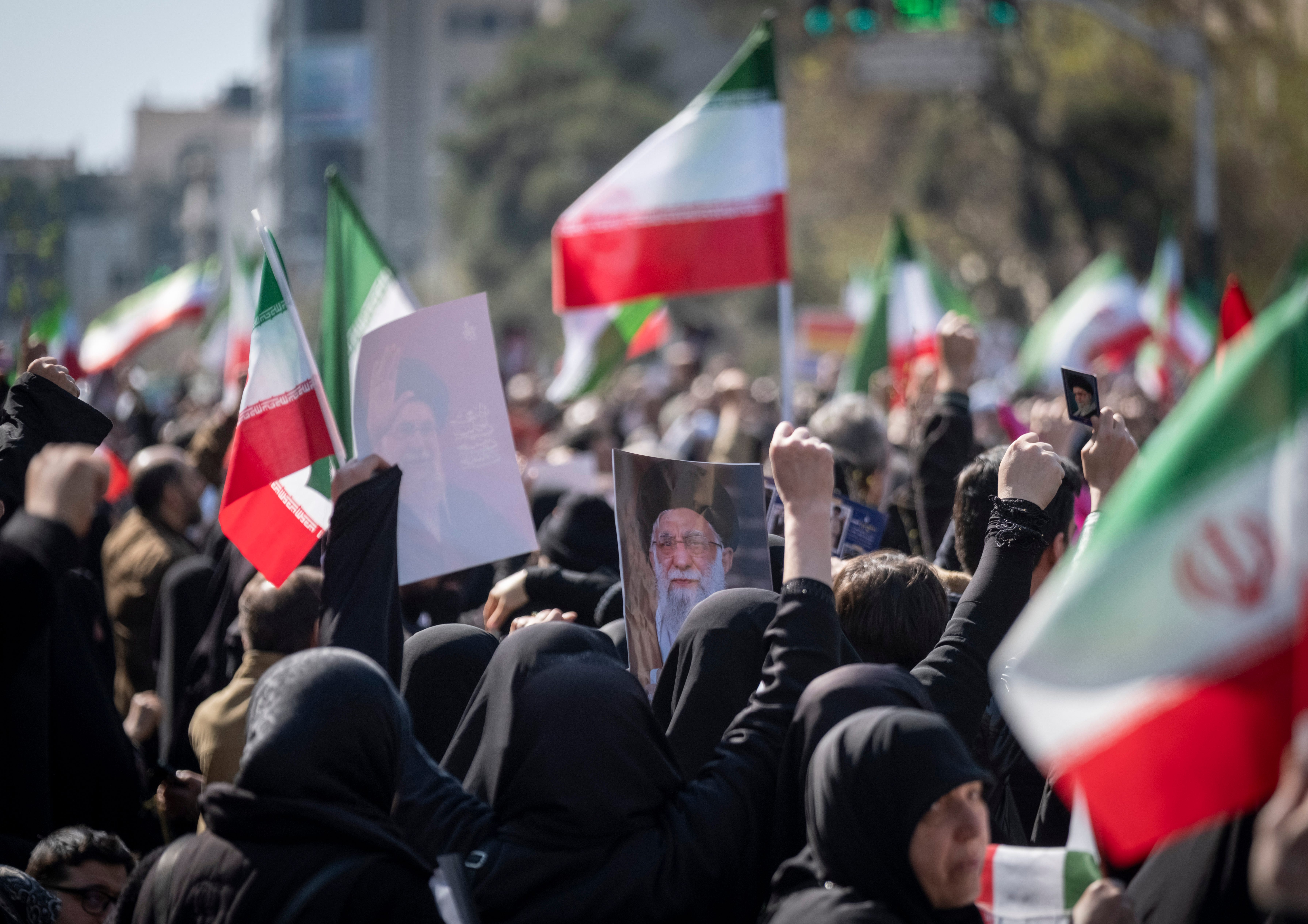
Since launching a scorched earth bombing campaign against Iran on February 28 despite ongoing negotiations, President Donald Trump has repeatedly sought to portray the Iranian government as cowering in the face of American might, appealing to him to make a deal to end the war. “They have no air defense. All of their airplanes are gone. Their communications are gone. Missiles are gone. Launches are gone. About 60% and 64%, respectively. Other than that, they’re doing quite well,” Trump quipped on Thursday. “And they’re calling. They’re saying, ‘How do we make a deal?’ I said, ‘You’re being a little bit late,’ and we want to fight now more than they do.”
Trump’s claims that Iran has sought to negotiate a ceasefire with the U.S. are a “huge lie,” a senior Iranian official told Drop Site. On Thursday, Abbas Araghchi similarly told NBC News that Iran has not had any communications with the U.S. through backchannels since his meeting in Geneva last week with Special Envoy Steve Witkoff and Trump’s son-in-law Jared Kushner. “No, not after Thursday that we met last time. We met last Thursday. We negotiated for almost seven hours,” he said.
“No negotiations from the Iranian side are conceivable until the official announcement by the Supreme Leader of Iran,” the senior official, who is not authorized to speak publicly on the matter, said. “The decision of Iran’s military forces is the continuation of the defense of the country against attacks by Israel and the United States, and the long-term management of the war imposed by foreign forces.”
Ayatollah Ali Khamenei and other senior Iranian leaders were assassinated last Saturday in the opening strikes of the U.S. war. The Iranian government moved swiftly to name an interim leadership council consisting of President Masoud Pezeshkian, Gholam-Hossein Mohseni-Ejei, the head of Iran’s judiciary, and Ayatollah Ali Arafi, a prominent member of Iran’s Guardian Council and Assembly of Experts—the body that is ultimately responsible for choosing the country’s Supreme Leader.
Iran is expected to name a new Supreme Leader in the coming days. Some reports indicate that a leader may already have been selected by the Assembly of Experts. “The voting has been conducted,” the Iranian official told Drop Site. “Security and protection measures for the new leader must be put in place before they can announce his name.”
While Iran denied communications with the U.S., the official said other nations had reached out to Iran appealing for it to consider discussing a ceasefire. “Our assessment is that the USA side has requested their mediation. These requests have so far been rejected by our side,” the official said, adding that he believed such claims by Trump were part of a broader propaganda campaign.
“Some countries have begun mediation efforts,” Pezeshkian said on Friday. “Let’s be clear: we are committed to lasting peace in the region yet we have no hesitation in defending our nation’s dignity and sovereignty. Mediation should address those who underestimated the Iranian people and ignited this conflict.” Pezeshkian did not offer any details on the nature of these diplomatic initiatives.
Soon after Pezeshkian’s statement was posted on X/Twitter, Trump took to Truth Social to demand full capitulation from Iran. “There will be no deal with Iran except UNCONDITIONAL SURRENDER!” Trump wrote on Friday. “After that, and the selection of a GREAT & ACCEPTABLE Leader(s), we, and many of our wonderful and very brave allies and partners, will work tirelessly to bring Iran back from the brink of destruction, making it economically bigger, better, and stronger than ever before. IRAN WILL HAVE A GREAT FUTURE. ‘MAKE IRAN GREAT AGAIN (MIGA!).’”
On Wednesday, in an interview with Drop Site, the Iranian Foreign Ministry spokesman Esmail Baghaei also denied that Iran had asked to resume talks with the U.S. “They are killing our citizens. Municipalities, schools, hospitals, medical centers, sports clubs—everywhere is being bombarded and targeted by missiles by [the] Israeli and American war machine. Do you think any Iranian with common sense would be really in a position to reach out to the United States under these circumstances?” Baghaei asked. “We were negotiating with the United States,” he said, pointing out that another round of talks was scheduled for Monday, March 2. “Just two days before that, the United States and Israel attacked Iran,” he added. “We were betrayed. Diplomacy was betrayed.”
The Iranian Military Mosaic
As the war nears a week, the U.S. and Israel continue to rain missiles and bombs on cities and villages across Iran, inflicting massive destruction not only to government buildings, military infrastructure, air defense capacity and missile systems, but also directly striking civilian buildings, including schools, hospitals and parks. Among the dead are 168 young girls killed in a direct strike on their school in Minab in the opening hours of the U.S.-Israeli assault. The World Health Organization said that 13 medical facilities in Iran have been struck in attacks over the past week. According to the Iranian Red Crescent Society, the death toll in Iran is at least 1,332, and roughly 30 percent of those killed are children.
Trump and his aides—most prominently War Secretary Pete Hegseth—speak of the war as a sporting event, gloating over the U.S. military’s overwhelming firepower advantage. “Our rules of engagement are bold, precise and designed to unleash American power, not shackle it. This was never meant to be a fair fight, and it is not a fair fight,” Hegseth said Thursday during a visit to U.S. Central Command. “We are punching them while they’re down, which is exactly how it should be. Thus far, Operation Epic Fury has delivered twice the air power of shock and awe of Iraq in 2003.” Hegseth promised the U.S. would intensify the bombing, including through the use of 2,000-pound gravity bombs. “We are just getting started,” he boasted.
“Iran is not the same country it was a week ago,” Trump told CNN on Friday. “A week ago they were powerful, and now they’ve been indeed neutered.”
While it is undeniable that Iran’s military forces have absorbed massive damage and that the U.S. and Israel have degraded its air defenses, making it easier to fly warplanes over the country with greater frequency, Tehran is exhibiting an ongoing capacity to launch missiles and drones at both Israel and at U.S. military, diplomatic, and intelligence targets across the region. Since Monday, the State Department has been sending Americans in more than a dozen countries urgent messages to “DEPART NOW,” spurring an exodus of tens of thousands from the Gulf. U.S. embassies and consulates, several of which have come under attack, have shut down and U.S. military and civilian personnel have been moved away from bases.
Since the bombing started, Iranians have regularly gathered in crowds in the streets and squares across the country to denounce the U.S.-Israeli war and Iranian officials have maintained that the country will remain defiant and that capitulation is not an option. The U.S. has repeatedly said that it believes Iranians will rise up against the government and Trump has openly called on anti-government Iranians to seize power as the U.S. decimates Iranian military and security forces.
In January, large peaceful protests against the government in Tehran descended into bloodshed after groups of people began attacking police stations, mosques, and government buildings. In response, Iranian forces violently cracked down. The Iranian government says that roughly 3,100 people were killed during the unrest, blaming the deaths on Israeli and U.S.-backed “terrorist” forces, while human rights organizations asserted the death toll was much higher and accused Iranian forces of indiscriminately shooting protesters.
Throughout the past week, Iranian security agencies have sent out text messages to Iranian citizens, warning of potential plots to create unrest and threatening that “any movement that disrupts security will be met with [a] strong fist.” The agencies warned against engaging in actions “that could pave the way for enemy exploitation” and asking citizens to report suspicious activity. “If you observe any suspicious anti-security incidents, such as movements of terrorist groups, movement of weapons and military equipment, and misinformation and anti-psychological security measures, please send reports to your servants in the IRGC [Islamic Revolutionary Guard Corps],” read one message confirmed as authentic by Drop Site. Another government text message verified by Drop Site said that “the next step” in the U.S.-Israeli war will include efforts to spark “terrorist acts and street riots.”
While there is little doubt Iranian authorities would respond forcefully to anti-government protests as the country is under bombardment, the U.S.-Israeli bombing also casts any anti-government protests as pro-Trump and in favor of regime change. “Now it’s a very different dynamic where if you’re protesting right now, it comes off as explicit support for a foreign entity that is killing your fellow Iranians,” said Ali Ahmadi, an Iranian analyst who is a fellow at the Geneva Center for Security Policy. “It is a very different dynamic.”
While the senior Iranian official who spoke to Drop Site acknowledged the damage wrought to Iran’s military infrastructure, he said the U.S. and Israel were exaggerating its impact. Prior to the bombing, he said, Iran engaged in extensive planning for a protracted war with the U.S. and Israel that would include leadership decapitation strikes, including by delegating authority further down the command structure to engage in military action.
“This mosaic of different Iranian military commands around the country operate independently and continue firing missiles, firing drones, and basically running out the stock of American interceptors that’s available not just to the United States itself, but also to Israel and the Gulf states,” Ahmadi said. “You have different military sectors in different parts of the country with predetermined strike packages, ways of coordinating without talking, knowing each other’s game plan and responding to attacks and counter attacking. There doesn’t need to be a centralized command structure.”
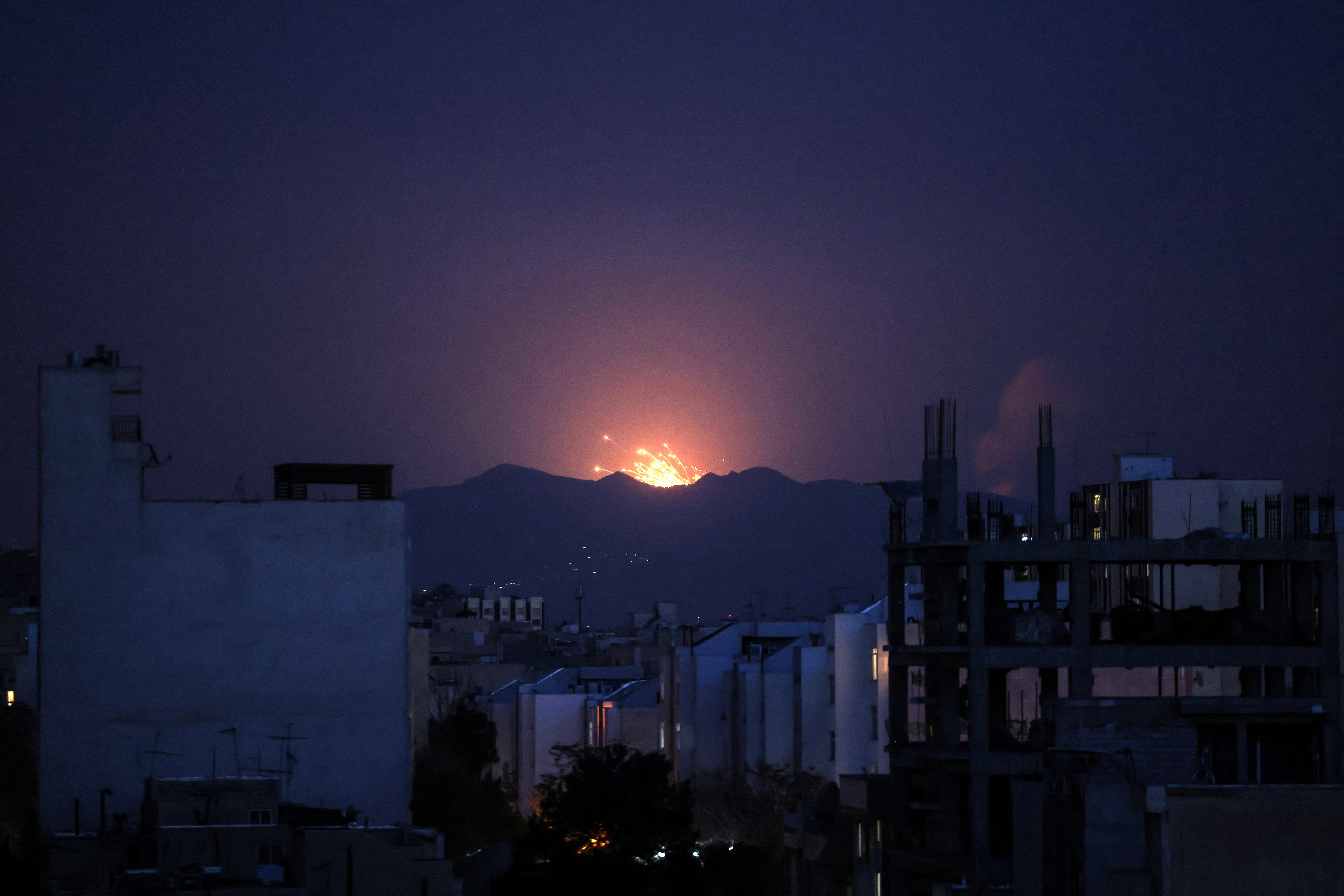
Senior Iranian military commanders, meanwhile, have claimed that their missile and drone attacks have done far more extensive damage to U.S. air defense systems inside the borders of its regional Arab allies that house U.S. military facilities than the U.S. and Israel are publicly acknowledging. Iranian missile strikes have hit THAAD anti-aircraft sites and early warning radar detection systems, including the billion dollar ballistic-missile early-warning radar at Udeid Air Base in Qatar, which feeds data to THAAD and Patriot systems throughout the region of incoming missile attacks. An open source investigation by the New York Times confirmed that in just the first three days of the war, Iranian strikes “damaged structures that are part of or near communication and radar systems on at least seven U.S. military sites across the Middle East.”
Sources from the Iranian Revolutionary Guard Corps told state media over the past two days that in the opening phase of its retaliatory attacks, Iran largely used missiles produced between 2010-2014 and that it was beginning to deploy more modern, longer range missiles against U.S. and Israeli targets. After U.S. officials claimed Iran’s pace and scope of attacks seemed to be slowing on Thursday, that night Iran launched heavy attacks at U.S. facilities in multiple Gulf countries and successfully struck multiple sites across Israel.
The initial days of Iran’s military response, the Iranian official told Drop Site, were aimed at “setting the stage to unleash a lot more power,” utilizing “stronger and more advanced missile weapons in [Iran’s] arsenal.”
Iran has carried out strikes against civilian targets in Arab nations, including hotels and other buildings in Bahrain and the United Arab Emirates. Iranian officials told Drop Site that some of the buildings were housing U.S. military or intelligence personnel. Without confirming that any officials were in sites hit in Bahrain, the U.S. embassy did evacuate its staff from hotels in Manama and Israel recently conducted a special airlift to exfiltrate Israeli government employees from the UAE.
Tehran has also denied that it bombed an airfield in British-controlled Cyprus. A drone hit a hangar used by American U2 spy planes. Britain initially accused Iran of launching the attack, but UK defense officials later said it did not come from Iran and that they believe it was launched from Lebanon or Iraq. Iran likewise claimed it was not behind an attack on an airport in Azerbaijan.
Throughout the past week, Iran has accused Israel of engaging in “false flag” attacks in an effort to draw other nations into the U.S.-Israeli war. “Attacks have been carried out that have been attributed to Iran,” the Iranian official said. “These attacks are false-flag operations intended to provoke the countries of the region into entering a regional war.”
No evidence has been produced to indicate Israel has been responsible for any of the strikes in Gulf Cooperation Council (GCC) countries or Azerbaijan.
On Thursday, following a meeting of the foreign ministers of European nations and the Gulf Cooperation Council, the EU and GCC officials issued a joint statement condemning Iran for its “inexcusable attacks” in the region and calling on Tehran to “cease immediately.” Attacks in Bahrain, Kuwait, and the U.A.E. have killed eight people, including two Kuwaiti soldiers and an 11-year-old girl. At least 11 have been killed in Israel. Six U.S. military members were also killed on the second day of the war when an Iranian drone hit an operations center in Port Shuaiba, Kuwait. The statement ignored entirely the mounting civilian death toll in Iran and the bombing of civilian sites.
The GCC countries, Ahmadi said, were blindsided by the actual impact the war against Iran has had on Gulf Arab countries. “I don’t think they expected to get hit hard. I don’t think they expected the U.S. to focus so heavily on defending Israel to their detriment,” Ahmadi said. “The foundation of their governance philosophy is the idea that America is going to put a lot of bases in their countries and they’re going to be essentially guaranteed security regardless of what America even uses their bases to do. And that creates the foundation for GCC stability and prosperity. And now that’s all been thrown into chaos.”
Iran has said repeatedly that it would intentionally strike oil infrastructure only if its facilities were attacked first and it has denied striking such sites in Saudi Arabia and elsewhere. “As Iran has previously announced, it will only attack energy infrastructure if Iran’s energy infrastructure is targeted by the United States or Israel,” the Iranian official told Drop Site. “The logic of this position is also clear: energy infrastructure in the region constitutes USA interests, directly or indirectly.”
On Friday, the price of Brent crude oil surged past $90 a barrel for the first time in two years. Qatar’s Energy Minister Saad al-Kaabi warned in an interview on Friday that if the conflict with Iran continues for several weeks, it could “bring down the economies of the world,” predicting oil prices could reach $150 per barrel amid ongoing disruptions to shipping and production in the region. “Everybody’s energy price is going to go higher. There will be shortages of some products and there will be a chain reaction of factories that can’t supply,” al-Kaabi told the Financial Times. Qatar also supplies about 20% of the world’s liquid natural gas and has stopped production since Monday.
Trump’s Regime Change Visions
Since the first bombs struck Iran last weekend, Trump has been on a telephone tour with a variety of Washington, D.C. journalists, bragging about the war he unleashed and engaging in theoretical discussions about what might happen next in Iran.
Trump told Axios’s Barak Ravid on Thursday that he must approve of any future Iranian leader. “I have to be involved in the appointment, like with Delcy [Rodriguez] in Venezuela,” he said in a reference to the U.S. operation to kidnap President Nicolas Maduro and the consolidation of U.S. support for Venezuela’s vice president. “We want someone that will bring harmony and peace to Iran.” Trump told CNN’s Dana Bash on Friday, “It’s gonna work very easily. It’s going to work like [it] did in Venezuela,” adding, “I don’t mind religious leaders, I work with a lot of religious leaders and they are fantastic.”
In recent days, there has been a spate of news reports that the CIA has been arming Kurdish rebels in Iraq and may try to deploy them in a ground invasion in Iran. On Thursday, multiple media reports said Kurdish forces had already crossed over into Iran—but Kurdish sources rejected this claim wholesale. Any Kurdish effort would be up against a large and well-equipped national army. The concept seems to be one component of an emerging U.S. plan that envisions widespread instability gripping Iran, accompanied by defections and support for armed attacks against government forces in a campaign to overthrow the government.
“I don’t know what capabilities they’re going to be able to bring over from other places to fight the Iranian government,” said Ahmadi. “They’re dancing around trying to figure out options because sending 100,000 American troops isn’t really politically viable.”
When it comes to attempts to foment unrest, Ahmadi believes both the U.S. and Israel are misjudging the cohesion of the Iranian state and the strength of its governing, security, and military structures.
“You have a very decentralized network of ideological, security, economic organizations, all of whom are loyal to the founding principles of the Islamic Republic. They are decentralized enough to the point where killing individual people is not going to really accomplish very much,” Ahmadi said. “This is just a huge miscalculation on the part of the Israelis and the Americans, a miscalculation they keep making over and over and over and over again where they think Iran functions the same way as Hezbollah, which is a non-state actor. This is an actual country. It’s a government. The IRGC is an actual military force. It has a command structure. It has lines of security succession. Decapitation strikes don’t really accomplish much.”
Iran has dismissed Trump’s calls for the government to surrender and senior officials have predicted that once the U.S. realizes that Iranian retaliatory strikes cannot be entirely prevented and a domestic uprising is not occurring, the U.S. and Israel will seek an end to the war. “We didn’t ask for a ceasefire even last time,” Araghchi told NBC, referring to the 12 Day War in June 2025. “In [the] previous time, it was Israel who asked for a ceasefire. They asked for an unconditional ceasefire after 12 days that we resisted against their aggression,” he said. “We are not asking for a ceasefire, and we don’t see any reason why we should negotiate with the United States when we negotiated with them twice, and every time they attacked us in the middle of the negotiations.”
The U.S. bombing Iran while claiming Iran is “refusing diplomacy” is the same cynical playbook used in Iraq, Libya, and countless other wars—destroy first, then blame the victim for not negotiating under fire. Demanding “unconditional surrender” while civilians and children are being killed exposes this war for what it is: not defense, but imperial coercion. History will remember who sabotaged diplomacy and chose escalation instead.
Your Reporting is Critical to the growing anti-war, anti-imperialist movement here in the U.S. ‘Belly of the Beast’‼️👏🏼💞🌈🌹❤️🔥☮️☮️🇮🇷☮️🇮🇷☮️🇮🇷