

Iranians Return to South Pars Gas Complex to Repair and Rebuild
Engineers at the facility estimate 12% of the crucial gas facility's capacity was affected by U.S.-Israeli strikes in March.

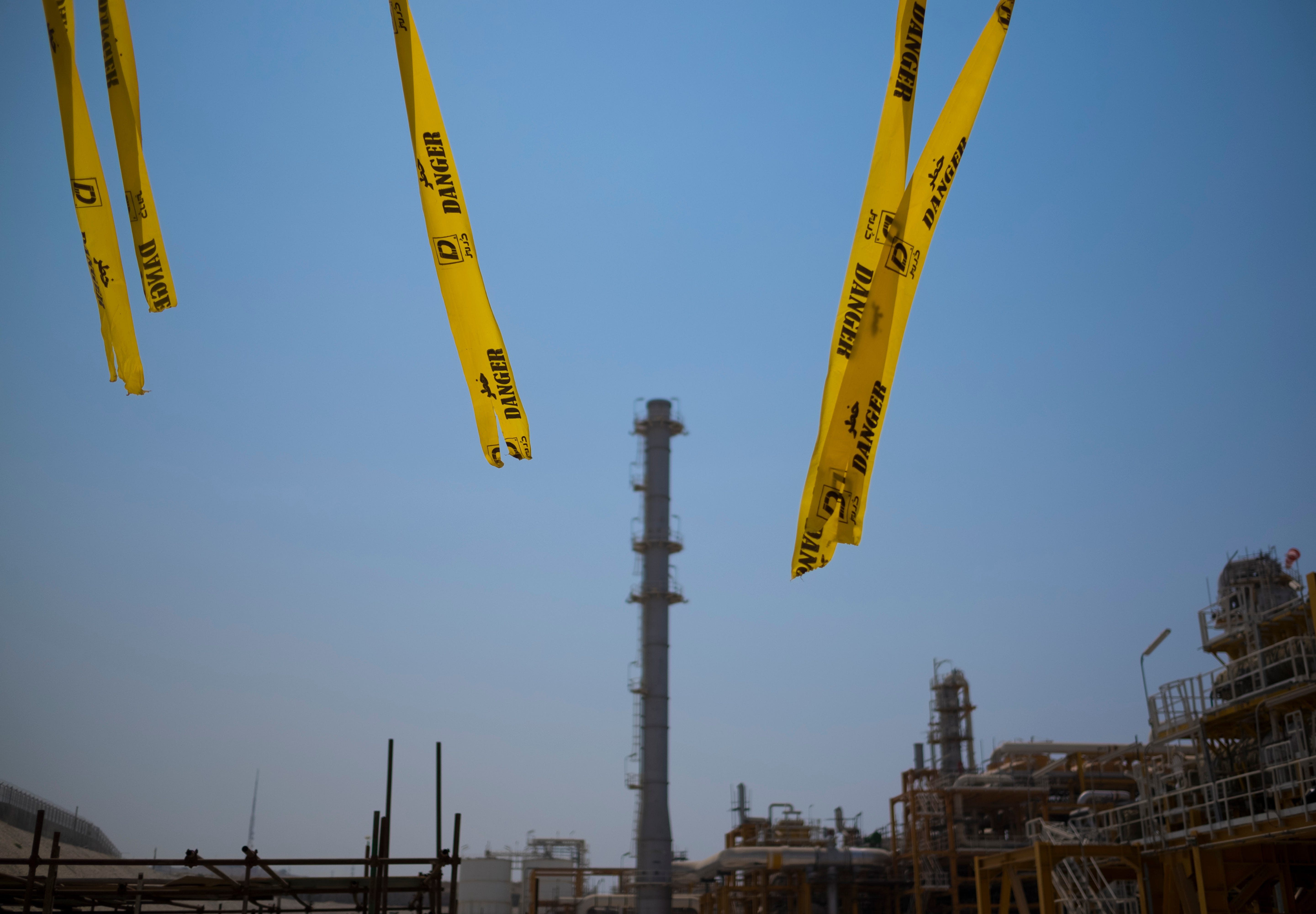
TEHRAN, Iran—When the first explosions hit infrastructure linked to Iran’s South Pars gas field on March 18th, Yasin, an electrical engineer, was hundreds of kilometers away at his family home.
A number of facilities at the field were hit by Israeli airstrikes in one of the most serious attacks on energy infrastructure during the war. Within hours, videos of smoke rising from South Pars began spreading across social media. Inside the gas complex in the city of Assaluyeh, in the southwestern province of Bushehr, workers and engineers quickly returned to contain the fires and prevent further explosions at one of the country’s most critical energy hubs.
According to workers interviewed by Drop Site, the strikes damaged vital infrastructure connected to electricity, water, and oxygen systems that supply the Assaluyeh complex, a colossal onshore refinery that is critical to Iran’s domestic grid and energy exports. The strikes caused operational disruptions across several facilities, and emergency repairs are ongoing. (For security reasons, workers in Assaluyeh asked to be identified only by their first names.)
Days earlier, management at parts of the complex had told workers they could temporarily leave because of the war. “They told us anyone who wanted to go home could leave and still receive full pay,” Yasin, who works in the complex, told Drop Site. “Nobody knew how far the war would go.”
“When I heard South Pars had been attacked, I immediately wanted to return,” Yasin said. “My mother was extremely worried. But I felt this was no longer just about a job.”
“I’m not even a particularly religious person,” he added. “But I know how much Iranian engineers sacrificed over decades to build this industry under sanctions and pressure. When I heard the complex had been hit, it felt like our home itself had been attacked.”
Yasin returned to his hometown along with many others, including Shahin, a worker at the complex, and Saeed, a laborer who had long struggled with the exhausting conditions of southern Iran’s heat and industrial environment.
South Pars, which sits at the center of Iran’s domestic energy network, is one of the largest gas fields in the world, containing enormous reserves shared between Iran and Qatar, with Qatar referring to its section as the North Dome field.
The field also sits at the center of Iran’s domestic energy network. Gas from South Pars powers homes, electricity generation, petrochemical facilities, and refineries across the country. Analysts have long warned that disruptions there could affect everything from industrial output to winter heating supplies.
“When we returned, we saw that some critical utility systems had been damaged,” Yasin said. “The first priority became preventing the fire from spreading and stabilizing operations.”
According to Yasin, at least two refinery sections suffered serious damage after the strikes, while multiple sections—called “phases”—were temporarily shut down to prevent the fire from spreading. He estimated that the disruptions may have affected roughly 12% of Iran’s gas production capacity linked to parts of the South Pars network, although he said the full scale of the damage was still unclear in the immediate aftermath of the attacks. Hossein, another engineer at the complex, confirmed this estimate.
At the same time, he stressed that the situation on the ground was more complicated than either total collapse or full recovery. “The damage was serious,” he said. “But this industry was built domestically by Iranian engineers over many years. That matters now because even if repairs are difficult, we understand these systems ourselves.”
Iran’s energy infrastructure has developed under decades of sanctions, forcing much of the country’s engineering and technical capacity inward. Workers say this created an unusual wartime advantage: even heavily damaged systems could often be repaired without dependence on foreign contractors.
That does not mean the economic consequences are minor. South Pars supports nearly half of Iran’s petrochemical capacity through downstream facilities concentrated around Bushehr province and Assaluyeh. The field also produces massive volumes of gas condensate used by refineries, including the Persian Gulf Star refinery, one of Iran’s most important gasoline producers.
Iran already faces chronic gasoline imbalances and relies heavily on stable condensate flows from South Pars to sustain refining capacity. Yasin and Hossein estimated that disruptions connected to condensate production could eventually reduce gasoline output by between 5 and 10 million liters per day if repairs are delayed.
“People outside the energy sector often don’t realize how interconnected everything is,” Yasin said. “A disruption here can affect petrochemicals, electricity, gasoline, and eventually prices across the entire country.”
He estimated that some damaged sections may not fully return before winter, potentially worsening Iran’s seasonal gas shortages. “At the moment, we can still manage domestic supply,” he said. “But if repairs take longer, winter could become much more difficult.”
“We are trying to rebuild the damaged sections and bring them back online within the next five to six months,” Hossein said.
Shahin, who has a six-year-old child, said he initially considered remaining home after hearing about the attacks. But after seeing reports that civilians had gathered around strategic infrastructure sites in the wake of the strikes, he decided to return.
“When I came back, my manager thanked me and said conditions were still unstable and nobody knew what might happen next,” Shahin told Drop Site. “But I felt I couldn’t stay away while others were returning.”
Saeed described a similar feeling. “Working in Assaluyeh is exhausting even under normal conditions,” he said. “Because of the heat and pressure, many workers constantly wait for vacations so they can leave for a while.”
“But when I returned home and saw the images of the attacks, I felt terrible staying there,” he added. “Trump said he wanted to free the Iranian people. But when energy infrastructure is hit, ordinary people are the ones who suffer first.”
Following the strikes, Iran retaliated against energy infrastructure elsewhere in the Gulf, including Qatar’s Ras Laffan industrial complex, triggering sharp spikes in global oil and gas prices.
Regional governments condemned the escalation, while energy analysts warned that attacks on infrastructure tied to the Persian Gulf’s interconnected gas network could destabilize global LNG markets for months.
Inside Iran, however, workers say the focus remains narrower and more urgent: keeping South Pars operational.
“The war showed us how vulnerable these facilities are,” Yasin said. “But it also showed how much of the country depends on the people working here.”
This article was published in collaboration with Egab.
 | A guest post by
|