

Iran hits Gulf oil facilities with retaliatory strikes; Global energy markets shaken; Lebanon death toll tops 1,000
Drop Site Daily: March 19, 2026


Israel kills 12 in strike on residential area in Iran. Iran targets energy infrastructure in Gulf states in retaliatory strikes. President Donald Trump threatens to hit gas field again. Pentagon requests $200 billion for Iran war. Oil hits $119 a barrel. Projectile hits Bushehr nuclear plant grounds. Fire aboard USS Gerald R. Ford injures sailors, raises concerns over deployment. Saudi Arabia says missiles intercepted over Riyadh as videos show fires. Qatar expels Iranian officials after missile strike on gas hub. U.S. weighs troop deployments and expanded operations in Iran, report says. Four Palestinians killed in Israeli airstrikes on Gaza City. Four women killed in Hebron area salon. Rafah reopens for pedestrian movement. Germany withdraws support for Israel in ICJ genocide case. Director of National Intelligence Tulsi Gabbard defers to Trump on defining “imminent threat” in Iran testimony. Fed holds rates steady, flags inflation risks from Iran war. FBI investigates former counterterrorism chief after resignation over Iran war. Founder of United Farm Workers accused of rape. DACA recipient detained by ICE on his way to the NICU. Pakistan and Afghanistan agree to temporary Eid ceasefire amid clashes. Russian oil shipments head to Cuba as blackout deepens crisis. Kataeb Hezbollah sets conditions to pause attacks on U.S. Embassy in Baghdad. Iraq resumes Kirkuk oil exports via Turkey amid war disruptions. China offers Taiwan energy security in push for reunification. Clashes along Sudan-Chad border kill 17 as fighting intensifies. RSF accused of executing civilians in North Kordofan. UN-backed Haiti security force aims for full deployment by October. Nigerian forces repel insurgent assault on Borno base, army says. Suspect in Ecuadorean presidential candidate slaying arrested in Mexico.
NEW from Drop Site: Grieving Parents in Iran Spend Every Night at the Graves of Their Children, Killed by U.S. Strike
This is Drop Site Daily, our free daily news recap. We send it Monday through Friday.
War on Iran
Casualty count: At least 1,444 people have been killed and 18,551 injured by the U.S.-Israeli war on Iran since February 28, according to Iran’s Health Ministry.
Israeli strikes kill civilians: A U.S.-Israeli attack on a residential area in Dorud in western Iran killed at least 12 people Thursday, according to Iranian media, while a drone attack near the city of Malekan killed two people, according to the Tasnim news agency.
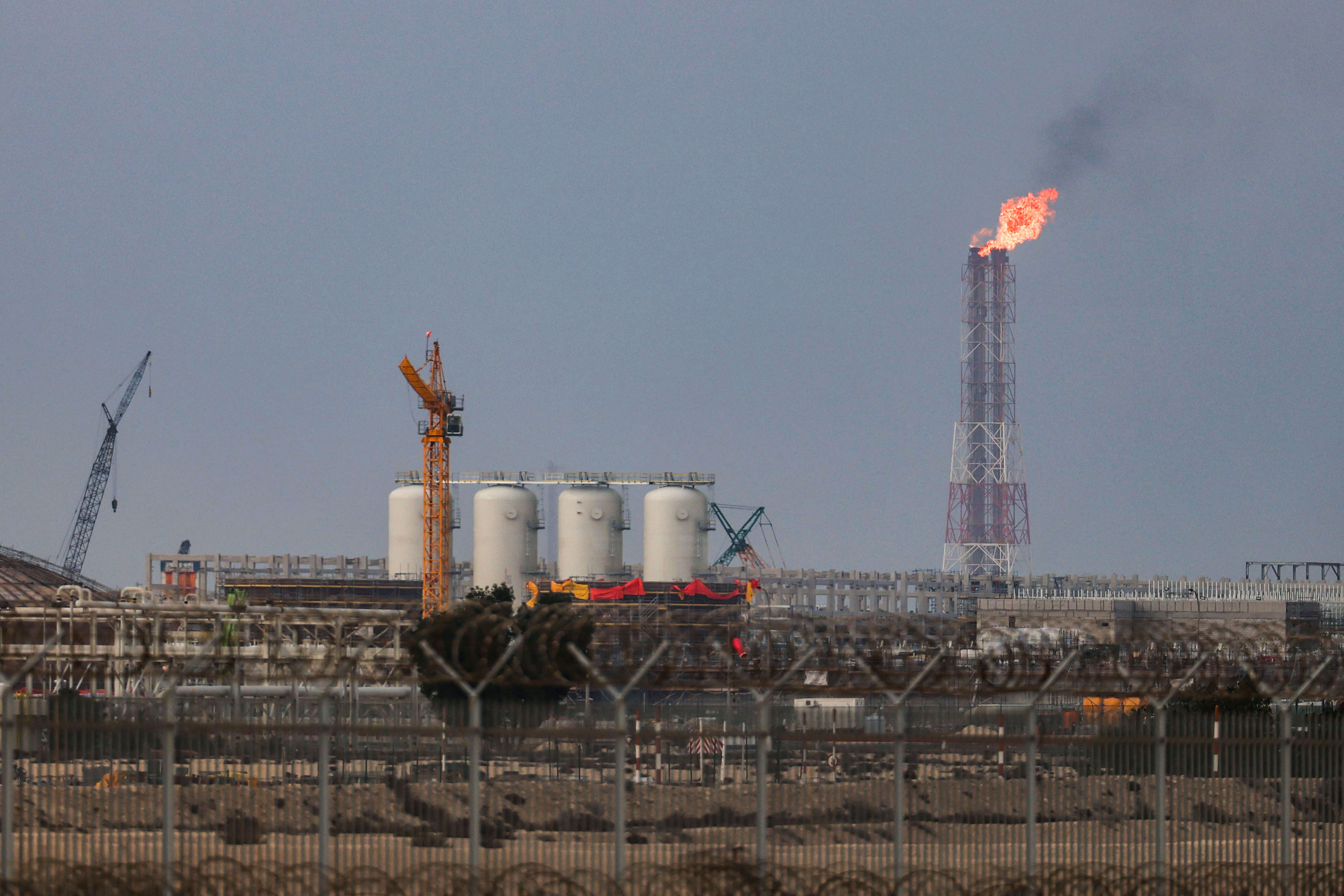
Iran targets energy infrastructure: Iran targeted energy facilities in several Gulf states in retaliation for an Israeli airstrike Wednesday on Iran’s South Pars gas field, the largest natural gas field in the world.
Qatar said Iranian missiles struck Ras Laffan, the country’s main gas facility, causing “significant damage.” The CEO of state-owned QatarEnergy Saad al-Kaabi told Reuters that the strike “knocked out 17% of Qatar’s liquefied natural gas export capacity, causing an estimated $20 billion in lost annual revenue and threatening supplies to Europe and Asia.” QatarEnergy may have to declare force majeure on long-term contracts for up to five years for gas supplies for Italy, Belgium, South Korea, and China as a result of the attacks, al-Kaabi said.
Kuwait said a drone hit an operational unit at the Mina Al-Ahmadi refinery, sparking a fire. A second facility, the Mina Abdullah refinery, was also hit by a drone, causing a fire.
Saudi Arabia said a drone crashed at the SAMREF refinery in the Red Sea port of Yanbu, with “damage assessments” still ongoing.
The United Arab Emirates said falling debris from intercepted missiles hit the Habshan gas facility and Bab oilfield, resulting in the shutdown of processing at the facility, one of the country’s largest.
Trump threatens to hit gas field again: President Donald Trump threatened to “massively blow up” the South Pars gas field if Iran attacked Qatar again. Writing on his Truth Social platform on Wednesday, Trump claimed that the U.S. “knew nothing” about Israel’s attack on the gas field, which Iran shares with Qatar. Trump declared “no more attacks will be made by Israel” on the field unless Iran attacks Qatar, adding: “In which instance the United States of America, with or without the help or consent of Israel, will massively blow up the entirety of the South Pars Gas Field at an amount of strength and power that Iran has never seen or witnessed before.” While Trump declared the U.S. knew nothing about Israel’s strike, the Wall Street Journal cited unnamed U.S. officials saying Trump was informed of the attack ahead of time and approved of it to try and pressure Iran to unblock the Strait of Hormuz. Iran’s Foreign Minister Abbas Araghchi said in a post on X Thursday that Iran’s retaliatory strikes on oil and gas infrastructure in the region “employed FRACTION” of its power due to de-escalation requests, adding that there will be “ZERO restraint” if Iranian infrastructure is hit again.
Pentagon requests $200 billion for Iran war: The Department of War has asked the White House to approve a request to Congress for more than $200 billion to fund the war in Iran, according to the Washington Post, which characterized the move as “an enormous new ask that is almost certain to run into resistance from lawmakers opposed to the conflict.”
Oil hits $119 a barrel: Oil and natural gas prices surged after Israel’s attack on the South Pars gas field and Iran’s retaliatory strikes. Brent Crude, the global pricing benchmark for oil, rose to nearly $120 a barrel in trading, up from less than $73 per barrel on the eve of the war. On Wednesday, Trump issued a 60-day waiver of the Jones Act, allowing foreign-flagged ships to carry fuel between U.S. ports to speed deliveries and ease price pressure. Other governments are moving to limit shortages, with Slovakia capping diesel sales and countries across Asia tightening their supply in anticipation of the crunch. The Philippines, Myanmar, and Thailand have introduced various measures to cope with this, such as workweek reductions, driving limits, export bans, and price controls.
Projectile hits Bushehr nuclear plant grounds: Iran reported that a projectile struck the premises of the Bushehr nuclear power plant on Tuesday, according to the International Atomic Energy Agency, with no damage to the reactor or injuries to staff. In a statement, agency chief Rafael Grossi called for “restraint during the conflict to avoid any risk of a nuclear accident.”
Fire aboard USS Gerald R. Ford injures sailors, raises concerns over deployment: A fire aboard the USS Gerald R. Ford in the Red Sea injured sailors and damaged about 100 sleeping berths, with nearly 200 crewmembers treated for smoke inhalation after the blaze in the ship’s laundry area. One crew member was flown off the ship with injuries, according to The Guardian. The carrier is expected to sail to Crete for repairs, as concerns grow over crew fatigue, morale, and ongoing technical issues aboard the vessel.
Private planes damaged in missile interception at Ben Gurion Airport: Three private planes parked at Ben Gurion Airport were damaged by shrapnel Wednesday after an Iranian missile was intercepted by Israeli air defenses, the Israel Airports Authority said. One aircraft caught fire and others sustained structural damage, but no casualties were reported.
Saudi Arabia says missiles intercepted over Riyadh as videos show fires: Saudi Arabia said its air defenses intercepted four ballistic missiles targeting Riyadh, with debris falling across parts of the city. The government later confirmed that 4 people were injured in the strike, all of whom were foreign Asian residents. The rare strike on the capital follows earlier Iranian threats to target Saudi energy infrastructure.
Qatar expels Iranian officials after missile strike on gas hub: Qatar confirmed that Iran launched ballistic missiles at the country on Wednesday, with one missile striking Ras Laffan Industrial City and igniting a fire. Most of the missiles were intercepted, according to the government. In response to the attacks, Doha expelled Iranian military and security attachés and their staff, calling the attack a violation of its sovereignty and warning it reserves the right to respond under international law. As of late Wednesday evening, Qatar was still dealing with the fire at Ras Laffan, according to the Ministry of the Interior.
U.S. weighs troop deployments and expanded operations in Iran, report says: The Trump administration is considering a significant escalation in Iran, including deploying thousands of additional troops and expanding air and naval operations to secure oil routes through the Strait of Hormuz, according to Reuters. Options under discussion include potential ground operations near key oil infrastructure and nuclear sites, though officials say no final decision has been made, as the operation is considered highly risky.
Barrack declines to condemn Iran strikes: U.S. Special Envoy for Syria Tom Barrack brushed off the toxic, carcinogenic effects of the U.S. attacks on Tehran, saying that the strikes were conducted in the “fog of war,” and refused to condemn the incidents when he was questioned about them at a New York event on chemical weapons. He was also pressed on newly released DOJ records indicating he remained in contact with Jeffrey Epstein years after Epstein’s 2008 conviction, saying that “all of us dealt with Jeffrey Epstein in the Eighties as a business person…he was bigger than life.” He added that everyone suspected Epstein’s influence had to do with his relationship with the government of Israel, but did not elaborate on the nature of this relationship.
Omani foreign minister warns Gulf states now exposed by Iran retaliation: Oman’s foreign minister said Iran’s retaliation against targets in neighboring countries was “inevitable” but unacceptable, arguing it reflects the limited options Tehran faced amid a war aimed at ending the Islamic Republic, in an article in The Economist. He warned that Gulf states now view U.S. security guarantees as a vulnerability, and that the conflict has seriously threatened the bloc’s economic model.
Lebanon
Casualty count: The death toll from Israel’s assault on Lebanon has risen to at least 1,001—with 2,584 wounded—since March 2, according to Lebanon’s Health Ministry.
Four killed in Thursday morning strikes on Lebanon: Two people were killed in an Israeli airstrike on the town of Adloun in southern Lebanon Thursday, according to the National News Agency. Two more were killed and eight injured in strikes on Housh Tyre, Burj al-Shamali, Bazouriyeh, and the public housing area. RT correspondent Steve Sweeney and his cameraman Ali Rida were injured in a strike on the Qasmiyeh bridge. Israeli airstrikes also targeted Qantara, while artillery shelling hit Wadi al-Slouqi and the outskirts of Ghandoorieh. This comes amid renewed Israeli displacement orders warning residents south of the Zahrani River to move north.
Israeli strikes on Wednesday:
In southern Lebanon, Israel shelled two bridges across the Litani River, according to reports from the National News Agency. Israel said it would target bridges crossing the river, “to prevent the transfer of reinforcements and weapons” to the frontlines, which would in effect disconnect a large part of the south from the rest of the country.
Six civilians were killed, including two children and two women, following an Israeli airstrike on the Lebanese town of Younine on Wednesday night.
An Israeli air attack in Saada killed two and wounded one, the NNA reported.
An Israeli attack targeting four houses in the town of Sahmar in the Bekaa killed at least four people.
The Gaza Genocide, Israel and the West Bank
Four Palestinians killed in Israeli airstrikes on Gaza City: Four Palestinians were killed in Gaza City on Thursday in two separate Israeli airstrikes, according to the AP. A strike in the Zeitoun neighborhood followed by a second in the Tuffah neighborhood each killed two people.
Four women killed in Hebron area salon: Four Palestinian women were killed, and at least six others were injured after debris from an Iranian missile struck a salon in Beit ‘Awwa, southwest of Hebron, according to the Palestine Red Crescent. The victims were inside a metal caravan when it was hit. Other rocket fragments also landed across the Hebron governorate, including Hebron City and Deir Sammit, emergency teams said.
Rafah reopens for pedestrian movement: The Rafah Crossing reopened on Thursday morning for the first time since the launch of the U.S.-Israeli war on Iran, according to WAFA. A group of eight patients in need of medical evacuation and 17 companions departed for the Rafah crossing from the Red Crescent in Khan Younis after their documents were processed. More than 20,000 patients require treatment abroad and the number of travellers from Gaza has not exceeded 700 since Israel partially reopened the crossing in February. Since the U.S.-Israeli attacks on Iran, only a third of the aid agreed upon in the ceasefire agreement has been allowed through the Kerem Shalom crossing, with Israel announcing Tuesday it suspended the entry of aid shipments from Egypt after alleging tobacco and nicotine smuggling inside hygiene kits.
Germany withdraws support for Israel in ICJ genocide case: Germany has withdrawn its support for Israel in proceedings at the International Court of Justice over the accusations of genocide brought to the court by South Africa, reversing its earlier plan to intervene as a third party. Berlin had previously dismissed the case as “baseless” and as a “political instrumentalization” of the genocide convention, and defended Israel’s military actions as an exercise of its right to self-defense.
Palestinian sexually assaulted by settlers recounts attack: CNN interviewed Qusai Abu al-Kebash, a 29-year-old Palestinian shepherd, who was sexually assaulted by Israeli settlers in the occupied West Bank village of Khirbet Humsa. He told the outlet that settlers zip-tied his genitals, paraded him through the village while beating him, threatened to rape women, assaulted children, and stole hundreds of his sheep.
Record number of Palestinian child detainees held without trial, report says: More than half of Palestinian children in Israeli detention—180 out of 351 as of December 31, 2025—are being held without charge or trial, the highest proportion recorded since monitoring began in 2008, according to Defense for Children International–Palestine. The group and lawyers released a new report documenting Israel’s widespread abuse of children in its prison system. The full report is available here.
United States
By Julian Andreone, with Ryan Grim. Have a tip on Capitol Hill? Email Andreone at Julian@dropsitenews.com.
Gabbard defers to the president on defining “imminent threat” in Iran testimony: Director of National Intelligence Tulsi Gabbard told the Senate Intelligence Committee Wednesday that determining whether a threat is “imminent” is the responsibility of the president, declining to directly assess Iran’s pre-strike nuclear posture. She said Iran’s military capabilities have been significantly degraded by U.S. and Israeli strikes, though she gave differing accounts on its recovery efforts and warned the country could rebuild and potentially develop an ICBM capability before 2035.
Fed holds rates steady, flags inflation risks from Iran war: The Federal Reserve kept interest rates unchanged on March 18 and projected higher inflation, driven by rising energy prices tied to the Iran war; the projections included the possibility that there would only be one rate cut this year. “In the near term, higher energy prices will push up overall inflation, but it is too soon to know the scope and duration of the potential effects on the economy,” Powell announced in a press conference following the Fed’s decision.
Trump voters back war with Iran but favor quick end, poll finds: Most voters who support President Donald Trump back a war with Iran, with 76% expressing support, but majorities oppose sending U.S. ground troops and favor ending the conflict quickly, according to an Ipsos poll commissioned by the American Conservative and the Quincy Institute. Support is stronger among older voters, while younger respondents are more divided and more concerned about economic impacts such as rising gas prices, and a narrower majority views Israel’s role positively.
FBI investigates former counterterrorism chief after resignation over Iran war: The FBI has opened a leak investigation into former National Counterterrorism Center Director Joe Kent, focusing on allegations he improperly shared classified information, according to people familiar with the probe cited by Semafor. Kent resigned Tuesday, stating Iran posed no imminent threat and accusing President Donald Trump of launching the war under pressure from Israel.
Founder of United Farm Workers accused of rape: Several women accused Cesar Chavez, founder of the United Farm Workers, of abusing them for years when they were as young as 13, according to an investigation by the New York Times. Dolores Huerta, a co-founder of the UFW, also said that Chavez sexually assaulted her during the 1960s. “The farmworker movement has always been bigger and far more important than any one individual,” Huerta wrote in response to the revelations. “Cesar’s actions do not diminish the permanent improvements achieved for farmworkers with the help of thousands of people.” Chavez died in 1993.
DACA recipient detained by ICE on his way to the NICU: Juan Chavez Velasco, a DACA recipient and medical worker, was detained by immigration agents in Texas while on his way to see his premature newborn, leaving behind his U.S.-citizen wife and children, according to a report from MS Now. The Trump administration has escalated its targeting of Dreamers, advocates say, and those who have not been directly targeted have faced lengthy delays in their renewal processes. Regarding his detention, Velasco said: “I feel very sad and heartbroken because I would have thought that the Trump administration would be more compassionate towards people like me who contribute to the country and have basically lived here all our lives. I love this country. I love what I’ve been able to accomplish here.”
FBI and IRS launch initiative to probe nonprofits over terrorism concerns: The FBI and IRS are launching a joint initiative to investigate nonprofit organizations for potential links to domestic terrorism, following a directive from Attorney General Pam Bondi that prioritizes cases tied to “extremist activity” and possible tax violations, according to CBS News. The effort, part of a broader campaign authorized in December, includes a centralized command unit and will enlist officers from the IRS’s Criminal Investigation unit.
Proposal outlines plan to cut U.S. electricity bills by 30 percent: A policy proposal from the Vanderbilt Policy Accelerator argues that regulators could reduce household electricity costs by about 30 percent—saving households roughly $500 annually—primarily by targeting investor-owned utilities’ returns and expenses. “It’s a matter of fairness, and it’s also a matter of making sure that utilities can’t make customers pay for the things that the utility does to try to increase the prices on customers,” the plan’s author says. Read more about the report in a write-up from The American Prospect, available here.
Other International News
Pakistan and Afghanistan agree to temporary Eid ceasefire amid clashes: Pakistan and Afghanistan have agreed to a temporary pause in hostilities over Eid al-Fitr, running through early next week, following mediation efforts by Saudi Arabia, Qatar, and Turkey. The truce comes after weeks of deadly cross-border fighting and air strikes, with both sides warning that operations could quickly resume if violence continues.
Russian oil shipments head to Cuba as blackout deepens crisis: Two vessels carrying Russian oil and fuel are expected to arrive in Cuba in the coming days, marking the first such deliveries in three months as the island grapples with severe blackouts and fuel shortages, according to the Financial Times. The shipments follow a nationwide power outage and come after supplies from Venezuela and Mexico were halted under U.S. pressure, leaving Cuba’s energy system strained and largely without fuel imports.
Kataeb Hezbollah sets conditions to pause attacks on U.S. Embassy in Baghdad: Iraq’s Kataeb Hezbollah militia said it will halt attacks on the U.S. Embassy in Baghdad for five days if demands are met, including an end to Israeli strikes in Beirut’s southern suburbs, a halt to attacks in Iraq, and the removal of CIA personnel from the embassy. The group warned that failure to comply would lead to renewed and intensified strikes, while saying foreign diplomatic and economic sites would be spared if their governments stay out of the conflict.
Iraq resumes Kirkuk oil exports via Turkey amid war disruptions: Iraq has resumed crude exports from its Kirkuk fields to Turkey’s Ceyhan port after Baghdad and the Kurdistan Regional Government reached an agreement, with initial flows of around 170,000 barrels per day set to rise to 250,000, Reuters reported. The move comes as the Iran war has slashed Iraq’s southern production and strained finances, prompting efforts to restore exports and stabilize revenue amid broader regional supply disruptions.
China offers Taiwan energy security in push for reunification: China said it would provide Taiwan with stable energy supplies if it accepted Beijing’s rule, linking the offer to its broader campaign for “peaceful reunification,” as global markets face disruption from the Middle East war. Taiwan rejected the offer, with President Lai Ching-te saying the island has secured diversified energy sources, including increased U.S. gas imports, to ensure near-term supply stability.
Clashes along Sudan-Chad border kill 17 as fighting intensifies: Heavy fighting between Sudan’s army and the Rapid Support Forces near the Chad border has killed at least 17 people and wounded more than 100, many seriously, according to Doctors Without Borders. The escalation around Tina, a key aid corridor in Darfur, underscores the worsening humanitarian crisis in a conflict that has already killed tens of thousands and displaced millions.
RSF accused of executing civilians in North Kordofan, medical group says: Sudan’s Doctors Network said the Rapid Support Forces executed 12 civilians, including six women, in the Shuraim Mima area north of Bara on March 18, alleging they were targeted on suspicion of ties to the army. The group described the killings as a “new massacre,” warning of escalating violence against civilians and calling for international action as control of Bara continues to shift amid the broader conflict.
UN-backed Haiti security force aims for full deployment by October: A UN-backed international force to combat gangs in Haiti is expected to reach full deployment of about 5,500 personnel by October, Dominican Republic Foreign Minister Roberto Alvarez said, with new Chadian troops training in the United States and Kenyan forces set to withdraw gradually. The rollout follows delays and staffing shortages in earlier missions, as Haiti continues to face widespread violence that has killed thousands and displaced more than a million people.
Venezuela replaces longtime defense minister amid post-Maduro reshuffle: Venezuela’s interim president Delcy Rodríguez announced the replacement of longtime defense minister Vladimir Padrino López, a key figure from Nicolás Maduro’s administration, as part of a broader cabinet shake-up following Maduro’s removal in January. General Gustavo González López, who occupied key roles in Maduro’s government and is viewed as a loyal Chavista by the rank and file, was named as his successor.
Nigerian forces repel insurgent assault on Borno base, army says: Nigerian troops backed by air support repelled an attack by Boko Haram and ISWAP fighters on a military base in Borno state, killing at least 80 insurgents including senior commanders, according to the army. The assault followed deadly suicide bombings earlier in the week, underscoring an intensification of militant operations in the region.
Russia boosts military support to Iran with intelligence and drone technology, report says: Russia has expanded intelligence sharing and military cooperation with Iran, providing satellite imagery, targeting data, and enhanced drone technology to support strikes on U.S. and allied forces, according to a new report from The Wall Street Journal. The assistance, which draws on Russia’s battlefield experience in Ukraine, will allegedly help Iran refine its targeting and tactics in its ongoing war with the United States and Israel.
EU offers to fund pipeline repairs to break Hungary’s veto on Ukraine aid: European Union leaders have offered funding and technical support to help Ukraine repair the Druzhba oil pipeline, aiming to persuade Hungary to lift its veto on a €90 billion aid package for Kyiv, according to the AP. Hungarian Prime Minister Viktor Orbán has tied his opposition to the restoration of oil flows, escalating tensions with Ukraine as the bloc seeks to secure funding and maintain its unity in support of Kyiv.
Suspect in Ecuadorean presidential candidate slaying arrested in Mexico: Ángel Esteban Aguilar is accused of being the leader of Ecuador’s Los Lobos gang and suspect in the 2023 assassination of presidential candidate Fernando Villavicencio. He was detained entering Mexico using a false identity and was extradited to Colombia, Al Jazeera reported. Ecuadorean Interior Minister John Reimberg hailed the trilateral effort to arrest Aguilar, despite his country’s ongoing tensions with both Mexico and Colombia.
Poll Shows U.S. population rejects Trump’s Cuba policy: A new survey from Blue Rose Research commissioned by the Progressive International finds most Americans oppose a naval blockade on Cuba, with fewer than a quarter agreeing with Donald Trump’s characterization of the country as an extraordinary national security threat and only 7% support the use of force to remove the Cuban government.
More from Drop Site
Families hold nightly vigils after deadly school strike in Minab: Families in Minab, Iran, have been gathering each night during Ramadan to hold quiet vigils at the graves of at least 168 children killed in a February 28 U.S. strike on an elementary school, one of the deadliest single attacks on children in memory. Parents described their grief and communal mourning at the cemetery. “We exchange memories. We talk about the games our children loved, and we bring back moments of their laughter,” one parent said. “All of that makes the night a little less lonely, and eases the feeling of absence a little.” Read the full report from Drop Site contributor Mahmoud Aslan here.
Watch: Drop Site’s Jeremy Scahill joined Owen Jones on a discussion on the events of the past 24 hours in the U.S.-Israel war on Iran
Programming note: You can sign up here to get updates from us on our WhatsApp channel.
If you want to continue getting this newsletter, you don’t have to do anything. But if this is too much—we do try to be mindful of your inbox—you can unsubscribe from this newsletter while continuing to get the rest of our reporting. Just go into your account here at this link, scroll down, and toggle the button next to “Drop Site Daily” to the off setting. It looks like this:

I just want to say I'm quite grateful for this kind of news summary, and I klnow it takes a lot to put it together.
News sources are all about trust, and while I grew up in previous decades reading the NYT, WaPo, and so on, I find their coverage these days to be woefully incomplete (rarely do they interview officials in Iran, Russia, China, India, Israel, and so on) and what they report is far too biased. They don't need to be "objective" but certainly aim for fairness.
Having Drop Site provide original reporting from reporters based in other countries, and then provide a curatorial service of a news round-up from various sources, helps a lot. A tip o' the hat to you all. Thank you!
Israel has gone full American they just can't stop killing people.