

Maduro pleads not guilty in U.S. court; DOJ drops claim that “Cartel De Los Soles” exists; CDC slashes vaccine recommendations for children
Drop Site Daily: January 6th, 2026


Venezuelan President Nicolás Maduro pleads not guilty in his U.S. trial and says he remains the president of Venezuela. Delcy Rodríguez is sworn in as Venezuela’s interim president. Reports of gunshots and unidentified drones near the Venezuelan presidential palace Monday night. Interior Minister Diosdado Cabello calls for a nationwide mobilization, as Venezuelans stream into Caracas to show their support for Maduro. DOJ drops charges alleging that Maduro was the leader of the “Cartel de los Soles.” New details surface on why Washington declined to back Venezuelan opposition leader María Corina Machado. Israel attacks Gaza, injuring four Palestinians and killing three, including a child who was shot in the head in Beit Lahia, as ceasefire violations by Israel proliferate in the enclave. Azerbaijan says it will not send troops to Gaza. The Global Sumud Flotilla asks Egypt to approve a humanitarian convoy into Gaza. More Israeli airstrikes hit southern Lebanon. Israeli military conducts a series of raids across the West Bank. Israel increases electronic surveillance of Palestinians in the West Bank. Israel intends to uphold its ban on independent foreign media in Gaza. U.S. Homeland Security Advisor Stephen Miller declines to rule out seizure of Greenland. Leaders of several European countries issue a joint statement on Greenland. Zelenskyy oversees leadership changes. Corporation for Public Broadcasting formally dissolves after funding cuts. Centers for Disease Control and Prevention cuts the number of vaccines recommended to U.S. children. The UN’s International Organization for Migration estimates displacement in Sudan’s Kordofan is around 65,000. Iran announces a cash aid program in response to recent protests. Two incidents kill nearly 40 in Nigeria. Thailand accuses Cambodia of violating their ceasefire.
Join Drop Site’s Livestream at 9:30 AM Eastern Time, “The Plot Against Maduro: Venezuela on the Edge”: Jeremy Scahill and Ryan Grim will speak with guests Carlos Ron, former Venezuelan deputy foreign minister, and Jack Murphy, former U.S. army ranger and investigative journalist at The High Side.
This is Drop Site Daily, our new, free daily news recap. We send it Monday through Friday.
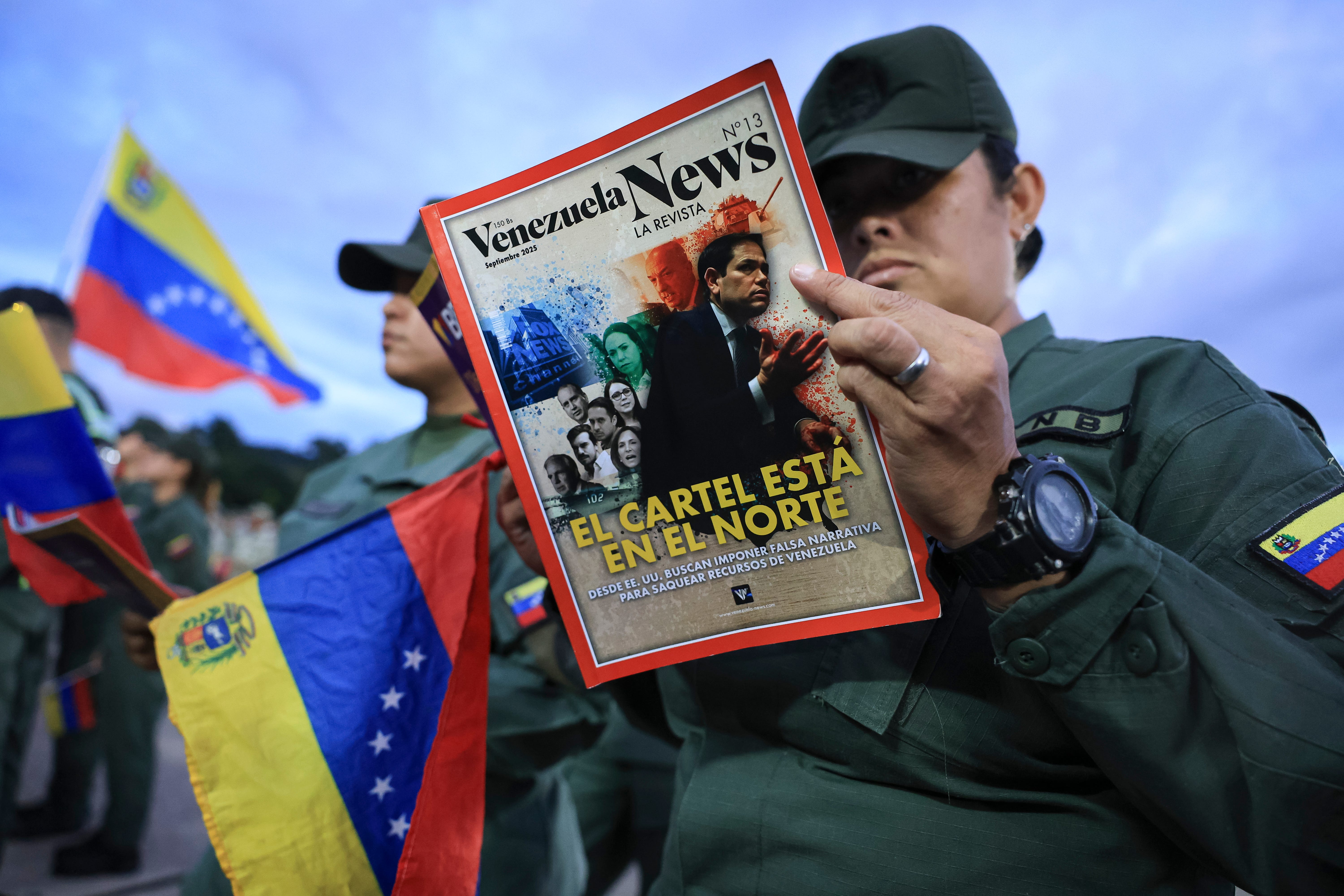
Venezuela
Rodríguez formally assumes the presidency: Delcy Rodríguez was sworn in as Venezuela’s interim president on Monday before the National Assembly, presided over by her brother Jorge Rodríguez, who retains his post as head of the chamber, according to Reuters. Delcy Rodríguez was designated acting president by the Supreme Court over the weekend following the U.S. operation in Caracas that kidnapped President Nicolás Maduro and his wife, lawmaker Cilia Flores.
Unrest reported near the presidential palace: Gunfire and explosions were reported near the Miraflores Palace in Caracas late Monday, after security forces opened fire when unidentified drones were spotted flying over the presidential palace around 8:00 p.m. local time, Venezuelan government sources told Agence France-Presse. Venezuelan officials said the situation was brought under control with no wider unrest reported.
Parliamentary term commences with an address from Maduro’s son: Venezuela’s new 2026–2031 parliamentary term opened in Caracas with an address from Nicolás Maduro Guerra, the son of Nicolás Maduro, who said the U.S. seizure of his father is an attack on Venezuela’s historical legacy rather than on his father as an individual, Camila Press reported. Maduro Guerra said his family is being targeted for refusing to “sell out,” pledged his full support for acting President Delcy Rodríguez, and called for unity to ensure the country’s stability and Maduro’s return.
Interior Minister Cabello presses for a nationwide mobilization: Venezuela’s Interior Minister Diosdado Cabello is calling for popular resistance and mobilization over the weekend, according to the Miami Herald. Cabello sent voice messages to loyal military officers and ruling-party figures stressing unity, the need for military reorganization, and mass mobilization, warning those behind the raid “will regret it for the rest of their lives.” Armed pro-government paramilitaries, known as Colectivos, set up checkpoints across Caracas that check citizens’ identification and mobile phones. Cabello oversees large parts of Venezuela’s security and intelligence apparatus. U.S. authorities have offered a $25 million reward for information leading to his capture.
Pro-Maduro crowds continue to pour into Caracas: Large crowds flooded central Caracas chanting in support of President Nicolás Maduro and waving Venezuelan flags. Demonstrators interviewed at the scene denounced the U.S. capture of Maduro and First Lady Flores as an illegal kidnapping and violation of Venezuelan sovereignty. Interior Minister Cabello appeared on a street in Caracas flanked by police, as forces around him chanted, “Loyal always, traitors never.”
Maduro pleads not guilty, insists that he remains the president of Venezuela: Venezuelan President Nicolás Maduro told a federal judge in Manhattan that “I am not guilty, I am a decent man, I am still the president of my country” as he pleaded not guilty to federal charges including narco-terrorism and drug trafficking, according to NBC News and court reports.
DOJ withdraws charges of “Cartel de los Soles” connection, revises Maduro’s indictment: The U.S. Department of Justice dropped its earlier claim that Venezuela’s so-called “Cartel de los Soles” is a formal drug cartel led by President Nicolás Maduro, according to a revised indictment. Prosecutors now describe the group as a loose patronage network and allege a “culture of corruption” tied to drug money, while still accusing Maduro of drug trafficking punishable under anti-terrorism statutes.
Courtroom details: Ninety-two-year-old U.S. District Judge Alvin K. Hellerstein was assigned to oversee the federal criminal case against Maduro in the Southern District of New York. Maduro is represented by attorney Barry Pollack, while his wife, lawmaker Cilia Flores, is represented by Mark Donnelly and Andrés Sánchez. Maduro appeared defiant in court, telling the judge he was “kidnapped illegally” from Venezuela and brought to the U.S., according to international correspondent Alejandro Rincón, who attended the hearing and spoke with Drop Site’s Areeba Fatima outside the courthouse. Rincón described visible injuries to Flores, including rib and facial bruising requiring medical care, and said Maduro appeared to be limping.
Venezuelan and U.S. ambassadors address the UN: Samuel Moncada, Venezuela’s ambassador to the UN, said that “No state can set itself up as judge, party, and executor of the world order…Venezuela is the victim of these attacks because of its natural resources” in a UN hearing. Meanwhile, the U.S. ambassador to the UN defended Washington’s abduction of Maduro, saying “You cannot continue to have the largest oil reserves in the world under the control of adversaries of the United States.”
Members of the UN Security Council criticize U.S. operation: Members of the council condemned the abduction of Venezuelan President Nicolas Maduro and his wife by US special forces and warned it could set a dangerous new precedent. In addition to Cuba, Colombia, Russia, and China, critics at the emergency session included US allies such as Denmark, Mexico, and France.
Details emerge about Washington’s decision not to back opposition leader Machado: A classified Central Intelligence Agency assessment concluded that regime insiders, including Vice President Delcy Rodríguez, were better positioned than opposition leader María Corina Machado to run a temporary government if Nicolás Maduro fell, according to the Wall Street Journal and New York Times. President Trump reportedly was briefed on the assessment that said a Machado government could trigger instability requiring prolonged U.S. military presence in the country.
The Genocide in Gaza
Casualty counts in the last 24 hours: Over the past 24 hours, the bodies of two Palestinians arrived at hospitals in Gaza, including one recovered from under the rubble, while 10 Palestinians were injured, according to the Gaza Ministry of Health. The total recorded death toll since October 7, 2023 is now 71,391 killed, with 171,279 injured.
Total casualty counts since ceasefire: Since October 11, the first full day of the ceasefire, Israel has killed at least 424 Palestinians in Gaza and wounded 1,199, while 685 bodies have been recovered from under the rubble, according to the Ministry of Health.
Three killed and four injured by Israeli attacks on Monday: Israeli airstrikes hit a tent sheltering displaced civilians in the al-Mawasi area northwest of Khan Younis, killing at least two people and injuring four, including children, according to Ma’an News Agency. Israeli aircraft fired at least two missiles at the tent, which is in an area outside the Israeli-designated “yellow line,” said a local correspondent. Israeli forces also shot a child in the head in Beit Lahia in northern Gaza. Since the October ceasefire, Israeli forces have shot hundreds of Palestinians west of the “yellow line.”
Ceasefire violations across the strip: Israel opened fire in Al-Zawaida and advanced military vehicles near the Abu Zaytoun area on the outskirts of the Jabaliya refugee camp, as Israeli forces continue to violate the ceasefire across the Gaza Strip, according to Al-Araby TV.
Azerbaijan says it will not send troops to Gaza: Azerbaijan ruled out sending troops to Gaza, with President Ilham Aliyev saying there is no intention to participate in a peacekeeping mission abroad, according to Reuters. Aliyev has been in contact with President Trump’s administration and submitted a detailed questionnaire on how a Gaza force would operate, but he said that “no participation in peacekeeping forces is envisaged.”
Global Sumud Flotilla asks Egypt to approve a humanitarian convoy into Gaza: The Global Sumud Flotilla (GSF) says it formally requested that Egypt authorize an overland humanitarian convoy to Gaza via the Libya–Egypt border and Rafah crossing. GSF cited acute shortages of food, medicine, shelter, and winter supplies as Israel continues to restrict aid access. The coalition says keeping Rafah effectively closed violates international humanitarian law, and noted that sea conditions have delayed a planned spring flotilla.
Israel, the West Bank, and Lebanon
Israeli forces raid Birzeit University: Israeli forces stormed the Birzeit university campus in the Occupied West Bank with live ammunition and tear gas during an event held in solidarity with Palestinian prisoners on Tuesday. 11 people arrived at the Istishari Arab Hospital in Ramallah following the Israeli assault, The Health Ministry said in a statement. Three were injured by live fire and three by shrapnel, while five were treated for tear gas inhalation.
Israel continues strikes on Lebanon: Israel carried out a wave of airstrikes across southern Lebanon and the Bekaa valley on Monday, following Israeli displacement orders. Israel hit sites that include a building in Kfar Hatta and a marked site in Anan, while blasts were reportedly heard as far away as Saida, according to Beirut-based outlet L’Orient Today. Residents said the explosions were unusually intense. Additional strikes hit Manara in the Bekaa Valley and Ain al-Tineh. An Israeli drone strike on a vehicle in Braikeh injured one person, who was taken to the hospital by the Islamic Health Authority.
Israeli military conducts a series of raids across the West Bank: Israeli forces carried out raids, arrests, and assaults across multiple areas of the occupied West Bank on Monday, triggering confrontations in Nablus and al-Khalil, according to the Palestine Information Center. The outlet reported tear gas arrests in Beit Furik, Halhul, Beitunia, Fasayil, and Shuafat refugee camp—where a child, Adham Abu Mayala, suffered facial burns after gas canisters were fired toward his home—along with raids and fines near Jerusalem, including at Jaba checkpoint and in Bir Nabala.
Israel increases electronic surveillance of Palestinians in the West Bank: Israel authorized the use of electronic tracking devices on Palestinians in the occupied West Bank, according to new reporting from the Times of Israel. The IDF’s Central Command issued a directive for real-time surveillance of Palestinians placed under administrative movement restrictions, regardless of whether the person has been charged with a crime. The order explicitly exempts Jewish settlers, according to a statement from Defense Minister Israel Katz.
Israel intends to uphold its ban on independent foreign media in Gaza: Israel’s government told its Supreme Court that a blanket ban on independent foreign media access to Gaza should remain in place, citing security risks, according to court filings obtained by AFP. In response to a petition by the Foreign Press Association, Israel said that unescorted entry by journalists “should not be permitted,” even though it acknowledged “a change in the factual situation on the ground.” The state added that allowing independent journalists into Gaza could interfere with efforts to recover the remains of Ran Gvili, the last dead Israeli captive believed to be missing in Gaza. The Israeli Supreme Court is expected to issue a ruling on the issue, though it is unclear when a decision will be handed down.
Netanyahu asks Putin to convey messages to Iran: Israeli Prime Minister Benjamin Netanyahu asked Russian President Vladimir Putin to pass messages to Iran signaling that Israel is not seeking to attack the country, according to KAN News. Israel reportedly fears that Iran might preemptively attack it. Iran and Israel exchanged indirect, secret messages via Russia to avert any escalation with Putin personally acting as an intermediary, according to Amwaj Media.
U.S. News
U.S. eyes takeover of Greenland, Miller says: Stephen Miller declined to rule out the use of force over Greenland in an interview with CNN’s Jake Tapper. Miller said Greenland “should be part of the U.S.,” as he questioned Denmark’s claim to the territory, citing Washington’s status as the leading power in NATO. Pressed on whether military action was off the table, Miller said, “Nobody is gonna fight the U.S. militarily over the future of Greenland.”
2,000 additional DHS personnel to descend on Minneapolis: The Trump administration announced that it would be deploying up to 2,000 Department of Homeland Security personnel to the Minneapolis–St. Paul area, CBS News reported. This would represent what the administration is calling a “30-day surge,” combining the existing immigration enforcement operation in the area with expanded fraud investigations, a consequence of allegations against Minnesota’s childcare programs. The deployment has intensified fear in immigrant communities, particularly among Somali Americans, while Minnesota leaders, including the outgoing Gov. Tim Walz, warn the crackdown and frozen federal funds do serious damage to the state’s economy.
Kristi Noem clarifies DHS policy regarding Venezuelan TPS holders: U.S. Secretary of Homeland Security Kristi Noem said Venezuelans who lose “Temporary Protected Status” in the U.S. may seek asylum or refugee status, in light of the uncertainty following the capture of President Nicolás Maduro. Noem said existing immigration pathways remain available to Venezuelans affected by changes to TPS policy.
Conflicting statements about a deployment of troops to Venezuela: President Donald Trump warned that he could authorize further strikes if interim president Delcy Rodríguez stops cooperating. House Speaker Mike Johnson, however, said U.S. troops will play only a limited role in Venezuela, telling reporters after a closed-door briefing that Washington does not expect “troops on the ground” following the operation that captured President Nicolás Maduro.
Trump alerted oil executives to forthcoming action in Venezuela, report says: President Donald Trump privately signaled to U.S. oil executives to “get ready” weeks before the U.S. operation that captured Venezuelan leader Nicolás Maduro, according to a report from the WSJ. While Trump publicly touted multibillion-dollar investments by U.S. firms—especially Chevron—to revive Venezuela’s oil sector following the intervention, major companies remain cautious about the investment, citing political instability, contract risks, and employee safety.
U.S. corporations want to profit off Venezuela intervention: Just weeks before the U.S. operation that captured President Nicolás Maduro, U.S. oil giant Halliburton filed a rare arbitration case at the World Bank’s International Centre for Settlement of Investment Disputes. The oil servicer sought roughly $200 million in damages from Venezuela for losses it says stemmed from U.S. sanctions and domestic instability. The filing—alongside similar claims by firms including Williams Companies, Kellogg’s, and ConocoPhillips—could help extract Venezuelan state resources to settle U.S. investor claims worth billions. Read more from the Lever, here.
Corporation for Public Broadcasting formally dissolves after funding cuts: The Corporation for Public Broadcasting (CPB) announced on Monday that it voted to shut down less than a year after the Trump administration and Congress voted to defund the organization, cutting $1.1 billion that had been approved for public broadcasting over the next two years. Created by Congress in 1967, the CPB helped fund the operations of local public TV and radio stations alongside national outlets such as PBS and NPR. “After nearly six decades of innovative, educational public television and radio service, Congress eliminated all funding for CPB, leaving the Board with no way to continue the organization or support the public media system that depends on it,” CPB Board of Directors chair Ruby Calvert said in a statement.
Health officials cut vaccine recommendations for children: In an unprecedented move, federal health officials on Monday announced they were cutting the number of vaccines recommended for children from 17 to 11. Protection against flu, rotavirus, hepatitis A, hepatitis B, some forms of meningitis or RSV, are no longer broadly recommended by the Centers for Disease Control and Prevention (CDC). The changes, long sought by Health Secretary Robert F. Kennedy Jr., are effective immediately. States, not the federal government, have the authority to mandate vaccinations, but recommendations from the CDC greatly influence state regulations.
International News
Joint statement on Greenland: The leaders of several European countries issued a joint statement on Greenland on Tuesday opposing any aggression against NATO territory. The statement by the leaders of France, Germany, Italy, Poland, Spain, Britain, and Denmark said: “Security in the Arctic must therefore be achieved collectively, in conjunction with NATO allies including the United States, by upholding the principles of the UN Charter, including sovereignty, territorial integrity and the inviolability of borders. These are universal principles, and we will not stop defending them.” It continued: “Greenland belongs to its people. It is for Denmark and Greenland, and them only, to decide on matters concerning Denmark and Greenland.”
Drone strikes in North Kordofan: A drone strike on the Sudanese city of El-Obeid, the capital of North Kordofan, killed 10 people, including seven children, on Monday, a medical source told AFP. El-Obeid is controlled by the Sudanese Armed Forces and has come under attack by the rival Rapid Support Forces for months.
IOM estimates displacement in Sudan’s Kordofan at around 65,000: Nearly 65,000 civilians have been displaced from Sudan’s Kordofan region over the past three months, according to a new report from the UN’s International Organization for Migration, which recorded 56 new displacement incidents between October 25 and December. 30, mainly in North and South Kordofan. The agency said about 42,780 people fled North Kordofan, 21,860 were displaced from South Kordofan, and 250 from West Kordofan, amid weeks of heavy fighting between the Sudanese Armed Forces and the Rapid Support Forces, warning the figures are preliminary and likely to rise as the war continues.
Death toll rises in Iran protests:: At least 25 people have been killed in Iran during nine days of protests across dozens of cities sparked by skyrocketing inflation and living costs. Hengaw, a Kurdish Iranian rights group, put the death toll at 25, including four children, with more than 1,000 arrested. The Human Rights Activists News Agency, a group partially funded by the National Endowment for Democracy, said at least 29 had been killed, including two security forces, in addition to over 1,200 arrested. Meanwhile, large pro-government demonstrations were held in Qom on Tuesday.
Iran announces a cash aid program to address its economic crisis: Iran’s government announced it will provide most citizens with a monthly payment worth roughly the price of basic staples, an amount equivalent to about $7, according to a report from the New York Times. The government says the measure aims to preserve purchasing power and ensure access to food. Inflation topped 42 percent in Iran in December, and the currency has lost more than half its value against the dollar in the same month. The move is viewed as a direct response to the mass protests in the country.
A raid in Nigeria’s Niger state kills at least 30: Gunmen raided a village in northern Nigeria’s Niger State on Sunday, killing at least 30 people and abducting others, according to a report from Reuters. The attackers came from nearby forest reserves in the state’s Demo village, and they burned stalls, looted food, and opened fire indiscriminately, witnesses told Reuters. The attackers are allegedly part of a wider phenomenon of “bandit gangs” that have destabilized the country.
Nine Nigerian soldiers were killed by an attack in the northeast: At least nine Nigerian soldiers were killed, and several others wounded, when their convoy struck a landmine and came under fire in Borno state in northeastern Nigeria, according to security sources cited by Reuters. The attack destroyed an armoured vehicle and occurred near Bindundul village close to Kareto—an area where Islamic State West Africa Province is known to operate.
Suspected militants kill Nigerien official and his family in the country’s west: The attackers killed Captain Chaibou Mali, the prefect of Torodi in western Niger, along with his wife and children, according to reporting from AFP. The suspected militants set their home ablaze in a pre-dawn attack about 60 kilometers southwest of the capital of Niamey. A West African journalism group attributed the assault to the Al-Qaeda-linked Group for the Support of Islam and Muslims, and reported that they briefly seized control of the town.
Thailand accuses Cambodia of violating their ceasefire: Thailand’s army accused Cambodian forces of violating their 10-day-old truce by firing mortar rounds into Ubon Ratchathani on Tuesday, according to AFP. The incident wounded one Thai soldier, according to a military statement. A ceasefire was agreed to on December 27 between the countries, after weeks of clashes late last year that killed dozens and displaced around one million people on both sides. Cambodia’s defence ministry said in a statement Tuesday that Phnom Penh had proposed a bilateral border committee meeting with Thai counterparts to be held in Cambodia’s Siem Reap province this month.
Zelenskyy oversees leadership changes: President Volodymyr Zelenskyy appointed military intelligence chief Kyrylo Budanov as his new chief of staff on Friday, replacing Andrii Yermak amid corruption investigations against him, the Associated Press reported. Zelenskyy framed the move as one that would allow tighter coordination on security, defense developments, and peace talks, and he also nominated Digital Transformation Minister Mykhailo Fedorov to be his new defense minister.
More From Drop Site
“Zohran Mamdani Has More Jewish Support Than You Think”: While attention is on the New York City mayor’s revocation of pro-Israel executive orders, analysis reveals age and income shaped the Jewish vote more than ethnicity, religion, or support for Israel. “Among Jewish voters who were genuinely up for grabs, Mamdani and Cuomo split them roughly 50–50,” with block-level data indicating that Jewish voters largely voted in line with their non-Jewish neighbors rather than as a distinct political bloc. Read more from Drop Site contributor Michael Lange here.
Drop Site’s Latin American desk head José Luis Granados Ceja went on the Majority Report: “The U.S. doesn’t care who governs as long as it has access to resources,” Drop Site’s José Luis Granados Ceja told The Majority Report, noting that U.S. sanctions slashed Venezuela’s oil output from roughly 2.5–3 million barrels a day to under 1 million. To understand the raid on Caracas and Washington’s objectives, he said, one must look to a long-standing neo-colonial logic that treats Latin America as a U.S. backyard. Ceja casted doubt on reports emerging about Rodríguez’s complicity in the U.S. intervention, saying that it would be “very surprising” if Venezuela’s acting president Delcy Rodríguez were complicit in Nicolás Maduro’s capture. Ceja noted that Rodríguez is part of Chavismo’s core leadership alongside her brother Jorge, Diosdado Cabello, and Vladimir Padrino, and argued that any betrayal would collapse her base and fracture the governing coalition. Watch his full appearance here.
Drop Site on the Katie Halper Show: José Luis Granados Ceja also joined the Special Katie Halper Show to talk about Venezuela alongside Vijay Prashad and Andreína Chávez. That appearance can be watched here.
Courthouse reporting from Areeba Fatima: Following President Nicolás Maduro’s U.S. court appearance, Drop Site contributor Areeba Fatima spoke outside a New York courthouse with international correspondent Alejandro Rincón, who attended the hearing. Rincón said Maduro appeared defiant, telling the judge he had been “kidnapped illegally” from Venezuela and brought to the United States. Maduro is represented by attorney Barry Pollack, while his wife, lawmaker Cilia Flores, is represented by Mark Donnelly and Andrés Sánchez. Rincón also described visible injuries to Flores, including rib and facial bruising requiring medical care, and said Maduro appeared to be limping; the brief hearing was limited to arraignment, with no evidence presented, but sweeping narco-terrorism and drug-trafficking charges now set the stage for a legal fight over the legality of Maduro’s capture.
Programming note: You can sign up here to get updates from us on our WhatsApp channel.
If you want to continue getting this newsletter, you don’t have to do anything. But if this is too much—we do try to be mindful of your inbox—you can unsubscribe from this newsletter while continuing to get the rest of our reporting. Just go into your account here at this link, scroll down, and toggle the button next to “Drop Site Daily” to the off setting. It looks like this:

The most revealing detail here isn’t Maduro’s courtroom defiance, but the DOJ quietly abandoning the “Cartel de los Soles” fiction while keeping the kidnapping intact. Once the propaganda frame collapses, what’s left is a precedent: a nuclear-armed state abducting a sitting head of state, then retrofitting legal justifications after the fact. The UN reactions underscore how dangerous this is—not because Maduro is sympathetic, but because sovereignty is now openly conditional on U.S. resource access. The parallels with Gaza are hard to ignore: ceasefires violated, journalists barred, civilians killed, and law reduced to a tool of power. This isn’t a breakdown of the rules-based order—it’s the rules being clarified.
“Ninety-two-year-old U.S. District Judge Alvin K. Hellerstein was assigned to oversee the federal criminal case against Maduro in the Southern District of New York.” Wow. This is one more thing that defies comprehension.