

Commonwealth Secretariat Lodges Dissent Against Pakistan’s Escalation of State Repression
As Pakistan’s military tribunals sentence journalists and commentators to jail, the Commonwealth of Nations has criticized the Pakistani Prime Minister in a private letter obtained by Drop Site


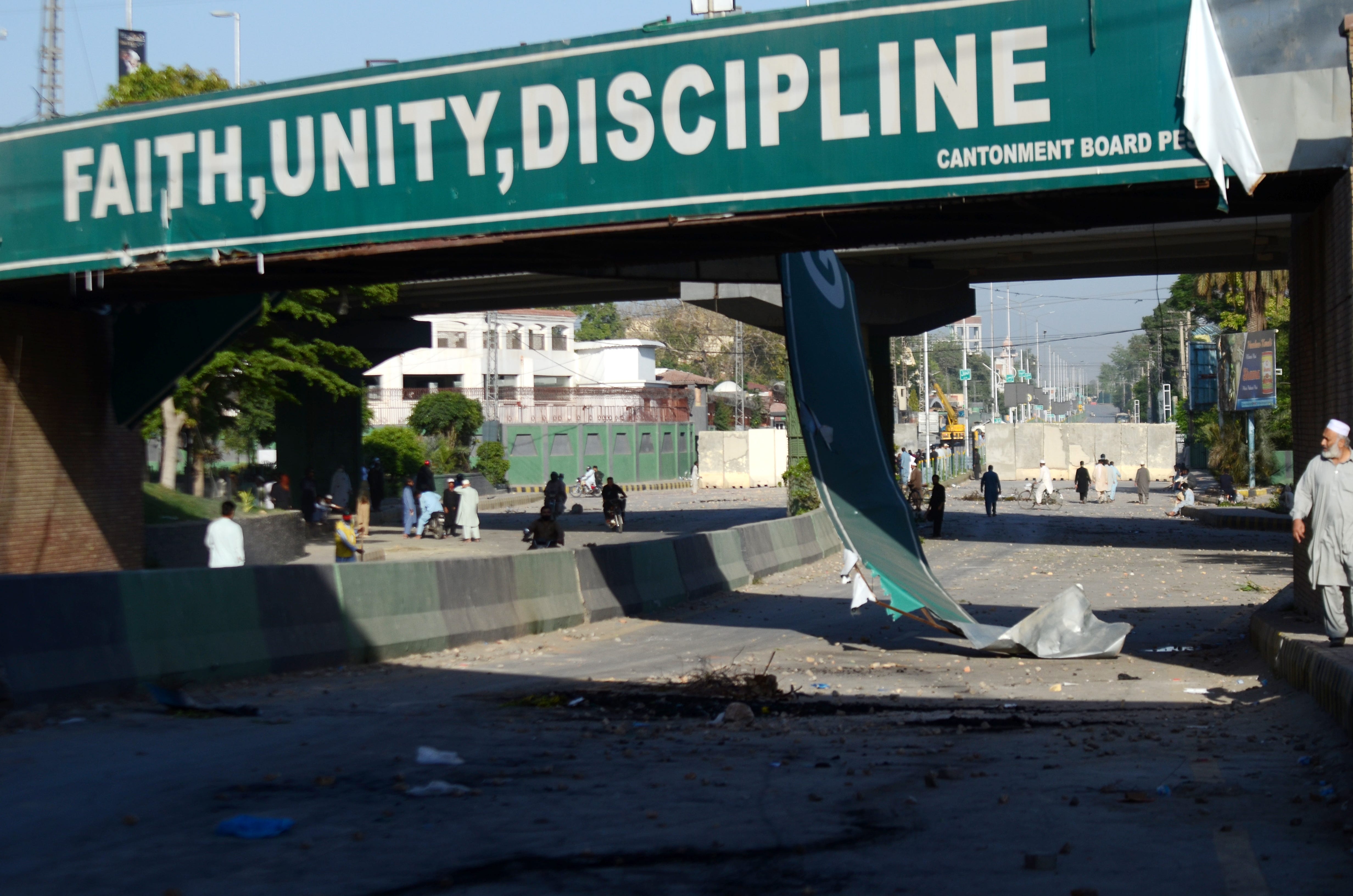
On January 2, an Islamabad anti-terrorism court in Pakistan sentenced a group of prominent journalists, social media commentators, and former military officers to life imprisonment in absentia for alleged “terrorism-related” online activities. The charges included expressing support for both the jailed former Prime Minister Imran Khan, who is presently incarcerated on politicized corruption charges and has been subject to repeated stints in solitary confinement, and the nationwide protests from his supporters during the summer in 2023.
Those convicted include well-known journalists and commentators such as Moeed Pirzada, Adil Raja, Wajahat Saeed Khan, Sabir Shakir, Shaheen Sehbai, Haider Raza Mehdi, and retired Col. Akbar Hussain—all of whom have been given 80-year double life sentences in absentia. The court’s ruling, under broad anti-terror laws, said the defendants’ digital content “promoted fear and unrest” and “waged war against the state,” although most had never been served summonses or appeared before the court. The defendants had been given only seven days to appeal the decision.
One of those sentenced to life, journalist Wajahat Saeed Khan, told Drop Site News that he was never served summons, never informed that a lawyer had been appointed to represent him, and was explicitly barred from retaining counsel of his own unless he appeared in person—an impossibility given that he lives abroad. The court-appointed attorney never contacted him or any of the other accused, according to Khan. The court has not released a written judgment—only circulated sentences via social media—while granting just one week to appeal without providing the actual order required to file one. “They want us convicted without a judgment, without representation, and without the ability to appeal,” Khan said. He described the trial as a predetermined “a mockery of justice,” with the judge acting as “judge, jury, and executioner all at once.”
Moeed Pirzada, another journalist among those sentenced to life, said Pakistani authorities served him court notices at an outdated address and then claimed he had fled the country, declaring him an “absconder,” despite having lived openly in the U.S. since 2022. After the court initially ruled that the case could not proceed without his presence, Pirzada said it later appointed a lawyer without his consent and quietly revived the case, ultimately issuing a long-reserved verdict. “These courts are no longer courts. They are tools in the hands of military officers,” Pirzada said. “Whatever decisions are announced come from the JAG branch [of the Pakistani military].”
The recent step to sentence journalists to jail on terrorism charges is only the latest development in a Pakistani government campaign aimed at suppressing criticism of the country’s military junta, while the U.S. and other allies of the Pakistani junta have maintained public support of the government, despite its increasingly brazen suppression of the country’s civil society and opposition. Behind the scenes, leaked documents show that concerns about deteriorating political conditions in Pakistan may be fracturing that alliance.
In mid-November, the Commonwealth Secretariat privately sent an urgent letter to Pakistani Prime Minister Shahbaz Sharif that criticized Pakistan’s reinstatement of civilian trials in military courts, democratic backsliding, and the continued incarceration of former Prime Minister Khan. A copy of the November letter, written by the The Commonwealth Ministerial Action Group (CMAG), was provided to Drop Site. The letter from CMAG stated that members of the organization have “expressed their concern in respect of the recent constitutional amendments concerning the appointment and tenure of the Chief Justice and the recent reinstatement of provisions for civilians to be tried in military courts.”
The Commonwealth Secretariat represents the interests of British Commonwealth countries that include the UK, Canada, Australia, India, South Africa, and New Zealand, while the CMAG is the Commonwealth’s enforcement and oversight body on democracy, rule of law, and human rights. It is composed of foreign ministers from selected Commonwealth member states and is empowered to formally censure, investigate, or even recommend suspension of member countries that violate the Commonwealth’s foundational political values.
The private letter is the first time the Commonwealth has mentioned the detention of the former Prime Minister since he was arrested over two years ago, and it references the “importance of fostering an atmosphere where all voices can fully engage in the democratic process, in the spirit of inclusion and national unity.” The letter stated that concerns have been “raised regarding the continued detention of the former Prime Minister and the broader environment for political opposition and minority communities,” and it cited as evidence the crushing of the Pakistani judiciary as well as attempts to modify the constitution to give absolute power to Pakistan’s military junta.
On December 12, the UN Special Rapporteur on torture, Alice Jill Edwards, issued a separate public statement demanding that the government of Pakistan urgently address the reportedly inhumane detention conditions faced by Khan. “Since his transfer to Adiala Jail in Rawalpindi on 26 September 2023, Imran Khan has reportedly been held for excessive periods in solitary confinement, confined for 23 hours a day in his cell, and with highly restricted access to the outside world,” Edwards said, calling his solitary confinement “unlawful” and demanding that it be “lifted without delay.”
Transnational repression
The new letter comes amid growing anger over a crackdown on institutions in Pakistan, as well concerns about the Commonwealth’s own role in assisting an assault on democracy in a member state. The Commonwealth Secretariat previously conducted an observer mission during the 2024 elections in Pakistan that found widespread fraud—only for the election report itself to be suppressed by the organization. A leaked copy of the report was published by Drop Site after being provided by a whistleblower frustrated with the coverup.
In the months since its publication, the Pakistani military has carried out wholesale massacres of protestors who have expressed opposition to its plans to normalize relations with Israel and send troops to Gaza, while continuing its persecution of activists connected to Khan’s party, the Pakistan Tehreek-i-Insaaf (PTI), both in Pakistan and abroad.
In early December, a Drop Site report revealed that during a closed-door meeting between Pakistan’s Interior Minister Mohsin Naqvi and the United Kingdom’s High Commissioner Jane Marriott in Islamabad, Pakistani officials quietly floated what insiders described as a “quid pro quo arrangement”: Islamabad would agree to accept the deportation of convicted British-Pakistani grooming gang members if the British government agrees to also hand over Pakistani dissidents Adil Raja and Shehzad Akbar.
Since that report, Akbar and Raja have faced intensified personal and legal reprisals. Akbar, who has lived in the UK since April 2022, was physically attacked outside his Cambridge home and later reported a second assault that damaged his property, incidents he alleges are politically motivated intimidation. These incidents are now under investigation by Scotland Yard’s counter-terrorism division. In 2023, Raja reported that the Pakistani intelligence had prepared documents identifying Pakistani-origin activists in the United States, many of whom are U.S. citizens.
Adding to the climate of anxiety among Pakistan’s critical voices in exile, the U.S. home of journalist and military critic Moeed Pirzada was engulfed in a “mysterious fire” in early January, an incident he escaped along with his daughters. While Pirzada himself stopped short of attributing the blaze to any actor, with no definitive evidence it was related to Pakistan’s government or security apparatus, coming on the heels of the attacks on Akbar and the burglary at Adil Raja’s residence, the timing has sparked unease and speculation within the Pakistani diaspora.
The Pakistani government meanwhile has continued to strengthen its ties with the Trump administration. Latest reports on Pakistan related FARA filings show that the Pakistani government has spent millions of dollars lobbying Trump, in addition to an outreach blitz that includes nominating the president for a Nobel Peace Prize. Pakistan has also dangled lucrative mineral deals and the promise of contributing troops to a planned international stabilization force for the Gaza Strip.
The Commonwealth and Pakistani authorities did not respond to request for comment.
Drop Site has excelled in reporting about Pakistan's military and it's government stooges -- and this is yet another scoop.
Clearly, Pakistan is "slouching towards fascism" while masquerading as a nation governed by the rule of law. The military is in the driver's seat exercising ruthless tactics to silence all dissent, which seems just fine with the Trump foreign policy team.
Imran Khan was the only prime minister in Pakistan's history to resist military rule and U S. influence. Some day soon, God willing, the people of Pakistan will take their nation back and commit to a rule of law with Imran Khan or another leader like him.
Convictions in absentia, no summons, no written judgments, and impossible appeal deadlines—this isn’t justice, it’s legal theater to rubber-stamp military rule. The Commonwealth’s private letter is notable, but quiet dissent paired with continued diplomatic cover only enables deeper repression, including the growing campaign of intimidation against critics abroad.