

Iran Blasts Trump’s Claims of Direct Talks as “Fake News” Aimed at Manipulating Markets
In an interview with Drop Site, a senior Iranian official outlines Tehran’s bottom lines to end the war.


Drop Site is reader-funded—no corporate owners, no outside influence. Your support is what keeps this journalism independent and free. Please consider making a tax-deductible donation to support our work.
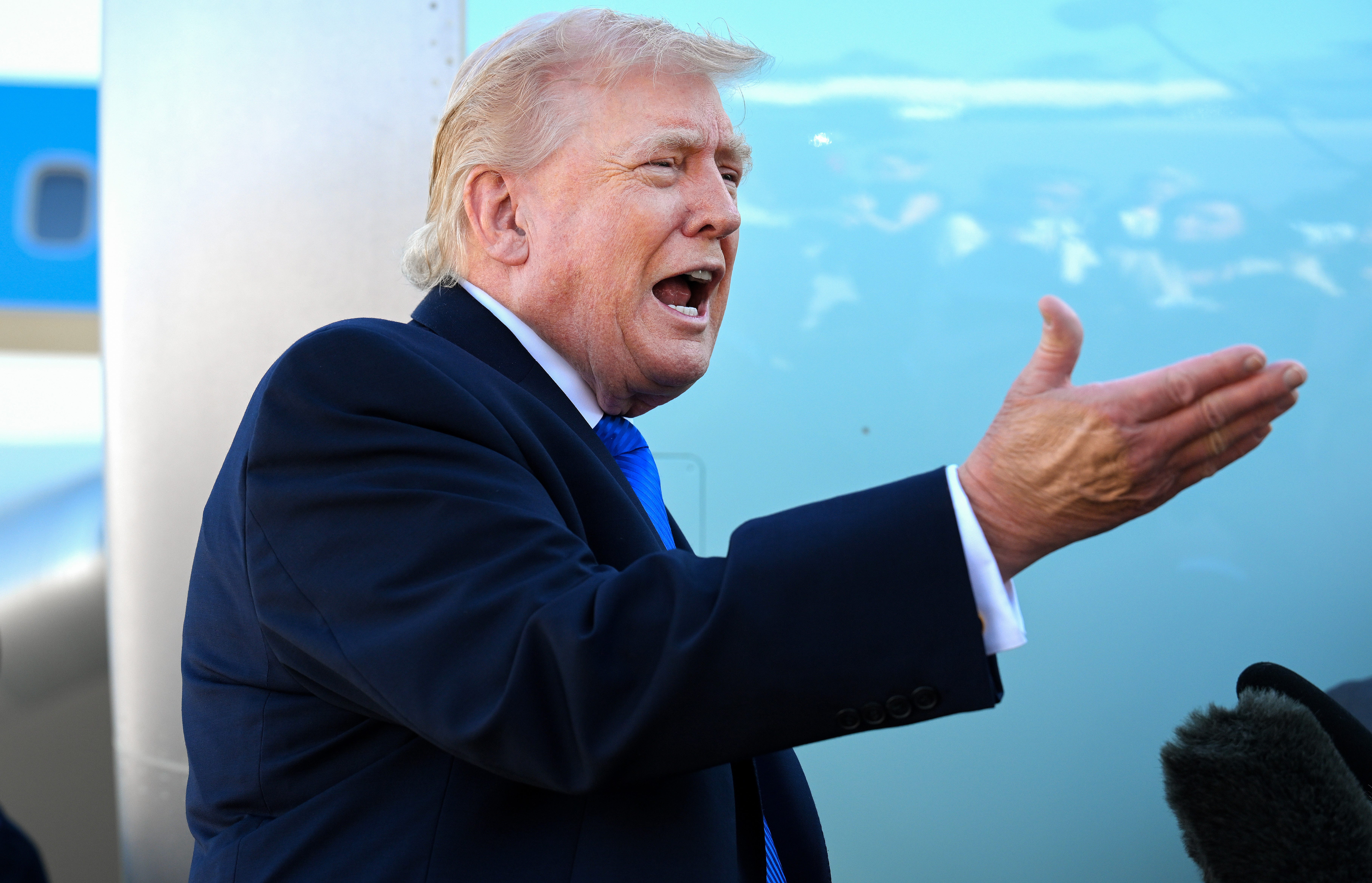
On Monday, Iran forcefully denied claims by President Donald Trump that the U.S. and Iran are in the midst of negotiations to end the war, saying that no direct talks are occurring.
Trump claimed on Monday via Truth Social that “GOOD AND PRODUCTIVE CONVERSATIONS” had taken place with Iranian officials over the past two days, backtracking from his Saturday threat to destroy Iranian energy infrastructure if Iran did not open the Strait of Hormuz within 48 hours.
Iran immediately dismissed his claims. “Fake news is intended to manipulate financial and oil markets and to escape the quagmire in which America and Israel are trapped,” wrote Mohammad Bagher Ghalibaf, the Speaker of Iran’s parliament, in a post on X.
A senior Iranian official confirmed to Drop Site that “no new developments have occurred” between Washington and Tehran. The official was not authorized to make public statements and spoke on condition of anonymity. The U.S. has continued to send messages through third countries, he said, but Iran has only reiterated its position and has not engaged in any back and forth.
“There aren’t any negotiations taking place. The Iranian side has simply communicated its conditions to them and even that has been done indirectly,” the official said. He added that Iranian officials had previously expressed their position on ending the war in general terms to regional countries acting as intermediaries, but that they “firmly deny” claims that any talks had taken place between Iranian and American officials.
According to the official, Iran’s conditions for an end to the war include a simultaneous ceasefire in Iran, Lebanon, and Iraq. Iran has consistently said that it will not accept a ceasefire similar to the one requested by Israel and the U.S. that ended the “12-Day War” in June 2025. Tehran has maintained that agreement was exploited to buy time for another U.S.-Israeli war and that Iran will only consider a comprehensive deal.
The war, the official said, created a new dynamic for Iran’s nuclear enrichment. “In light of the violations of international law by the United States, as well as Israel’s extensive attacks on nuclear facilities, Iran will formulate a new doctrine concerning its nuclear industry,” he said. “Under this doctrine, enrichment activities at levels required for national needs will continue, either independently or in cooperation with China and Russia.” Iran had previously insisted on the right to enrich uranium on its soil for purposes of generating energy and medical research.
Iran also wants U.S. sanctions on the procurement of defensive weapons and equipment lifted. Iranian ballistic missiles, the official asserted, represent a deterrent against future aggression that Iran will not abandon. “Given its defensive nature in countering Israel, this program will continue unchanged and with increased intensity in the event of a ceasefire,” he said. “The missile program shall not be subject to negotiation under any prospective talks.”
Iran would also pursue compensation for damages inflicted by the U.S. and Israel during the war, the official added.
On Saturday, Trump issued a statement threatening a massive escalation of the war by attacking Iranian energy infrastructure: “If Iran doesn’t FULLY OPEN, WITHOUT THREAT, the Strait of Hormuz, within 48 HOURS from this exact point in time, the US will hit and obliterate their various POWER PLANTS, STARTING WITH THE BIGGEST ONE FIRST!”
The Iranian government quickly responded to Trump by threatening to systematically target energy infrastructure in Israel and throughout the Persian Gulf region in retaliation—a measure that Iran would only take, the official emphasized to Drop Site, as retaliation for U.S. or Israeli strikes on their own power supply. Ghalibaf, a leading figure in the Iranian war effort, wrote on X that if Trump carried out his threats then critical infrastructure and energy facilities across the Middle East would be “irreversibly destroyed.” The Islamic Revolutionary Guards Corps also responded with its own statement directed at Trump, stating that if his orders were carried out, “The Strait of Hormuz will be completely closed and will not be opened until our destroyed power plants are rebuilt.”
Trump’s statements backing off from the energy threat “for a five day period, subject to the success of the ongoing meetings and discussions” resulted in an immediate rally in financial markets that have been thrown into chaos. Trump’s sensitivity to the economic impact of his decision to attack Iran three weeks prior, and, in particular, market fluctuations, has fed the belief in Tehran that his statements about the war are aimed at cynically preserving short-term economic stability.
“The fact that he publicly responds to [Iran’s position] by posting a tweet is solely intended to manage the financial markets—nothing more,” the Iranian official told Drop Site on Monday soon after Trump made his comments. “Since this morning up to this moment, the heaviest attacks by the United States and Israel against urban centers in Iran have taken place.”
Tehran was subjected to heavy bombardment Sunday night before Trump’s announcement, including attacks on Iranian infrastructure and an apparent assassination targeting an Iranian aerospace scientist, Saeed Shamghadari, who was reportedly killed at home along with his family.
Soon after posting on Truth Social, Trump made even more expansive claims in comments to reporters, claiming his envoys, Jared Kushner and Steve Witkoff, had engaged in talks with Iran, and that, “We’ve had very strong talks. Mr. Witkoff and Kushner had them. They went perfectly.” He added, ”I would say that if they carry through with that, it’ll end that problem, that conflict.” Trump said there were “major points of agreement” not only on access to the Strait of Hormuz but also on the Iranian nuclear program and the war in general. The senior Iranian official told Drop Site this was completely false.
All these claims have also been officially denied by the Iranian foreign ministry. In a statement reported by Mehr News the foreign ministry stated that it had “rejected the US President’s claims that talks are ongoing with Iran.” The statement also claimed that Trump’s comments are “within the framework of efforts to reduce energy prices and gain time to implement his military plans.”
While denying any talks with Washington, Iranian Foreign Ministry spokesperson Esmail Baghaei said “messages from the US, sent via friendly countries to seek talks and end the war, were received and answered in line with Iran’s principles,” according to Press TV.
The senior official told Drop Site the messages from the U.S. presented to Iran are “difficult to assess, as they have conveyed different points to each of the intermediary countries.” He added that the U.S. has “expressed a willingness to halt operations” in the messages passed onto Iran via third parties, but said they appear “primarily aimed at reassuring those countries and [have] not been taken seriously by the Iranian side.” Regarding reports of a possible meeting to be convened in Islamabad, the senior official told Drop Site that “each of the intermediaries is eager to have the ceasefire talks held in their own capital. Pakistan is no exception.”
In response to a request for comment about Iran’s denials of Trump’s claims, the White House pointed to remarks Trump made implying that the U.S. is secretly talking to an anonymous top Iranian official. “We’re dealing with the man who, I believe, is the most respected and the leader,” Trump said, adding that he won’t name the Iranian figure because “I don’t want him to be killed.”
Last week, Drop Site reported that Witkoff had sent a series of messages to Iran, including directly to Foreign Minister Abbas Araghchi, attempting to restart talks and that Tehran ignored his messages. The White House quickly spun an alternate version of the narrative, claiming Iran was begging him to negotiate.
Three weeks after the U.S. and Israel initiated a war of choice against Iran, Trump’s daily pronouncements on how he intends to secure a victorious ending to the conflict have begun to resemble the unraveling of a leader drifting toward psychological abyss. In a single set of comments on Saturday, Trump pivoted between boasts that the war has already been won, demands to select the new leadership of Iran, denunciations of allies, and wild threats of escalation—including the threat to target critical civilian infrastructure in Iran, a war crime.
The war started on February 28 with a series of bombings and assassinations carried out by Israel and the U.S. reportedly intended in part to trigger an uprising and the collapse of the government. Israel has continued to press forward with a strategy aimed at causing regime change or spreading chaos inside Iran while the Trump administration has expressed increasing doubt about this outcome. The war, meanwhile, has now metastasized into a regional conflict as the Iranian government has seemingly consolidated power while continuing to fire a steady rate of drones and ballistic missiles at Israel, the U.S., and Gulf Arab states hosting American military bases.
Iranian attacks have continued despite Trump’s repeated assertions that he had “blown Iran off the map,” and that the country was “dead,” and as the Iranian military now maintains de facto control of the Strait of Hormuz. While periodically dismissing the strait as something “we don’t need,” Trump has also threatened retribution against NATO countries for refusing to assist in the campaign to restore access to the strategic waterway.
After temporarily lifting sanctions on Iranian oil exports in hopes of stabilizing global markets, Treasury Secretary Scott Bessent—who has increasingly become the face of a conflict that JD Vance and Marco Rubio appear increasingly reluctant to embrace—claimed that the move, which will provide a financial windfall to Iran, was actually “jujitsuing the Iranians,” and “using their own oil against them.”
As the situation has dragged on, Trump has refused to rule out the possibility of a ground invasion of parts of Iran to regain access to the Strait of Hormuz. On Sunday, Senator Lindsey Graham also called on U.S. troops to storm Iran’s strategic Kharg Island—a major export terminal for Iranian oil—while invoking the specter of the World War II invasion of Iwo Jima, which killed nearly 7,000 American soldiers.
Over the weekend ballistic missiles fired by Iran struck the Israeli cities of Arad and Dimona—the latter being the site of Israel’s primary nuclear facility. Footage showed that the strikes, which Iran described as a direct retaliation for an earlier attack on its Natanz nuclear enrichment facility, caused significant destruction to residential areas. The Israeli Ministry of Health reported at least 180 casualties across both locations declaring a “mass casualty incident” following the attack.
Several Gulf states have further hardened their positions against Iran. UAE Foreign Minister Abdullah bin Zayed said on Sunday the country “will never be blackmailed by terrorists,” referring to Iran, while Saudi Arabia expelled the Iranian military attaché and four embassy staff on Saturday, declaring them persona non grata. In a statement issued Sunday, Anwar Gargash, a senior diplomatic advisor to the UAE government, went even further—stating that the goals for terminating the conflict should go beyond a ceasefire towards a full dismantling of Iranian military capacities, including “curbing the nuclear threat, missiles, drones, and the bullying of the straits.”
When asked about the position of Gulf countries regarding regime change in Iran, the senior official said, “Unfortunately, this is the heartfelt wish of the rulers of some of these countries. However, they are fully aware of our patience and perseverance, as well as the resilience of the Iranian side, and they know that this is an unattainable aspiration.”
The pattern here is pretty hard to ignore. Trump announces "GOOD AND PRODUCTIVE CONVERSATIONS," markets rally, and then Iran's foreign ministry, parliament speaker, and a senior official all independently say the same thing: nothing happened. That's not a miscommunication — that's a fabrication.
What's most telling is the timing. Heavy bombardment of Tehran the night before, then a Truth Social post about "great talks" that conveniently walks back his 48-hour ultimatum. Bessent is out there calling sanctions relief "jujitsu." These aren't the moves of an administration that's winning — they're the moves of one that's desperately trying to manage bond yields and oil futures while a war spins out of control.
"We're dealing with the man who I believe is the most respected leader" — and he won't name him because he'll get killed? That's not diplomacy, that's a tweet written for CNBC's opening bell.
Drop Site is doing important work here. The rest of the press needs to stop stenographing White House spin and start asking: if talks are going so well, why can't a single Iranian official confirm it?
I believe Iran, sadly.