

Iran peace talks hinge on Lebanon ceasefire as U.S. heads to Pakistan; Inflation spikes on soaring gas prices; Russia and Ukraine agree to Easter ceasefire
Drop Site Daily: April 10, 2026


U.S. delegation heads to Pakistan as ceasefire talks hinge on Lebanon. U.S. President Donald Trump suggests Israel agrees to ceasefire in Lebanon, Israeli Prime Minister Benjamin Netanyahu says otherwise. Netanyahu says Israel will open direct talks with Lebanon “as soon as possible.” Iran-linked hackers claim breach of former Israeli army chief’s phone. Hormuz transit remains at a near standstill. Israeli army chief in Lebanon: “We are not in a ceasefire.” Israeli forces kill third-grade girl in northern Gaza. Inflation spikes on record energy price increases. White House told staff to stop insider trading. First Lady Melania Trump denies Epstein ties. DNC rejects resolution targeting AIPAC influence. Russia and Ukraine agree to Easter ceasefire. Trump wants to punish NATO for Iran War by withdrawing troops from Europe, report says. At least 56 killed, including 17 children, in drone strike on wedding ceremony in North Darfur. U.S. summons Iraq’s ambassador in Washington after “ambush.” Philippines opens coast guard base on disputed South China Sea island. Jihadists kill Nigerian brigadier general and 17 soldiers. UN expert warns Mexico has become a “garbage sink” for U.S. waste. Ecuador raises tariffs on Colombia to 100 percent. Argentina approves glacier mining bill amid protests.
NEW from Drop Site: Israel is running low on missile defense.
Drop Site is now live on WhatsApp. Get our latest reporting, podcasts, and breaking news, delivered directly. Join the channel here.
This is Drop Site Daily, our free daily news recap. We send it Monday through Friday. Today’s edition is being sent to more than 750,000 subscribers. Help us grow that number by forwarding and recommending this newsletter.
Ceasefire updates
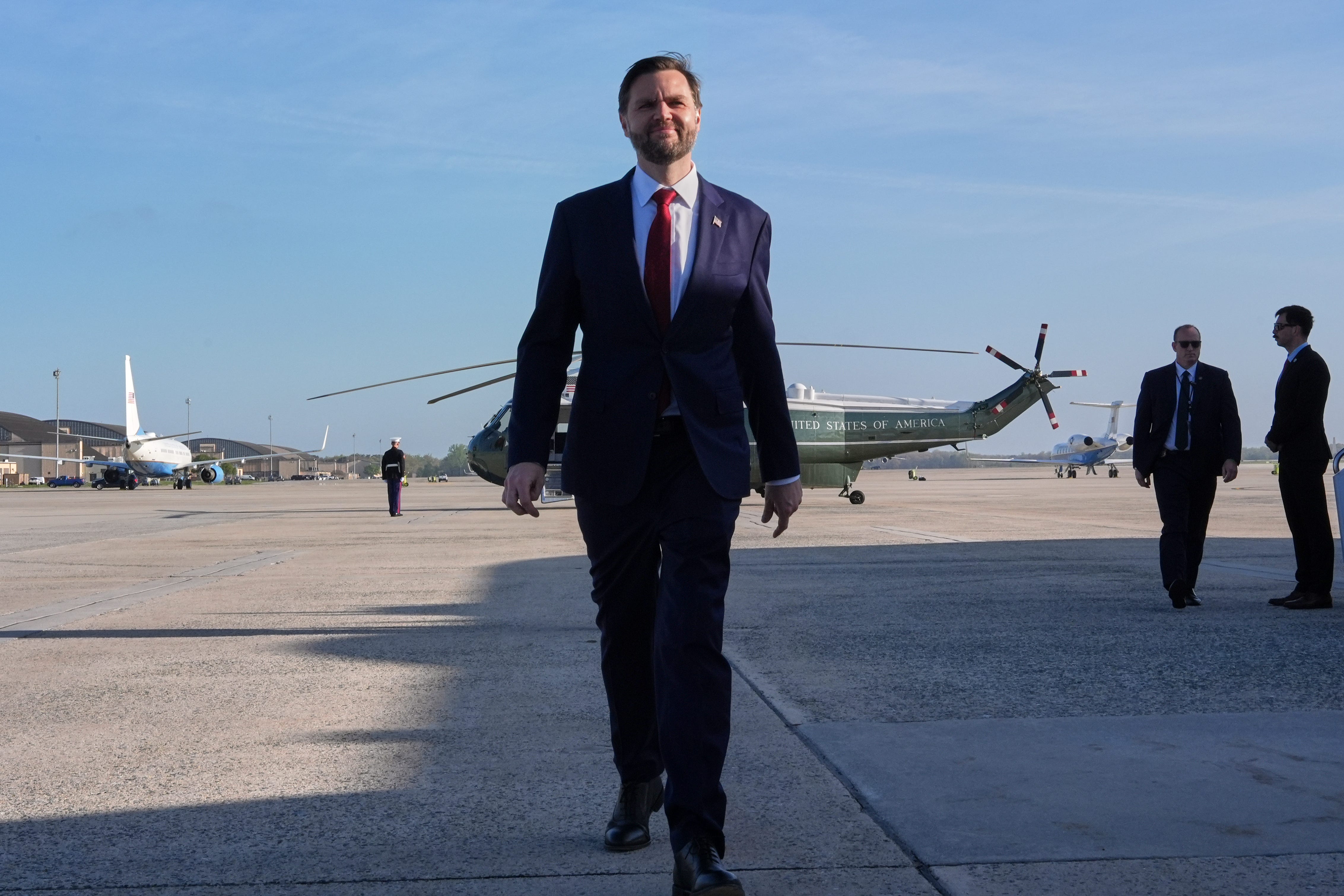
U.S. delegation heads to Pakistan as ceasefire talks hinge on Lebanon: Vice President JD Vance will arrive in Pakistan on Friday to lead a U.S. delegation on high-level talks with Iran in Islamabad along with U.S. envoys Steve Witkoff and Trump’s son-in-law Jared Kushner. Iran’s speaker of parliament, Mohammad Bagher Ghalibaf, and foreign minister, Abbas Araghchi, are expected to lead the Iranian delegation, though there are mixed messages from Tehran regarding Iran’s participation as a result of Israel’s ongoing attacks on Lebanon. An analyst, reportedly close to Ghalibaf, said on Thursday “Iran has informed Pakistan that if Lebanon is not part of the ceasefire, Iran’s team will not go to Islamabad.” Aragchi posted on Thursday: “If the U.S. wishes to crater its economy by letting Netanyahu kill diplomacy, that would ultimately be its choice. We think that would be dumb but are prepared for it.”
Trump suggests Israel agrees to ceasefire in Lebanon, Netanyahu says otherwise: After telling PBS yesterday that Lebanon was “not included in the deal,” President Donald Trump told Israeli journalist Neria Kraus on Thursday that Israeli Prime Minister Benjamin Netanyahu “is on board with the agreement,” and that he would “low key a little bit” with regards to Lebanon. In remarks to the Israeli public, however, Netanyahu unequivocally denied this, saying, “There is no ceasefire in Lebanon.” “We continue to strike Hezbollah with full force,” he said, and he said there would be no end to these strikes until the “security” of the Israeli people was “restored.” CBS News reported on Thursday that President Donald Trump had agreed to ceasefire terms with Iran that included Lebanon, according to multiple diplomatic sources, before Prime Minister Benjamin Netanyahu called Trump, and the U.S. public position shifted.
Netanyahu says Israel will open direct talks with Lebanon “as soon as possible”: Netanyahu announced on Thursday that Israel would enter direct negotiations with Lebanon “as soon as possible” after what he said were “repeated calls” from the Lebanese government to do so. He added that Israel would continue to strike Hezbollah in Lebanon. Lebanese Prime Minister Joseph Aoun welcomed the move. Hezbollah has rejected any talks with Israel. A U.S. official confirmed to AP that talks between Israel and Lebanon would take place starting next week at the State Department in Washington. AP cited a source as saying the talks would be led on the U.S. side by Ambassador to Lebanon Michel Issa and on the Israeli side by Israel’s Ambassador to the U.S. Yechiel Leiter.
Iran’s supreme leader declares victory, outlines objectives: On the 40-day anniversary of his father’s death, Supreme Leader Mojtaba Khamenei gave an address in which he declared Iranian victory, discussed plans for the Strait of Hormuz, and stressed the unity of the “Resistance Front.” “Today… it can be said that you, the heroic Iranian nation, are the definitive victors. The emergence of the Islamic Republic as a major power and the decline of global arrogance are now visible to all,” he said. Khamenei also mentioned the upcoming ceasefire talks with the U.S. and pledged there would be a “new era” in the Strait of Hormuz.
New figures on Iran war toll:
Abbas Masjedi, the head of Iran’s Legal Medicine Organization, an official government body, was quoted in state media as saying the death toll from the U.S.-Israeli war on Iran is over 3,000 people. A previous tally from the Ministry of Health on April 3 put the toll at 2,076.
The head of the Iranian Red Crescent Society said on Friday a total of 125,630 civilian units were hit across the country in U.S.-Israeli attacks on Iran, according to the IRNA news agency, including 32 universities, 857 schools, and 339 medical facilities.
Iran-linked hackers claim breach of former Israeli army chief’s phone: The hacking group Handala, reportedly linked to the Iranian government, claimed on Thursday to have accessed more than 19,000 files from the phone of former Israeli Defence Forces Chief of Staff Herzi Halevi, including images and videos from sensitive meetings. Some of the leaked material reportedly shows Halevi meeting with United States and Arab officials in Qatar, the United Arab Emirates, and Jordan. The group also claimed access to maps, command centers, and other classified systems, though much of that material has not been publicly released.
Hormuz transit remains at a near standstill: A Gabon-flagged oil tanker became the first non-Iranian vessel to pass through the Strait of Hormuz since the ceasefire was announced Tuesday, carrying 44,000 barrels of fuel oil from Sharjah to India, MarineTraffic reported. Only nine vessels transited the strait on Wednesday and Thursday combined, according to S&P Global Market Intelligence, compared with a prewar daily average of more than 135. The International Maritime Organization estimates some 2,000 ships—including oil and gas tankers, bulk carriers, and six cruise liners—remain stranded in the Persian Gulf, with 20,000 seafarers aboard.
“There will be no return to the pre-war status quo”: A senior Iranian source told Russian state news agency TASS on Thursday that Tehran will cap vessel transit through the Strait of Hormuz at fewer than 15 ships per day under the ceasefire terms, with all passage subject to approval by the IRGC. “There will be no return to the pre-war status quo,” the source said. Trump on Thursday, posted on Truth Social on Thursday that “Iran is doing a very poor job, dishonorable some would say, of allowing Oil to go through the Strait of Hormuz. That is not the agreement we have!” He also posted earlier: “There are reports that Iran is charging fees to tankers going through the Hormuz Strait – They better not be and, if they are, they better stop now!”
Kuwait condemns drone strikes on vital facilities, blames Iran: The Kuwaiti Foreign Ministry on Friday accused Iran of launching drone attacks on Thursday that targeted “vital Kuwaiti facilities.” It blamed the attacks on Iran and its “allied factions, militias, and armed groups.” Iran’s Islamic Revolutionary Guard Corps (IRGC) denied launching attacks on Gulf states.
Saudi government tallies damage from previous strikes: Strikes on Saudi energy infrastructure have reduced the kingdom’s oil production capacity by around 600,000 barrels per day and cut throughput on the East-West Pipeline—Saudi Arabia’s only crude export route while the Strait of Hormuz remains blockaded—by about 700,000 barrels per day, the Saudi Ministry of Energy said Thursday. The Saudi government had not previously provided details about strikes on its energy industry during the war. In its statement, it did not blame Iran directly (though it did note that it had intercepted many Iranian drones and missiles in recent weeks). It also announced the deaths of one Saudi national, an employee of the national oil company, and seven other foreign nationals.
Kamal Kharrazi, senior adviser to Iran’s supreme leader, dies from airstrike injuries: Kamal Kharrazi, the former Iranian foreign minister and head of Iran’s Strategic Council on Foreign Relations, died Friday from injuries sustained in a United States-Israeli airstrike on his Tehran home on April 1, in which his wife was also killed. The 81-year-old served as Iran’s foreign minister from 1997 to 2005 and as ambassador to the United Nations from 1989 to 1997, and had continued as a senior adviser to Supreme Leader Mojtaba Khamenei following the death of Ali Khamenei. At the time of the strike, Kharrazi had reportedly been working with Pakistani intermediaries to arrange a direct meeting between Iranian officials and Vice President JD Vance.
Israel is running out of missile defense systems: A Trump administration source told Drop Site News on the eve of the ceasefire that Israel’s ballistic missile interceptor stockpile had fallen to double digits, forcing Israeli military officials to selectively choose which incoming missiles to shoot down. A recent analysis by the Royal United Services Institute for Defence and Security Studies estimated that by late March, Israel had expended the vast majority of its Arrow 2, Arrow 3, and THAAD interceptors—munitions that cost up to $12 million per unit and take months to replenish. The latest from Murtaza Hussain and Ryan Grim for Drop Site is here.
Lebanon
Casualty count: The death toll from Israel’s assault on Lebanon has risen to at least 1,888—with 6,092 wounded—since March 2, according to Lebanon’s Health Ministry. The preliminary toll of Israel’s brutal Wednesday attack on Lebanon is currently at 303 killed and 1,150 wounded.
UNICEF: Israel’s Wednesday attack on Lebanon killed 33 children and wounded 150: “Unicef is receiving reports of children being pulled from under the rubble, while others remain missing and separated from their families. Many are experiencing trauma, having lost loved ones, their homes, and any sense of safety,” the organization said in a statement.
Continuing Israeli attacks:
At least 18 people were killed in Israeli strikes on Friday across Lebanon, according to the National News Agency (NNA). An Israeli airstrike on a car wash in the central square of Jbaa in the Iqlim al-Tuffah area killed six people, including the owner, his two sons, and three others, while a separate strike in the town of Ansar in the Bekaa region killed one person. A drone strike on the Samaiyah–Deir Qanoun Ras al-Ain area left two people dead, and another individual was killed in a drone strike while riding a motorcycle near the Al-Mahdi Schools junction in the town of Sharqiya.
In Nabatiyeh, the NNA reported heavy Israeli airstrikes hitting large parts of the city, including a state security office. At least eight state security personnel were killed and several buildings destroyed in what the state-run news agency described as a “horrific massacre.”
Israel bombed several ambulances and firetrucks in the town of Deir Qanoun Ras al-Ain in southern Lebanon on Friday, according to NNA. Israel’s military spokesperson on Friday reiterated a threat to target ambulances and medical facilities in Lebanon claiming without evidence that they were being used by Hezbollah for military activities. Over 50 medical workers in Lebanon have been killed in Israeli attacks since March 2.
Israeli airstrikes on Thursday hit the town of Kfar Dounin, a home in Ansarieh near the city of Saida, and a juice factory in Deir Takla. Artillery and gunfire struck Khiam in Marjayoun, with additional attacks on Bint Jbeil’s market, Kafra, and areas of Harouf. Drone strikes were reported in Haniyeh and Batoulieh, alongside multiple strikes on Qlalila and nearby areas, where three people were wounded. Further injuries were reported in Shehabieh, where ambulances were dispatched.
Hezbollah vows to continue attacks until “Israeli-American aggression” stops: Hezbollah said its fighters launched rocket attacks targeting the settlements of Kiryat Shmona, Metula, and Misgav Am, vowing in a statement released on the group’s telegram channel Friday that “these attacks would continue until the Israeli-American aggression against the country and the people stopped.” The group also said it struck “a gathering of Israeli enemy soldiers east of the Khiam detention center” in southern Lebanon with a missile, and announced targeting the Israeli military naval base at the port of Ashdod Port with advanced rockets.
“Resistance will continue until the last breath”: Naim Qassem, Secretary-General of Hezbollah, addressed “a message to the steadfast and sacrificing Lebanese people,” offering condolences for those killed and saying that “the Israeli enemy has failed in the field…and was unable to carry out a ground invasion as repeatedly declared.” He said Israel had turned to “bloody criminality” by targeting civilians across Lebanon “to cover its failure,” while praising Lebanese resilience and stressing that “the resistance will continue until the last breath.” He added, “we will not accept a return to the previous situation,” calling on officials to stop concessions and emphasizing unity between “the state, army, people, and resistance” to protect the country and expel the Israeli occupation.
Israeli army chief in Lebanon: “We are not in a ceasefire”: Israeli army chief of staff Eyal Zamir said Israeli forces are continuing their combat operations in southern Lebanon. “The IDF is in a state of war, we are not in a ceasefire. We continue to fight here in this sector, this is our primary combat zone,” Zamir said in a video statement published by the Israeli military during his visit to the outskirts of Bint Jbeil on Thursday.
WHO warns 450 Beirut hospital patients at risk after Israel orders evacuation of southern suburbs: The World Health Organization warned Friday that around 450 patients across two major Beirut hospitals—including 40 in intensive care—face serious risk following an Israeli evacuation order covering the capital’s southern suburbs. The affected facilities, Rafik Hariri University Hospital and Al Zahraa Hospital, are both operating at full capacity with no alternative facilities available to receive patients. The WHO called the evacuation order “operationally unfeasible” and urged Israel to reverse its directive. Lebanon’s Health Ministry said in a statement Friday, after contacting WHO and the Red Cross, that it received international assurances the hospitals won’t be targeted and all remain operating.
Genocide in Gaza, the West Bank, and Israel
Israeli forces shoot and kill third-grade girl in northern Gaza: Israeli forces shot and killed Ritaj Rihan, a third-grade student, inside an educational tent in Beit Lahia, northern Gaza, on Thursday. The tent, which served as a makeshift classroom for children displaced by more than two years of war, stood atop the rubble of a school destroyed during the conflict. Palestinian poet Mosab Abu Toha, who attended the same school, said the site where Ritaj was killed was the ruins of his former high school. “Even when kids try to learn, after over two years of nonstop running from the bombs, Israel shoots them,” Abu Toha wrote.
Palestinian journalist released from Israeli detention: Palestinian journalist Muath Amarneh, who spent seven months in Israeli administrative detention, was released today. He was detained by Israeli forces in August while traveling between Bethlehem and Hebron in the occupied West Bank, and had previously been imprisoned for nearly nine months at the start of the genocide in Gaza. Amarneh also lost an eye while covering protests against land confiscation in the West Bank in 2019, after an Israeli soldier shot him. He has described medical neglect in Israeli detention, with a severe infection causing his prosthetic eye to fall out of its socket.
International flotilla departs Europe bound for Gaza: A French convoy of roughly 20 boats departed Marseille on April 4, set to join the larger Global Sumud Flotilla leaving Barcelona on April 12. The civilian effort aims to challenge Israel’s naval blockade of Gaza and deliver humanitarian aid. More than 1,000 activists, doctors, and engineers are expected aboard, alongside public figures including climate activist Greta Thunberg, actor Susan Sarandon, and actor Liam Cunningham, with support from Greenpeace’s Arctic Sunrise vessel. Organizers say the convoy could grow to around 100 vessels, with an expected arrival near Gaza around April 20.
U.S. News
By Julian Andreone, with Ryan Grim. Have a tip on Capitol Hill? Email Andreone at Julian@dropsitenews.com.
Inflation spikes on record energy price increases: Consumer prices rose 3.3% in March from a year earlier, the Department of Labor said Friday, up significantly from just 2.4% in February and the biggest yearly increase since May 2024. The increase in inflation was driven by a record spike in energy prices. “The index for energy increased 10.9 percent in March, the largest monthly increase in the index since September 2005. The gasoline index increased 21.2 percent over the month, the largest monthly increase since the series was first published in 1967,” the Labor Department wrote.
White House told staff to stop insider trading: The White House Management Office sent a staff-wide email on March 24 warning employees against using their positions to place well-timed bets in futures markets, according to a new report from the Wall Street Journal. Three accounts on the prediction platform Polymarket earned more than $600,000 by correctly betting on the timing of this week’s Iranian ceasefire, and a flurry of activity on oil futures markets—in which $760 million changed hands in less than two minutes—preceded this email by only 15 minutes. The White House confirmed the email’s authenticity but denied any wrongdoing, with Trump spokesman Davis Ingle calling any suggestion of insider trading “baseless and irresponsible.”
Melania Trump denies Epstein ties: First Lady Melania Trump delivered an unscheduled address to reporters at the White House on Thursday, denying that she had any meaningful relationship with Jeffrey Epstein. She claimed she first crossed paths with Epstein in 2000 at an event she attended with her husband, and denied that Epstein introduced the couple, reaffirming that she met President Donald Trump in 1998 at a New York City party through Italian modeling agent Paolo Zampolli. Melania also addressed a 2002 email exchange with Epstein associate Ghislaine Maxwell, calling it “nothing more than casual correspondence.” She closed by calling on Congress to hold a public hearing specifically for survivors of Epstein’s abuse.
Trump official allegedly threatened rival pope: The Trump administration is working to contain possible diplomatic outrage after reports emerged that a U.S. official invoked the medieval Avignon papacy—widely interpreted as a threat to sponsor a rival pope—during a January meeting at the Pentagon with the Vatican’s former ambassador to the U.S., Cardinal Christophe Pierre, according to the Financial Times. The meeting, which included Under-Secretary of Defense for Policy Elbridge Colby, was called after Pope Leo XIV publicly criticized the growing use of military force, saying “war is back in vogue.”
Federal judge strikes down Pentagon press restrictions again: Judge Paul Friedman of the U.S. District Court for the District of Columbia declared a revised set of Pentagon restrictions on journalists covering the military unconstitutional on Thursday. This is the second time Judge Friedman has struck down elements of Defense Secretary Pete Hegseth’s press policy. Friedman ruled that the Pentagon’s updated rules were “transparent attempts to negate the impact of this court’s order” and ordered the reinstatement of press access for New York Times reporters at the level they enjoyed at the time of his first ruling.
DNC rejects resolution targeting AIPAC influence: The Democratic National Committee’s resolutions committee rejected a symbolic resolution targeting the influence of the American Israel Public Affairs Committee in Democratic primaries, and referred a pair of measures calling for conditioning military aid to Israel to the party’s Middle East Working Group, which was established last summer. “We had various resolutions that focused on different industries and groups,” DNC Chair Ken Martin said on X, “and instead of going one-by-one, we passed a blanket repudiation.” “I have made my position on this clear from day one: We must end the influence of dark money in our politics and restore power back to the people.” Pro-Israel groups claimed the stifling of the AIPAC resolution as a victory, saying that its failure showed that the “vocal, far-left faction” of the party is “in no way in charge.”
Candidate for Pelosi’s seat calls for sanctions on Israel: Saikat Chakrabarti, a former software engineer and chief of staff to Rep. Alexandria Ocasio-Cortez (D-N.Y.), running to represent California’s 11th District (the San Francisco seat long held by Nancy Pelosi), became one of the first candidates to call for U.S. sanctions on Israel. “Israel has been committing a genocide in Gaza and is now committing ethnic cleansing in Lebanon,” Chakrabarti said. “Ending funding isn’t enough—we need sanctions.”
Trump administration wants to let predatory lender off scot-free: The Trump Justice Department has proposed settling a landmark predatory lending lawsuit against Texas land developer Colony Ridge—which allegedly duped tens of thousands of Hispanic residents into high-interest mortgages—with no monetary compensation for victims, instead directing $20 million toward local policing and immigration enforcement in Liberty County. Eight former federal civil rights attorneys and investigators told ProPublica and the Texas Tribune they were stunned by the agreement, with one calling it “a complete misjustice.” A federal judge is scheduled to hear the proposal on Friday. Read the full report on Colony Ridge, from ProPublica and The Texas Tribune, here.
Other International News
Russia and Ukraine agree to Easter ceasefire: Russian President Vladimir Putin announced on Friday that he has ordered Russian forces to cease fire “in all directions” from Saturday afternoon through Easter Sunday, with Ukrainian President Volodymyr Zelenskyy saying Kyiv is “ready for symmetrical steps.” The truce comes after Zelenskyy had asked the United States to pass a holiday ceasefire proposal to Moscow earlier this week. Zelenskyy added that “Russia has a chance not to return to strikes after Easter as well,” signaling Kyiv’s desire for the pause to extend beyond the weekend.
Trump wants to punish NATO for Iran War by withdrawing troops from Europe, report says: President Donald Trump has discussed with advisers the possibility of withdrawing some of the more than 80,000 U.S. troops stationed in Europe, angered by NATO allies’ failure to help reopen the Strait of Hormuz and by stalled efforts to acquire Greenland, according to a White House official cited by Reuters. The White House official said Trump is specifically considering bringing troops back to the United States rather than repositioning them within Europe. “He asked NATO specifically to come up with a plan [to secure the Strait] when we were in Davos” in January, the official said, “and they’re sort of not taking it seriously.”
At least 56 killed, including 17 children, in drone strike on wedding ceremony in North Darfur: At least 56 people were killed, including 17 children, and 107 others were injured when a drone strike hit a wedding ceremony in the Al-Salama neighborhood of Kutum, North Darfur, on Wednesday evening, according to Sudan Tribune. Local witnesses and the Rapid Support Forces blamed the Sudanese Armed Forces for the attack; the SAF has not commented. Kutum, located roughly 120 kilometers northwest of El Fasher, has been under RSF control since 2023.
U.S. summons Iraq’s ambassador in Washington because of an “ambush”: The U.S. State Department summoned Iraq’s ambassador in Washington on Friday after what it called an “ambush of American diplomats” in Baghdad on April 8, blaming Iran-supported militias operating from Iraqi territory. Washington cited hundreds of recent attacks targeting American personnel, facilities, and regional interests, and warned Baghdad that it has failed to prevent them, even as it acknowledged some contributions by Iraqi security forces. For background, read Nir Rosen and Hajar al Obeidi on the indiscriminate U.S. attacks in Iraq.
Philippines opens coast guard base on disputed island in South China Sea: The Philippines on Thursday unveiled a coast guard district command on Thitu Island in the South China Sea, describing it as a “steadfast sentinel of our sovereignty” in a region where Chinese forces maintain a heavy patrol presence. Hours after the ceremony, the Philippine coast guard accused Chinese forces of firing flares at its patrol aircraft over the disputed Subi Reef and Mischief Reef, calling it “a clear and deliberate act of bullying” that endangered Filipino personnel. China did not immediately respond to either development. Thitu Island, home to around 400 Filipino civilians, sits roughly 24 kilometers from Subi Reef, where China has built a major island base with a military-grade runway.
Jihadists kill Nigerian brigadier general and 17 soldiers: Jihadists overran a military base in Benisheikh in Borno, according to the AFP, killing Brigadier General O.O. Braimah and at least 17 other soldiers and burning vehicles and buildings before withdrawing. It is the second killing of a high-ranking Nigerian officer in five months, following the death of Brigadier General Musa Uba at the hands of the Islamic State West Africa Province in November. The U.S. State Department on Wednesday authorized non-emergency government employees to depart Abuja, “due to the deteriorating security situation” in the country.
UN expert warns Mexico has become a “garbage sink” for U.S. waste: Marcos Orellana, a United Nations special rapporteur on toxics and human rights warned Friday that Mexico is facing a “toxic crisis” driven in part by imports of hazardous and plastic waste from the United States, saying that “US overconsumption and economic activity are using Mexico as a garbage sink.” His report cited factories dumping hazardous waste into the Atoyac River in Puebla, industrial pig farms contaminating drinking water on the Yucatan peninsula, and a decade-old mining chemical spill still affecting communities along the Sonora River. Orellana said weak regulatory standards had produced what he called “the legalized poisoning of people,” and recommended Mexico use the upcoming review of the U.S.-Mexico-Canada free trade agreement to strengthen environmental enforcement. Read more at The Guardian, here.
Ecuador raises tariffs on Colombia to 100 percent: Ecuador’s government announced Thursday that it will raise tariffs on Colombian exports to 100 percent effective May 1, citing Bogotá’s alleged failure to adequately address drug trafficking and border security. Colombian President Gustavo Petro responded declaring that Ecuador’s actions amounted to “the end of the Andean Pact for Colombia” and calling on his foreign minister to abandon the regional economic integration pact and instead pursue full membership in the Mercosur trade bloc.
Cuba defends medical internationalism: Cuban Foreign Minister Bruno Rodríguez accused the United States of “extorting” Latin American and Caribbean nations into canceling medical cooperation agreements with the island. Rodríguez said Washington aims to cut a key source of hard currency for Cuba, whose medical brigades provide a key source of foreign currency. Guatemala, Honduras, Jamaica, and Guyana have recently ended such deals. Echoing U.S. criticisms, the president of the Inter-American Commission on Human Rights (IACHR) recently charged that there are elements of forced labor and human trafficking in Cuba’s international medical missions.
Argentina approves glacier mining bill amid protests: Argentina’s Congress passed a bill backed by President Javier Milei allowing mining in environmentally sensitive glacier and permafrost areas of the Andes, weakening a 2010 glacier protection law. Supporters say it provides legal certainty for copper and lithium extraction, while environmentalists warn it threatens water sources for 70% of Argentinians.
More from Drop Site
Special Thursday livestream: Ryan, Sharif, and Murtaza discuss the assault on Lebanon, the current state of the ceasefire, and all the latest in the Middle East in yesterday’s livestream, available here:
Ryan Grim responds to Ben Shapiro’s attacks on Drop Site: Drop Site co-founder Ryan Grim responded to Ben Shapiro’s attack on Drop Site on Breaking Points. Shapiro accused Grim of “despising America,” and Drop Site of having intentionally cloudy funding. Ryan makes clear just how we fund our reporting (mostly, with the contributions of readers like yourself). Watch Ryan here:
 Drop Site@DropSiteNewsRyan Grim responds to Ben Shapiro accusing him of “despising America,” addresses New York Post attacks on Drop Site’s publisher, discusses the ‘Soros funding,’ and defends interviewing U.S. adversaries and leaders from designated “terrorist” groups. @ryangrim | @emilyjashinsky
 Dr. Nika Soon-Shiong @nikasoonshiongThe Murdoch-controlled NY Post can call me a nepo baby and label @DropSiteNews a rogue outlet all they want. We publish breaking news with clear sourcing & attribution—and readers can tell the difference. https://t.co/ruOmwrNsZR11:26 PM · Apr 9, 2026 · 92.5K Views33 Replies · 136 Reposts · 1.24K Likes


Jeremy Scahill spoke to AJ+ on the meaning of the ceasefire in Iran, its prospects for survival, and our latest reporting on the conflict, here:

If you want to continue getting this newsletter, you don’t have to do anything. But if this is too much—we do try to be mindful of your inbox—you can unsubscribe from this newsletter while continuing to get the rest of our reporting. Just go into your account here at this link, scroll down, and toggle the button next to “Drop Site Daily” to the off setting. It looks like this:

These negotiations in Pakistan will never go anywhere because, well, Israel. That's the elephant in the room.
Iran will never accept any agreement if it doesn't involve muzzling Israel and it's murderous campaigns in Lebanon, Gaza, West Bank.
Iran has the upper hand at the negotiation table: the U.S. and Israel launched a war to squash Iran, and now Iran is a superpower in the entire region.
That's what this war has achieved, and the U. S. and Israel seem to be in denial.
Peace talks depend on Israel attacking Lebanon HUH. Making the world realize that they have been the main cause of violence relating to the Middle East for the last 80 years. One way or another they are the main reason for most of its wars. The AIPAC induced coma of the US carries on this blindness to this day.