

Tentative But Defiant, Lebanese Families Return to Southern Lebanon Amid Continued Occupation
Israel conducted some of its heaviest attacks on Lebanon following the U.S.-Iran deal. The bombardment has finally halted but troops remain.

Drop Site is a reader-funded, independent news outlet. Without your support, we can’t operate. Please consider becoming a paid subscriber or making a 501(c)(3) tax-deductible donation today.
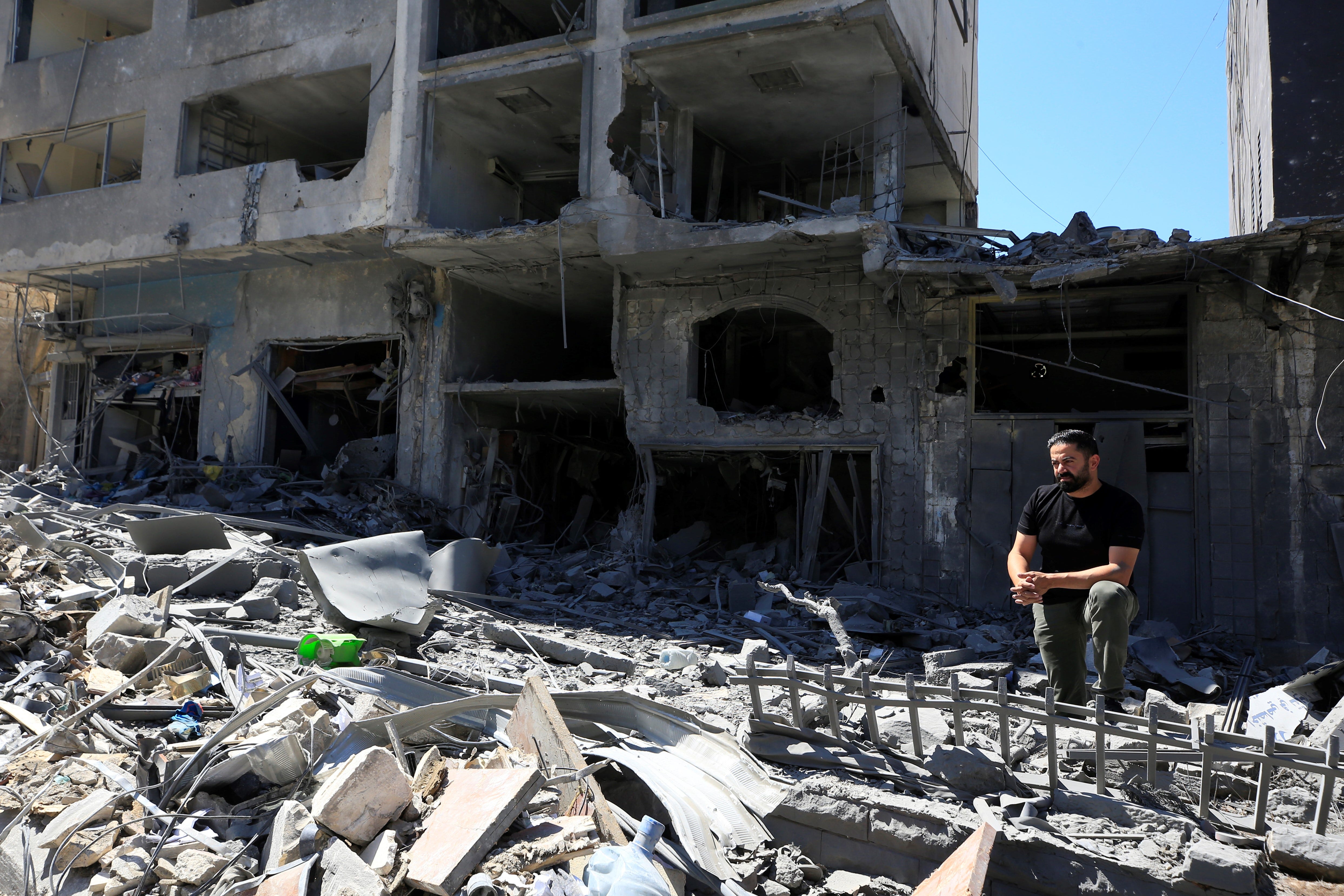
BEIRUT, Lebanon—Fadel Jaber returned to Nabatieh in southern Lebanon on Thursday, anxious to see his home for the first time since he was forcibly displaced by the Israeli military three months ago. The previous day, the U.S. and Iran had signed a memorandum of understanding to end the war between them that included a specific stipulation to halt the fighting in Lebanon. Believing that the city would be safe, Jaber joined thousands of people heading south on roads choked with traffic, the flow of vehicles slowed by damaged bridges targeted by Israeli airstrikes.
After several hours, he finally reached his home, but the respite turned out to be temporary. Around midnight, the earth began to shake from heavy bombardment.
“It was a disaster,” Jaber told Drop Site News. “Nonstop warplanes, nonstop bombing. The strikes seemed to come from every direction.”
His son in the nearby village of Kfar Joz received a call from the Lebanese Civil Defense telling him that they were evacuating residents and that he should meet them at the emergency vehicle down the street. Minutes after leaving, his building along with three others in the vicinity were flattened by Israeli bombs.
“The strikes weren’t concentrated in one area of military importance; they were widespread and targeted civilian areas,” said Abbad Romani, a medic and spokesperson with the Islamic Health Authority in Nabatieh. Romani spent the night assisting at Najdi Hospital, where the dead and wounded were brought throughout the brutal Israeli assault. “They were so intense that people weren’t even able to leave.”
Around 5 a.m, Jaber decided to leave his home once again and try to head back to Beirut. Within an hour of departing, he got word that the building adjacent to his and another across the street were both bombed, and his own home was heavily damaged. The Israeli military later declared it had conducted more than 150 strikes across Lebanon, the majority concentrated in Nabatieh and its surrounding villages. At least 47 people were killed that night, according to Lebanon’s Health Ministry, though Romani expected the toll to grow as more bodies were recovered.
“It was the most violent night we witnessed this war. The work was very tough,” Hassan Fakih, the head of the Lebanese Civil Defense in Nabatieh, told Drop Site. “Drones targeted anything moving on the roads, which limited our ability to rescue the injured,” he said, adding that the waves of airstrikes were supplemented with heavy artillery shelling.
Despite reports emerging on Friday of a ceasefire deal between Israel and Hezbollah, Israeli strikes continued overnight killing scores more people. Hezbollah fought back killing at least six Israeli soldiers and wounding more than 20. But by Saturday afternoon the attacks subsided and a relative calm has held for the first time since March.
Bombing the Ceasefire
Multiple residents told Drop Site that the events on Thursday bore resemblance to April 8, when the Israeli military struck more than 150 locations across Lebanon in the span of ten minutes after the United States and Iran first agreed to a temporary ceasefire—an attack that killed over 350 people and is referred to in Lebanon as “Black Wednesday.”
The lack of warning, the breadth and scale of the bombardment, and the timing were echoed in Thursday’s assault on Nabatieh. In both cases, Israel launched an intensified attack after Washington and Tehran reached an agreement that included a ceasefire in Lebanon in no uncertain terms.
According to local witnesses, the assault coincided with an Israeli attempt to advance through the village of Kfar Tebnit and seize Ali Taher hill, which overlooks Nabatieh and which Israel claimed serves as a major strategic location for Hezbollah. Residents reported heavy clashes between Hezbollah fighters and Israeli troops, with the Israeli military illuminating the night sky with flares as it evacuated wounded soldiers. At least four Israeli soldiers, including a battalion commander, were killed by Hezbollah anti-tank missile fire on Thursday night, while at least 17 others were wounded.
Since March, when Hezbollah entered the war alongside Iran, Israel has killed more than 4,100 people in Lebanon and displaced over 1.2 million. Hezbollah has continued to retaliate against Israel’s military campaign and has stunned Israel with its ability to inflict losses on occupation forces. More than 30 Israeli soldiers have been confirmed killed in action since March 2.
The first provision of the MOU signed last week mentions Lebanon three times, calling for “the immediate and permanent termination of military operations on all fronts, including in Lebanon” as well as “ensuring the territorial integrity and sovereignty of Lebanon.”
In response to Israel’s bombardment of Lebanon on Thursday, Iran refused to de-link Lebanon and allow the agreement with the U.S. to move forward, declaring it would close the Strait of Hormuz, jeopardizing a key provision of the MOU. Iran also told mediators it was prepared to suspend the agreement entirely and launch retaliatory strikes against Israel, a senior Iranian official told Drop Site.
Nevertheless, Israeli Prime Minister Benjamin Netanyahu has insisted that Israeli troops would remain in a “security zone” in southern Lebanon, which runs several kilometers along the border into Lebanese territory and encompasses more than 60 Lebanese villages, indefinitely. “Our fighters in southern Lebanon have full freedom of action to thwart any direct or emerging threat against them or against the residents of the north. The IDF has no restrictions in this matter,” Netanyahu said on Monday. “I stand firm on the fact that we will remain in the security zone in southern Lebanon for as long as is required to protect the residents of the north and all the citizens of the state.”
Israeli Defense Minister Israel Katz also said that Israeli troops would not withdraw from Beaufort castle—also known as Qalaat al-Shaqif—in southern Lebanon. “Israel has no intention of withdrawing from the Beaufort, which is an integral part of the security zone in Lebanon and essential for the defense of the Galilee settlements and IDF forces,” Katz wrote on X.
Hezbollah Secretary General Naim Qassem rejected Israel’s continued occupation of Lebanese territory, saying in a televised address on Sunday Israeli troops “remaining on Lebanese land is impossible. There are no security zones for Israel...we have a national army which deploys, and it is responsible for preserving sovereignty, and it is who we cooperate with.” He also condemned the hypocrisy of Israel’s position. “A ceasefire means Hezbollah does not fire and Israel is free to occupy anywhere. We do not want such a ceasefire.”
Even Lebanese President Joseph Aoun—who at the outbreak of the latest phase of the war on March 2 regularly condemned what he called Iranian interference in Lebanese affairs, declared a ban on Hezbollah military activity, and supported efforts to expel Iran’s ambassador from Beirut—appeared to warm to Tehran’s stance. Aoun held direct talks with Israeli officials in Washington—the first publicly acknowledged direct negotiations in decades—that were conducted alongside the U.S.-Iran negotiations in what was presented as two separate tracks. Since the signing of the MOU, however, Aoun has welcomed the deal and spoken by phone with Iranian Foreign Minister Abbas Araghchi.
Yet the continued occupation of large swathes of southern Lebanon by the Israeli military risks scuppering the deal, which explicitly calls for the “territorial integrity and sovereignty of Lebanon.”
As Israel’s bombardment has halted, Lebanese families once again began to slowly return to the south, including to Nabatieh and its surrounding villages, many to find their homes reduced to rubble.
Jaber said that despite relative calm and the progress made in the U.S.-Iran talks over the weekend in Switzerland, he didn’t believe the war was over. “It won’t end until the Israelis have completely withdrawn from Lebanese land,” he said. He planned to return to Nabatieh on Tuesday to begin repairs on his home in preparation to move back for good. He said he could not afford another month of rent in Beirut and did not want to endure life in a government shelter. “Better to die in dignity.”
 | A guest post by
|
Pure unadulterated concentrated evil.
I agree with Istvan. Israel is the criminal in all of the Middle East.