

From Mutual Suspicion to Political Embrace: How the U.S. Learned to Stop Worrying and Love Pakistan


Yesterday, Pakistan’s Prime Minister Shehbaz Sharif told the Sunday Times that Pakistan serving as a mediator in the U.S.-Iran war is “one of the shining moments in our history.”
“We are in seventh heaven and on cloud nine and it’s intoxicating,” the former Pakistani ambassador to the U.S. Masood Khan concurred. “I’ve had a long diplomatic career and I have never seen Pakistan on such a high pedestal.”
“When I went to Washington as ambassador in 2022, it was an uphill task,” he continued. “Yet now Pakistan is playing the role the UN should have been—it’s a very delicate task and we are doing it well.”
For some, Pakistan may have appeared as an unexpected mediator in the negotiations to end the Iran war. But the country, taken over by a military regime after the ouster of populist PM Imran Khan, has recently been making a major play on the world stage.
Drop Site has been a lone voice in producing independent investigations on Pakistan—a country of over 200 million people with nuclear weapons and without freedom of the press. We’re able to do so because—as a reader-funded independent news outlet—we operate free from the influence of governments and corporate backers.
This is essential to our mission: to report on what matters most, beholden only to the truth. In that spirit, we made a commitment to ensure that our journalism is free for everyone, not locked behind a paywall. But that means we rely on the voluntary support of our community of readers. Please consider making a tax-deductible donation to support our work today.
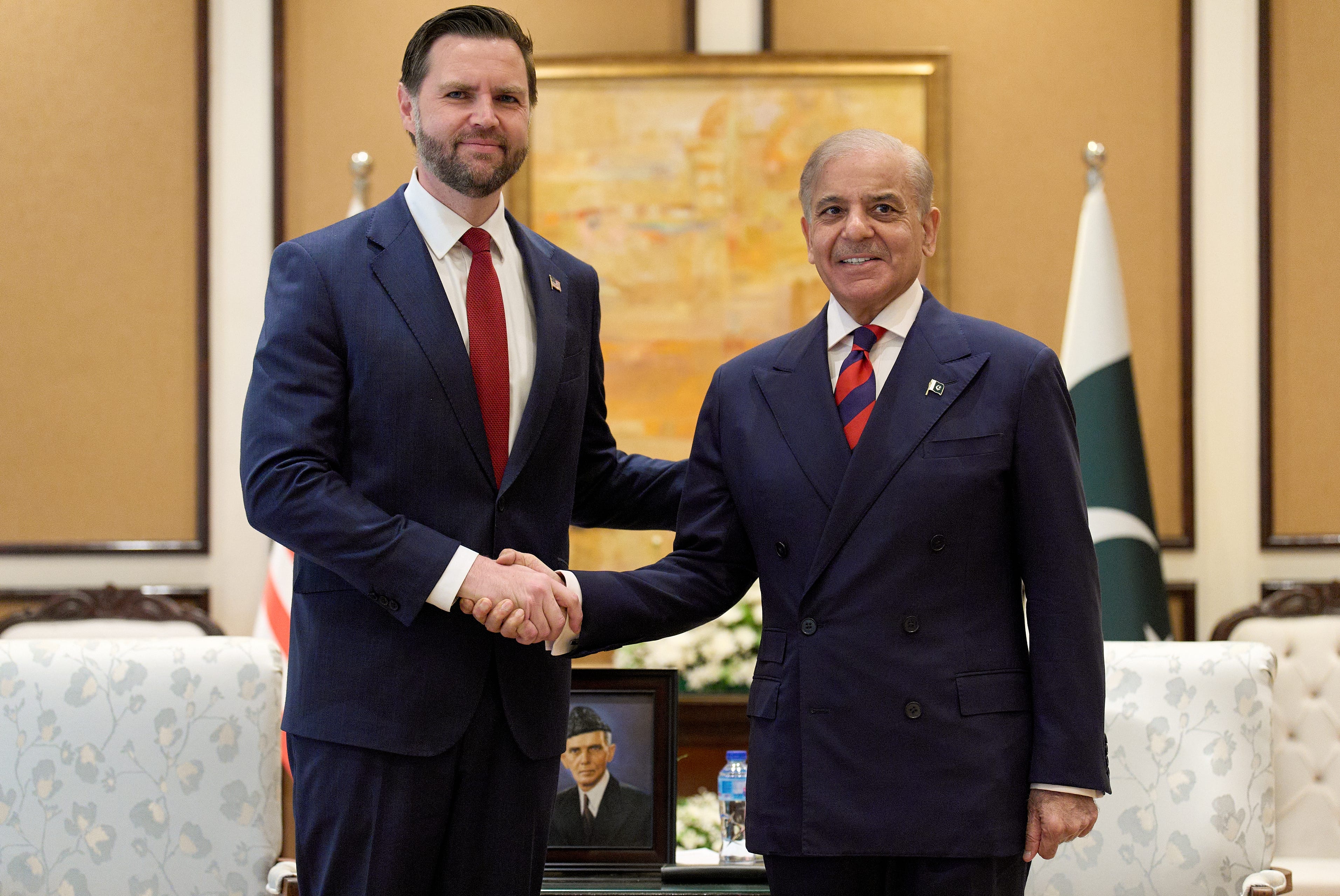
On the afternoon of Friday, April 24, as markets in the United States were closing for the weekend, the Trump administration saw some welcome news: Axios published a story indicating that Iranian Foreign Minister Abbas Araghchi was headed to Islamabad, with the potential to restart the failed talks with the U.S. to end the war. If all went well, Araghchi would meet that Monday with U.S. envoy Steve Witkoff and Donald Trump’s son-in-law, Jared Kushner. “A trilateral meeting with the U.S. will be assessed after our meeting with Araghchi,” a source described as a “Pakistani official” told Axios’s Barak Ravid.
At the same time, Pakistan’s Inter-Services Public Relations (ISPR), the media arm of Pakistan’s ruling military, sent out a private message on WhatsApp to reporters. The message, the ISPR told reporters, was “Attributable to Government Sources”—obscuring the military’s role—and informed reporters of Araghchi’s impending visit. “Following important discussions with the Pakistani mediation team, a second round of Islamabad peace talks between the United States and Iran is expected, government sources say,” the ISPR suggested. “A U.S. logistics and security team is already present in Islamabad to facilitate the negotiation process.”
The claim flew around the world and stocks popped at the close, as reporters copied the ISPR message and pasted it on their Twitter accounts. Pakistani mediators basked in adulation from the Western press, which marveled at the Phoenix-like rise of the military-run government, now a central player on the world stage.
And yet, surprising nobody who had been following the situation closely, the story quickly unraveled. As Drop Site reported in real time, Araghchi was not going to Islamabad to re-open talks and would most certainly not be meeting with Witkoff and Kushner. Trump called off their trip, saying the Iranians could phone them if they wanted.
By Sunday, Ebrahim Rezaei, an Iranian national security spokesperson, had seen enough. “Pakistan is a good friend and neighbor of ours, but it is not a suitable intermediary for negotiations and lacks the necessary credibility for mediation,” Rezaei said on Twitter. “They always take Trump’s interests into account and do not say a word against the Americans’ wishes.”
Listing a litany of instances where Pakistan had simply deferred to Trump and overlooked his violation of agreements, he added, “A mediator must be impartial, not always leaning to one side.”
Pakistan has continued assisting the talks, including by lending an official plane to Araghchi for a short flight to Oman for a brief diplomatic tour last month. But the very mercenary nature of the regime, which allowed it to position itself so effectively as a tool for American interests, also diminishes its value in the role as peacemaker. At the same time, other parties, including Oman, Russia, China, Saudi Arabia, and Turkey have also begun to try their hands at shaping the diplomatic outcome of the war.
How Pakistan got to this point is a story of steady American pressure applied in a variety of ways and a testament to the Pakistan military’s uncanny survival instincts. After engineering former prime minister Imran Khan’s removal in 2022, blatantly rigging a national election in 2024, and continuing to govern in the face of sustained public opposition, the generals have only tightened their hold at home and their standing in Washington.
Leaked documents obtained by Drop Site News, as well as interviews with former civilian and military officials, trace the sequence of events that shaped the U.S.-Pakistan relationship over the past five years and brought Washington and Islamabad from mutual suspicion into a political embrace. This budding relationship, despite bearing hopes to reshape the region, may yet be brought down by the shaky foundation on which it was built.
To hear the recent laudatory profiles of Pakistan tell it, Pakistan’s diplomatic position is a product of effective lobbying by the Pakistani government in D.C. But the true story has been much longer in the making.
Burns in Islamabad
In June 2021, CIA Director William J. Burns flew to Islamabad to meet with then-Prime Minister Imran Khan. He waited a full day to see Khan, according to reports from the time. But the meeting never happened. Khan’s office informed Burns by phone that the prime minister, citing protocol, would only take calls from his counterparts. His counterpart was President Joe Biden, who, since taking office that January, had declined repeated requests for a direct call.
Biden’s refusal to meet Khan personally marked a stinging reversal from the previous administration. In July 2019, Khan had been invited for a brief meeting in the White House during the Trump administration that wound up lasting longer than 90 minutes. Trump and Khan enjoyed a warm relationship and had much in common: They were both celebrities in the ‘80s and ‘90s who became populist politicians around the same time. They met again in September 2019 on the sidelines of the United Nations General Assembly meetings and again in January 2020 in the White House.
For the Biden administration, Khan was merely the Donald Trump of Pakistan. Burns had come to secure Pakistani territory for U.S. drone bases to use against targets in Afghanistan after the planned American withdrawal. He left with neither the bases nor an audience with the prime minister. If there was any confusion on the matter, Khan cleared it up later that month in an interview with Axios’s co-founder Jonathan Swan. “Absolutely not. There is no way we are going to allow any bases, any sort of action from Pakistani territory into Afghanistan. Absolutely not,” he said. Within weeks, Kabul fell to the Taliban, and the U.S. evacuation descended into chaos that damaged the Biden administration’s standing at home and abroad.
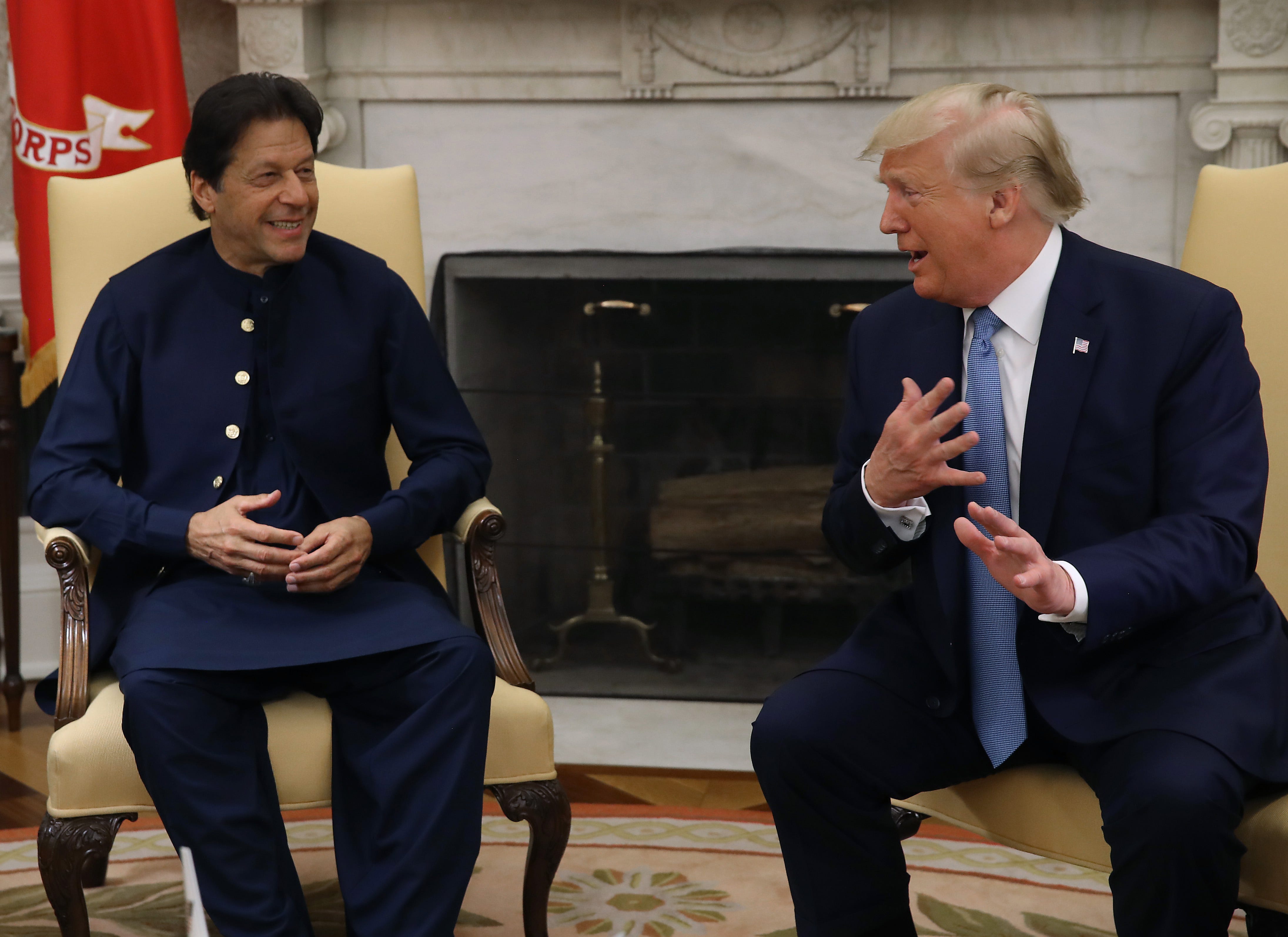
In the months prior, Khan’s government had helped broker the final agreement between the Taliban and the Trump administration. Even so, ties between Washington and Islamabad were already deeply frayed. For two decades, U.S. officials had accused Pakistan of sheltering the Taliban while accepting billions of dollars in American aid as a nominal ally. Pakistan’s military faced further scrutiny after U.S. Navy SEALs killed Osama bin Laden in 2011 in Abbottabad, a garrison town home to Pakistan’s military academy, a raid conducted without Islamabad’s knowledge. By the early 2020s, the prevailing view in U.S. policy circles was that Washington should leave Afghanistan and cut Islamabad loose.
The dismissal of Burns’s request and the collapse of Kabul set off a chain reaction. Leaked documents reviewed by Drop Site News show that in the same period, Saudi Arabia was pressing Pakistan for a mutual defense pact—an overture Khan’s government was also rebuffing, according to the documents. In principle, Khan’s government was drawing diplomatic red lines with both Washington and the Gulf Cooperation Council, but the Pakistani military concluded he was isolating the country.
In July 2021, without the prime minister’s knowledge, the military quietly retained a former CIA Islamabad station chief as a lobbyist in Washington, an early sign that Pakistan’s generals were beginning to move independently of their own elected government.
READ MORE: Leaked Documents Reveal Details of the Secret Saudi Arabia–Pakistan Mutual Defense Pact
All Will Be Forgiven
In February 2022, Vladimir Putin invaded Ukraine. Driving back Russia became the Biden administration’s overriding foreign policy priority almost overnight. U.S. diplomats pressed capitals across the world to pick a side. As the world began to fracture over the conflict, Pakistan unexpectedly found itself in the center of the maelstrom.
On February 24, the day Russian forces crossed into Ukraine, Imran Khan was in Moscow for a long-scheduled meeting with President Putin. Days before that fateful meeting, Jake Sullivan, national security advisor to Biden, had called his Pakistani counterpart, Moeed Yusuf, urging him to persuade Khan to cancel the trip. The details of that call, later leaked to Drop Site, show Sullivan warning against the visit and pressing Islamabad to side clearly with the U.S. in the Ukraine war. Khan ignored the warning.
Photographs of Putin and Khan shaking hands went viral on social media the same day the news of the invasion hit the timelines. Pakistani officials said the trip had been planned for months and could not be cancelled. Yet the incident was not viewed innocently in Washington.
Days later, Pakistan abstained from a United Nations General Assembly resolution condemning the invasion, joining China, India, and much of the Global South. U.S. diplomats, already furious over the Moscow visit and Khan’s refusal to clearly align with Washington, began telling Pakistani interlocutors privately that the relationship could not continue on its existing terms.
On March 7, 2022, Pakistan’s ambassador in Washington, Asad Majeed Khan, met with Donald Lu, the U.S. assistant secretary of state for South and Central Asian affairs. That conversation, documented in a classified diplomatic cable that would later be leaked, became the inflection point of the U.S.-Pakistan relationship. According to the cable, Lu told the ambassador that Washington’s grievances with Khan’s government could be set aside, “all will be forgiven,” in the phrase the Pakistani ambassador would later cite, if Khan were removed from office through a no-confidence vote.
(The authors of this article previously published the contents of the cable, known as a cypher in Pakistan, but had withheld the memo itself for source protection reasons. The cypher can now be published in full, so it can be a part of the historical record. It is now available here.)
Khan was removed on April 9, 2022, in a no-confidence vote backed by Pakistan’s military. His party, Pakistan Tehreek-e-Insaf, was subsequently outlawed, stripped of its electoral symbol ahead of the 2024 general election, and barred from fielding candidates under its own banner. Members who won seats as independents were denied certification.
Khan and his wife, Bushra Bibi, were jailed on a series of corruption, contempt, and national security charges. Both remain in prison to this day, Khan under solitary confinement since last year.
Under the new government, installed with the military’s backing, Islamabad began delivering to Washington what it had refused to deliver under Khan. Within months, Pakistan emerged as a quiet but significant supplier of artillery shells and other munitions to Ukraine.
Leaked documents showed the weapons were routed through U.S. defense contractors and third-country intermediaries, easing shortages in Ukrainian stockpiles during the first year of the war. Former U.S. and Pakistani officials stated at the time that American support for Pakistan’s next International Monetary Fund program was explicitly linked to the continuation of the weapons pipeline. In July 2023, the IMF approved a $3 billion standby arrangement for Pakistan.
In February 2024, both the European Union and United States looked away as the military massively rigged elections and installed a suitable government in Islamabad.
During the U.S. Presidential elections the same year, the Pakistani diaspora in the United States overwhelmingly supported the Trump campaign. The reason, cited almost unanimously, was the Biden administration’s support for the military junta in Pakistan. Many prominent Pakistani-Americans and groups such as PAKPAC declared their support for the Republican campaign due to this.
When Trump took office in January 2025, the question of what to do about Pakistan became an early flashpoint inside his administration. Drop Site News reported at the time that the new State Department, under Secretary Marco Rubio, clashed with the Pentagon over the direction of U.S. policy toward Islamabad, a dispute that would shape everything that followed.
The Pentagon and CIA finally won and took over the relationship.
The Republican promises to the Pakistani diaspora were used by the Trump administration to scare the Pakistani government into submission. The Pakistani government also proceeded to spend hundreds of thousands of dollars in public relations spending during this period according to publicly available FARA filings.
The Nuclear State
On April 9, 2022, the day Khan’s government was toppled, Pakistan conducted a missile test. The missile was the Shaheen III, Pakistan’s longest range ballistic missile with a range of almost 3,000 kilometers. While Pakistan’s missile program has been focused on India, the test was essentially a validation that Islamabad’s missiles also had the capacity to reach Israel. That fact reflected a longstanding anxiety in Washington.
After Khan was removed by General Qamar Javed Bajwa, Pakistan’s army chief at the time, Bajwa travelled to D.C. in October 2022 in an effort to reset ties. During the visit, which also marked his last month in office, Bajwa met with top Biden officials, including Defense Secretary Lloyd Austin and national security adviser Jake Sullivan. In those talks, he assured the U.S. that Pakistan would limit the ranges of its missiles to just fall short of Israel. Seeking to curry even more favor, Bajwa also assured his American interlocutors that Pakistan wanted to rein in its military, limit its nuclear program, and move away from China.
In October 2022, soon after General Bajwa’s return to Pakistan, Bajwa called the head of the Strategic Plan Division (SPD), the military division overseeing Pakistan’s nuclear weapons. According to a source aware of the details of the conversation, General Bajwa ordered the head of SPD to allow an American delegation to visit and inspect some sensitive nuclear sites in the country. In the hierarchy of Pakistan’s nuclear command, the head of SPD reports directly to the Joint Chief of Staff Committee (JCSC), who in turn reports to the prime minister, not to the army chief.
Using this excuse, the SPD head refused General Bajwa at the time, according to sources, showing that the military chief was not completely in charge of the country’s nukes. Later the same month President Biden gave a statement claiming that, “Pakistan may be one of the most dangerous nations in the world” because the country has “nuclear weapons without any cohesion.”
The statement, coming seemingly out of nowhere, stunned many observers. But according to sources privy to the internal communications over the matter, Biden’s statement was related to Bajwa’s inability to provide American inspectors access to Pakistan’s sensitive nuclear sites.
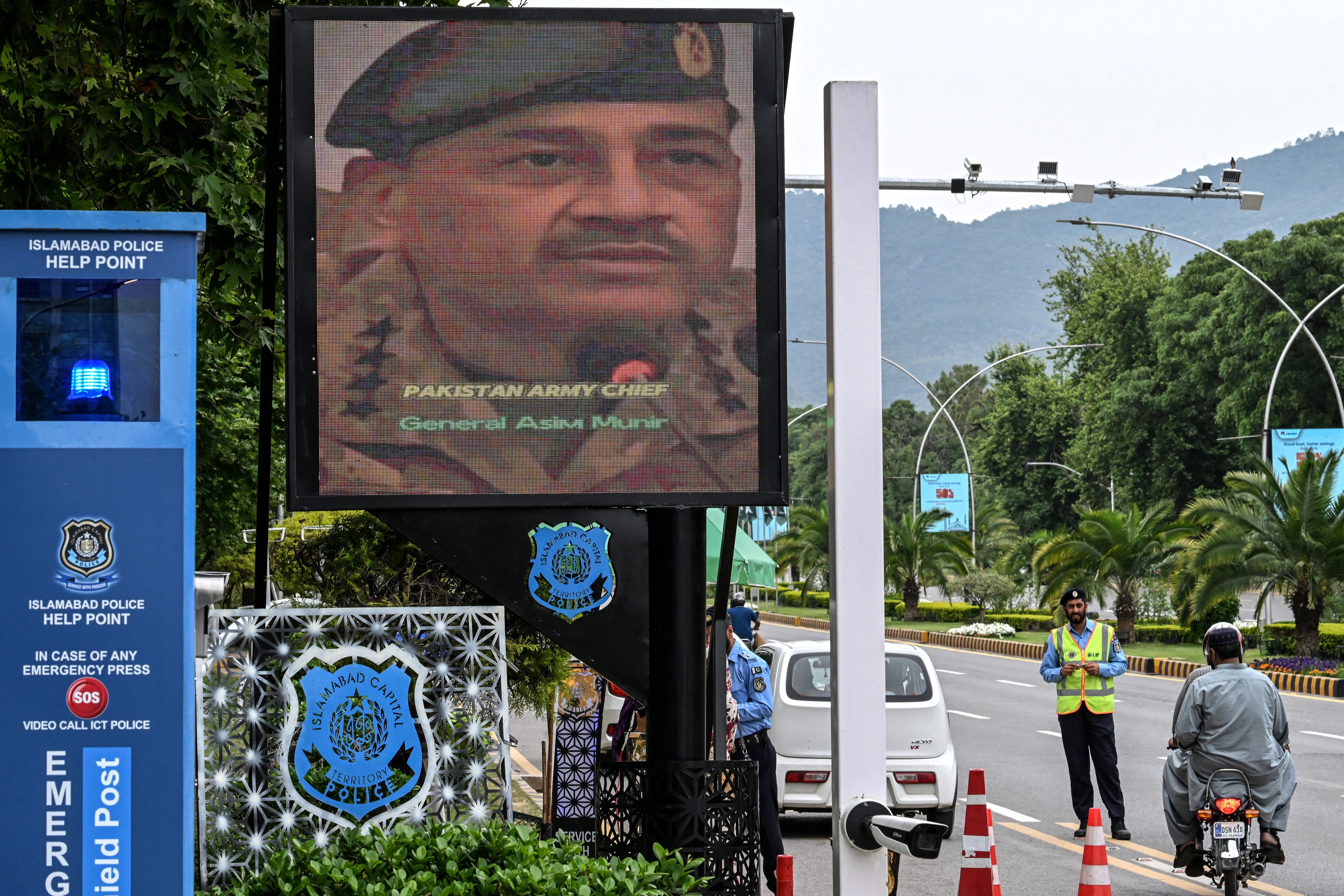
Bajwa stepped down a month later, putting General Asim Munir in charge in November 2022. In 2025, after three tumultuous years heading the military-led government, Munir promoted himself to the rank of Field Marshall, created a new office of Chief of Defence Forces’ for himself, and abolished the role of JCSC through a constitutional amendment. The series of bureaucratic maneuvers—unprecedented in Pakistani history—also had the effect of placing Munir personally in charge of Pakistan’s nuclear weapons. For the first time, the checks and balances surrounding Pakistan’s nuclear command had been unified under a single person: the country’s staunchly pro-U.S. army chief.
Asim Munir’s Second Act
To Trump, Asim Munir is “my favorite Field Marshal.” He relishes the title, musing regularly about the delightfulness of the moniker. It was never a given that Munir would wind up in such an exalted position.
In April 2019, while Munir was director general of the ISI, the country’s powerful spy service, he traveled with then-Prime Minister Khan to Tehran for discussions with Iranian officials as well as officials with the Iranian Revolutionary Guard Corps. Munir, according to people close to Khan, battled with the Iranians over the long-simmering insurgency in the Baloch region that is split by the Iran-Pakistan border.
According to a former PTI official, Munir “used undiplomatic language in Iran and deviated from the strategy the Pakistani government had discussed internally prior to the trip,” which is characteristic of Munir’s style. A source who served in Khan’s inner circle confirmed the account to Drop Site. Pakistan and Iran cooperating to stamp out the insurgency in the Baloch region would be a step toward closer relations and run contrary to Washington’s efforts to isolate Iran. Munir, whether on orders from the U.S. or by instinct, by disrupting that relationship, was doing a strong favor for the Americans.
Iranian leadership complained to Khan about Munir’s outburst and in June 2019, Khan sacked Munir over the incident, sources with knowledge of his decision making said. At eight months, it was a remarkably short tenure atop the ISI. When Bajwa initially put forward a list of successors for the position of Army chief, Munir wasn’t on it.
Khan later alleged that Munir traveled to London after his firing and met with Nawaz Sharif—the former Pakistani Prime Minister who, by late 2019, was living in self-imposed exile in London after being permitted to leave Pakistan for medical treatment in the middle of a corruption sentence. According to Khan, that meeting marked the beginning of what he would later, from prison, call “the London Plan,” an alleged understanding between Munir, Sharif, and members of Pakistan’s senior judiciary under which Munir would be elevated to army chief in exchange for the political and judicial dismantling of Khan’s government and his party.
Munir was appointed army chief on November 24, 2022, in a process that was widely reported to have involved extensive consultations with Nawaz Sharif.
Within months of the appointment, Khan was arrested and convicted in a series of corruption, contempt, and national security cases, which have repeatedly fallen apart under scrutiny, only to be replaced with new charges.
Sharif returned to Pakistan in October 2023; the bulk of his outstanding convictions were vacated within weeks. By February 2024, his younger brother, Shehbaz Sharif, was again prime minister, and Munir was the most powerful figure in the country. Khan remains in prison and this month three Islamabad High Court judges, Mohsin Akhtar Kayani, Babar Sattar, and Saman Rafat Imtiaz, were transferred out of the capital and into provincial high courts in Lahore, Peshawar, and Karachi, scattering the bench that had been hearing his appeals.
Stopping China
For most of the past decade, Pakistan’s relationship with China stood as the one constant in its foreign policy. The China-Pakistan Economic Corridor, launched in 2015 as the flagship of Beijing’s Belt and Road Initiative, brought tens of billions of dollars in highways, power plants and port infrastructure to a country that had struggled to attract foreign investment. Senior officials in Islamabad described the relationship in language reserved for no other partner, calling it “all-weather,” and “deeper than the deepest sea.”
Under Munir, that relationship has slowed almost to a halt.
Of the roughly 90 projects originally envisioned under CPEC, only 38 have been completed. Twenty-three remain under construction. About a third have not been started. The last major project to be delivered, the Gwadar East Bay Expressway, was finished in 2022. No flagship project has been added to the pipeline since. ML-1, the upgrade of Pakistan’s main north-south rail line and once the centerpiece of CPEC’s planned second phase, has been deferred repeatedly.
Prime Minister Shehbaz Sharif left Beijing empty-handed after a 2024 visit intended to secure new funding. Pakistan’s unpaid dues to Chinese power producers have ballooned into a recurring source of friction. Beijing’s ambassador in Islamabad, Jiang Zaidong, took the unusual step of using a public seminar in 2024 to accuse the Pakistani state of failing to protect Chinese workers, 21 of whom have been killed in attacks since CPEC’s launch.
The relationship was even colder behind the scenes. In 2024, Drop Site News reported that Pakistan had given Beijing private assurances it would permit China to convert the deep-water port at Gwadar into a permanent Chinese military facility, a longstanding ambition by Beijing that Pakistan had declined for more than a decade.
According to classified Pakistani military documents reviewed by Drop Site News, Pakistani negotiators presented Beijing with a list of demands in exchange for that base. They asked China to indemnify Pakistan against any U.S. political, economic or diplomatic retaliation for hosting the facility. They also asked China to provide modernization assistance to keep Pakistan’s military and intelligence capabilities competitive with India. Most consequentially, they asked Beijing to provide Pakistan with a sea-based nuclear second-strike capability, the most sensitive element of any nuclear power’s deterrent, and a capability Pakistan has spent two decades trying to develop on its own.
China refused. According to sources with knowledge of the talks, Beijing concluded that the second-strike request would amount to direct Chinese participation in nuclear proliferation in South Asia, and therefore would violate Beijing’s own nonproliferation commitments and expose China to international consequences disproportionate to the strategic value of the Gwadar facility. The Chinese side described the demand as unreasonable, and the negotiations ended on a bitter note.
READ MORE: Pakistan Promised China a New Militarized Naval Base, Leaked Documents Reveal
In an August 2025 interview, Munir told a journalist, “We will not sacrifice one friend for the other,” referring to Pakistan’s relationship with Washington and Beijing. However, in an effort to realign itself, Pakistani military leadership has ended up doing just that. CPEC’s second phase, which would have deepened Pakistan’s economic dependence on Beijing, was intentionally allowed to atrophy, and Chinese requests for permanent security arrangements covering its workers, a long-running Beijing demand that would have placed Chinese personnel on Pakistani soil under Chinese command, were quietly deflected. These moves had more geopolitical significance for Washington than Pakistan’s participation in the Trump family’s crypto schemes, and did more to make Munir Trump’s “favorite field marshal.”
Web of Alliances
In September 2025, Pakistan signed a mutual defense pact with Saudi Arabia committing each country to come to the other’s aid in the event of war, an agreement Khan’s government had refused to sign three years earlier. Throughout the same period, Pakistan’s new military-led government, working in close coordination with the Pentagon, set about cultivating the new Trump administration.
When the Trump family moved into cryptocurrency, Islamabad followed, establishing the Pakistan Crypto Council. Within weeks of the body’s creation, the leadership of World Liberty Financial, the decentralized finance platform launched in September 2024, and majority owned by the Trump family, landed in Islamabad. The April 26 delegation was led by Zach Witkoff, the chief executive of World Liberty and son of Steve Witkoff, and included co-founders Zak Folkman and Chase Herro. By the end of the visit, Finance Minister Muhammad Aurangzeb, in presence of Field Marshal Asim Munir, had signed a memorandum committing Pakistan to route a share of its $36 billion in annual remittances through the Trump-family-owned firm’s USD1 stablecoin.
When concerns about U.S. dependence on Chinese rare earth mineral supply chains became a recurring theme in administration messaging, Pakistan announced a sweeping rare earths agreement with U.S. partners. The September 2025 deal, signed by the military-run Frontier Works Organization and a Missouri-based firm called U.S. Strategic Metals, promised $500 million in American investment in exchange for Pakistani antimony, copper, tungsten, and rare earth elements. Beyond a symbolic first consignment dispatched a few weeks later, no commercial-scale shipments have moved under the deal in the months since.
And when the Trump administration sought a Muslim-majority country to commit troops to its proposed international stabilization force in Gaza, the Pakistani military volunteered.
Throughout this Trump presidency, Pakistan has found a way to stay relevant and in the headlines, promising much but delivering little.
Despite being ceaselessly hyped by Islamabad, the current efforts at mediating an end to the war seem to have reached a familiar impasse. While Munir initially touted the idea of signing an “Islamabad Accord” that would not only put an end to the current fighting but lead to a new era of peace between Iran and the U.S. At present those efforts appear to have stalled. While Pakistan officially retains its role as a mediator, the prospects of a negotiated deal brokered by Islamabad appear more remote than they did one month prior.
Meanwhile, there is increasing pressure on President Trump from pro-Israel voices in the United States to drop Pakistan as a mediator in the Iran talks and reassess Islamabad’s growing political and military proximity to the administration.
Following a report by CBS News, newly purchased by pro-Israel mogul David Ellison, Sen. Lindsey Graham (R-S.C.) questioned Pakistan’s legitimacy as a mediator and accused it of “double-dealing” by allegedly providing safe harbor to an Iranian jet. Pakistan insists that the plane was part of the Iranian delegation, which stayed in Pakistan a few extra days in anticipation of the talks. But the denial did not stop Graham from pressing War Secretary Pete Hegseth on the matter at a Senate Appropriations Committee hearing on Tuesday; Hegseth declined to respond.
Trump was not so evasive. When the same question was put to him by a reporter later that day, he replied, “They’re great. I think the Pakistanis have been great. The field marshal and the prime minister of Pakistan have been absolutely great.”
The Biden administration gave us the prolonged Ukraine proxy war, the Israeli Gaza genocide, and the collapse of the elected Pakistani government. What did I leave out? Oh, he failed to prosecute Trump’s attemped insurrection for three years while allowing him to run for another term in violation of the 14th Amendment of the Constitution.
Wow. This is a **big** read - in several senses of the term.
Two takeaways from my first read-through:
1) Western "democracy", as always, is being delivered to other parts of the world through very undemocratic processes. No thought whatsoever to the **human** impact of its policies.
2) The current military-controlled government of Pakistan is untrustworthy and unstable, therefore a very poor base for negotiations as consequential as those between the US and Iran - unless, Washington is not truly pursuing a negotiated settlement, which from my window, it isn't.