

Trump Escalates Military Threats in Hormuz as Iran Prepares for New Round of U.S.-Israeli Bombings and Assassinations
Iran believes Trump is likely to resume the war in failed quest to declare victory, a senior Iranian official told Drop Site

Drop Site’s journalism is free to read because thousands of readers choose to fund it. If our work matters to you, please consider making a tax-deductible donation today.
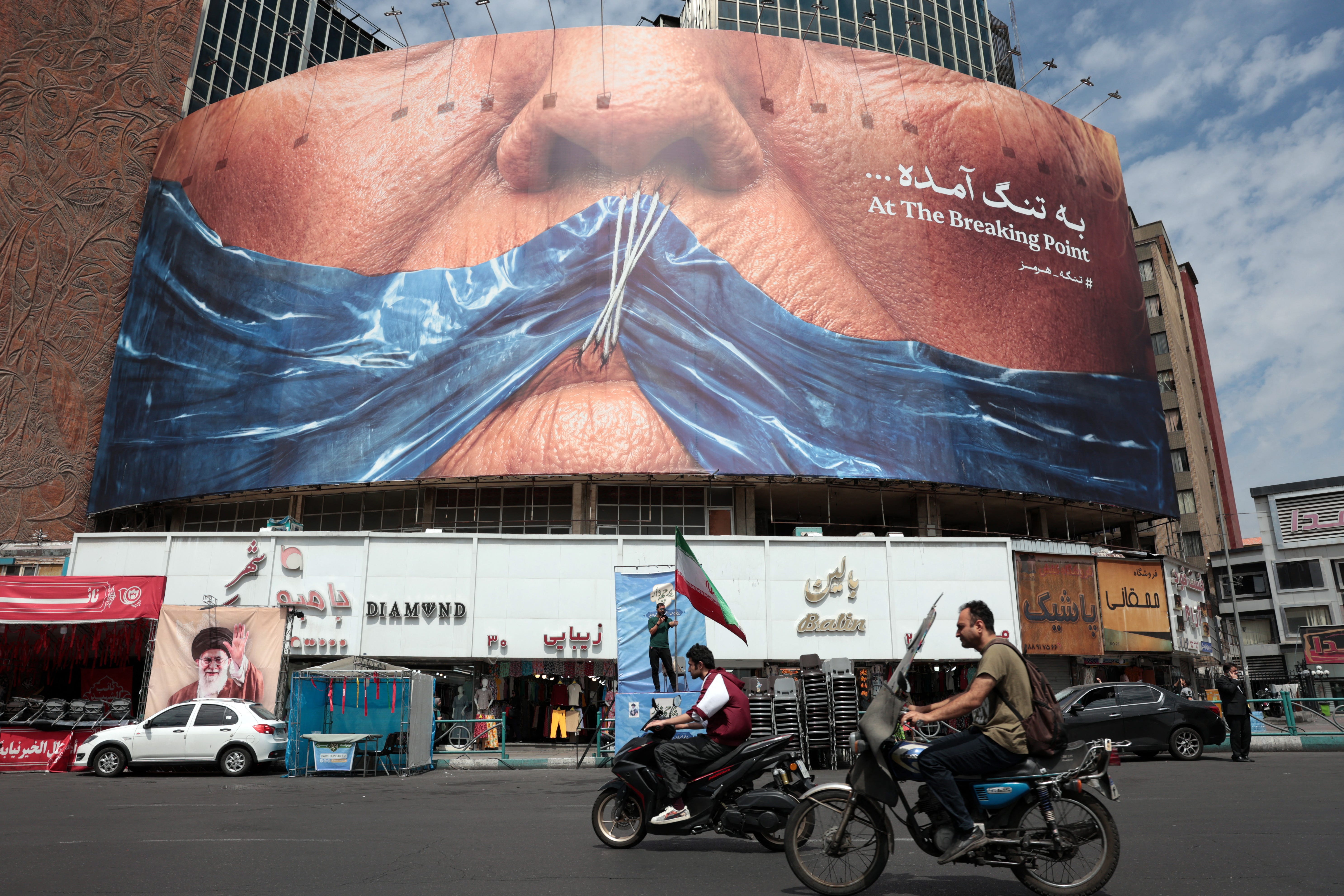
President Donald Trump is scrambling to find a way to declare victory in the war against Iran—vacillating between public demands to make a deal and threats to unleash a new round of massive bombing. The U.S. naval blockade on the Strait of Hormuz has sparked a global economic and energy crisis, and neither the blockade nor Trump’s threats have resulted in Iranian capitulation or a willingness to forfeit any of its rights to control maritime traffic in the Strait.
A senior Iranian official told Drop Site that while Iran is actively engaged in indirect diplomacy with the U.S. via mediators, it has no intention of participating in direct talks until the U.S. blockade is unconditionally lifted.
“Based on current assessments, another military attack seems likely. [Trump’s] goals from the naval blockade haven’t been achieved,” the official said. “He can’t keep the blockade going for much longer. We think the U.S. will focus on Hormuz, so military attacks and operations will likely expand along Iran’s coastline, along with a new wave of assassinations [against Iranian leaders] they may pursue jointly with Israel.”
The official, who requested anonymity because he is not authorized to publicly comment, has direct knowledge of internal deliberations in Tehran. Trump, he argued, has limited options to find an off-ramp from his increasingly unpopular war.
“We have succeeded, through the sustained management of the Strait of Hormuz under our control, in effectively transforming the unilateral pressure imposed by the Americans into a reciprocal one. As time progresses, the restrictions imposed on this strategic chokepoint will generate increasingly widespread consequences for various goods and commodities worldwide,” he said. “The United States has, in practice, positioned itself as a destabilizing force for the global economy particularly in the energy sector. This development, from a strategic perspective, works clearly and substantially to Iran’s advantage.”
On Sunday afternoon, Trump announced that the U.S. would begin to “guide” merchant vessels stuck in the Strait out of Iranian waters. “If, in any way, this Humanitarian process is interfered with, that interference will, unfortunately, have to be dealt with forcefully,” Trump wrote on Truth Social. U.S. Central Command announced that it would support what Trump called “Project Freedom” with “guided-missile destroyers, over 100 land and sea-based aircraft, multi-domain unmanned platforms, and 15,000 service members.”
Trump posted his announcement shortly before oil futures trading opened, sparking speculation it was—at least in part—an attempt to manipulate markets. After Trump’s post, U.S. officials told numerous news outlets that the military was not planning to enter Iranian waters, but would respond to attacks on ships that attempted to leave the Strait.
Trump’s action “is primarily intended to provoke Iran into taking an initial step toward confrontation, thereby creating a pretext for escalation and enabling him to justify further military action in response to an Iranian initiative,” said the Iranian official. Any attempt to alter “current conditions” in the Strait, he warned, would spark a forceful response. “Any commercial vessel attempting to transit through designated restricted routes without prior coordination will be promptly intercepted by Iranian forces. Should U.S. military vessels respond, such actions would be met with an immediate and corresponding response from Iran,” the official asserted. “Trump has effectively turned [civilian merchant vessels] into bargaining tools in his political game.”
On Monday morning, the Islamic Revolutionary Guard Corps Navy began issuing warnings to all vessels in the Strait with a VHF broadcast: “If you cross into the Strait of Hormuz without permission from the Islamic Republic of Iran, you will be targeted and destroyed.”
Despite all of this, indirect negotiations are continuing, primarily through the passing of messages via Pakistani officials. Trump has portrayed this process as Iran begging him to make a deal. “Now they have to cry, uncle. That’s all they have to do,” Trump said on April 29. “Just say, ‘We give up. We give up.’” Trump has characterized Iran’s leadership as “unbelievably disjointed.”
On April 30, Iran sent mediators from Pakistan its latest framework for ending the war. “This plan is based on initially setting up an agreement to pause and end the war and then discussing the implementation details over a 30-day period,” said Esmail Baghaei, Iran’s Foreign Ministry spokesman in an interview with Iranian TV on Sunday. He rejected U.S. demands that Tehran agree to terms on its nuclear enrichment before any further issues are negotiated. “Iran has never negotiated under ultimatums or deadlines. It has never allowed itself to be pressured by such artificial deadlines and continues to do its work.”
The U.S. delivered a response, which Iran said it is reviewing, though Trump told Israel’s Kan TV network Sunday that Iran’s proposal is “not acceptable to me. I’ve studied it, I’ve studied everything—it’s not acceptable.” He added, “the Iranians want to make a deal, but I’m not satisfied with what they’ve offered.”
The U.S. narrative that Iran’s leadership is balkanized and confused and desperate to make a deal but for the malign influence of the “hard liners” from the Islamic Revolutionary Guard Corps sabotaging it. “Again, they want to make a deal—they’re decimated. They’re having a hard time figuring out who their leader is,” Trump claimed on May 2.
Trump in turn assumes the role of the decider who flippantly dismisses Iran’s requests or suggests they are not yet good enough. “They have not yet paid a big enough price for what they have done to Humanity, and the World, over the last 47 years,” Trump wrote on Truth Social.
Iranian officials tell a very different story. They view the Trump administration as disjointed, lacking in technical expertise, and in a constant state of chaos as the administration struggles to reconcile U.S. interests with the Israeli agenda and a complete failure to win in either the military or diplomatic arenas.
Tehran did not unilaterally decide to submit a proposal to the U.S. last week, according to the senior Iranian official. In an effort to break the deadlock, Pakistani mediators asked Iran to draw up a detailed outline for negotiating an end to the war that Islamabad would then deliver to the White House. “They basically couldn’t move the negotiations forward,” the Iranian official said. On April 30, following a visit to Islamabad by Foreign Minister Abbas Araghchi and subsequent meetings with the key players in Iran, Tehran submitted its 14-point proposal.
“In light of the apparent inability of the U.S. negotiating team to advance matters, we have taken a step back and formally communicated, in writing and through the intermediary, our own proposed frameworks governing the conditions for sustaining the ceasefire and initiating potential negotiations on the range of outstanding issues,” the Iranian official said. “Since the beginning of the ceasefire, there has been no meaningful progress on the areas of disagreement.”
The Iranian proposal calls for an initial agreement to end all military attacks by the U.S. and Iran, a commitment that would also apply to Israel as well as Iran’s allies. Iran wants this deal to apply to Lebanon as well, where Israel continues a military assault on southern Lebanon despite a supposed ceasefire. The Iranian proposal, the senior official told Drop Site, reiterates Iran’s demand for the unconditional lifting of the U.S. naval blockade and suggests a 30-day period to negotiate an enduring resolution to the standoff in the Strait of Hormuz and agree on a negotiating framework to end the war. Iran would then formally reenter direct negotiations with the U.S. on the future of Iran’s nuclear program, its stockpile of highly enriched uranium (HEU), and other issues. Iran’s central conditions for any deal remain the same: guarantees that the U.S. will not resume the war, the lifting of economic sanctions, and the unfreezing of tens of billions of dollars in Iranian assets.
Iran still maintains that it will not agree to transfer its HEU to the U.S. or any other nation, instead reiterating its offer to dilute its enriched uranium under the supervision of the International Atomic Energy Agency. This offer, the Iranian official said, is contingent upon Iran retaining sufficient stockpiles for research, medical, and other non-military purposes. In its latest proposal, Iran also offered not to clear rubble and debris from nuclear sites bombed by the U.S. for a defined period, though the official would not provide any specific details. Trump continues to insist that Iran’s HEU must be removed and that Tehran must commit to ending its enrichment activities entirely. “[Trump] has defined the removal of highly enriched uranium and the complete cessation of enrichment as his benchmarks for success,” the official said. Iran has said these are red lines it will not abandon.
“The issues raised about enrichment or nuclear materials are purely speculative and, at this stage, we are not talking about anything other than stopping the war completely, and the direction we will take in the future will be determined in the future,” said Baghaei at a press briefing in Tehran on Monday. “At this stage, our priority is to end the war,” he added. “The other side must commit to a reasonable approach and abandon its excessive demands regarding Iran.”
During the direct talks in Islamabad on April 11-12, the U.S. reportedly asked Iran for a 20-year moratorium on nuclear enrichment. Some reports suggested Iran countered with an offer of a five-year suspension, though the Iranian official said Iran’s offer was even shorter in duration.
“It has been underscored within [the latest] framework that the issue of removing uranium from Iran must be entirely excluded from the agenda of any negotiations,” the official added.
Snatching Defeat from the Jaws of Success
While Iranian negotiators continue to engage in the diplomatic process, Tehran remains skeptical of the prospects for an agreement, absent a dramatic shift in Trump’s approach. “From the very first day of the ceasefire, our initial conditions were modified by the Americans,” the senior official said, referring to Trump’s original statement when the ceasefire was announced on April 8. Iran’s 10-point framework was a “workable basis on which to negotiate,” Trump wrote at the time. “We then made further adjustments, after which they sent new revisions, and we again submitted our own views within that framework,” the Iranian official said, adding that Tehran has concluded, “A change in the current situation requires actions on the ground so that the Americans take negotiations for reaching an agreement more seriously.”
At key moments when a resumption of diplomacy appeared possible, Trump escalated his belligerent rhetoric and pledged to continue the naval blockade indefinitely, claiming it was “strangling” Iran.
“Trump really snatched defeat from the jaws of success because the ceasefire actually disproportionately favored the United States,” said Trita Parsi, an Iran expert at the Quincy Institute, in an interview with Drop Site. Trump, he said, could have alleviated pressure on global energy costs and supplies and eroded Iranian leverage through a protracted negotiation process without imminently lifting economic sanctions, one of Tehran’s central objectives. “He’s in a very tight situation. The more aggressive his rhetoric tends to become, the more he says that the Iranians are in disarray, the more it tends to be a reflection of the fact that his own negotiating position has become tremendously vulnerable and weakened.”
Meanwhile Trump has exaggerated the blockade’s impact on Iran, the senior official said, while downplaying the gravity of the global economic consequences. There is no doubt that the Iranian economy has been severely damaged by the naval blockade, the official added, but said that it is nowhere near a state of collapse, as Trump suggests. “We have turned time into a factor that no longer works solely to Iran’s disadvantage; rather, the United States will increasingly suffer significant damage from its prolongation,” the Iranian official said. “As the crisis extends well beyond its initial projections, [the U.S.] will progressively lose its effectiveness in market shaping and in controlling oil prices and other related domains.”
Parsi said that Trump appears to have embraced faulty projections, including those produced by the neoconservative think tank the Foundation for the Defense of Democracies, that convinced him that his naval blockade would bring a weakened and more pliable Iran to the negotiating table. Trump began claiming that Iranian oil infrastructure was on the verge of catastrophic failure. “Something happens where it just explodes,” Trump told Fox News on April 30. “They say they have only three days left before that happens. When it explodes, you can never rebuild it the way it was.” No such explosions occurred and energy experts said Trump’s claim was erroneous.
The White House lifted language whole cloth from the FDD in crafting its justification for the Iran war and Trump’s team publishes dubious charts created by FDD about Iranian nuclear enrichment. Nick Stewart, managing director of advocacy at FDD’s lobbying arm, was recently added to the Iran negotiating team headed by Special Envoy Steve Witkoff and Trump’s son-in-law Jared Kushner.
“I think Trump is looking for some sort of a spectacular military action that is not necessarily successful on a strategic level, but on a tactical level, gives the impression that he has dominance, that he has escalation, dominance and control, and then go to the negotiating table and strike a deal,” Parsi said. “The Iranians are not going to allow him to get that.”
If Trump does authorize a new round of bombing and military operations, Iranian leaders have said they will unleash an intense series of retaliatory strikes across the Persian Gulf and resume ballistic missile attacks targeting Israel. Military officials in Tehran have said they used the period during the ceasefire to rebuild their defenses and develop new banks of potential targets that would further exacerbate the global economic and energy crisis.
“It may actually prove to be a blessing for the Iranians” if Trump resumes military attacks, Parsi said, adding that Iran would likely expand its attacks in the Gulf, particularly the United Arab Emirates, Israel’s closest ally in the Arab world, which recently announced it was quitting OPEC. “Iran still has escalation dominance in this scenario, and I don’t see why a renewed round of bombings and assassination would make a huge difference compared to what it has done so far,” Parsi argued. “On the contrary, I think the Iranians have now further honed their strategy. They are more confident about exactly what they can achieve.”
Iran’s Two Track Planning
Over the past few weeks, Iranian political and military leaders have declared strategic victory over the U.S., promoting their view that Trump is submerged in a quagmire of his own making. “Trump must choose between an impossible military operation or a bad deal with the Islamic Republic of Iran,” the IRGC’s intelligence division declared in a statement posted on Sunday on X. “The room for U.S. decision-making has narrowed.”
Kuwait did not export any crude oil during the entire month of April, the first time this has happened since the 1991 Gulf War and panic is spreading across Arab countries in the Gulf over the fate of their oil and gas revenue and the instability of the future. Trump is scheduled to visit China on May 14. Beijing is the most powerful nation with a significant stake in what happens in the Strait of Hormuz and has steadily asserted its demands that a resolution be reached. On May 2, the Chinese government announced that it was blocking compliance with U.S. sanctions on domestic refineries that import Iranian oil, including Hengli refinery, one of the country’s largest petrochemical complexes.
In a statement about the decision, China’s commerce ministry said it had issued the “prohibition order” preventing enforcement of the sanctions in order to “safeguard national sovereignty, security, and development interests.”
“The only thing that reaches [Trump] is how bad the economy is going and how much that is going to create a problem for him and how much of a problem it’s going to be for him if he has to show up in Beijing and face the Chinese from this utter position of embarrassment and weakness,” said Parsi. “He still has this false illusion that the blockade, one way or another, is going to deliver him the type of a victory that will rewrite the entire history of these last seven, eight weeks. If he goes after Iran’s exports to China, he will not only escalate this regional conflict into a global conflict, but he will further push up oil prices, which will backfire faster on him than it will backfire on the Iranians.”
The Iranian official told Drop Site that as a result of Trump’s erratic posture and out of economic necessity created by the blockade in the Strait of Hormuz, Tehran is operating on two tracks: engaging in indirect diplomatic negotiations aimed at achieving a mutually agreed framework for direct talks on ending the war; and preparing for a scenario where no deal is reached, the crisis in the Strait continues, and Iran faces an ongoing spectre of U.S. or Israeli attacks.
“If we can manage the impact of the maritime blockade in the coming weeks, serious tensions between China and the U.S. are likely to begin, which would shift the dynamics and nature of the negotiations,” the Iranian official said. Tehran, he said, is “focused on strategic issues such as accelerating cooperation among Eastern countries to neutralize American pressure and leverage.”
Throughout the war, Iran has intensified its diplomatic efforts to strengthen ties and partnerships with a range of countries. Araghchi’s recent face-to-face meeting with Russian President Vladimir Putin came as the Iranian foreign minister publicly snubbed U.S. officials after Trump claimed a new round of talks with Vice President JD Vance was imminent. Iran has also maintained close contact with China and has coordinated with Beijing in moving shipments through the Strait of Hormuz during the U.S. blockade.
Tehran has been developing a new framework for administering the Strait, reportedly including a ban on Israeli ships and a toll-based system for safe passage. Iran’s new Supreme Leader Mojtaba Khamenei said in a statement read on state TV on April 30 that Iran “will ensure security in the Persian Gulf region and put an end to the abuse of this strategic waterway by hostile forces.” He added, “Those who come from afar with greedy and hostile intentions have no place in this region—except at the bottom of its waters.”
While the U.S. and Europe have denounced Iran’s plans, Tehran has been focused on winning support for a new mechanism from its strategic allies.
Parsi said that while some countries may balk at the idea of paying tolls to Iran, eventually they would accept it as a new norm. “At the end of the day, they need their oil and they will pay the fees. And the Iranians are going to use the fee collections, not necessarily as something that replaces all income, but something that forces countries to reestablish financial connections with Iran, countries that otherwise had left the Iranian market as a result of US sanctions,” he said. “Now the Iranians have leverage to push them back in. And that is of tremendous value to them to be able to make sure that they have these connections.”
Iranian officials have spent weeks briefing regional allies on Tehran’s proposals for the Strait, but also understand that getting Moscow and Beijing onboard is crucial.
“Neither China nor Russia has expressed any official opposition at the formal level,” the senior Iranian official said. “Since there is no established international precedent, any payment would need to be defined in exchange for services. These advisory considerations have already been taken into account in Iran’s draft plan, which is currently being finalized.”
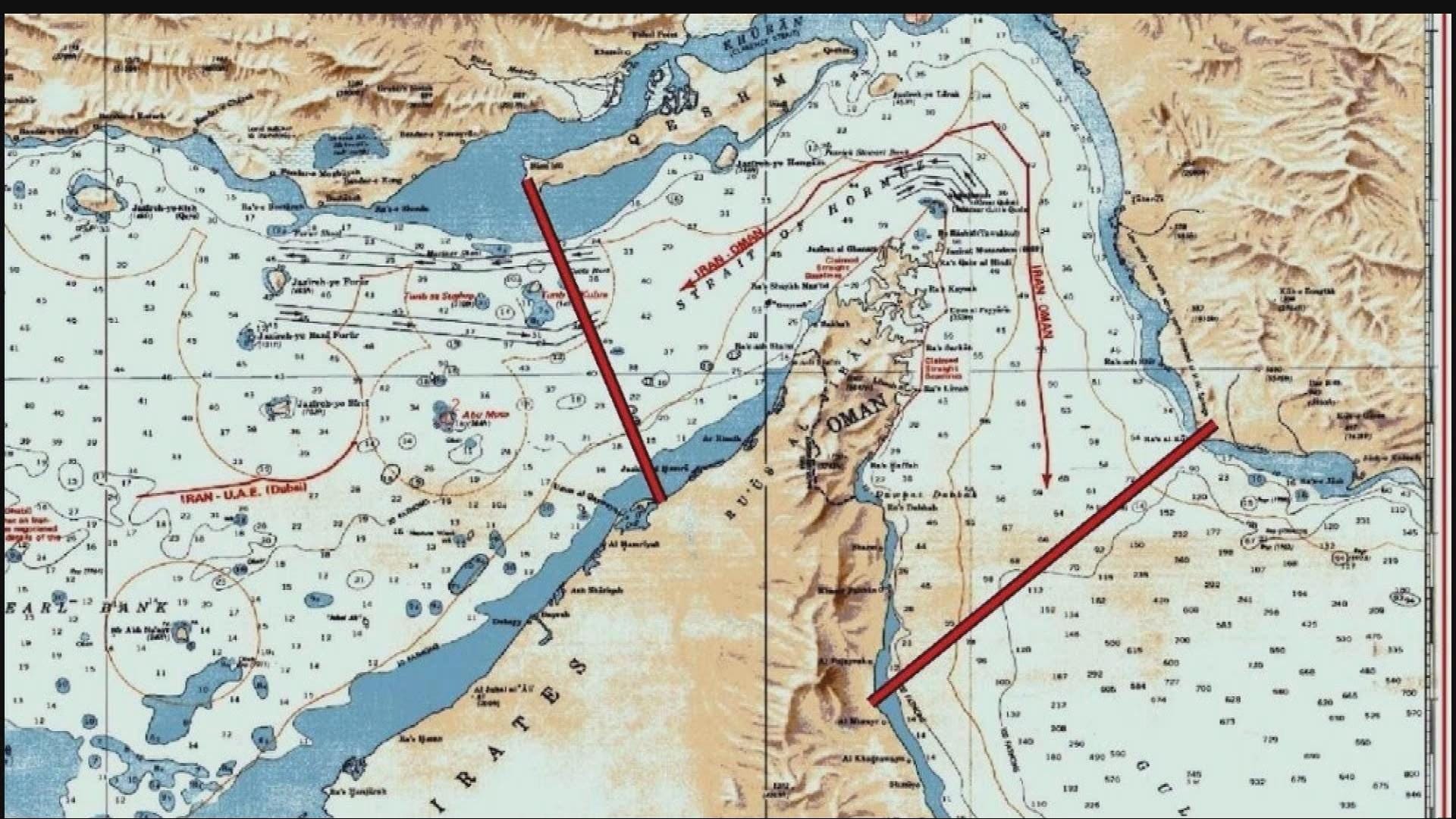
On Monday, the IRGC published a map outlining what it called a new “area of control” in the Strait, featuring two red lines cutting from Iran’s southern coast to ports in the United Arab Emirates. An IRGC official said it was not a change in policy, but a clarification of the areas where vessels would need to follow Iranian protocols for safe passage.
The future of all of these plans depends on how the broader war plays out in the days and weeks ahead. The U.S. could attempt to re-open the Strait by force, an operation that would bring extreme risks for Trump on both a tactical and political level and would be extremely difficult, if not impossible, to sustain without a complete change of government in Tehran. It is possible the U.S. and Iran could reach an agreement through negotiations, but this would almost certainly result in Iran retaining its dominance of transit. Trump has, at times, suggested he may leave the fate of the Strait to other countries to resolve, claiming the U.S. does not need it.
“If this new scenario ends up becoming contested, in which the risk of war is still there, looming in the background, in which there isn’t full acceptance and as a result you also don’t have a full flow of oil, that will ensure that the international markets are going to try to reduce the strategic significance of the Strait of Hormuz,” Parsi said. “In that scenario, Iran needs to also have an alternative.”
As it works on its future plans for managing Hormuz, Iran also has been working to prepare for such a scenario. It has been negotiating the expansion of alternative land shipping options in the region and is brokering the erection of a network of routes transiting Pakistan and Afghanistan, a parallel trade system outside of Western dominance. Iran envisions this as establishing itself as a central transit hub in the heart of central and western Asia.
“This is an important development. For years, we did not pay much attention to developing land transit infrastructure due to a lack of necessity. However, we are now moving forward at a very fast pace, and the level of engagement from the countries involved in these corridors has genuinely surprised us,” said the Iranian official. “This dynamic is reshaping the region and will significantly transform the future of trade and the nature of relations between countries in West Asia.”
These alternative land routes are not just long-term strategic planning by Tehran, but a direct response to the blockade in the Strait of Hormuz that Iran believes will allow it to endure a prolonged standoff by countering some of the economic and supply impact. “Our volume of maritime trade is very high, so naturally shifting it to land transit won’t be easy,” the official said. But, he added, “things are actually moving forward at a really good pace.”
Thanks for this detailed report, and for always covering the Iranian view, something our corporate media never does.
The Iranians clearly seem to be the sane and anti-war party in this conflict. Trouble is, we are dealing with a narcissist in Trump who hates "losing," and who seems to be a puppet for a war-mongering Netanyahu.
May sanity prevail and may God stop more death and destruction by our nation and Israel.
This is all so unnecessary and horrific. This situation **never needed to happen**. This is a war of vanity, a war of ego, a war of profane stupidity.
"FDD" is an organization that we Americans can safely marry to the likes of AIPAC:
"The White House lifted language whole cloth from the FDD in crafting its justification for the Iran war and Trump’s team publishes dubious charts created by FDD about Iranian nuclear enrichment. Nick Stewart, managing director of advocacy at FDD’s lobbying arm, was recently added to the Iran negotiating team headed by Special Envoy Steve Witkoff and Trump’s son-in-law Jared Kushner."
Looking forward to the next time Trita Parsi is on Drop Site Live.
Thanks again to everyone at Drop Site News.