

Epstein Flipped Israel’s Gaza-Tested Biometric Scanners Into Nigeria Ports Deal for UAE
Former Israeli Defense Minister Ehud Barak used the Boko Haram threat to pilot Israeli facial recognition scanning in Nigeria, while Jeffrey Epstein facilitated oil and logistics deals.


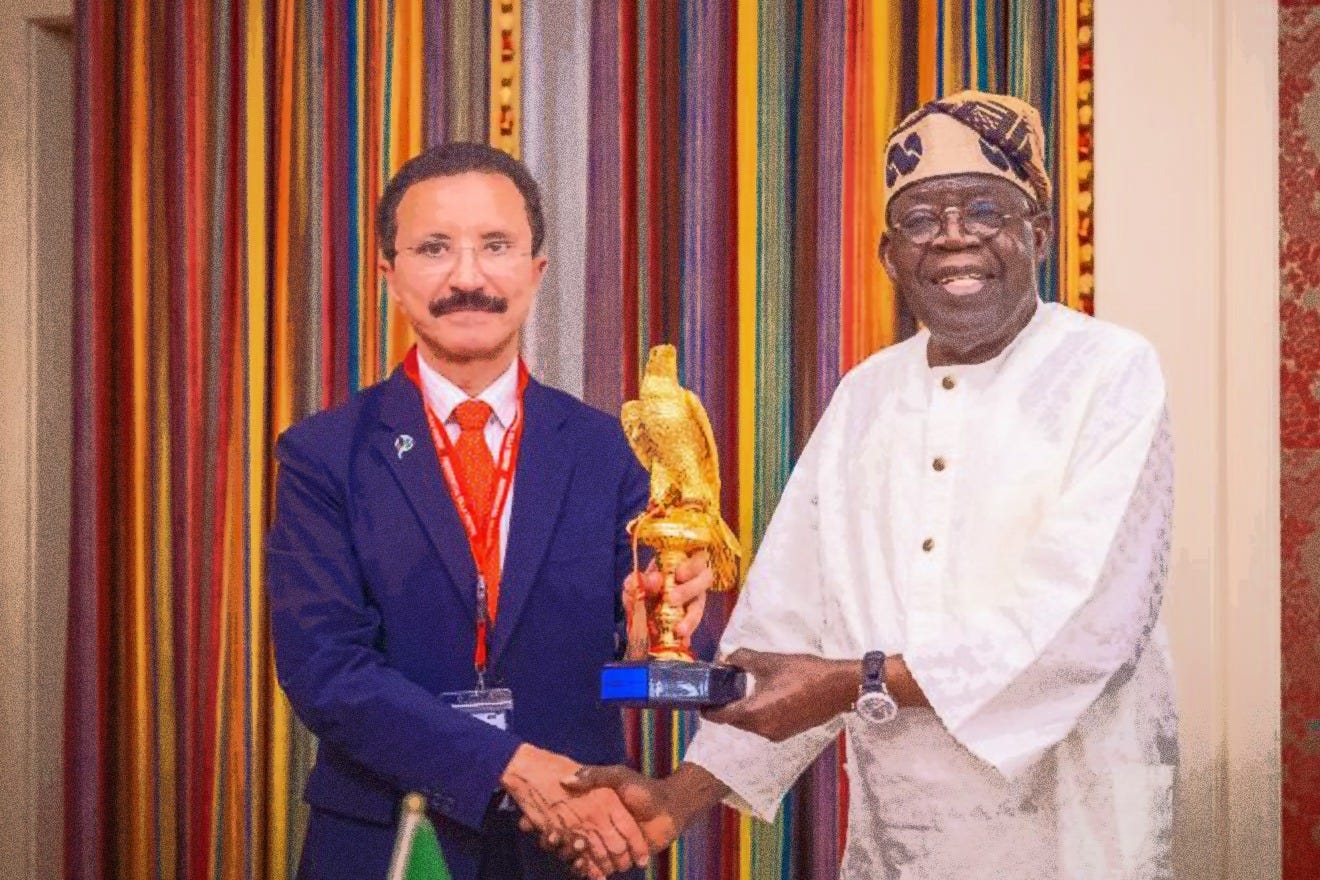
The year before Jeffrey Epstein’s suspicious death in a Manhattan jail, the financier was working to broker an infrastructure deal for Emirati logistics conglomerate DP World in Nigeria, according to a massive trove of emails released by the Justice Department last month.
In an email exchange from the summer of 2018, Epstein facilitated talks between then-chair of Nigeria’s sovereign investment fund, Jide Zeitlin, and DP World’s ex-chairman, Sultan Ahmad bin Sulayem, on possible shipping terminals in Lagos and Badagry. Sulayem resigned from DP World on February 13, 2026 amid fallout from the revelation of his intimate friendship with Epstein.
DP World’s leadership was reluctant to invest in an industrial zone in Nigeria unless they could own the surrounding port outright, and talks with previous Nigerian presidents, since 2005, had led nowhere. Zeitlin informed Sulayem that he was close to then-President Muhammadu Buhari and billionaire shipping magnate Gabriele Volpi—the owner of Intels, Nigeria’s largest logistics company, which services the country’s massive oil & gas sector. Epstein, in turn, offered to involve Kathryn Ruemmler, former White House counsel under President Barack Obama. Ruemmler recently announced her resignation as chief legal officer of Goldman Sachs.
Sulayem and Epstein worked together for more than a decade, cultivating a friendship between Israel and the United Arab Emirates long before the Abraham Accords agreement in 2020. Zeitlin wrote to Epstein in September 2018, after Djibouti nationalized DP World’s main hub in East Africa, “I hope your pal’s sojourn in Tel Aviv … was more effective than his efforts on the African continent.” After Epstein’s death, DP World acquired a controlling stake in a Nigerian logistics provider in 2022 and began expanding its footprint in Lagos as of last year.
Epstein was keen to profit from armed conflicts on the African continent. While negotiating DP World’s access to Nigeria, he was also helping Zeitlin navigate around U.S. sanctions on Oleg Deripaska, then-chairman of the Russian aluminum titan Rusal. The sanctions had a major impact on Ivan Glasenberg, the Israeli-South African CEO of mining giant Glencore; Glencore’s operations had been disrupted by a fraud probe into their dealings with Israeli mining kingpin Dan Gertler in Congo-Kinshasa. “Do you know Oleg Deripaska or Ivan Glasenberg?” Zeitlin asked Epstein. “Easy,” Epstein replied.
The American financier had deep ties to Israeli mining and military outfits in Africa, which he helped support alongside former Israeli Prime Minister Ehud Barak—a close associate with whom Epstein corresponded almost daily. “With civil unrest exploding in ukraine syria, somolia, libya, and the desperation of those in power,” Epstein wrote in a 2014 email to Barak, “isn’t this perfect for you.” Barak replied, “You’re right [in] a way. But not simple to transform it into a cash flow.”
That year, as the Nigerian military was locked in a grinding war with Boko Haram, Barak positioned Israeli security vendors as partners to then-President Goodluck Jonathan’s government, using a Christian university as a foothold to establish Israel’s cybersecurity industry in Nigeria. Epstein, who was friendly with Nigerian pastor and former trade minister Okey Enelamah, was closely involved in cultivating Barak’s opportunities in West Africa.
Israeli intelligence firms marketed their security know-how as “field-proven,” a euphemism for technologies deployed against Palestinians living under Israeli military occupation. Years before Barak sold a biometric access control system in Nigeria, Israeli authorities installed its prototype, called “Basel,” at the Erez Crossing between Gaza and Israel. Israel’s automated checkpoints, equipped with facial and hand-geometry scanners, were touted as a way for African governments to control movement of populations at scale.
Security cooperation offered an appealing way for Barak and Epstein to generate cash from chaos in Nigeria, while also promoting the political interests of the Israeli government. Barak’s initial foray in Nigeria led to a broad institutionalization of Israeli cyber expertise over the following years. In 2020, the World Bank tapped the Israel National Cyber Directorate and a digital forensics startup co-founded by Barak to shape Nigeria’s cyber infrastructure.
A hidden motive behind the security deals was the promise of accessing Nigeria’s rich petroleum resources. Barak’s hacked emails, published by Distributed Denial of Secrets and thoroughly corroborated by recent releases from the Justice Department’s Epstein Files, show Barak parlaying his Nigeria security relationships into oil investment opportunities, with Epstein’s steady guidance. This playbook illustrates a clear through-line for Epstein and Barak’s Africa strategy: Counter-terrorism partnerships opened doors and foreign investors seeking energy and mining deals walked through them.
“Hit the nail on the head”
At the start of 2014, emergency rule was in force in Nigeria as states on the borders of Niger, Chad, and Cameroon faced near-daily attacks by Boko Haram. Several hundred people were killed in a surge of violence, including arson, car bombs, and a massacre at a Catholic church. The apparent inability of the Nigerian government to halt the accelerating chaos offered an opportunity for Barak—one year removed from public office, and building a portfolio as a high-level consultant for foreign governments—to pitch Israeli security cooperation as a solution.
Barak often relied on his wife to approach leads for unofficial negotiations on Israeli security deals. On January 28, 2014 she wrote a message to Tim Akano, CEO of Nigerian technology firm New Horizons, who had invited Barak to Nigeria the previous year:
Dear Tim
we are shocked at the horrible deadly terror attack today with so many innocent people killed.Terror works like a cancer when it is trying to have a grip in a country.
Please convey Former PM Barak and my condolescences to the President, to the First Lady and to the Nigerian people.
As we discussed during our last visit, Former PM Barak is ready to be of help tackling and defeating the challenge of Boko Haram based on his experience.
Our hearts are with you,
Nili Priell Barak
Coincidentally, Akano was attending a cybersecurity conference in Tel Aviv the very same day. He wrote back, “I am an incurable optimist. I am confident that very soon we will have opportunity in Nigeria to receive help from Prime Minister Barak. I will continue to look for the right opportunity to hit the nail on the head.”
In the following months, the Israeli Defense Ministry negotiated a deal to transfer U.S.-made attack helicopters to Nigeria—but the sale was blocked by the Obama administration in the summer, after officials flagged human rights violations by the Nigerian army.
Epstein looked for other ways of penetrating Nigeria. On August 30, 2014, he sent a snippet of philosopher Robert Nozick’s “Tale of the Slave” to his friend Barnaby Marsh, an investment advisor. Marsh responded, “We should think about the growing emerging role of cards and phones in economic exchange and the future of money,” and shared an article about the use of electronic identity cards and biometric databases in Nigeria. In October, DP World chairman Sultan Ahmad bin Sulayem emailed Epstein to inform him of a meeting with Aliko Dangote, “the richest man in Nigeria.”
Akano, ever the optimist, was persistent. In April 2015, he emailed Barak a new opportunity, this time in the energy sector. During a previous visit to Abuja, Barak had floated the idea of Israeli firms building power plants in Nigeria. Akano proposed a pilot case: A Christian school, Babcock University, needed a power plant to supply electricity to its campus.
Barak’s emails and subsequent news reports don’t show any records of a power plant purchase—instead, Babcock bought biometric surveillance equipment developed by Israeli military intelligence.
In May 2015, Barak and his business partner Gary Fegel made a $15 million investment in FST Biometrics, a facial recognition technology for “access control” founded by Aharon Ze’evi Farkash—the former head of Israel’s military intelligence and the author of a Côte d’Ivoire surveillance plan brokered by Barak and Epstein the previous year.
Fegel, dubbed “Ehud Barak’s billionaire” by Israeli media, ran the aluminum business at Glencore, where he worked with both Deripaska, the aluminum kingpin, and Glasenberg, the CEO of Glencore—the two sanctioned individuals whom Epstein later advised through Zeitlin, then-head of Nigeria’s sovereign wealth fund. Fegel was also working closely with Barak to source cyberweapons from Israeli military research units, while Epstein secured funding from Silicon Valley and European bankers.
Farkash developed the concept of “remote identification” during the second Palestinian Intifada at Israeli checkpoints on the Gaza border. In 2003, Israel deployed the “Basel” system at the Erez Crossing, using facial scans to identify and process Palestinians going to work in Israel. “Palestinians were standing in the [queue] to enter Israel for four, five, or even six hours,” a spokesperson explained. “The military was trying to make sure that no one passing through the checkpoint was a terrorist or on a watch list.” He pitched the technology as a convenience for Palestinians frustrated by the wait times: “If someone is not a terrorist, he will not like us very much.”
As Boko Haram targeted Christians in their places of worship, the biometrics pilot at Babcock University took on a sectarian subtext. The pilot helped build relationships between Israeli operators and the Nigerian national security officials, while their partnership was framed as a matter of countering Islamic terrorism. By July 2015, a new “in-motion identification” system—the name for FST’s patented technology—was live at Babcock, allowing for facial recognition and authentication of students from a distance, in chapels, classrooms, and dormitories. Five hundred Babcock lecturers were trained to secure their classrooms with biometrics; a press release boasted, “the Israeli latest technology…helps guarantee safety on campus by filtering away all unwanted persons.”
Meanwhile, Epstein was working hard to establish Barak’s credibility as a global leader in cybersecurity. Emails show that Epstein connected Barak with several influential figures in Silicon Valley, including billionaire venture capitalist Peter Thiel, former Microsoft president Steven Sinofsky, and many others.
Around the same time as Barak’s FST investment, Epstein loaned Barak $1 million to invest in another security startup founded by Israeli intelligence officers: Reporty Homeland Security (now rebranded as Carbyne), a 911 response platform which enables emergency dispatchers and security services to retrieve precise location data and live video/audio feed from phones. As with FST Biometrics in Nigeria, Reporty pilot projects laid the groundwork for state security cooperation between Israel and Mongolia.
The two seed investments, FST and Reporty, built Barak’s reputation as a cybersecurity pioneer. Barak emailed Epstein from Israel, shortly after the investment in FST was announced: “We miss you. Never a dull moment here…Reporty moves forward. The access control co. I’ve entered with Gary Fegel drew positive attention here. I start to look as being involved in Security related HighTec.”
Epstein and Barak’s persistence paid off. Barak’s companies scaled up from operating a pilot at a small university to advising at the highest level of Nigeria’s state cybersecurity apparatus. In 2020, the World Bank subsidized a partnership with the Israel National Cyber Directorate and Toka Group, another ex-intelligence startup co-founded by Barak, to work directly on Nigeria’s national cybersecurity infrastructure. The cooperation deepened last year, in July of 2025, as an Israeli firm installed cyber warfare simulators at Babcock to train the next generation of cybersecurity operators.
“This is going to be fun”
Epstein had a long history in Nigeria. His first documented visit to the country was in September 2002, when he traveled with President Bill Clinton and a large entourage on his private Boeing 727 jet (later dubbed the “Lolita Express”), part of a highly-publicized HIV/AIDS advocacy tour that included stops in Ghana, Rwanda, Mozambique, and South Africa. Epstein’s interests in Africa were not purely philanthropic, however; he was deeply involved in shipping, logistics, and the global commodities trade.
JPMorgan’s Investment Bank consulted with Epstein on major African investment deals, according to unsealed emails from the U.S. Virgin Islands’ lawsuit against the bank. In a 2010 email to a JPMorgan executive, Epstein boasted of receiving security clearance to meet with several senior African and Arab political officials—including Nigerian foreign minister Henry Ajumogobia, who had recently served as Nigeria’s OPEC delegate and Minister of State for Petroleum Resources.
Among the names of celebrities and politicians in Epstein’s “little black book,” seized from his Palm Beach residence in 2005, was a contact for Lal Dalamal, a Nigeria-born British-Indian philanthropist, whose family was a major player in the import and export of agricultural commodities and consumer goods in Nigeria.
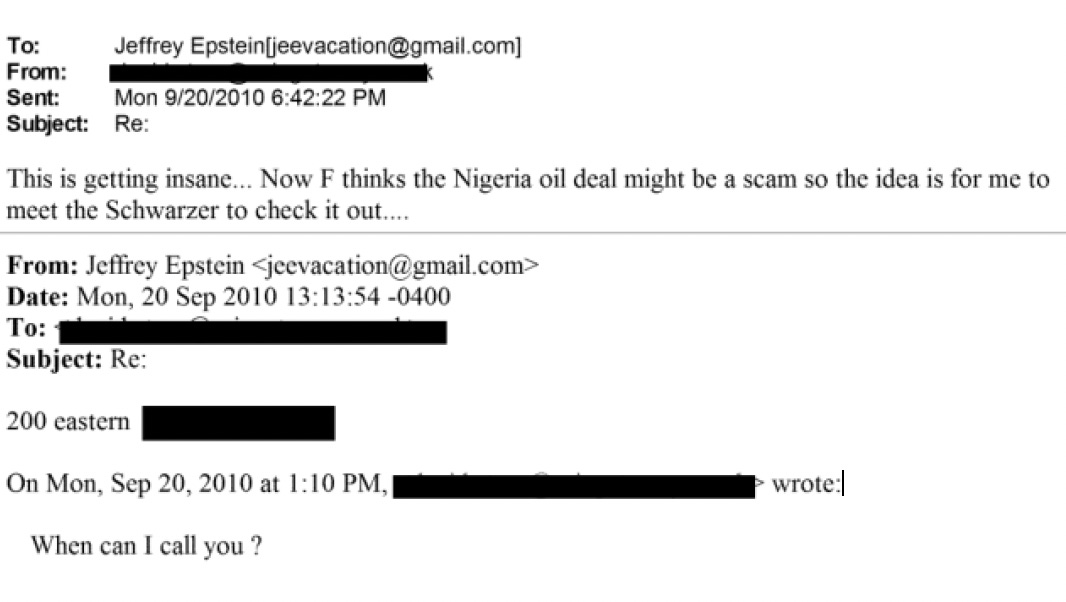
In a September 2010 email exchange, German businessman David Stern sent a note to Epstein about an upcoming meeting with “a guy who has access to Nigeria oil and when selling it to China (or somebody else).” Stern expressed skepticism about the deal, writing “This seems very fishy (as my boss JEE would say).”
Later that day, Stern sent Epstein an update, using a racial slur for Africans to express his frustration about the deal. “This is getting insane…” Stern wrote, “Now F thinks the Nigeria oil deal might be a scam so the idea is for me to meet the [slur] to check it out.”
Epstein’s connections to West Africa proved lucrative for his associates. In 2011, Epstein invited a JPMorgan executive to his New York mansion to meet Karim Wade, son of the President of Senegal, Abdoulaye Wade. Epstein wrote: “one of the most important players in africa, will be at the house this week, i think you will enjoy him.” Epstein tried to tee up a deal: “karim wants to hedge a million barrels each quarter of oil buying. This is going to be fun.” Senegal’s sole oil refinery, in Dakar, is supplied almost entirely by Nigerian crude.
“A way to make new friends for Israel”
Epstein quietly began helping Ehud Barak leverage his security ties in Nigeria to set up energy investments for his friends in Israel after Barak resigned as Israeli defense minister in 2013.
In emails with Renova Group, a conglomerate owned by Russian-Israeli oligarch Viktor Vekselberg, Barak proposed a Nigeria joint venture with Idan Ofer, chairman of the Israel Corporation, a massive petrochemical conglomerate founded by the government of Israel. Epstein had worked closely with Barak in establishing the relationship with Vekselberg and a consulting deal with Renova Group, which they also leveraged in backchannel negotiations with Russia during the Syrian civil war.
On May 19, 2013, Barak contacted his friend Michael “Micky” Federmann, billionaire chairman of the Israeli military technology giant, Elbit Systems. At the time, Elbit was facing controversy over a mass surveillance project in Nigeria. Ten days earlier, Nigerian legislators had learned of a secret $40 million intelligence contract for Elbit to develop infrastructure to spy on Nigerians’ online communications, and the country’s House of Representatives threatened to shut it down.
In the first week of June of 2013, Barak traveled to New York to visit Epstein and attend former U.S. Secretary of State Henry Kissinger’s 90th birthday party. Following his meeting with Barak, Epstein made an impromptu five-day trip to Africa; two weeks later, Barak received an invitation to speak at a conference for senior leadership of the Nigerian military and representatives from the country’s banking, oil & gas, and manufacturing sectors.
The event, called the World Cyber Security Conference, was hosted by an IT firm called New Horizons and was not announced publicly until after Barak confirmed his attendance. According to email correspondence, the main purpose of the conference appeared to be arranging private meetings for Barak with President Goodluck Jonathan and senior military chiefs, including the Chief of Defense Staff, Ola Sa’ad Ibrahim.
In an email to Barak on July 14, 2013, Akano, the event organizer, candidly expressed that Nigerian leaders saw Barak as a direct channel to the Israeli government. Akano shared with Barak a news article in which the Nigerian president called for additional Israeli support to fight Boko Haram. He wrote to Barak: “[Jonathan] needs more assistance from the Government of Israel. I am sure he will appreciate whatever help the Prime Minister can still render in whatever form- if there are new solutions or new technologies etc that can help Nigeria.”
Barak asked private intelligence firm Ergo to prepare a briefing on Nigeria, containing a dossier on Goodluck Jonathan, and his inner circle and adversaries. Ergo used informants inside Nigeria to develop their reports, and Barak cautioned them to be discreet. On July 20, Barak wrote to his Ergo contact: “[Please] make sure sources in Nigeria DO NOT know the purpose of the questions and/or identity of end user (namely myself).”
The conference was postponed after the mother of First Lady Patience Jonathan, who was hosting the event, was killed in a car accident. So, on August 5, Barak changed his travel destination to New York City. On arrival, he emailed Epstein: “R U in NY?” Epstein replied “no,” and sent Barak a number so they could catch up on the phone.
Instead, that week Barak met Henry Kissinger, another contact from Epstein’s black book, at the Four Seasons Hotel restaurant. In his final interview with Steve Bannon, Epstein recalled meeting Kissinger when they were both members of the Trilateral Commission, a non-governmental organization founded by David Rockefeller, the former CEO of Chase Bank.
After their meeting, Barak sent Kissinger an email asking for an invitation to the annual gathering of the Bilderberg Group, a transnational off-record forum held annually and attended by a select group of international elites. Kissinger’s office did not respond to requests for comment.
Epstein sent Barak an email on August 7, checking in: “is your time productive[?]” Barak replied: “Time will tell. I’m trying to make it one.”
Barak finally arrived in Abuja, Nigeria on September 16, 2013 for the rescheduled World Cyber Security Conference. According to the event itinerary, he was slated to meet with President Goodluck Jonathan in the afternoon, followed by dinner hosted by the First Lady, with key leaders in the government, military, and intelligence community, and several foreign ambassadors.
Notwithstanding Barak’s status as a private citizen, his hosts treated the event as a diplomatic outreach to the Israeli state. The event organizer wrote to Barak: “The dinner is one other excellent way…to meet with good Friends of Israel and make new friends for Israel as well.”
The actual conference, held on September 17, was only six hours long—and three of them were dedicated to prayer, reciting the national anthem, taking photographs, eating lunch, and presenting souvenirs and certificates to attendees. Barak spoke for 20 minutes, followed by a Q&A.
Nigerian media used the event to urge speedy passage of a pending Cybercrime Bill, a comprehensive legal framework for online surveillance, which was under pressure after the House of Representatives voted to suspend Elbit’s $40 million contract. Two days after the cybersecurity conference, on September 19, the Senate voted to advance the bill.
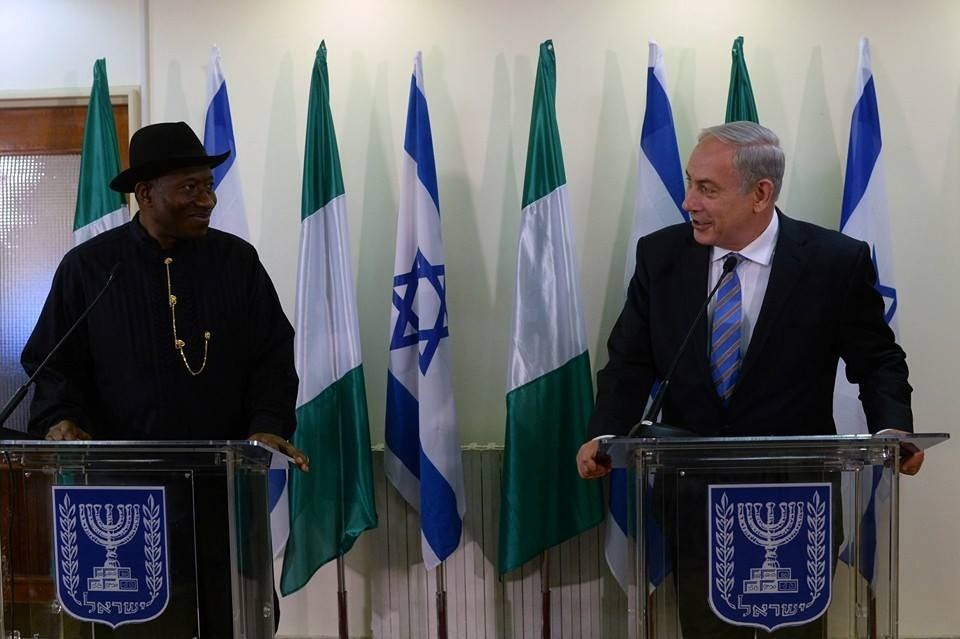
The next month, Goodluck Jonathan traveled to Jerusalem for his first-ever state visit to Israel. Although the cybersecurity bill was still stuck in the House, Elbit technicians “quietly landed” in Abuja on November 26 to begin installing the internet surveillance facility. Civil-society monitors observed Nigerian personnel being trained in Israel, even as Nigerian legislators were still debating the details of the bill.
“I don’t have time to learn from my mistakes”
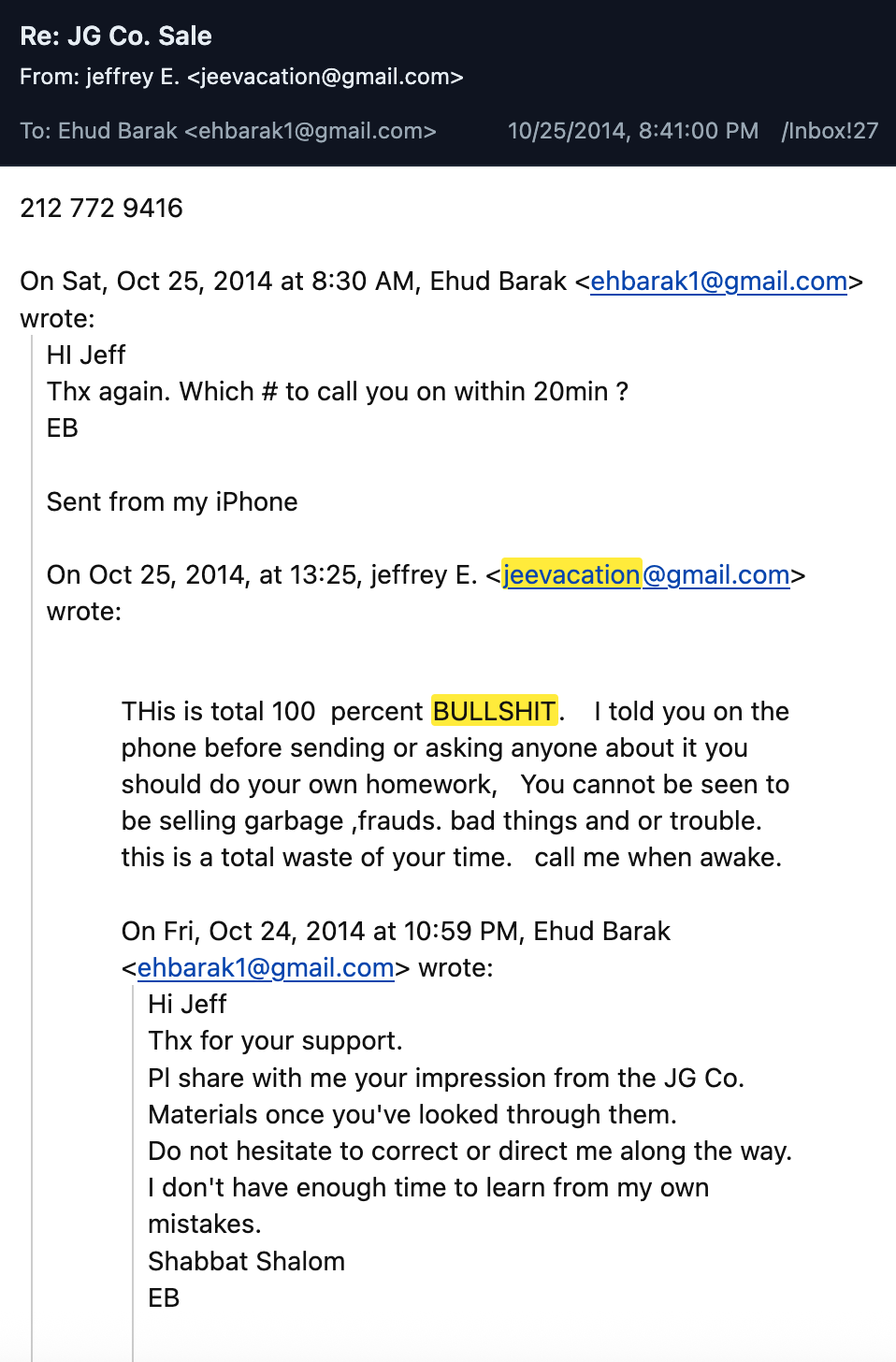
As Epstein coached Barak to become an energy dealmaker, he was not shy about giving harsh criticism to steer him in the right direction. When American oil & gas developer Jack Grynberg pitched Barak on buying some of his oil assets, Barak shared the detailed financials with Epstein to pass along to Apollo Global Management CEO Leon Black for due diligence. Barak wrote, “Do not hesitate to correct or direct me along the way. I don’t have enough time to learn from my own mistakes. Shabbat Shalom.”
A few hours later, Epstein sent a frustrated response: “This is total 100 percent BULLSHIT. I told you on the phone before sending or asking anyone about it you should do your own homework, You cannot be seen to be selling garbage ,frauds. bad things and or trouble. this is a total waste of your time.”
Later, Barak introduced Grynberg to ex-Mossad chief Danny Yatom, when Grynberg sought help with armed security for his power generators in Nigeria’s Ogun and Ondo states. Barak warned Yatom that Grynberg was a “tricky” character, and cautioned against getting too entangled with Grynberg’s operations; Yatom ultimately declined to work with on the American’s Nigeria project.
The following July, Barak set up shop at Epstein’s 71st Street mansion, aiming to meet with powerful industry titans who could advance his geopolitical ambitions in Africa. After meeting Nigerian petrochemical magnate Ambrosie Bryant Chukwueloka Orjiako at Idan Ofer’s house in London, Barak followed up with Orjiako, to make plans to meet again there or in New York soon.
Barak and Epstein were actively engaged in Israel’s oil and gas sector, working together to broker access to the Leviathan natural gas field for foreign investors. Epstein also arranged a meeting between Barak and DP World chairman Sultan Sulayem, while Barak was in Russia for a private meeting with Vladimir Putin at the St. Petersburg International Economic Forum in 2013.
Epstein seized the opportunity to promote DP World’s investment in Israeli ports. Barak replied in an email that it was “a little bit too early,” and suggested that direct investment by an Emirati company could succeed “once (and IF) we’ll start getting deeper into a sincere peace process.”
Soon after the Abraham Accords were signed in 2020, DP World bid for ownership of Haifa Port, one of Israel’s main Mediterranean Sea terminals, which services operations at the Leviathan field. They were ultimately out-bid by India’s Adani Group.
Barak’s business interests were prospering with Epstein’s support. The relationship between the two men was intimate, with near-daily email and phone correspondence. Epstein wrote Barak, in a heartfelt message: “there are very few people that I enjoy spending time with, you are unique.” Barak replied, “Thx. The same.”
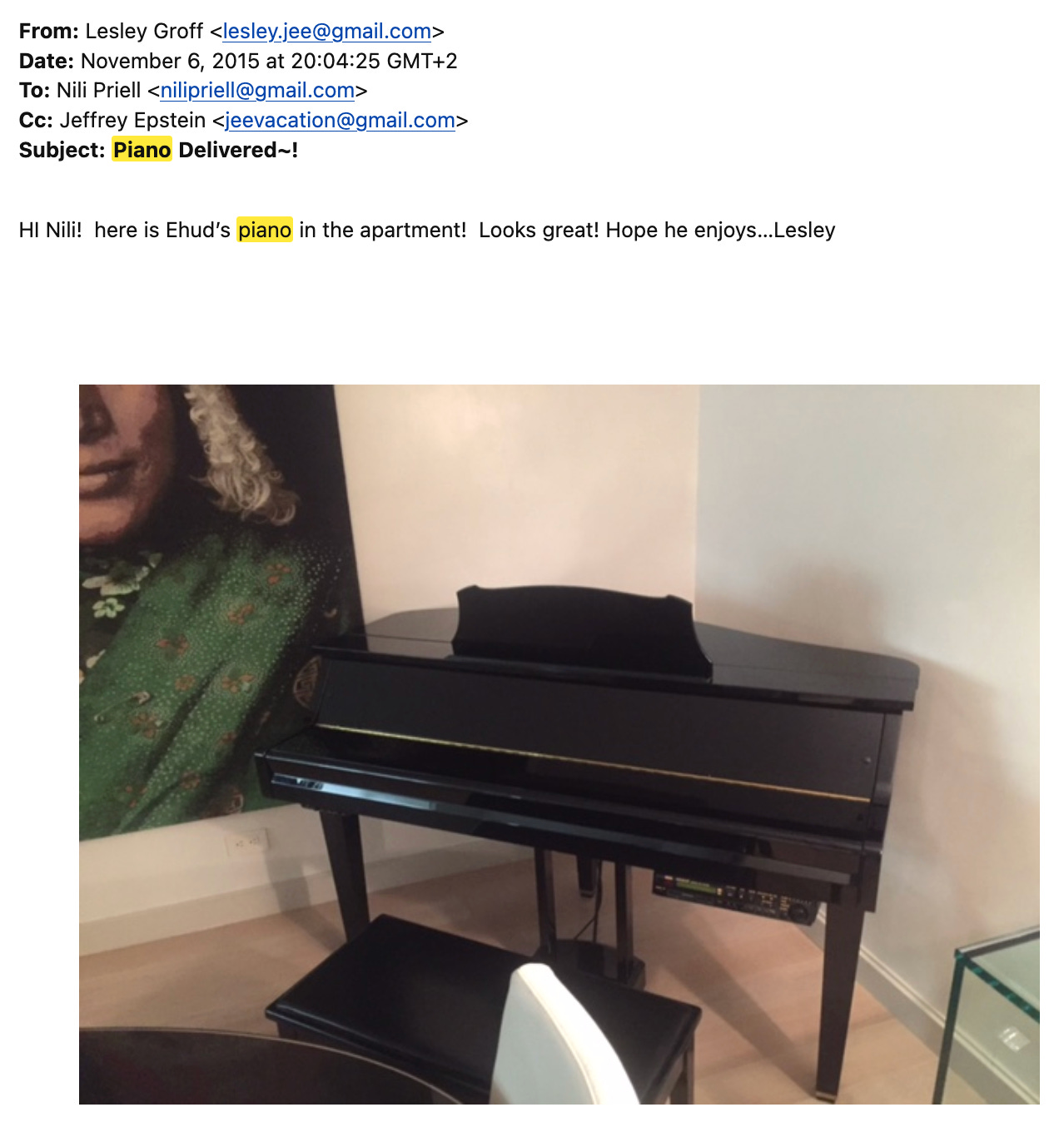
While writing a memoir and living at Epstein’s apartment in November 2015, Barak asked Epstein’s assistant to set up an electric piano, so he could practice classical music between writing sessions. Barak and Epstein, both pianists, shared a passion for music. Barak sent Epstein an article about the career benefits of studying music, with a note: “What is it about serious music training that seems to correlate with outsize success in many diverse fields? Here is the answer re your success in life.”
Epstein corrected Barak: “our.”
Correction, March 27, 2026: This article incorrectly stated that Ivan Glasenberg was under U.S. sanctions; Glasenberg was not personally sanctioned, he was forced to quit the board of Rusal after its main owner, Oleg Deripaska, was sanctioned by the U.S. The article has been updated to reflect this.
What this reporting exposes isn’t just another footnote in the Jeffrey Epstein saga — it’s a blueprint.
You have Jeffrey Epstein leveraging access to African oil and logistics networks while working hand-in-glove with Ehud Barak to market Israeli “field-tested” surveillance tech — meaning technologies refined on Palestinians under occupation — as counterterrorism solutions for Nigeria. The selling point wasn’t subtle: Boko Haram violence becomes the entry point for biometric systems first deployed at Gaza checkpoints.
Security cooperation opens the door. Energy and logistics money walks through it.
The use of facial recognition and access-control systems originally piloted at crossings like Erez and rebranded as campus safety tools in Nigeria reveals how occupation infrastructure becomes exportable product. The language shifts — “counter-terror,” “cybersecurity,” “stability” — but the model remains: crisis as market opportunity.
And then there’s the geopolitical layer. Long before the Abraham Accords, private networks linking Israeli political elites and Emirati business leadership were already greasing the wheels for port deals and strategic alignment. By the time formal normalization arrived, commercial groundwork had been quietly laid.
If even half of what’s detailed here holds up under scrutiny, this isn’t just a corruption story. It’s about how surveillance regimes, counterinsurgency branding, and extractive capital intertwine — and how “security assistance” can function as both diplomatic currency and business development strategy.
Drop Site deserves credit for following the paper trail. The implications stretch far beyond one disgraced financier.
OMG! These people are amoral grifters. And the common denominator is Israel. Apparently, pedophilia was a side hustle with the benefit of advancing their interests using blackmail. No morals, no integrity. As George Leone said “crisis as market opportunity.”
I just finished reading Winners Take All: The Elite Charade of Changing the World by Anand Giridharadas. While it doesn’t address Epstein and his merry band of disgusting grifters, it does demonstrate how elite organizations, somewhat unwittingly, support them. Thank you, Drop Site, and stay safe.